
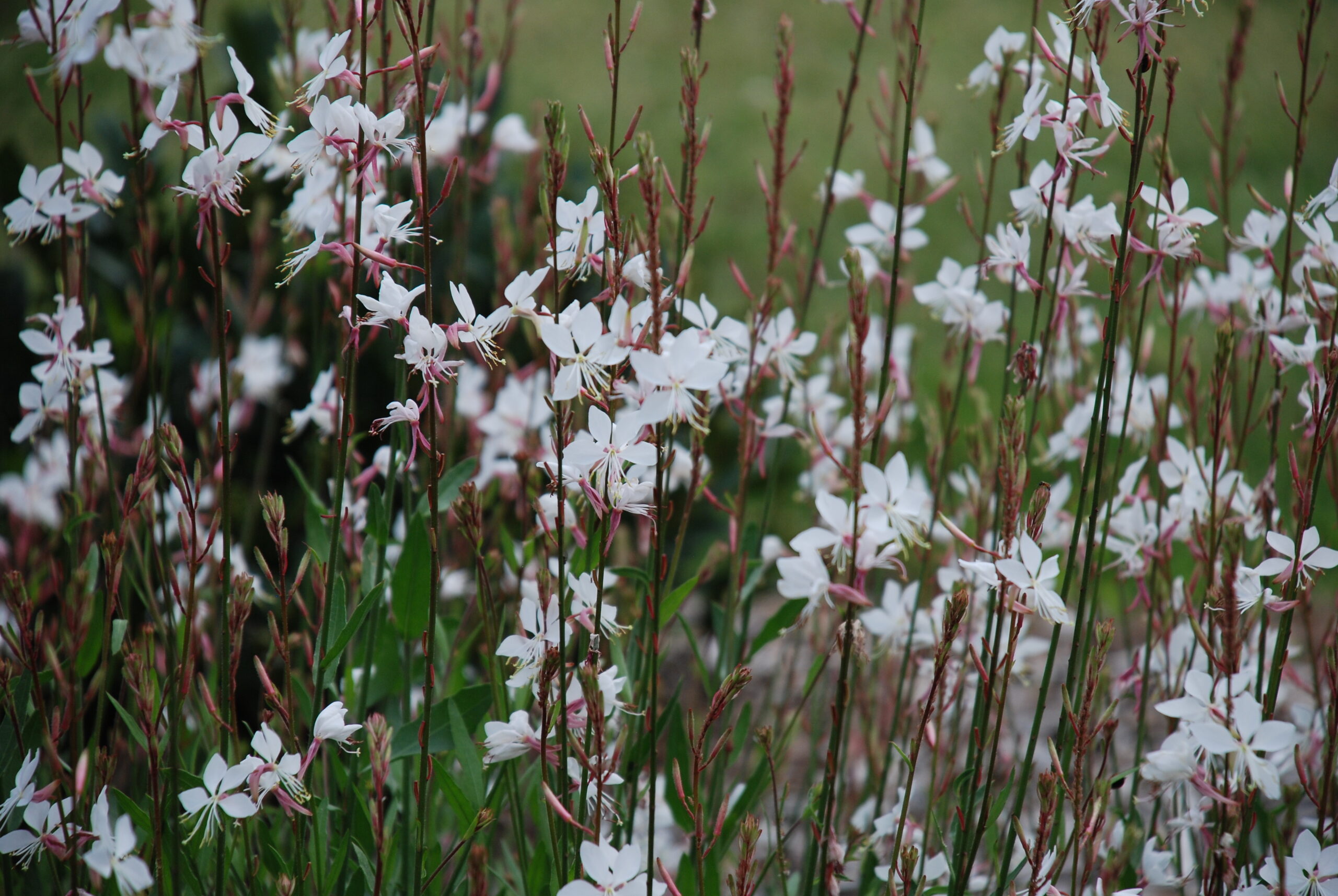
Lots of TN, VA, and KY gardeners don’t know Gauras, a tough beautiful Texas native perennial that performs equally well in our area. After countless trips to Biltmore Estates and the NC Arboretum in Asheville, I have gained an appreciation for its long summer blooming habit.
Gaura (Oenothera lindheimeri) is a low-maintenance perennial native to the southern U.S. (Zones 5-9). Gaura is often called “whirling butterflies”, “wandflower”, and “beeblossom” because the flowers appear to dance in the breeze. Gaura blooms all summer long producing graceful wands of nectar-rich white, pink, or bi-colored flowers that butterflies love.
Botanists have recently moved Gauras into the genus Oenothera, which also includes evening primrose (Oenothera biennis), and its official botanical name is now Oenothera lindheimeri.
The rabbit/deer resistant plants grow 2-3 feet tall. White flowering varieties have small, mostly non-distinctive green leaves. Modern dark pink flowering varieties flaunt foliage with deep reddish tones.
Site selection and ground prep are highly important in growing gauras. Otherwise, gauras are generally not long-lived perennials. Best flowering performance seems to be full day sunlight in the Mid-South region. Soil drainage is key. Wet, soggy winter soil will limit its garden longevity. Amend the soil deeply with a mix of compost and gritty sand (not beach sand) or in raised beds. Plants have a long deep taproot and are nearly impossible to transplant.
Plant 3-5 gaura plants for better visual impact and space them at least 18-24 inches apart. Dwarf varieties are also excellent container plants. Irrigate sparingly to encourage this taproot plant to dig deep. Generally, gaura thrives in poor lean soil and does not require fertilizing. Too much fertilizer can make plant(s) floppy.
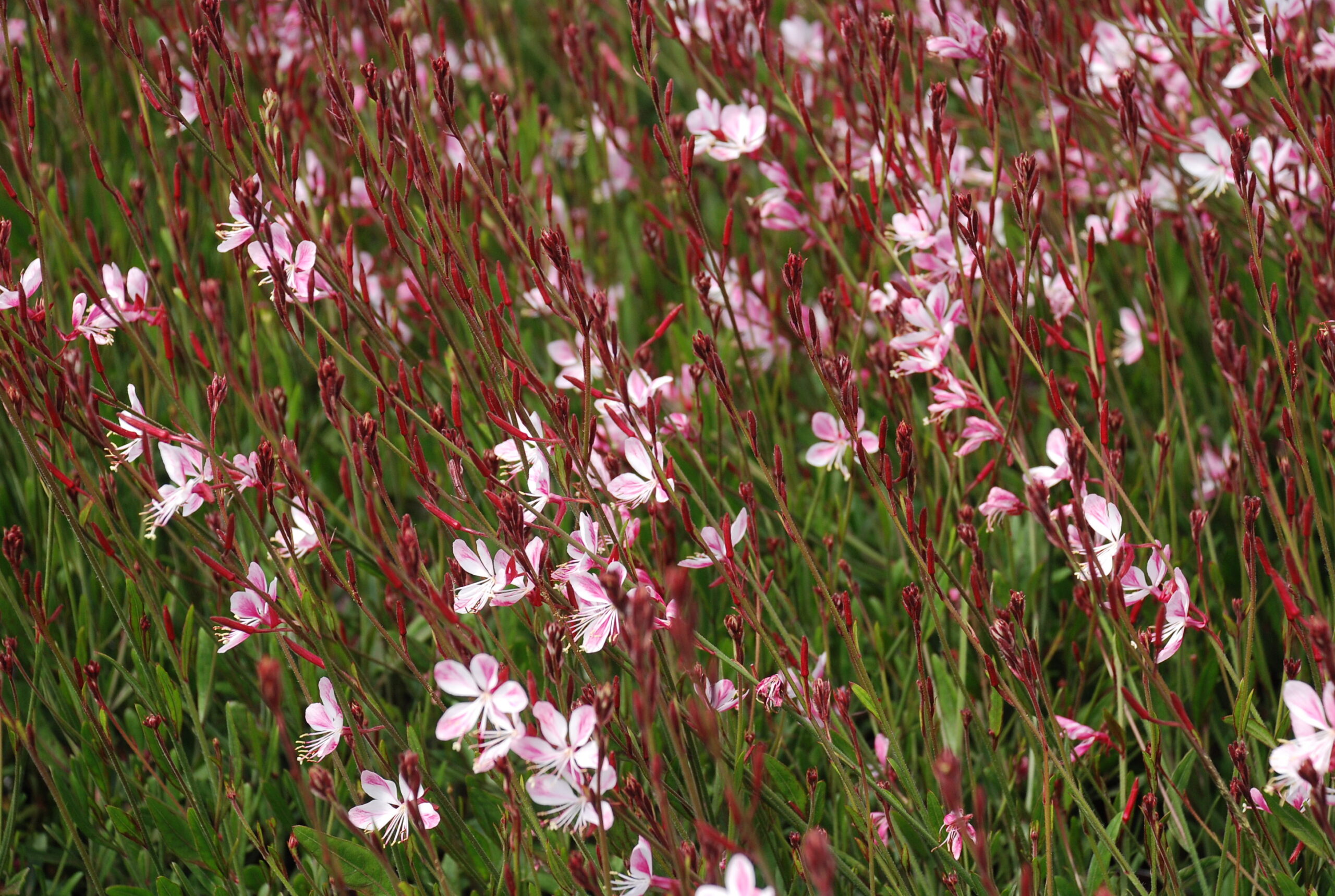
Five Beautiful Gaura (Wandflower) Varieties:
- ‘Corrie’s Gold’: Flowers are white tinged with pink and gold variegated foliage.
- ‘Passionate Rainbow’: pink flower wands and pink-edged foliage.
- ‘Siskiyou Pink’: showy rose-pink flowers on its notably wispy stems.
- ‘Sparkle White’: dainty white flowers are tinged with pink.
- ‘Rosy Jane’: compact, 18-24 inches high and wide, eye-catching performer that produces masses of white flowers with a pink picotee edge.
Overall, gauras may be affected by certain pests like aphids, whitefly and flea beetles. Root rot may occur in heavy and/or poorly drained soils. Rust and powdery mildew outbreaks may pop up in wet summers. To promote compact growth with abundant flowers, fertilize sparingly. Applications of insecticidal soap should resolve most pest issues.
Gaura plants tend to flop over in a shady garden, and staking may be necessary. Flowers invite pollinators by the score. Shop for dwarf gaura varieties to use in containers
After the first hard frost in the fall, or after flowering has ended, cut back all stems and foliage to ground and clean away debris to prevent pests from overwintering.
 Posted in


