
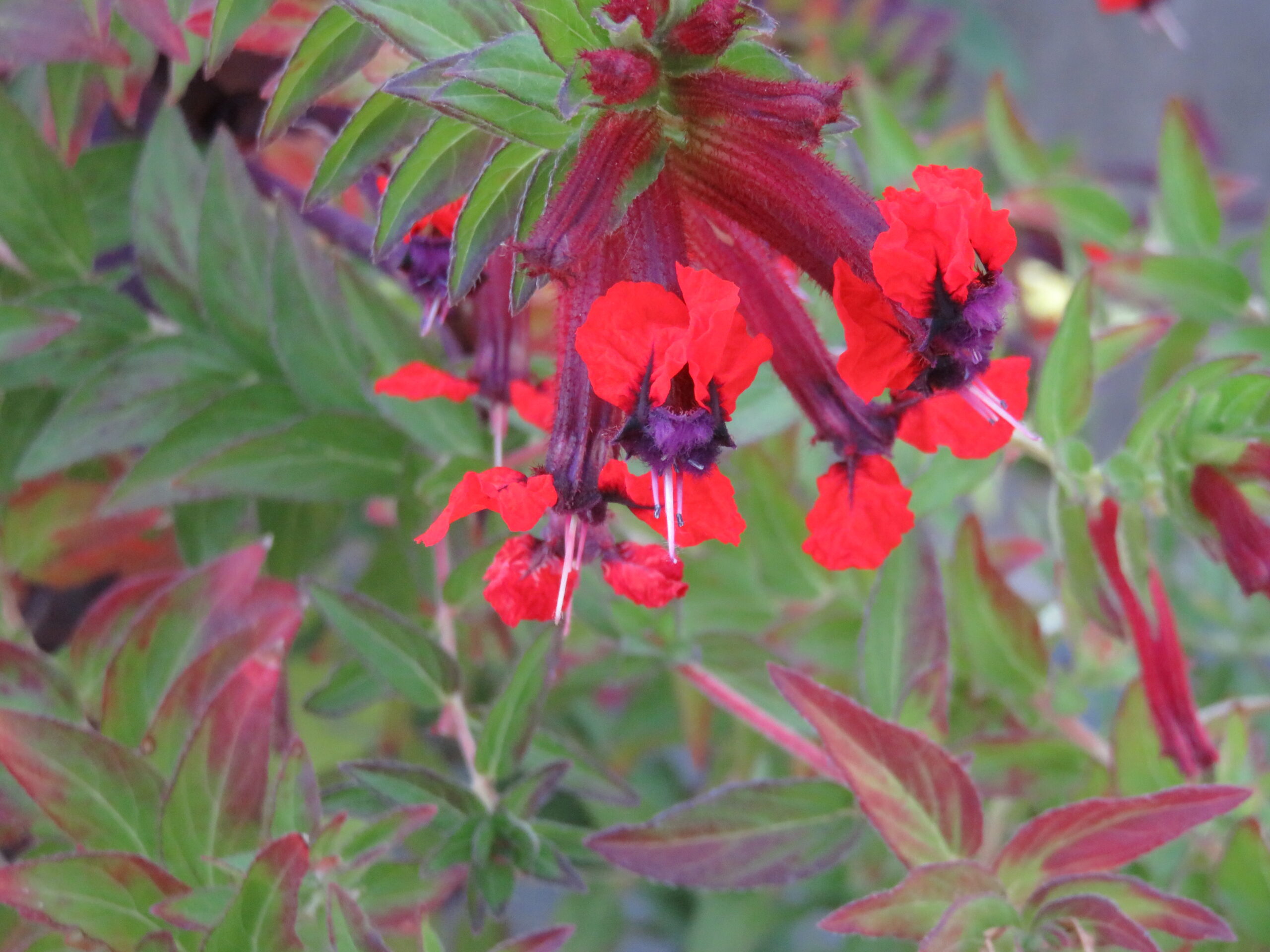
Planting Cupheas should set off fireworks in your summer flower garden. Cupheas are dependable, low-maintenance flowers that easily cope with the heat and humidity of the South. They’re exceptionally long blooming, attract bees, wasps, butterflies and hummingbirds like magnets, and are versatile enough for container plantings or in-ground beds. (See list below).
Currently, the most popular of the cupheas is Vermillionaire® Firecracker Plant (Cuphea x ‘Vermillionaire’), sometimes called “cigar plant”. It ignites multi-seasonal color and are really catching on with gardeners. Around the latter days of spring, scarlet-red tubular flowers with burnt tips emerge in abundance at the leaf axils along the stem.
Grow cupheas in full day sun (6 or more sun and in well-drained, fertile soil. Plants are moderately drought-tolerant, but prefers regular, light watering. Moderately fertilize with slow-release fertilizer at planting time.
Cuphea plants prefer fertile, light, well-drained soil. While fertilizers aren’t necessary, amending the soil with organic matter can help produce abundant blooms. Also, plant cupheas in raised beds or containers for improved drainage and aeration. Irrigate during prolonged summer dry spells.
Most cuphea plants are moderately drought-tolerant once established. However, these shallow-rooted species typically produce the most vigorous growth and abundant blooms when the soil remains evenly moist during the growing season.
Cupheas excel where summer heat and humidity soars. At the end of the autumn season, plants become frost-tough into the low 20’s and die back. Some varieties like Vermillionaire® may survive a mild winter. In zones 7b and higher, protect surface roots by mulching and/or move plants to a sheltered site to improve survival levels.
Plants need only moderate fertilizing levels from spring through summer and no more. Plant cupheas in humus-rich soil One time application of a slow-release fertilizer at the start of the growing season is adequate OR monthly feedings with a water-soluble fertilizer like Miracle-Gro™.

Worldwide there are over 250 cuphea species and many more cultivars and hybrids. Most popular in U.S. gardens include:
- Cigar plant (C. ignea) is a tender, low-growing annual; burgundy red blooms put on a show from late spring to fall. (zones 10 – 12).
- Vermillionaire® Firecracker Plant is popular cuphea hybrid from PW with showy, long blooming, fiery, tubular orange to red flowers; it grows 2.0 – 2.5 feet high and wide and may overwinter in a mild zone 7 garden with a leafy mulch cover. (zones 8 -11).
- Starfire cuphea (C. ignea x C. angustifolia) grows 18-24 inches high and two-thirds that in width with multi-colored pinkish-red, white and violet flowers.
- Honeybells® – rose and light-yellow, ground hugging hybrid; grows 8-10 inches tall.
- Hummingbird Lunch® (C. ignea) – bi-color blooms (red with yellow tips); 2 feet tall x 3 feet wide.
- Batface cuphea (C. llavea) flowers resemble the face of a mouse, with two red petals tinged in purple. Batface is a bee magnet on a sunny fall day.
- Mexican heather (C. hyssopifolia) is a compact 16–24-inch annual that stands out for the purple or white flowers. Reaches up to two feet tall. (zones 9-11).
- Candy corn (C. micropetala) grows 2.5 – 3.0 feet high annual with yellow to orange tubular flowers. (zones 8-11).
Cuphea plants are beloved for their long flowering season. Many bloom continuously from the warm days of late spring to the first hard frost of autumn. Some cuphea species have a light, pleasant fragrance, while others are unscented.
Cuphea are relatively disease- and pest- free and deer resistant. Wet soggy soils will weaken plants. Occasionally, aphids, thrips and whiteflies may be possible but are simply eliminated by applying insecticidal soaps or neem oil.

Optional info: to prevent plants becoming tall and leggy, pinch stem tips during in late May or June. In Southern climes cutback leggy perennial cupheas to a few inches from the ground or container in late winter or early spring to jump start new spring growth.
 Posted in


