

St. John’s Wort (Hypericum spp.) is a genus of about 400 species of annuals, perennials or shrubs which are noted for producing showy bright yellow flowers with a central mass of bright yellow stamens. Hordes of bee species love hypericum flowers. In midsummer, this U.S. native produces yellow flowers with distinctive clusters of puffball of stamens followed by colorful berries in fall (Hardiness zones 4 – 8).
Four North American native species are singled out here with slender clusters of fragrant white early summer. Also containing brilliant red-purple fall foliage color that lasts into winter.
Golden St. John’s Wort (H. frondosum): ‘Sunburst’ is the most popular hypericum in U.S. gardens because of large bright yellow 3-inch-wide flowers and lovely blue green foliage. Dense, blue-tinged, green foliage on a compact, upright shrub that is excellent as a foundation plant, in mass plantings, and informal hedges. Vivid yellow flowers with a distinctive puffball of stamens add sunny color to the summer landscape. Seldom grazed by rabbits or deer. (USDA zones 5-8).
Kalm St. John’s Wort (H. kalmianum): – a low-growing shrub that produces yellow flowers and blue-green foliage. In its northern areas where it is indigenous, it is called “goatweed”. Klamath produces dainty yellow flowers that grows in full to partial sun and prospers in a wide variety of soils and pH levels; exceptionally winter hardy (USDA zones 3-7).
Shrubby St. John’s Wort (Hypericum prolificum) is a compact, deciduous, rounded shrub with an erect habit that typically grows 2-4 feet (less frequently to 5 feet tall. Features 5-petaled, bright yellow flowers (up to 1.5 inches in diameter) with numerous, yellow stamens. Stamens are bushy to the point of partially obscuring the petals, hence the species name of prolificum for many stamens. Winter bark is shaggy and a bit unique.
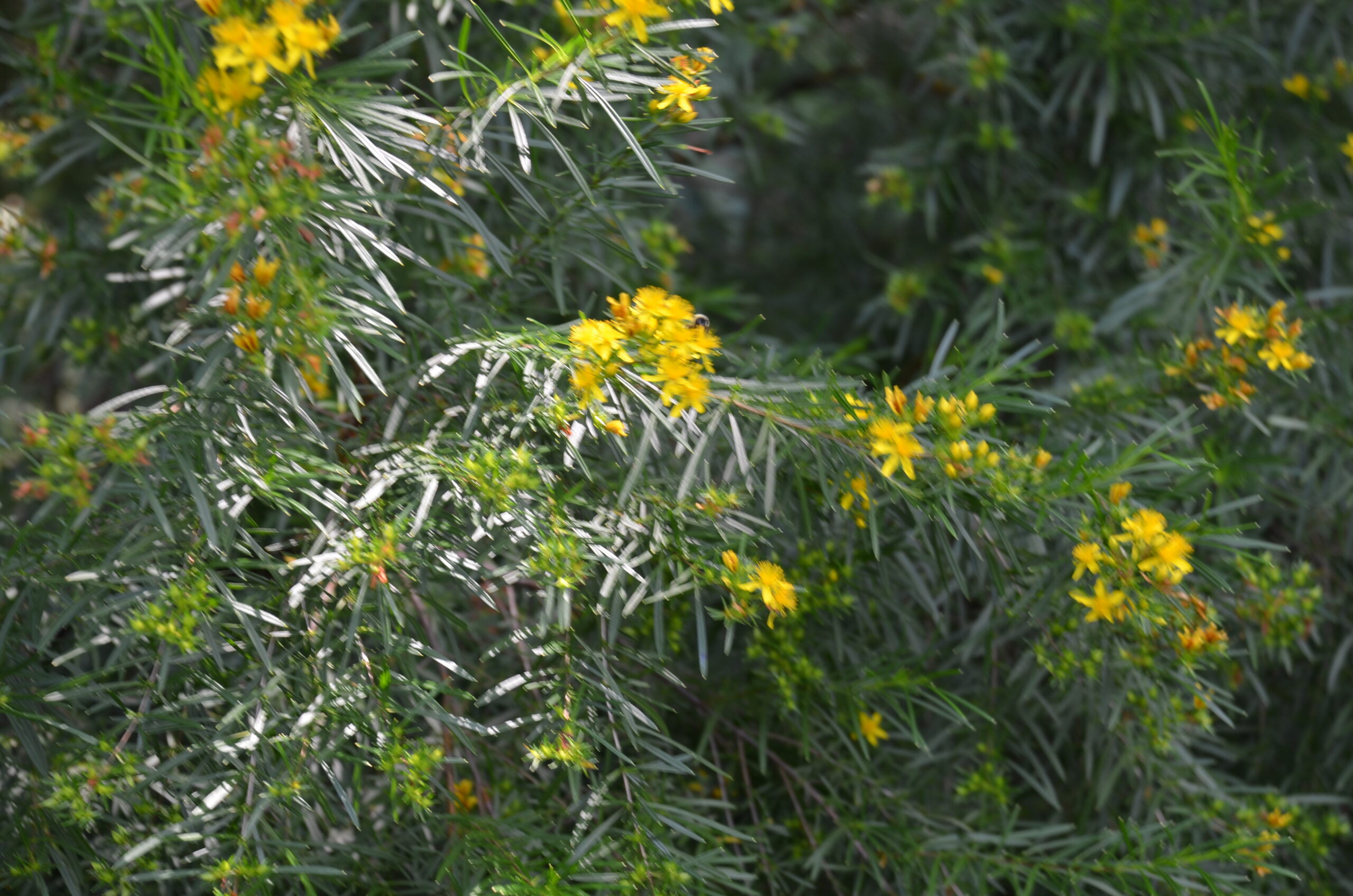
Bushy St. John’s Wort (H. densiflora) is a native shrub growing up to 7 feet tall / 3-5 feet wide. Leaves are 2–3-inch lance-shaped and green. This native species performs exceptionally well in moist acidic soils in moist and wet conditions in eastern USA and west to Texas. It excels in sopping sites including streams, ponds, and wet meadows. Clusters of yellow flowers attract butterflies in summer. (USDA zones 5-8).
Hypericums are generally untroubled by disease and insect problems when shrubs are properly sited. Pruning is minimal, primarily to hold the species to its place in the garden. Native species are difficult to find at local garden centers. Check out online native plant sellers.
 Posted in


