
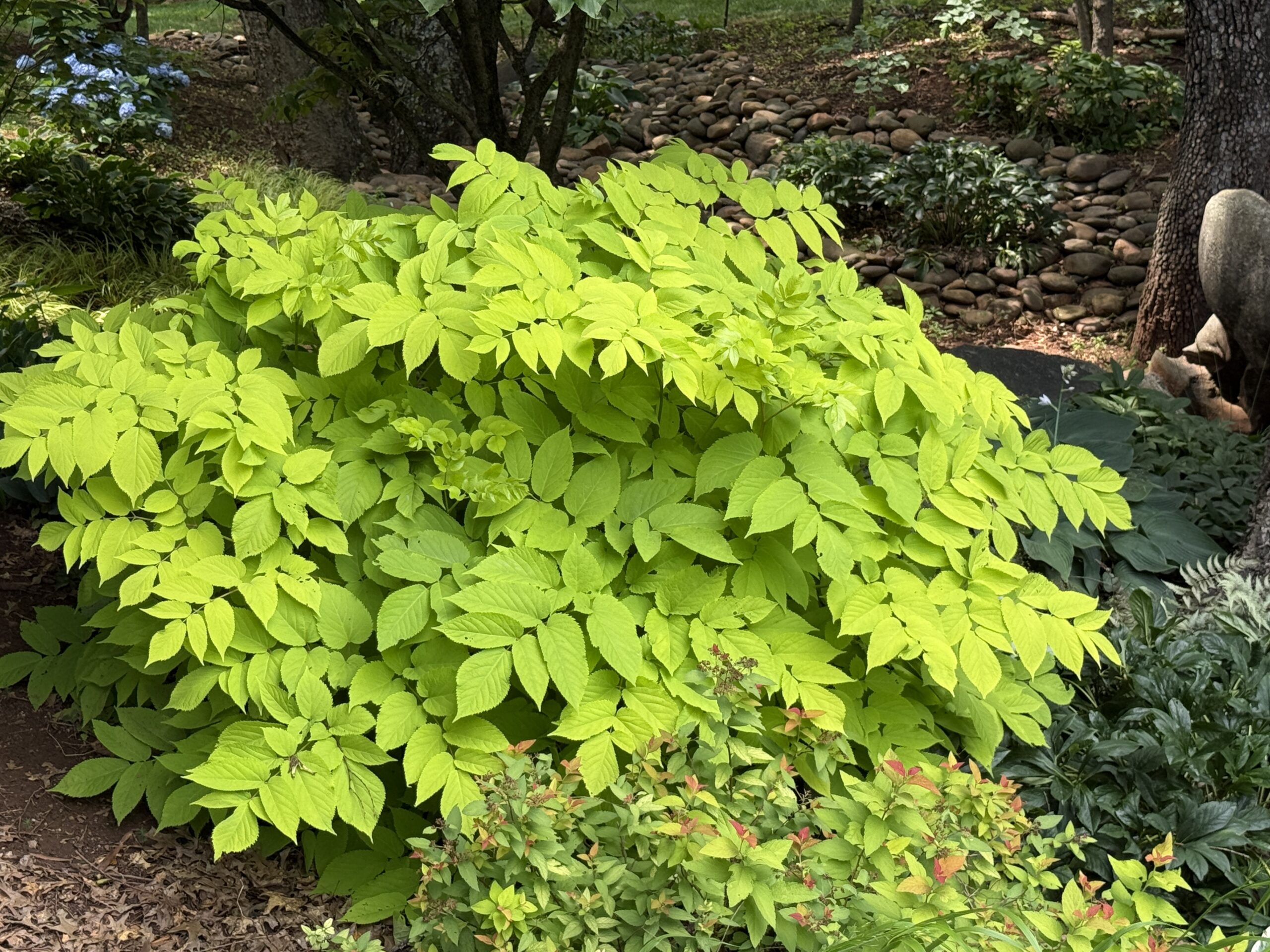
Plants with golden foliage can brighten up almost any drab garden patch. Sun King golden aralia (Aralia cordata ‘Sun King’), called Japanese spikenard and mountain asparagus, is no exception (USDA hardiness zones 3-9). Under ideal conditions this thornless, rhizomatous, herbaceous perennial starts out slowly to reach 3-5 feet tall and wide in its third summer.
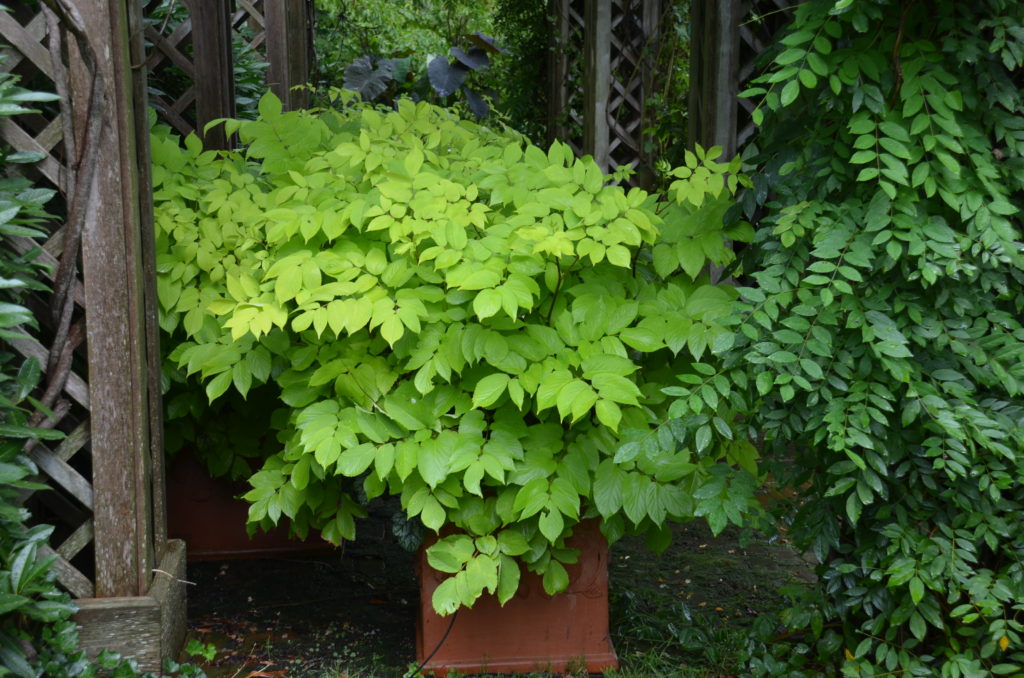
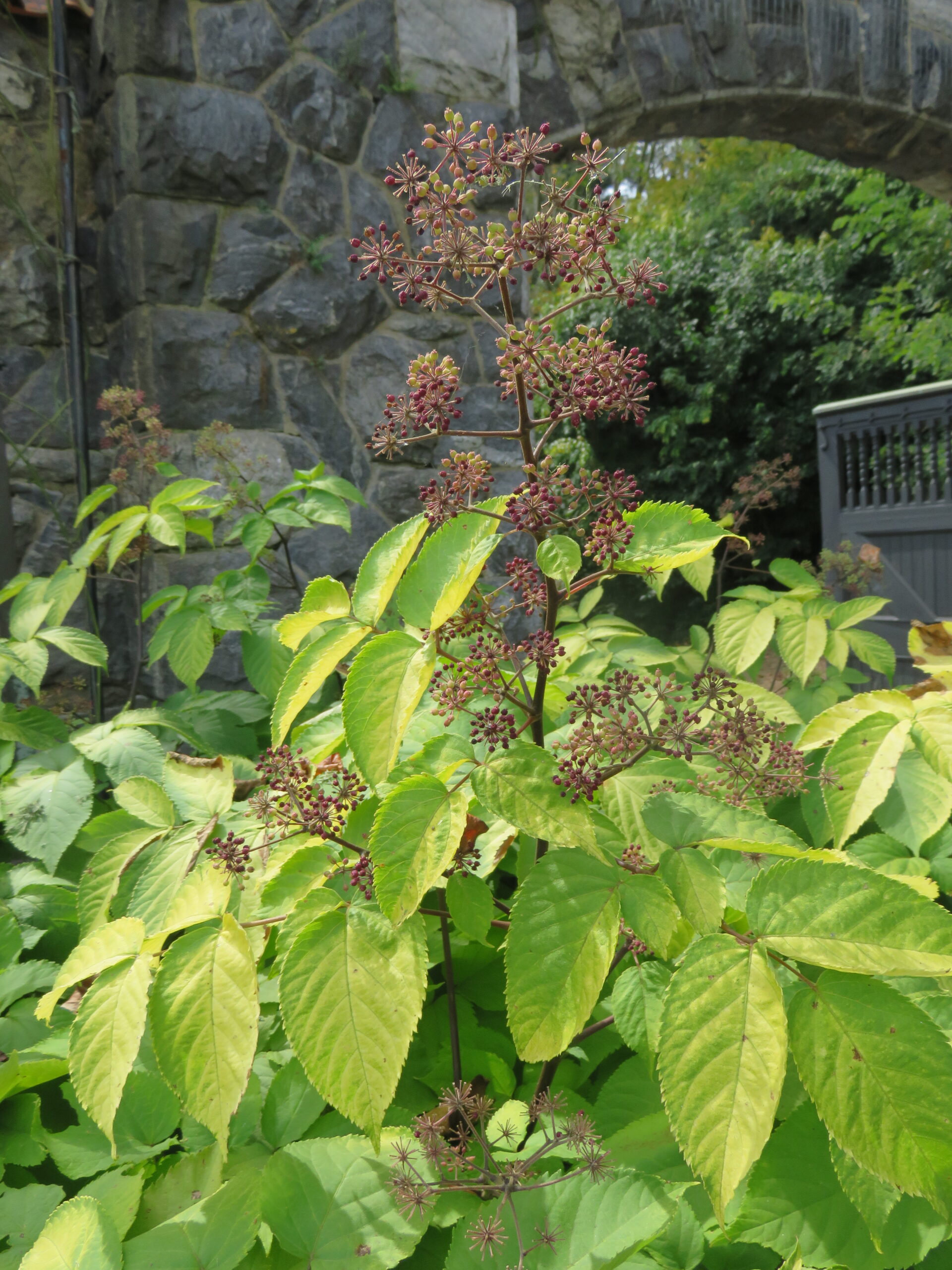
‘Sun King’ emerges in mid-spring with bright gold compound foliage (each leaflet to 6 inches long); foliage color slightly fades to chartreuse through the summer in moist humus-rich soil. Seasonal growth rate is slow at first and dies back to the ground in late autumn. In mid-summer numerous small clusters of tiny white flowers shoot up, borne on 2 feet tall racemes. Flowers add very little in ornamental value. After blooming, the tiny white flowers produce deep purple-black, inedible berries.
Sun King aralia makes a bold almost tropical statement in a semi-shade garden alongside variegated Solomon seals, hostas, brunneras, lungworts, bergenias, coral bells, and astilbes. It is a slow starter… The phrase “first year it sleeps, second year it creeps” fits Sun King to a tee. Grow it in a compost-rich moist soil and in ½-day sunlight (morning hours preferred).
Golden aralia creates an impressive focal point; group multiple plants for a dynamic show in large landscapes. It should be kept mulched. Irrigate to keep foliage lush during a dry spell. In USDA zones 8 and 9, grow only in dappled sunlight to avoid foliage burn.
Sun King aralia mixes well in large containers planted with green and other brightly colored foliage plants. Golden aralia is deer resistant, and the tiny white flowers attract numerous honeybees.
A native of Japan, Korea, and China, ‘Sun King’ aralia was introduced into the U.S. by Barry Yinger. Sun King was designated the Perennial Plant of The Year in 2020.
Caution: Birds love the tiny berries, which are NOT edible for humans.
 Posted in


