
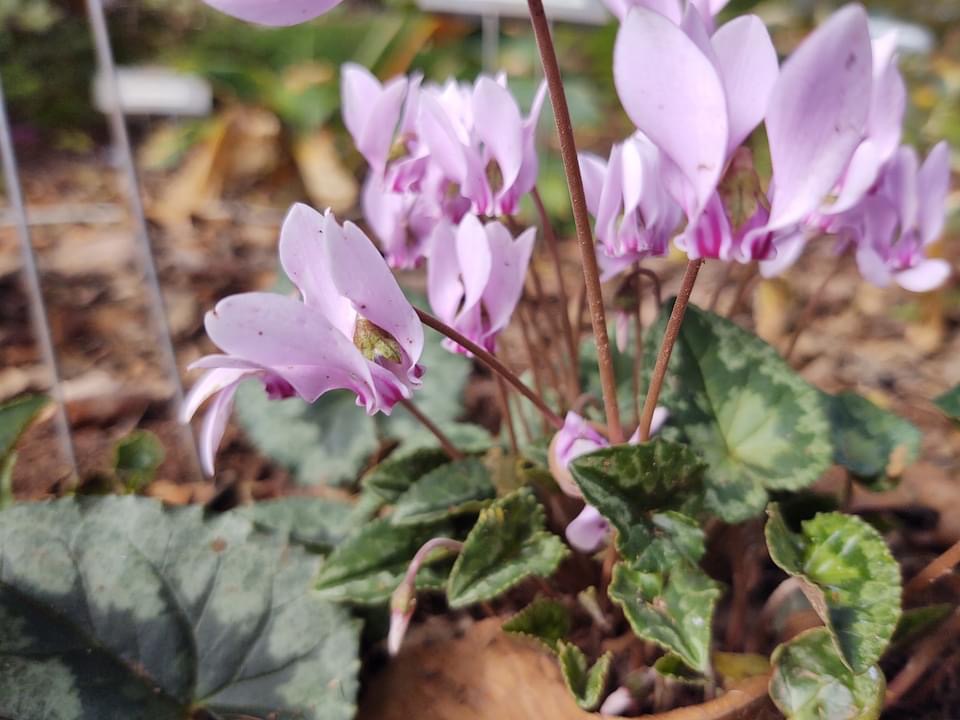
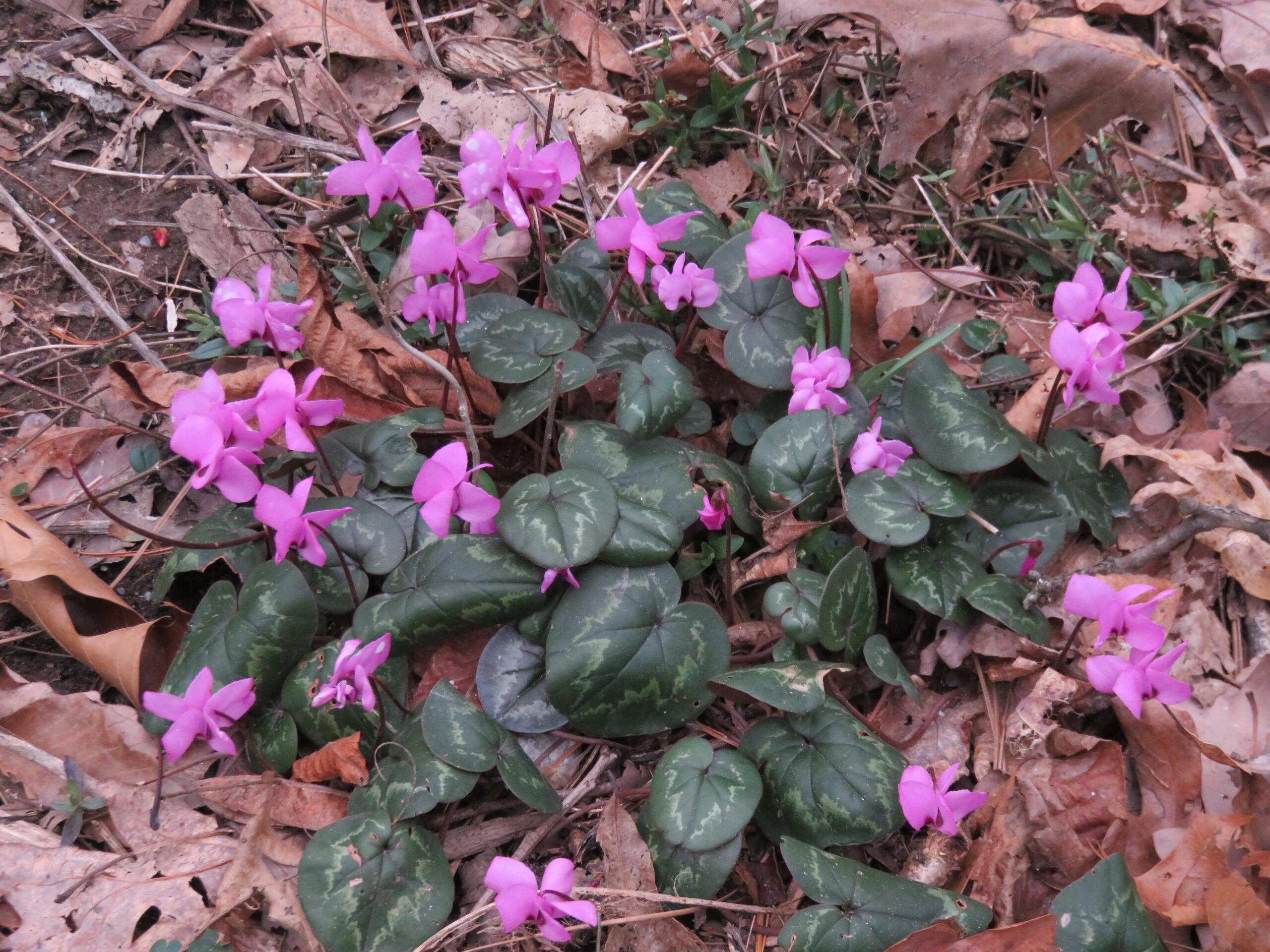
Hardy cyclamens are tuberous perennial that bloom according to species. They are native to Europe, around the Mediterranean region and parts of Asia and Africa. Two popular hardy species in U.S. gardens are spring-blooming Cyclamen coum and fall-flowering ivy-leaf Cyclamen hederifolium. Leaves remain evergreen through much of the winter season. Non-hardy florist cyclamens (C. persicum) are available at florist shoppes in floral shades of whites, pinks, and magentas along with beautiful mint green and silver mottled foliage.
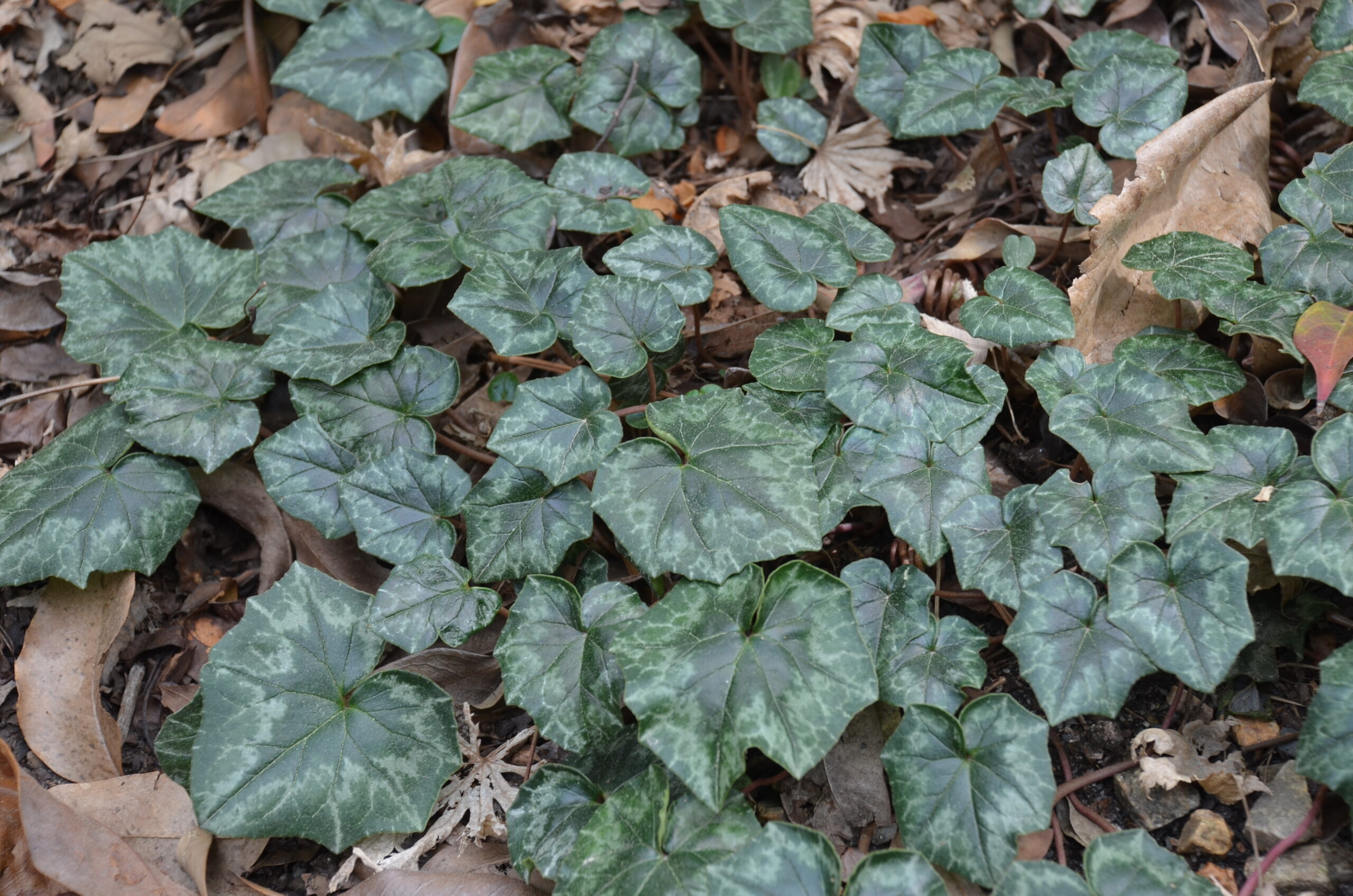
C. coum emerge from summer dormancy in October thru March and reenter dormancy in mid-spring as outdoor temps warm up. Leaves are round- to heart-shaped, with smooth or slightly toothed margins, from plain green through varying degrees of patterning in grey or silver to all over silver, underside purplish. At least a dozen more species are hardy in zones 7-9. C. hederifolium is dormant during the hot dry summers and fridge cold winters. Long-lived cyclamen often provides years of reliable color and interest with their handsome foliage.
Hardy cyclamens prefer part to dappled shade and do not cope with sunny locales. Instead, plants are best at home under the dappled shade of large shrubs or trees. Plants colonize in humus-rich, well-drained soil. They’re actually a good choice for dry shade. and will fail in daily summer irrigation.
Site selection is very important. Choose a spot in part to full shade, with dappled sunlight okay. Hardy cyclamens grow from small, roundish, flattened tubers, which should be planted shallow (about an inch deep) in late summer into fall. Again, summer dormancy should be dry. Fertilizing cyclamen is unnecessary. Apply fine compost and organic mulches at planting time and annually in late spring to improve soil texture and bed appearance.
After blooming, cyclamen plants self-sow their tiny seeds forming new tubers; tubers also grow in size through the years. Mark the spot where you’ve planted them so not to disturb them when they go dormant each summer. Keep the area weed-free where the cyclamen are planted. Divide tubers during the summer dormancy period. Every 4-5 years, lift each tuber, divide with a clean sharp knife, and replant.
Hardy cyclamens are rarely troubled by disease and insect pests. Squirrels and rodents may dig up tubers and may require DIY wire cages for protection. Keep house pets away from cyclamen.
Hardy cyclamen may be ordering through the summer into early fall from online bulb nurseries which ship in late September and early October. Plants are also available potted up in late winter and early spring from nurseries and gardening shows. They’re rarely sold at garden shoppes.
 Posted in


