
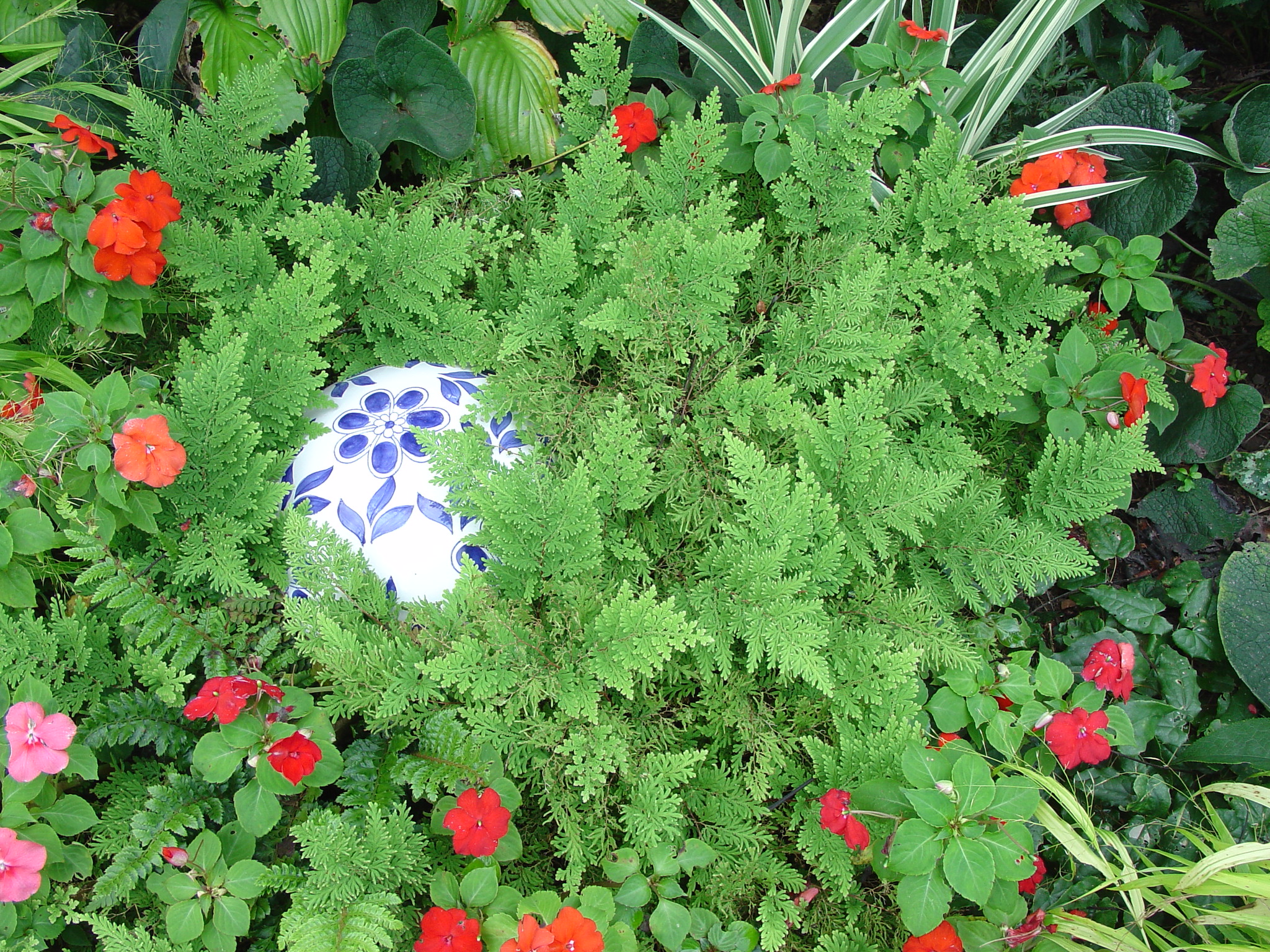
Arborvitae Fern (Selaginella braunii) is not a true fern, but it produces spores. This ancient plant is called a club moss and spikemoss. A diverse group of over 700 species, spikemoss is native to China. Its thick lacy fern-like foliage resembles Arborvitae or Cedar. Spikemoss (S. braunii) is a hardy landscape selection that forms a low-growing matting groundcover that shades out competing weeds. (USDA hardiness zones 6-9)
Spikemoss is a wonderful addition to a partial to full shade garden. Set in a well-drained, humus-rich soil. Established plantings demonstrate exceptional summer drought tolerance. While shady moist spots are ideal, this lacy ground cover does not tolerate standing water for long periods.
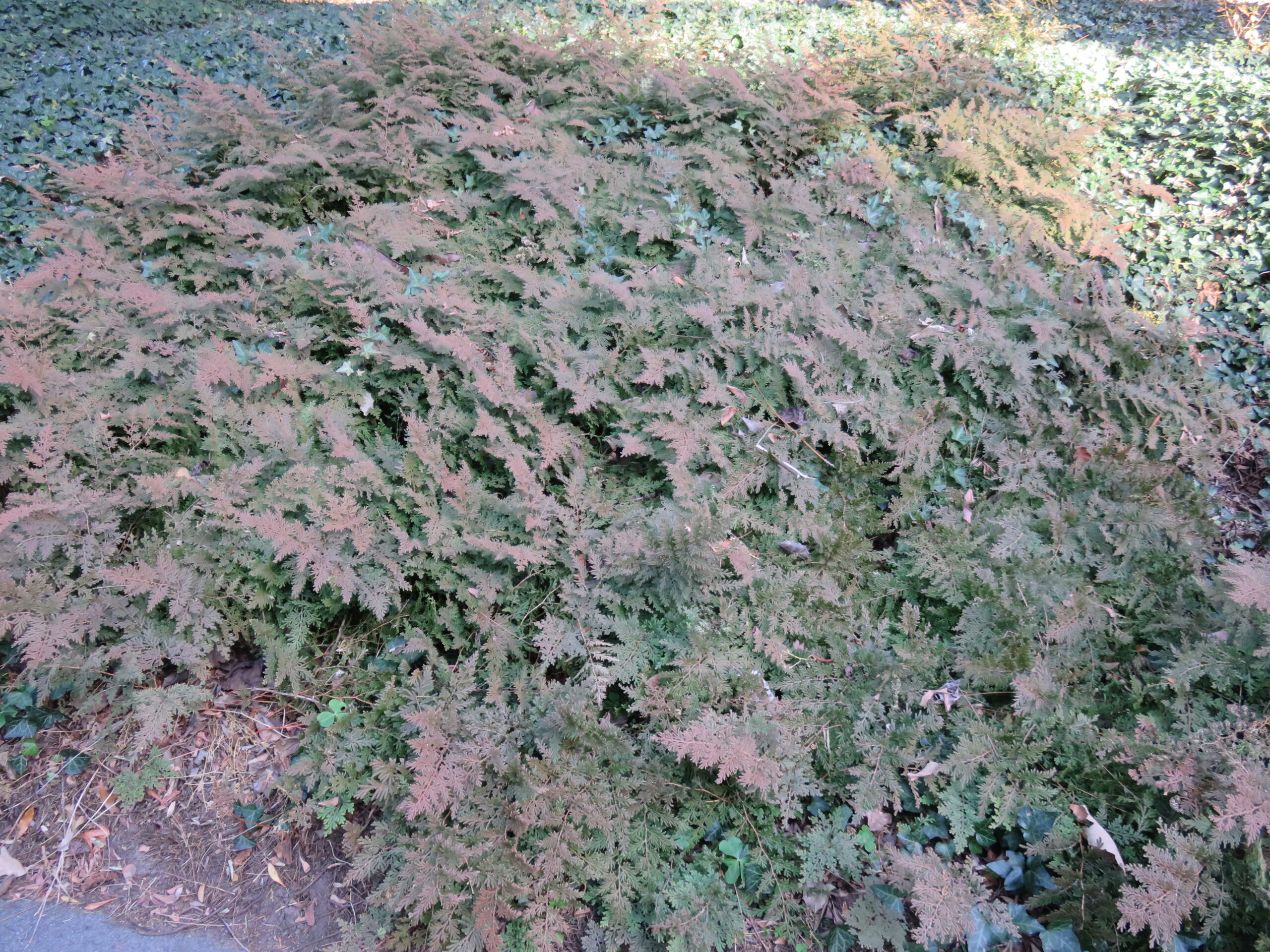
This carefree plant also looks great forming a mat around taller plants in containers and hanging baskets. Spikemoss wants excellent drainage when grown in containers. Clumps can be divided any time of year.
Over several years arborvitae fern will develop a dense ground cover that competes against most other vegetation. Fronds take on a coppery appearance once cool temps arrive in the fall.
Native to variable climates from tropical to dry and from sun to shade. Several perennial species are hardy in Tennessee and North Carolina areas (Zones 6-7). Selaginella plants are great as groundcovers around hosta, Solomon’s Seal, and other bold-foliaged perennials.
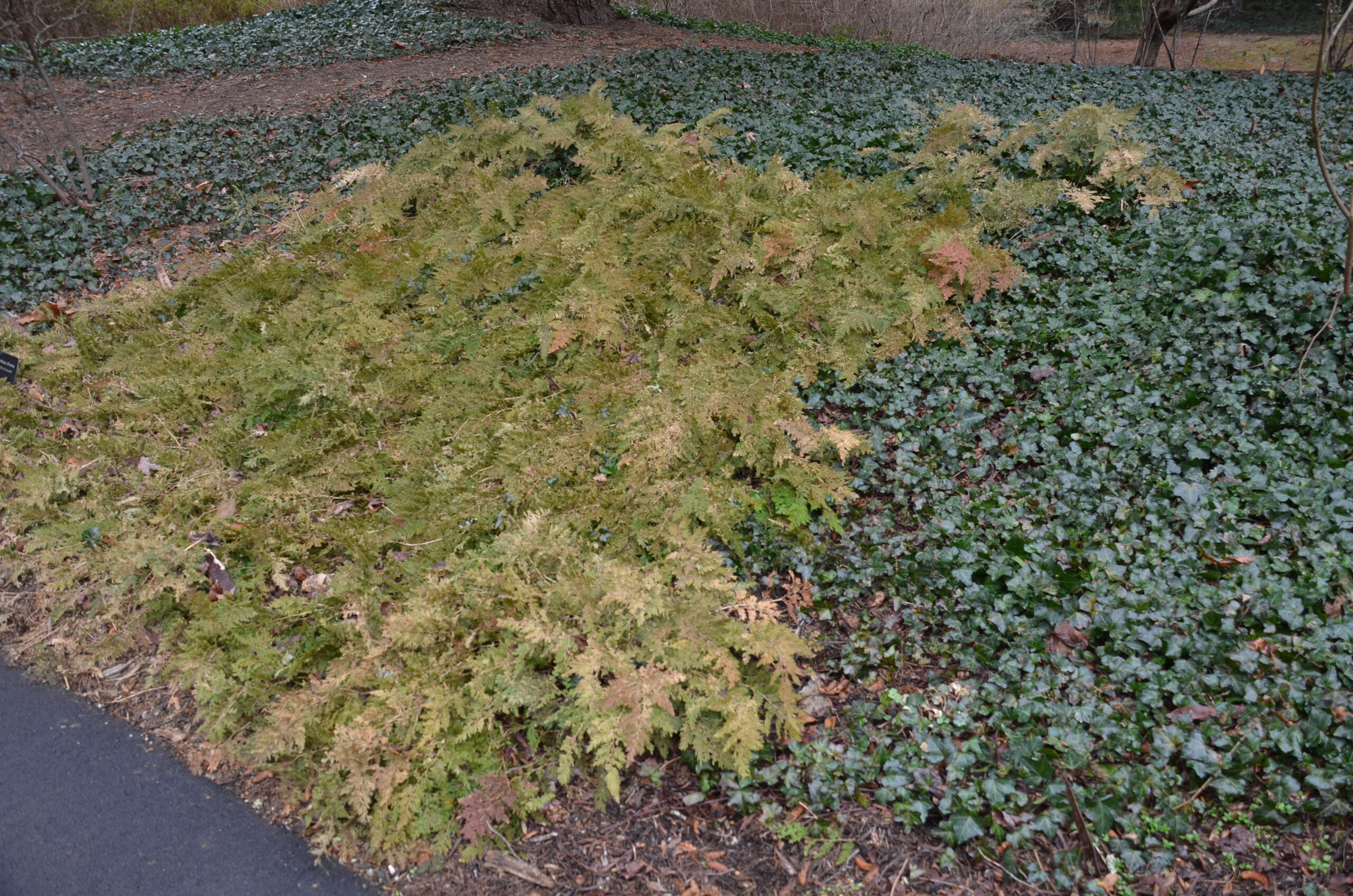
Spikemoss foliage is soft to the touch and low growing…a great groundcover filler for a woodland garden, pathway or shade container. Other species of Selaginellas thrive in terrariums and are fabulous companions to shade loving container plants.
Some Selaginella species are very drought-tolerant while others prefer marshy ground. This drought tolerant species may even turn brown and curl up during a drought but will rehydrate with no problems once rain finally arrives.
 Posted in


