
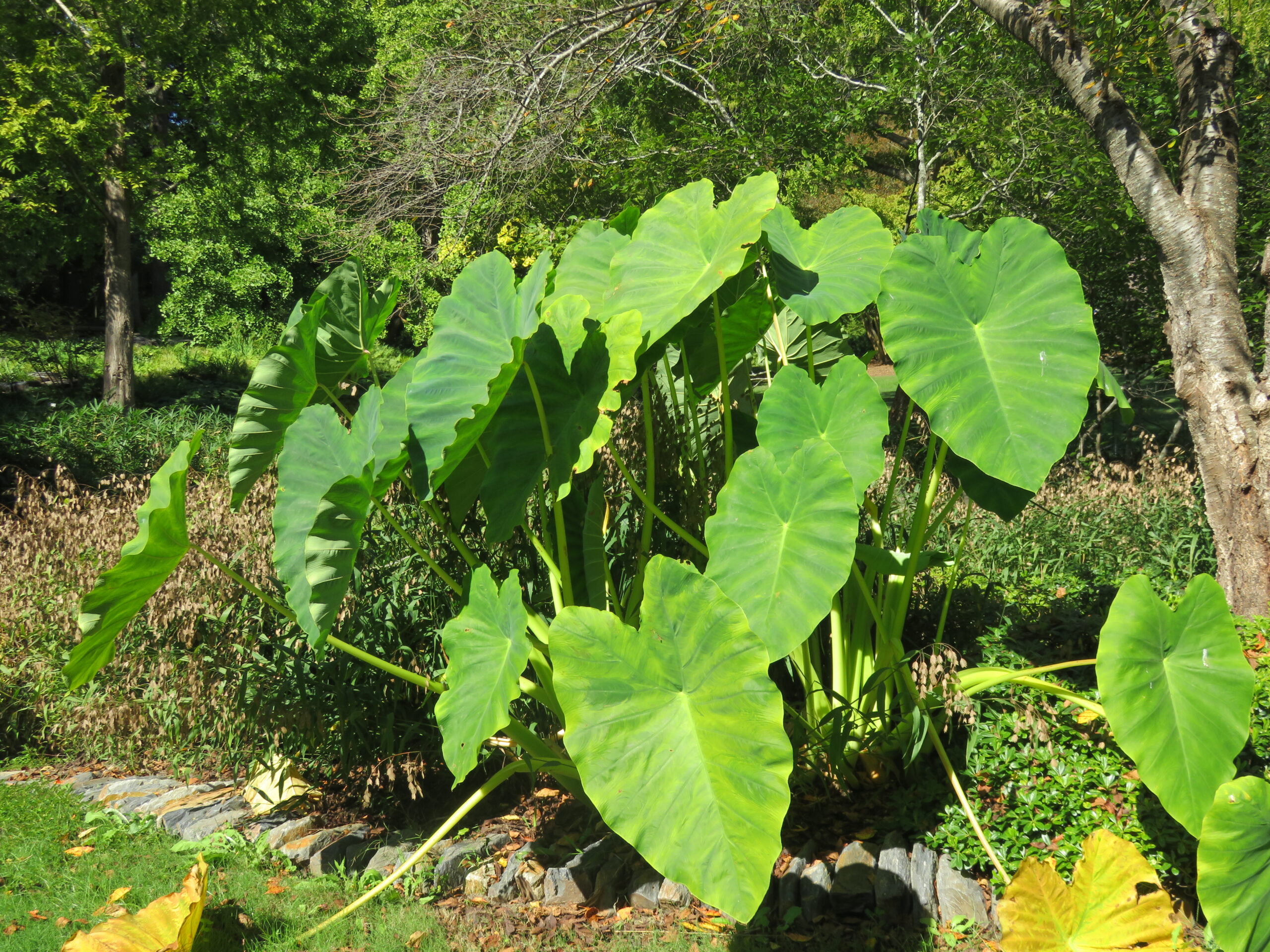
Elephant ears (Colocasia) and close botanical cousin (Alocasia) is also called ornamental taro. Plants take off and grow rapidly after spring planting, once all threats of spring freeze injury have passed. In moderate zones 6-7-like climates, elephant ears are special garden tropicals are stunningly beautiful over 7 months before declining for its long winter dormancy.
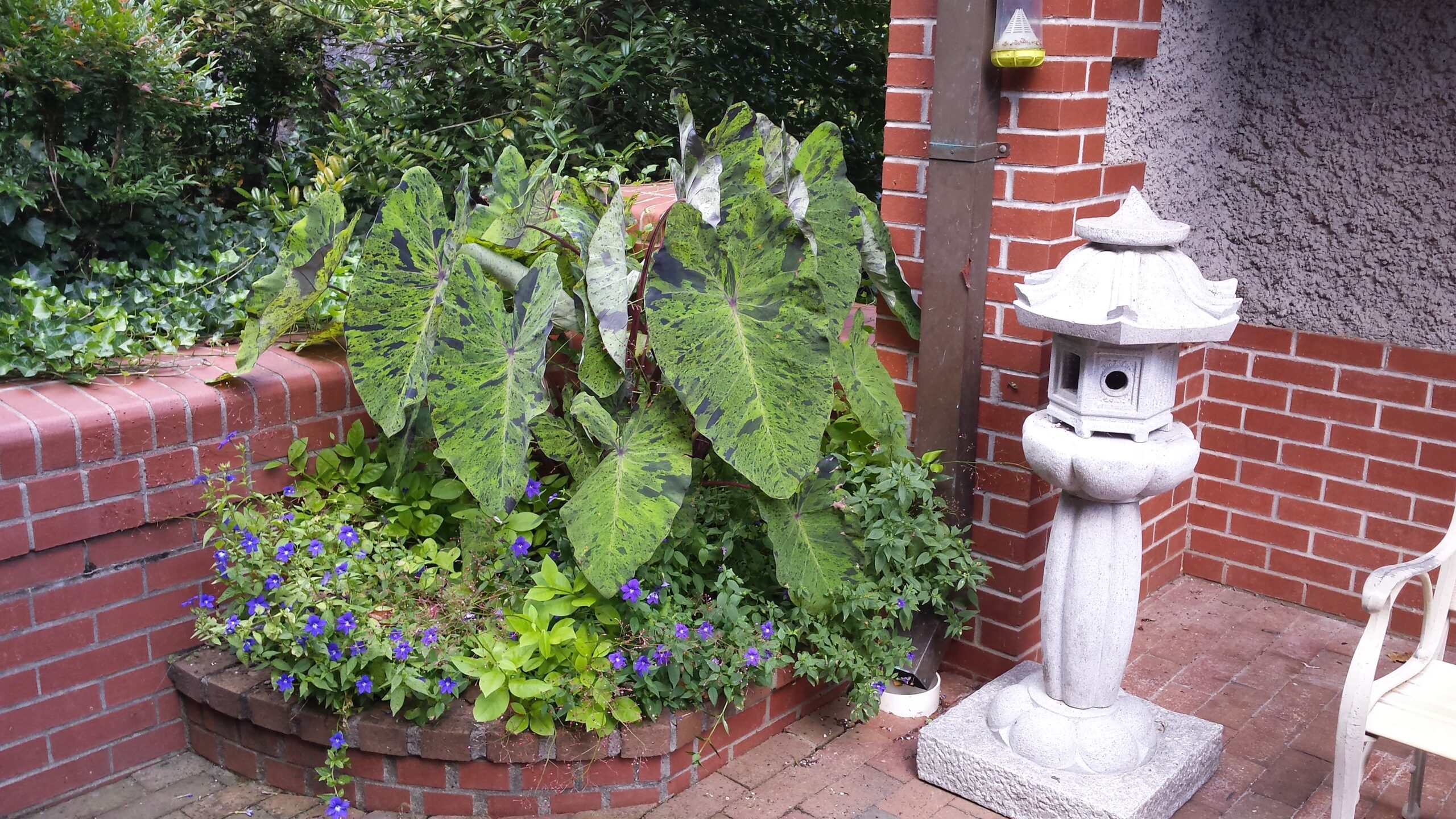
In smaller city gardens grow the mini-colocasia varieties such as ‘Black Magic (black matte finish), ‘Mojito’ (dark green /dark mottled patches), and ‘Tea Cups’ (cupped leaves that fill and spill water during rains).
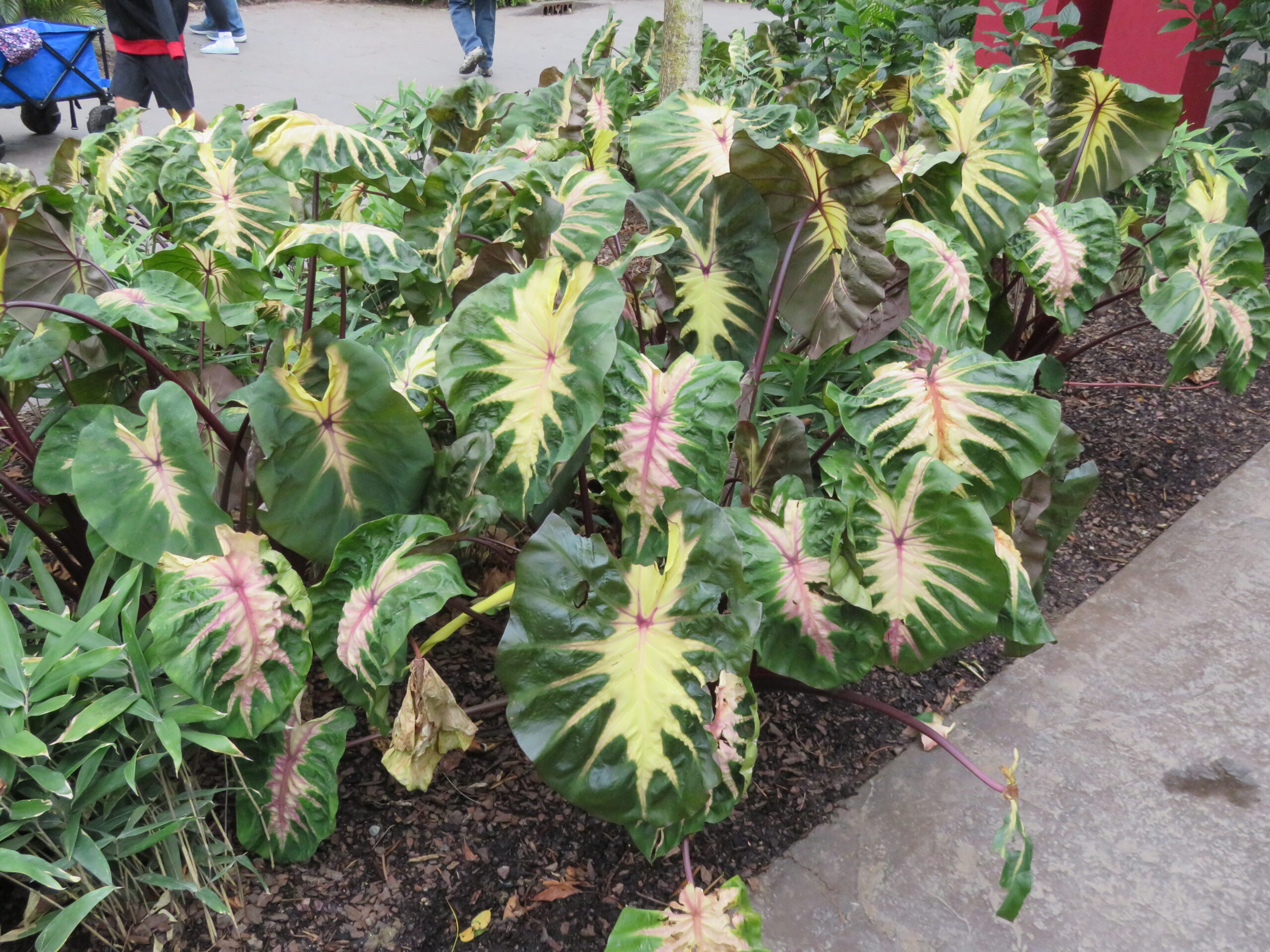
Larger varieties that demand larger spaces, choose Colocasia ‘Diamond Head’, ‘Pharoah’s Mask’, ‘Redemption’, and ‘Kona Coffee’ for their striking leaf artistry and Colocasia ‘White Lava’ and ‘Maui Gold’ with cheery chartreuse-gold color hues. C. gigantea ‘Thailand Giant’ is an enormous green plant that boasts thick 2-4-foot-long leaves.
Colocasia is a tender perennial that cannot survive winter months outside of zones 7b- 10. Either utilize this tropical plant as an annual or dig up the corm after the first frost in autumn and overwinter it in a cool dry area (submerged in dry wood shavings or peat) where winter temps do not fall below 40°F. The tuber is replanted back into the garden in late April. An easy alternative method is to treat Colocasia as a container plant and move the pot into an unheated garage (@ 40°F) over winter.
Elephant ears grow best in partial shade to partial sun and lots of soil moisture. Full sun exposure, especially in warm areas, may damage plants. They grow rapidly during the warmest days of summer. Feed plants with a slow-release fertilizer like Osmocote™ or a water-soluble fertilizer like Miracle-Grow™ or Peters™. Don’t forget to irrigate, but never to the point of flooding. Plants prefer soils that drains well and don’t stay soggy.
Elephant ears, particularly the small forms, can be grown in garden beds and in containers. Sources to buy them include independent garden centers, mail order, nurseries, and rarely at box stores.
In areas with moderate winter climes (zones 6b – 7a), move elephant ears and several other tender tropicals indoors in the fall. Store in a cool spot around 40°F until spring. Repot into a fresh compost-rich potting media, trim back roots, old foliage, and petioles. When the threat of spring frost has passed, move elephant ears back to the garden.
Warning: Avoid eating taro root raw. It may cause mild stomach upset if not cooked before eating. In contrast, all vegetative parts of Alocasia are highly poisonous. Keep the plant away from children and pets. Yes, taro is a major food crop for both people and farm animals, high in protein. The plant is traditionally served at Hawaiian luaus, and the corms form the basis for poi, a favorite Hawaiian dish.
 Posted in


