
Snake plants (Dracaena trifasciata) are one of the most popular houseplants and for good reason. It is incredibly drought-tolerant, able to go for weeks without water, and in low and medium lighting conditions. A majority of species are native to Western and Southern Africa and the Asian subcontinent.
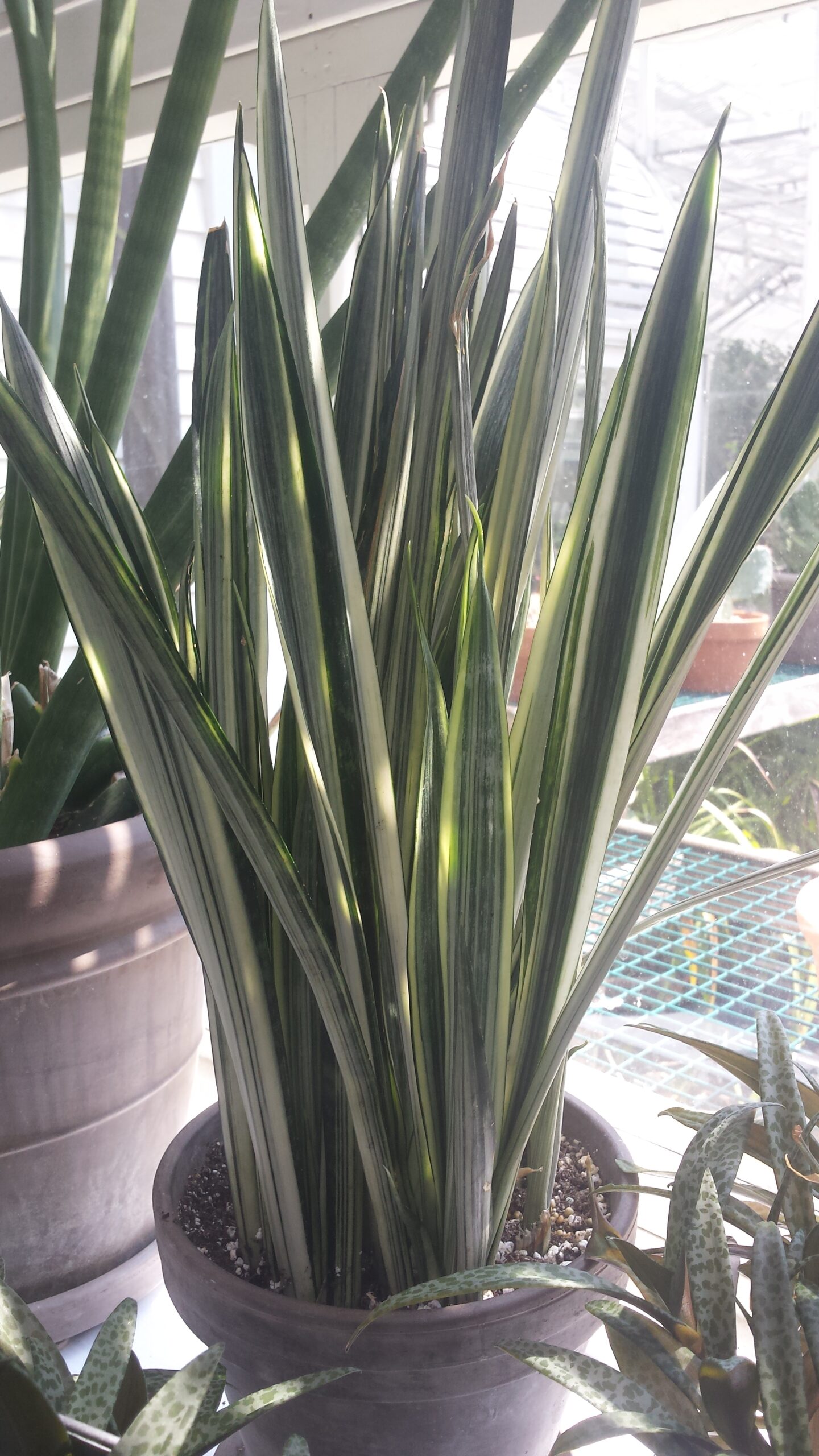
They are known under a number of names, including mother-in-law plant, mother-in-law’s tongue, and Sansevieria. Depending on variety, plants grow 2-5 feet tall. They tolerate low light (ideal for growing in office buildings) but will thrive in bright light, once acclimated, and send up new leaves and develop stronger variegation.
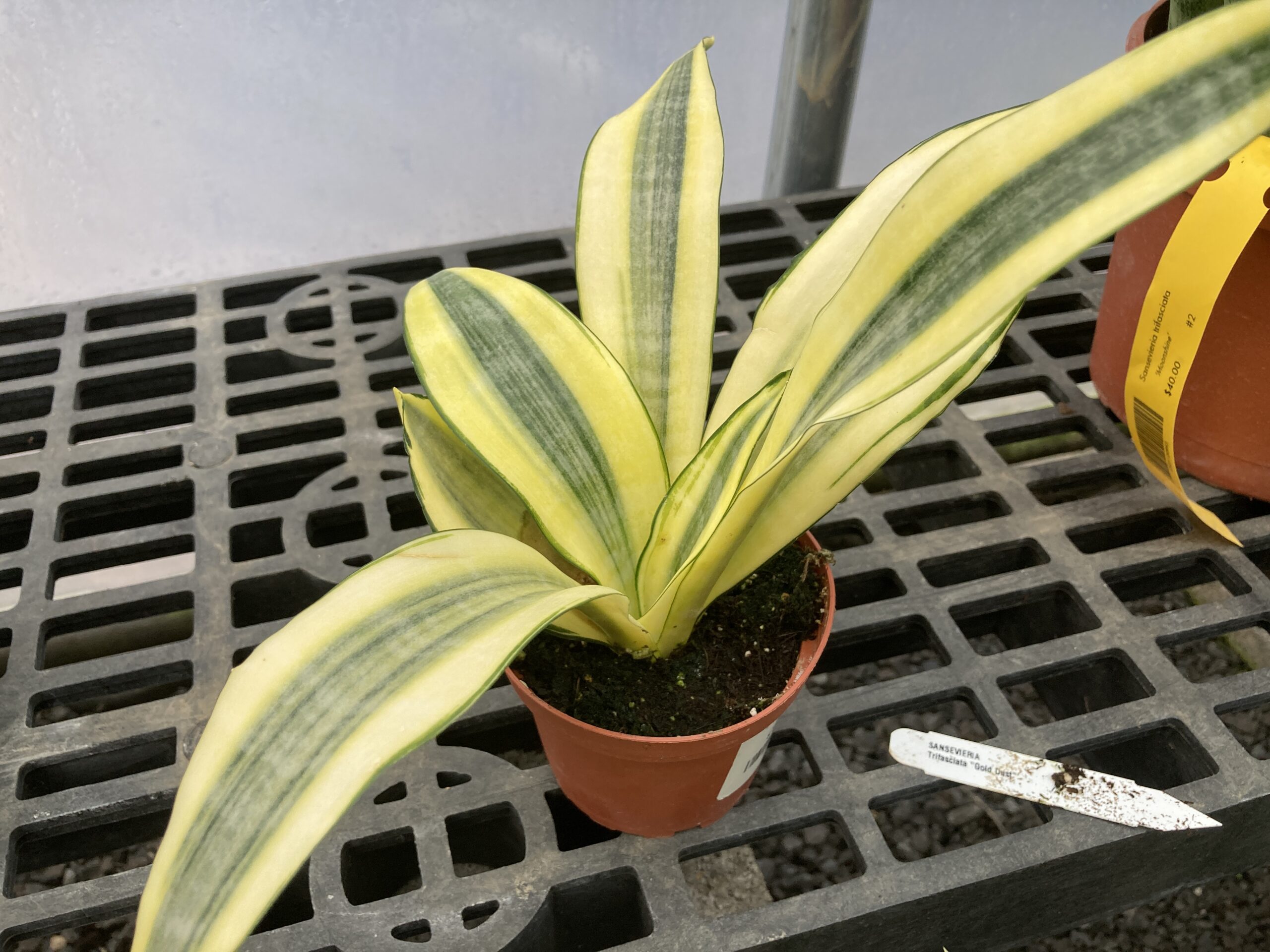
Snake plants are available in dozens of varieties and cultivars, with stiff sword-like leaves that are colored in bands of green, yellow, and cream. Sansevieria (the former genus) is a hard to kill house plant. That means it need very little attention. If you are an intense house plant enthusiast, sansevierias may be a plant to avoid.
Grow them as you would a succulent plant. Soil should have porous drainage mix containing peat/perlite/aggregate sand. Snake plants prefer a loose, well-drained potting soil mix. They do well in sandier soil which makes all-purpose cactus potting soil a good choice. Feed your snake plant monthly in spring thru fall with a water-soluble fertilizer such as Miracle-Gro™ or Peters™ diluted to half strength. Do not fertilize in winter.
Snake plants grow best with 8 – 10 hours of indirect sunlight or a few hours of early-morning direct sunlight. Too much direct sun causes may damage the leaves. Snake plants tolerate some shade, but lack of light will eventually stunt growth and dilute foliage color.
Water your snake plant when the soil has completely dried out, being sure to water deeply every 10-14 days. If leaves are brittle and dry, water immediately. Overwatering is the quickest way to kill a snake plant. Too much water or letting the plant sit in water will rot its root system. Yellowing leaves are an early sign of overwatering.
Snake plants grow best in warm temperatures between 70 °F and 90 °F. Keep plants away from cold drafty windows. They won’t tolerate frost, and prolonged exposure to less than 50 °F can kill the plant. They’ll do fine with average household humidity between 30-50%.
Set snake plants in bright, indirect light. Almost any window in your home is okay. Generally, water plants when the surface pot soil looks dry or every 7-21 days. Wilting leaves or leaf death is a symptom of overwatering and/or insufficient light.
Snake plants are easy to propagate by cuttings or by division. Prune snake plants during the growing season to encourage new growth. Remove tall leaves and damaged unattractive leaves at any time with an x-acto knife.
Repot your plant(s) every 3-5 years, usually at the start of spring. It may be getting unstable (tipsy). Wide, shallow pots with plenty of drainage holes are the best. Repotting is best performed in spring.
Snake plants can be grown outdoors in spring and summer as long as outdoor temps hold reliably above 50 °F. Bring plant(s) indoors back in autumn. Snake plants occasionally may bloom. Their creamy white, tubular-shaped flowers are fragrant.
Dust the leaves every few weeks and inspect for insects and rotting decaying leaves. Snake plants are susceptible to these houseplant pests—scale, spider mites, mealybugs and whiteflies. Wipe the plant with a swab or soft paper towel dabbed in a 50:50 solution of 70% isopropyl rubbing alcohol and water. An alternative approach is to treat pest infestations with Neem Oil.

Some Snake Plant Varieties:
- D. trifasciata ‘Hahnii’ (bird’s nest snake plant) grows 6 inches high with rosette form composed of densely packed leaves.
- D. angolensi, called “African Spear”, is cylindrical snake plant has round, stiff leaves several feet long. arching outward from a central crown.
- D. trifasciata ‘Laurentii’ is a variegated cultivar with creamy yellow leaf margins and grows 15-18 inches tall.
- D. trifasciata ‘Bantel’s Sensation’ grows 3-feet tall bearing narrow leaves with white vertical stripes.
 Posted in


