
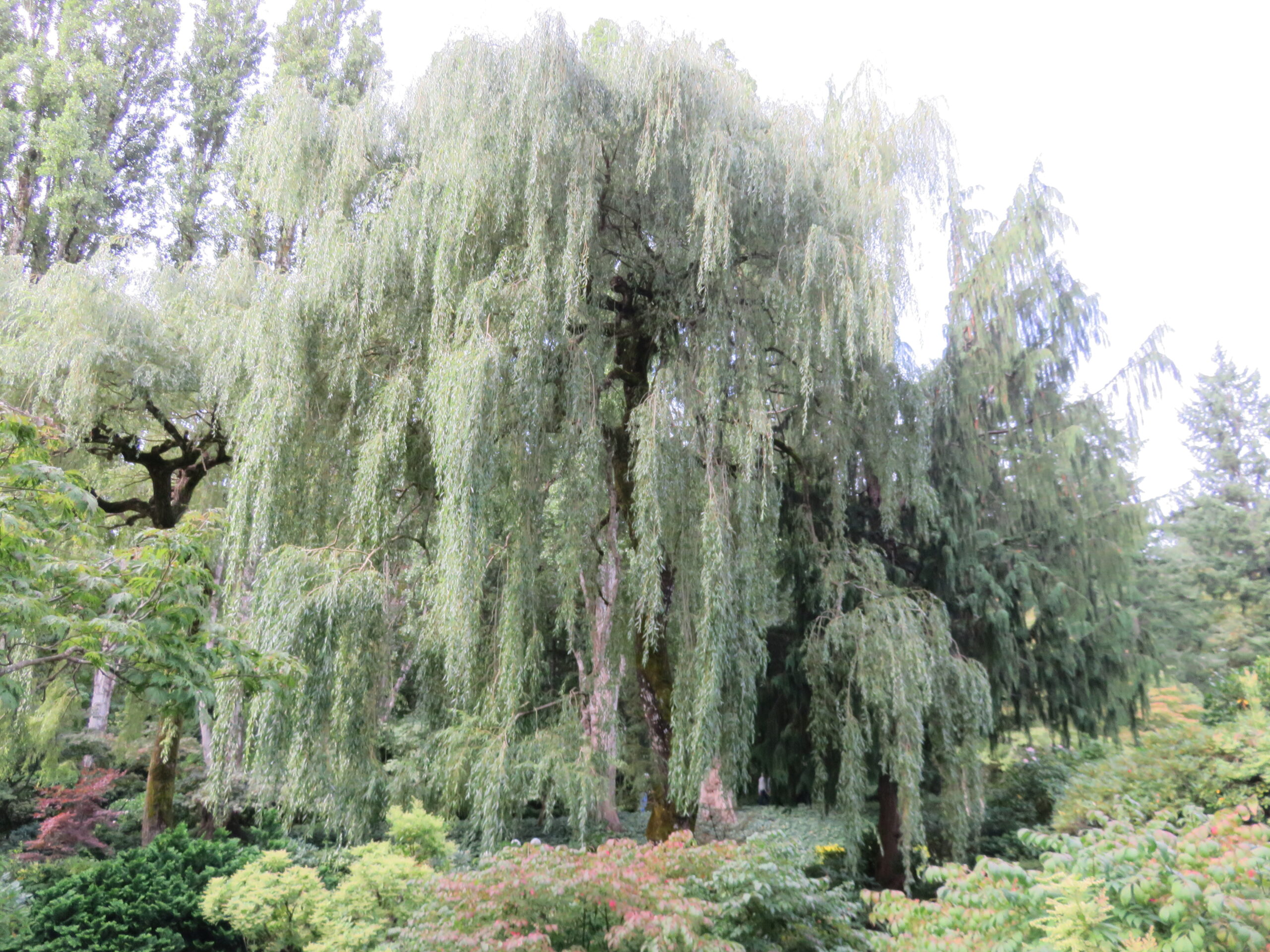
Invite landscape trees to your property that will be long-lived, seasonally beautiful, and low maintenance. Gardeners are looking for all kinds of plants that invite pollinators and songbirds to their property. We also wish to avoid critter proof and invasive plants. Below is a list of notoriously bad tree choices in most urban yards and streets.
What is a bad tree? Does not fit size-wise on the property, exceptionally weedy, disease and pest prone, drops lots of leaf and branch litter multiple times annually, susceptible to storm damage/ limb breakage, classified as invasive in your state , and high maintenance.

- Silver Maple (Acer saccharinum) (native) is a large tree that is weak wooded and susceptible to limb breakage; native maples like sugar and red maples rated as better choices.
- Cottonwood (Populus deltoides) is a large, fast-growing tree native to eastern and Midwestern U.S.; grow to enormous sizes, branches are weak-wooded and susceptible to storm or wind damage; roots penetrate home foundations and sewer/septic lines.
- Weeping Willow (Salix spp.) is not recommended due to littering, limb breakage, and disease and insect problems. Its invasive roots can also damage the water or sewage lines.
- Black Walnut (Juglans nigra) produces a deadly substance called “juglone” in its leaves, stems and roots which inhibits plant growth beneath the tree’s dripline; juglone sensitive plants include azaleas, peonies, and some garden fruits and vegetables, such as tomatoes, apples, and blueberries; also susceptible to numerous diseases and pests.
- Ash (Fraxinus spp.) (native) are susceptible to Emerald Ash Borer (EAB); susceptible native species to EAB, include Green Ash (F. pennsylvanica), White Ash (F. americana), and Blue Ash (F. quadrangulata). So far, no cure has been found.
- Quaking Aspen (Populus tremuloides) is a Midwest native tree that spreads via root-suckering that spreads to become very weedy.
- Callery Pear (Pyrus calleryana), aka Bradford pear, is a pyramidal branched mid-sized spring flowering tree; branches break apart during storms or strong winds; rated as an invasive species.
- Siberian Elm (Ulmus pumila) is a non-native fast-growing 50-70 feet tall tree that is weak-wooded and messy; susceptible to several insects including leaf beetles; prolific weedy seed producer; borderline invasive in parts of U.S.
- Tree of Heaven (Ailanthus altissima) is a non-native highly invasive fast growing large tree; host plant for the invasive spotted lanternfly.
- Lombardy Poplar (Populus nigra) is non-native, fast-growing, short-lived tree with a distinctively narrow form; female trees are messy, distributing huge amounts of cottony seed requiring some clean-ups; leaves and twigs fall in any season; shallow roots produce invasive suckers that invade other areas of the landscape.
- Staghorn Sumac (Rhus typhina) is a U.S. native that self-seeds and spreads aggressively via root suckers.
- White Mulberry (Morus alba) (non-native) produces edible fruits are relished by birds that drop seeds that stain concrete walkways, patios, and cars; also tree rated as weedy.
- Red mulberry (Morus rubra) (native) produces messy fruits that stain pavements, automobiles, decks, and patios; seed drop becomes a weedy mess.
- Mimosa tree (Albizia julibrissin) (non-native) develops weak branching prone to breakage. This weedy tree produces lots of seeds. Foliage is also susceptible to webworms.

 Posted in


