
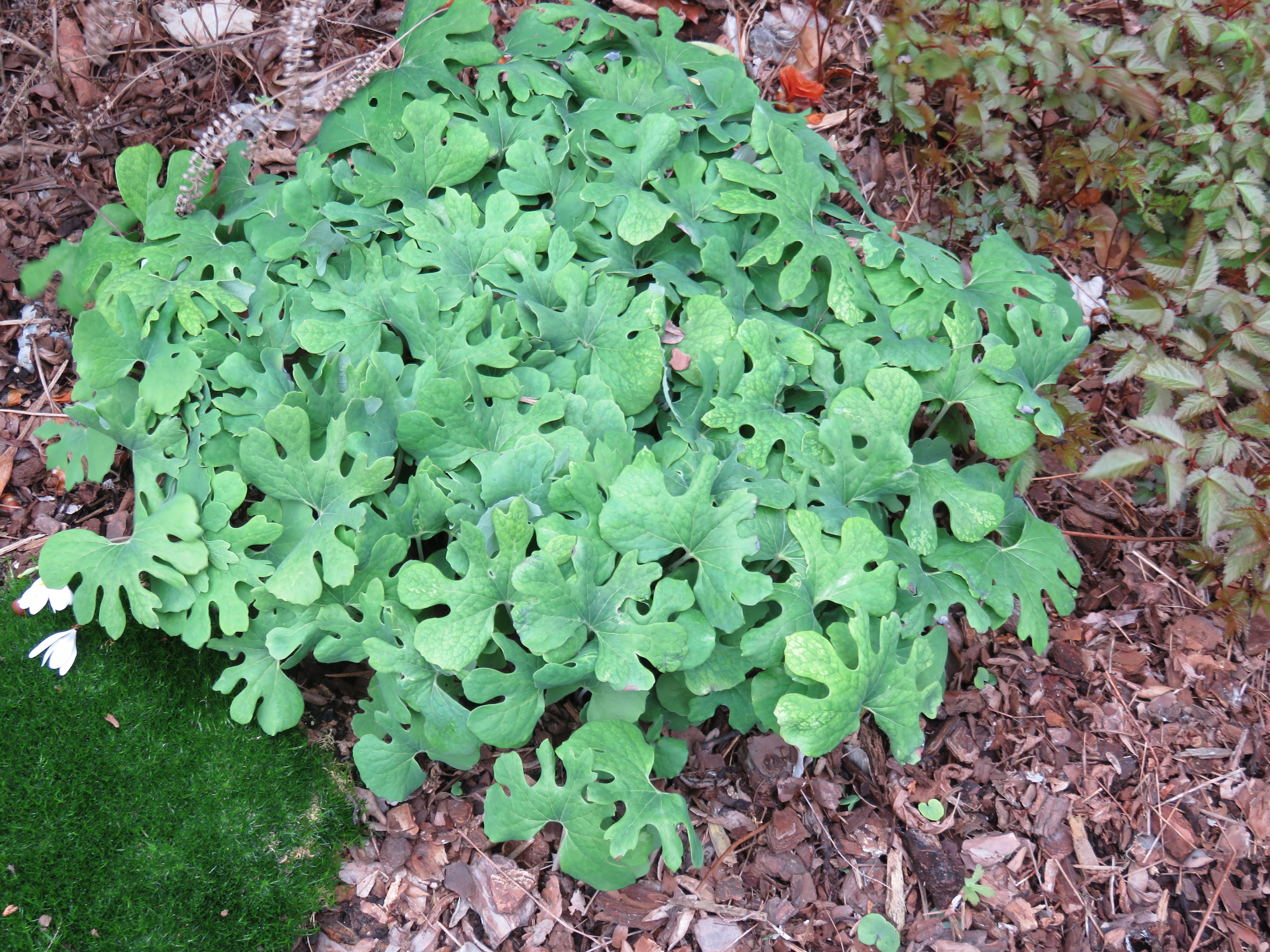
Bloodroot (Sanguinaria canadensis) is a member of the poppy family Papaveraceae. This botanical family includes about 825 species, including bleeding hearts (Dicentra spp. and Lamprocapnos spectabilis), Corydalis, and opium poppy (Papaver). Bloodroot is native to the eastern half of North America continent from Canada south to Florida.
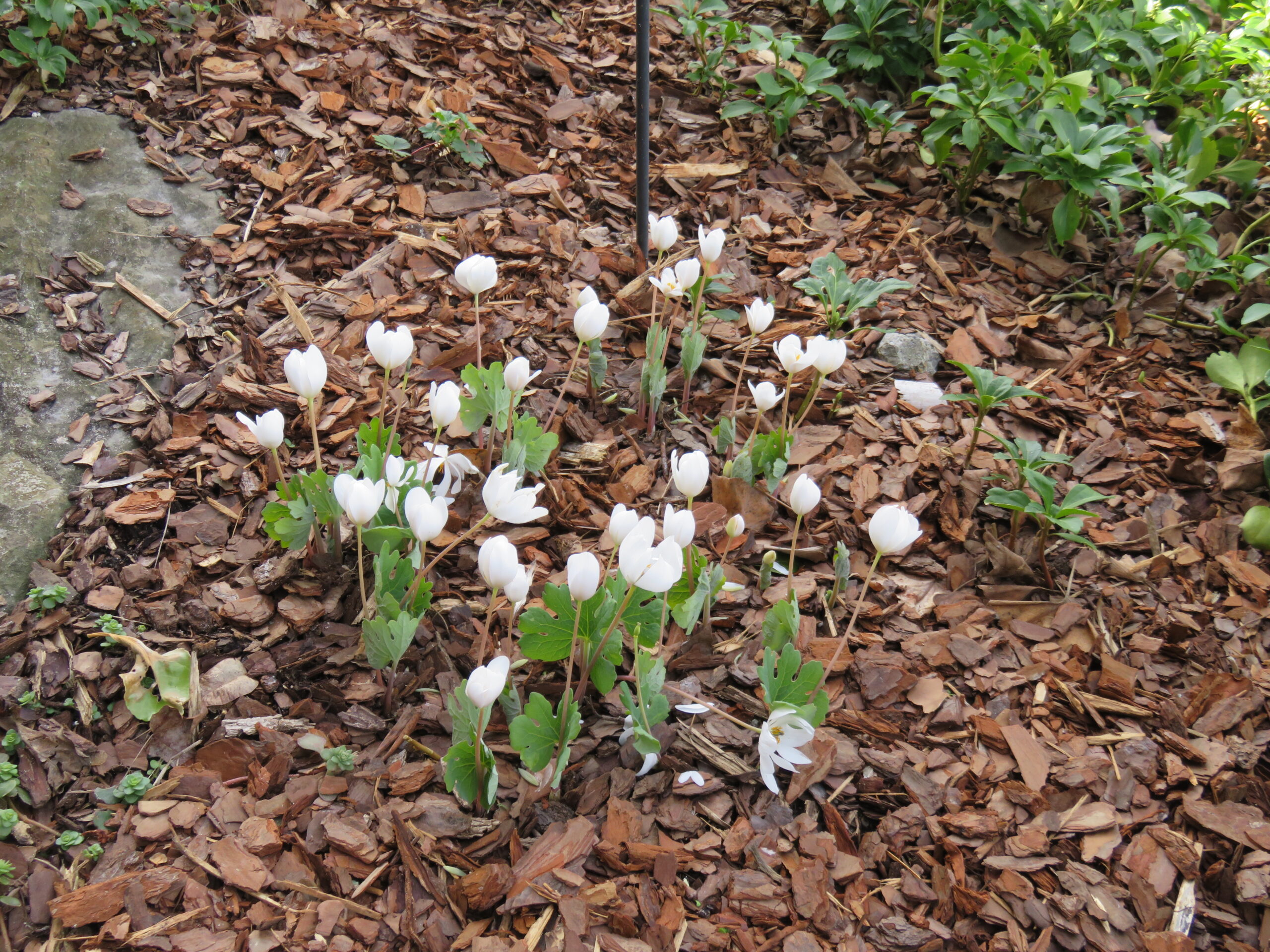
Bloodroot typically rises 6-10 inches tall and spreads over time to form large colonies on a deciduous woodland floor. Each flower stalk emerges in very early spring wrapped by one palmate, deeply scalloped, grayish-green, basal leaf. As the flower blooms, the leaf also unfurls. Each flower stalk produces a solitary, 2″ wide, 8-10 petaled, 1.5″ diameter, white flower with numerous yellow center stamens. Flowers open up in the morning sun and close at night. Individual flower life is short, usually only 1-2 days.
Leaves continue to grow in size and remain attractive until early to mid-summer when the plants go dormant. Over time, rhizomes branch out to form large colonies. Cutting leaves, stems, and roots exposes the bloody-looking sap that flows through every part of the plant.
Bloodroot is hardy in (USDA Hardiness Zones 3-8) and thrives in partial to full shade in early spring gardens. Grow bloodroot in a protected spot – even a mild breeze can knock the petals off the flowers. The ideal soil for bloodroot must be well-drained and fertile humus-rich soil with a pH of 5.5 to 6.5.
Flowers are pollinated by insects such as early native bees, honeybees, and flies. Additionally, the stamens will self-pollinate the stigmas if weather is rainy and too cold, or if pollinating insects are unavailable.
After successful pollination, seed capsules form, each pod packing 20 to 30 reddish black seeds that are dispersed in mid- to late spring. Attached to each seed is a fatty, protein-rich structure called an “elaiosome”. Ants are attracted to its sweetness and move bloodroot seeds back into their nests. Ants munch on the sweet elaiosomes and, later dispose of seeds, essentially sowing them in “ant dumps” that they have evacuated. Seeds germinate the following spring, and plants may start blooming within 2 years.
Propagation of bloodroot is from seed, by root division, or via transplanting. When handling any part of this plant, wear gloves and wash your hands afterwards. Collect seed from populations on your property or by permission from the landowner. Stay off national park lands.
Along with pigmented sap, bloodroot contains sanguinarine: an anti-inflammatory and antiseptic alkaloid. Historically, bloodroot has been used in dye-making, medicine, and dental hygiene. Native American tribes utilized the plant to dye fabric, baskets, and their skin. Medicinally, bloodroot has been used to treat the following maladies: rheumatism, fever, pain, wounds, skin infections, insomnia, ringworm, ulcers, and coughs. Keep bloodroot plants away from pets and livestock.
Cultivar Selection– Select the standard species or a double-petaled cultivar. Bloodroot won the Royal Horticultural Society Award of Garden Merit in 1993.
 Posted in


