
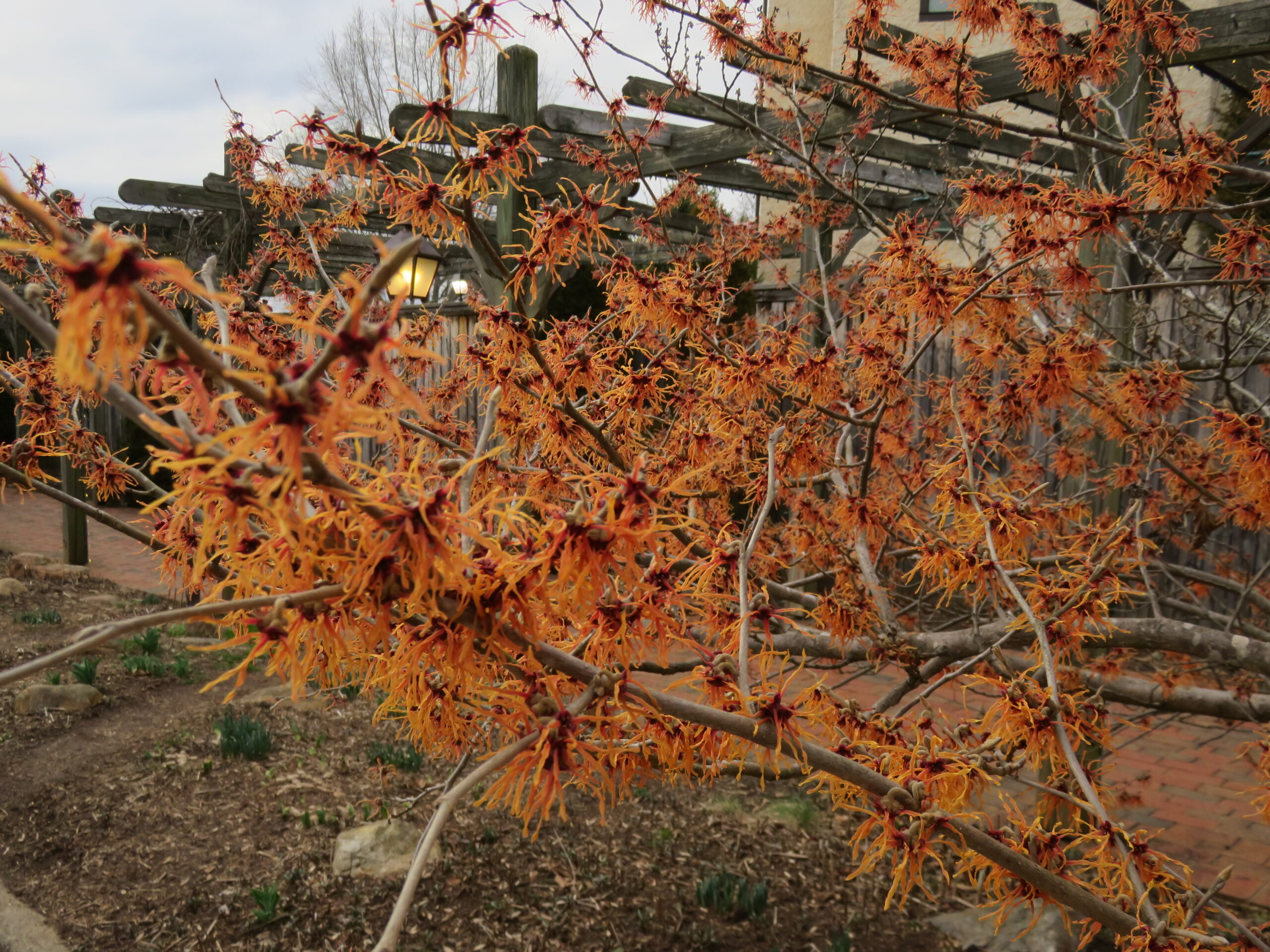
Add flowering and fragrance to your winter garden. Witchhazels (Hamamelis spp.) are prized for their strap-shape petalled flowers which bloom mid- to late winter. Depending on species and cultivar, blooming begins in late January and many possess fragrant blooms. Witchhazels are medium to large deciduous shrubs, typically 12-20 feet tall. Foliage texture is somewhat coarse. (USDA hardiness zones 5-8).
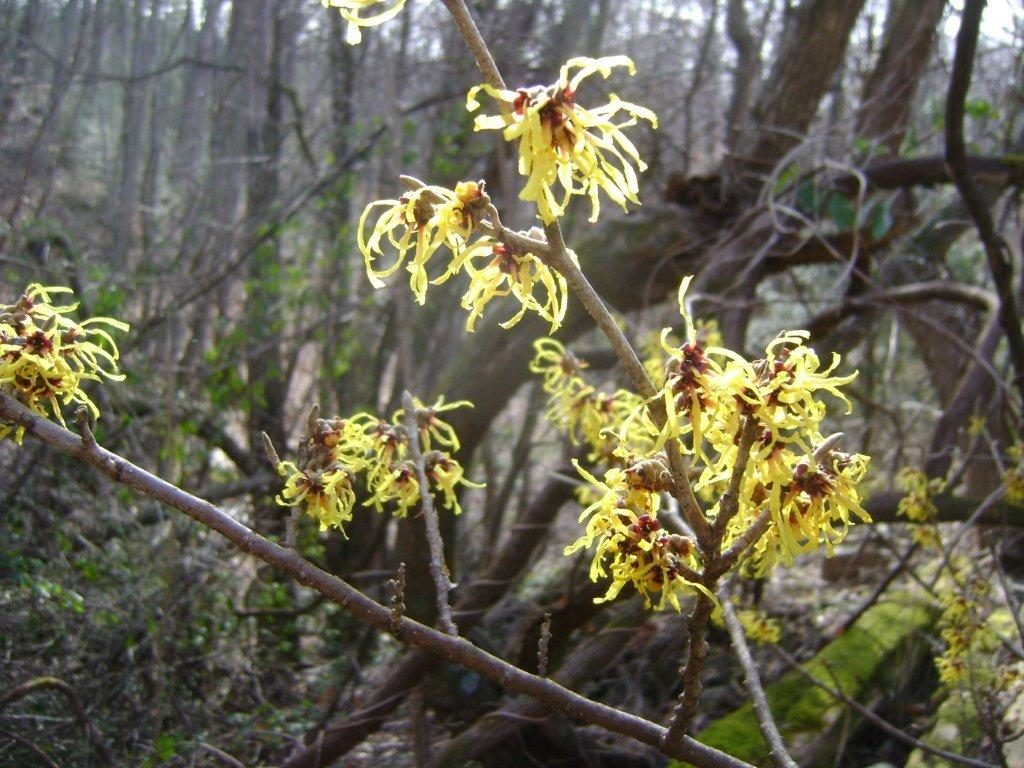
Branching tends to be upright, vase-shaped, with a spreading habit. Bright green 5–6-inch circular leaves appear weeks later in spring. An orangey-yellow to yellow fall color may vary from one year to the next. The first four winter-flowering witchhazel belong in the Chinese hybrid witchhazel (H. x intermedia) group:
1. ‘Jelene’– clusters of bright coppery orange flowers.
2. ‘Diane’ – sweetly fragrant coppery-red flowers.
3. ‘Primavera’ – bright yellow, spider-like flowers with narrow 3/8 to 5/8-inch-long petals.
4. ‘Arnold Promise’ – clusters of bright yellow strap-like flowers (to 1” long).
5. ‘Wisley Supreme’ (H. mollis) – fragrant golden-yellow flowers.
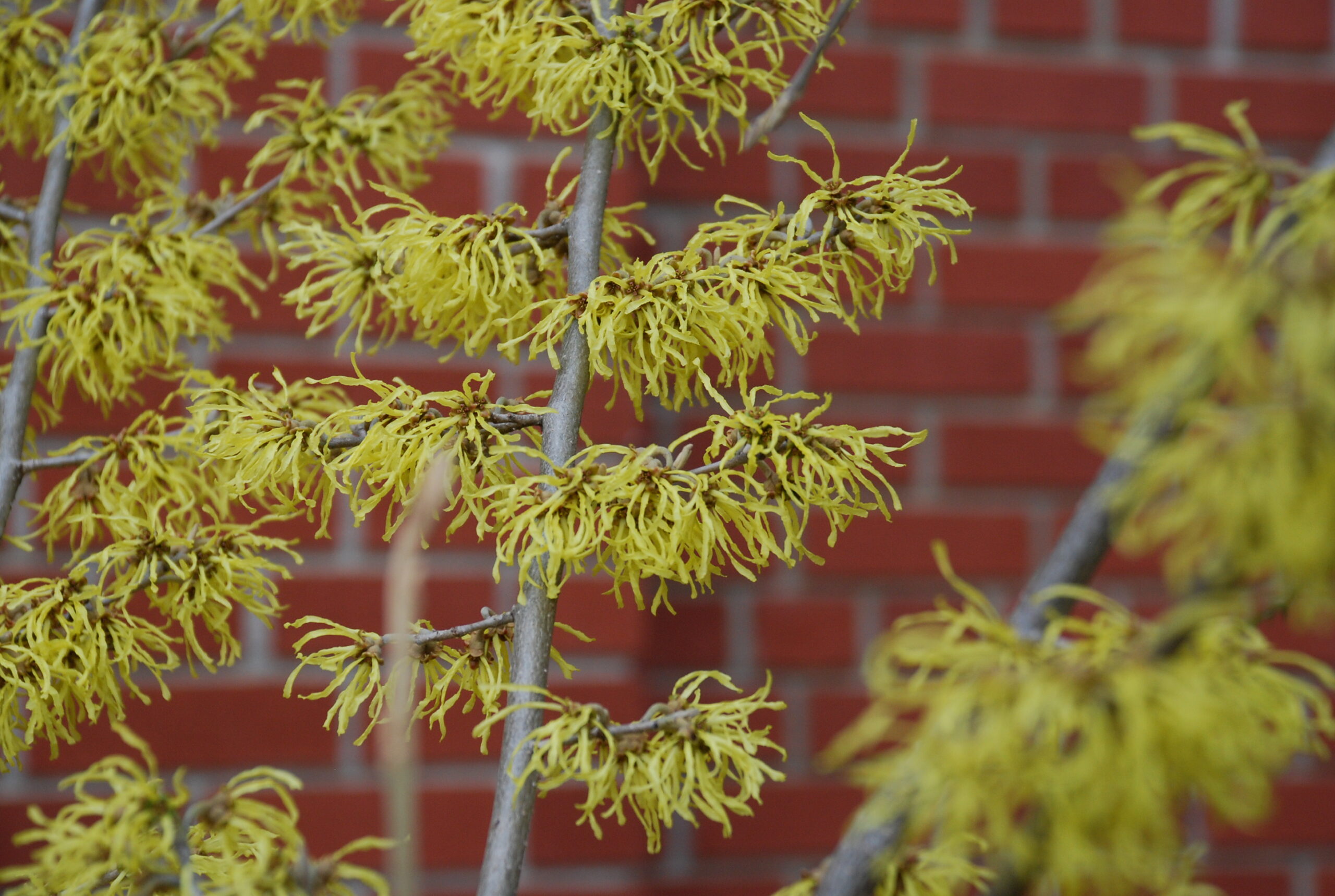
Witchhazels make highly dependable shrubs that grow in average, medium moisture, well-drained, moderately acidic pH soils and in full- to 1/2-day sun. Flower numbers are greatest in full sun. Expect leaf scorch over prolonged summer dry periods. Shrubs have some tolerance for clay soils as long as drainage is good. Most witchhazel varieties are currently produced from cuttings. If grafted, promptly remove root suckers emerging from below the graft union. Prune in spring after flowering to manage shape and size.
Watch for Japanese beetles, gall aphids, scales, leafrollers. Also scout for powdery mildew and leaf spotting over the summer months. Disease and insect issues get rarely serious enough to warrant the use of pesticides. Witchhazels are also deer resistant, although occasional browsing is possible in locations with high populations.
In summary, witchhazels should be planted more for their superior winter flowering. Utilize them in the landscape as single specimens, shrub borders, for privacy screening, or tall hedges. Shrubs are mostly available for sale from on-line specialty nurseries.
FYI — Witchhazel collection at the Scott Arboretum at Swarthmore College in Pennsylvania numbers 58 cultivars.
 Posted in


