
Kousa dogwood is indigenous to eastern Asia (Korea, China, and Japan) (USDA hardiness zones 5 – 8). ‘Wolf Eyes’ Kousa dogwood is an exceptional small landscape tree with variegated leaf color. Tree grows 15 – 20 feet tall and 20 feet wide. Hundreds of cream and green flowers appear in spring. Its narrow leaves are light green with creamy white margins. In mid- spring in Tennessee, this superior selection is covered with beautiful white flowers for about 3 weeks.
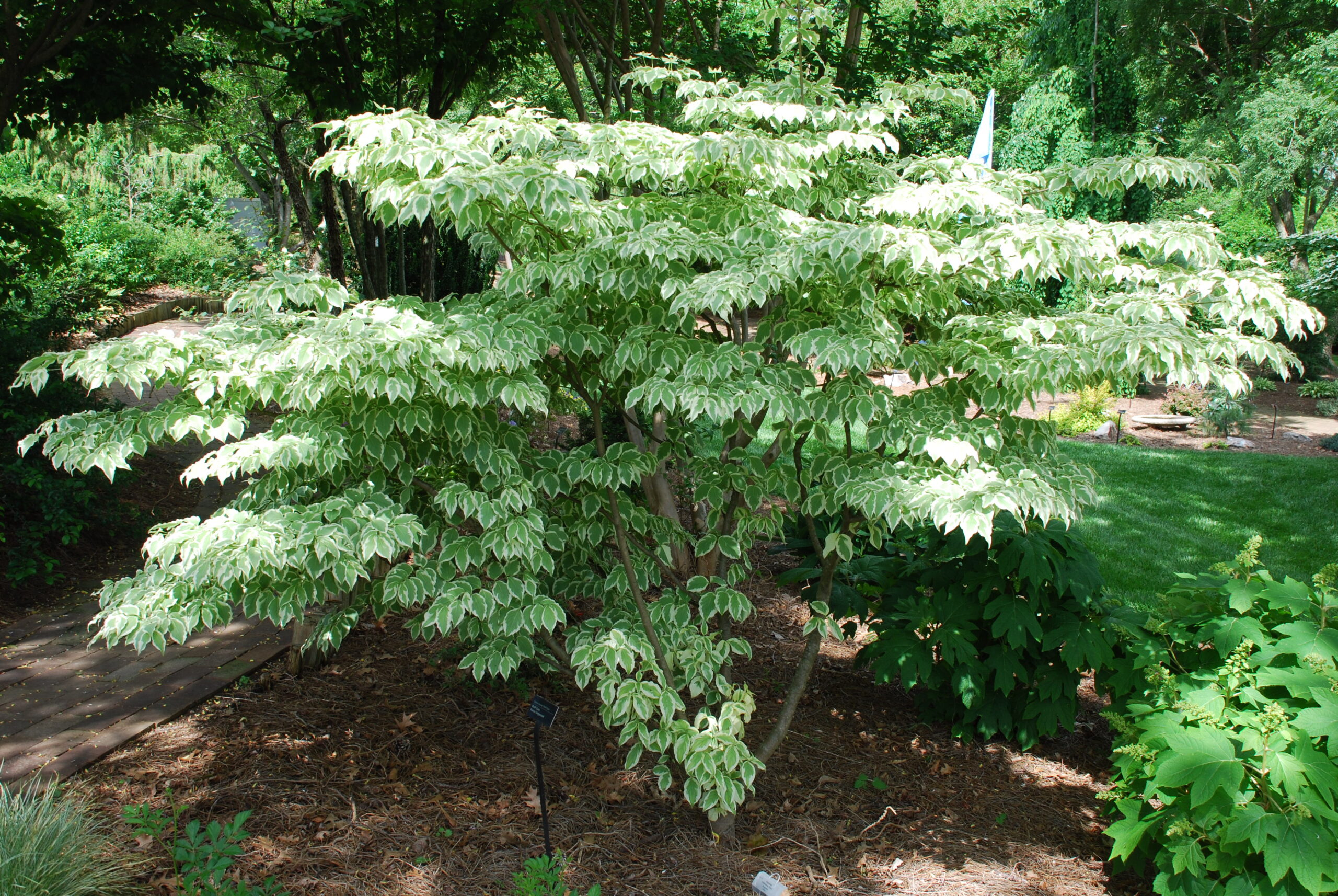
This slow-growing tree touts showy, scorch-free, ivory-edged foliage. Wolf Eyes may reach 10-15 feet tall in its first 10 years after planting. One of the finest variegated dogwoods, its intense leaf variegation may mask many of the white blooms. Bright-red edible strawberry-like fruits follow later in the summer which sought after by birds. Fall foliage on ‘Wolf Eyes’ finishes with a unique pink and red color. Leaves drop by mid-autumn to reveal the tree’s exquisite exfoliating bark. Its mottled patchy bark becomes more exquisite as the tree matures.
Kousa dogwoods are low-maintenance trees and the addition of Wolf Eyes to your landscape will be a great purchase. It grows well with partial to full sun along with adequate watering during unusual dry summer spells. It performs well in mildly acidic, compost-amended, well-drained soil. Annual spring feeding with a slow-release fertilizer is recommended. Compared to other kousa dogwood varieties, Wolf Eyes dogwood demonstrates superior verticillium wilt disease resistance.
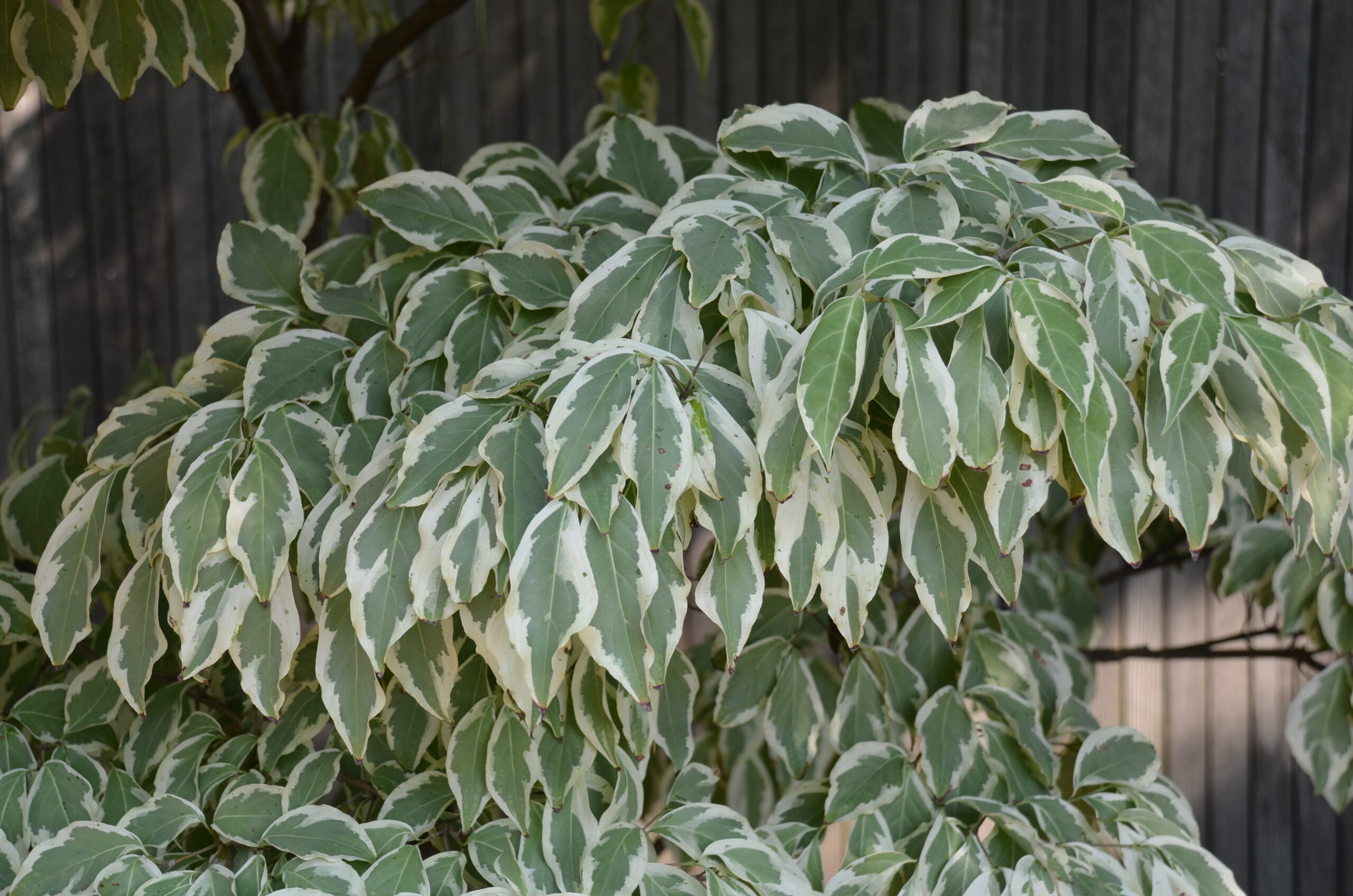
Wolf Eyes dogwood has a compact habit and is an ideal fit in a small suburban landscape or within a garden patio. This cultivar is less susceptible to burning (scorch) than other variegated species. Wolf Eyes dogwood is not commonly sold at local garden shops but may be special ordered for spring delivery. Most big box stores do not offer this service.
Young kousa dogwoods may require light pruning in late winter, primarily to snip off lower unwanted limbs or tiny dead branches. Keep an eye out for diseases like dogwood anthracnose and powdery mildew. Otherwise, tree maintenance is minimal to none.
 Posted in


