
Sunfinity™ Sunflowers are clearly a generational change in U.S. gardens. Compare them with single huge old-fashioned 9-12 foot ‘Mammoth’ sunflowers that bloomed in mid- to late summer and done by fall. Sunfinity sunflowers are sturdy stemmed, multi-branched flowers. After 9 to 12 weeks in the garden, flowering rates begin to decrease, and eventually the plant will die. Bloom size also declines in late summer. (Zones 9-11)
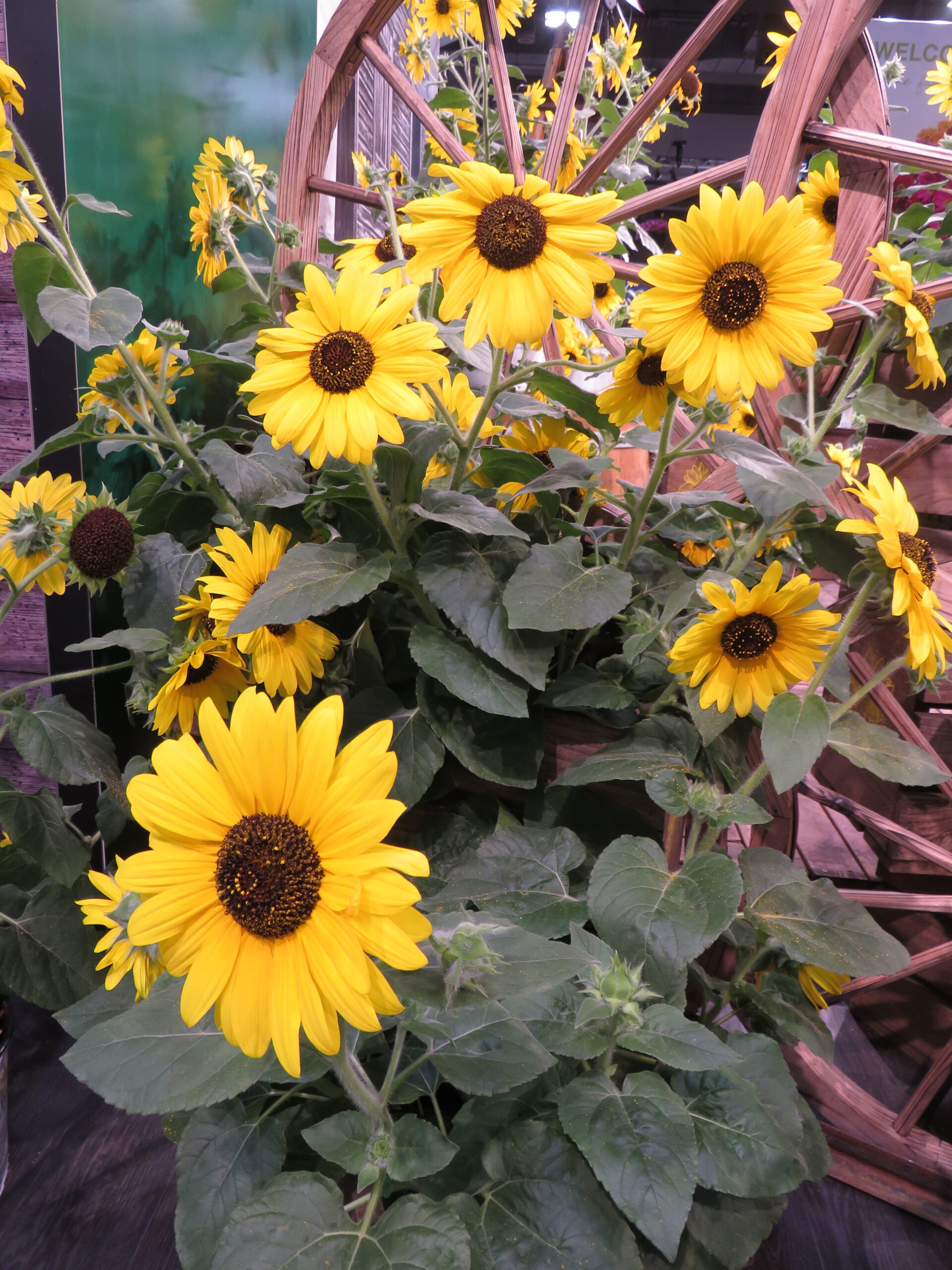
Sunfinity sunflowers are heavy bloomers, producing 50-100 flowers per plant from mid-spring to the end of summer. Plants grow 3-4 feet high and 2-3 feet wide. Some stem pinching is encouraged to develop more side-shoots that produce more flowers. Blooms should measure 3-4 inches across.
Sunfinity Double Yellow® sunflower thrives when planted in full day sun. Fertilize every 7-10 days with a water-soluble fertilizer like Miracle-Gro at the low rate on the package. Continue to do this throughout the growing season. Plant your helianthus next to other summer flowering annuals for a colorful look in a sunny garden.
They can be planted in the ground or in large pots. Large landscape containers greater than 1 gallon in size or in larger patio pots are best. For best performance, provide adequate water and a well-drained potting media. In garden soil allow plant to dry out between waterings and water every 5-7 days. Deadheading the spent blooms regularly will encourage continuous flowering.
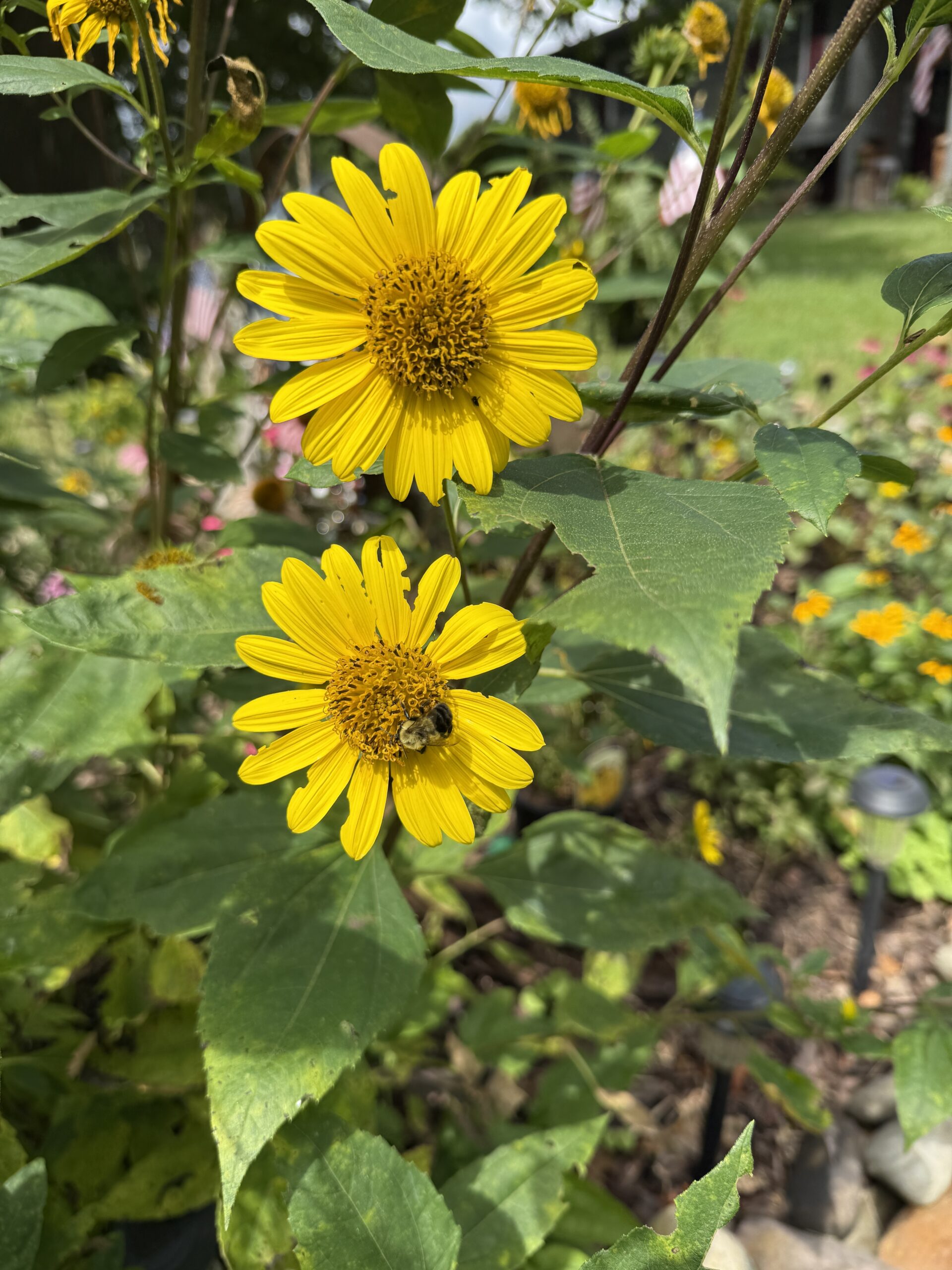
Three Varieties are available. Sunfinity™ ‘Yellow Dark Center’, ‘Double Yellow’, and ‘Bicolor Yellow-Red’.
Sunfinity has unmatched garden performance with continual flowering and highly resistance to powdery mildew through the summer season. Sunfinity Sunflowers are annual plants and complete their life cycle in one growing season (USDA hardiness zones 9-11).
Sunfinity sunflowers are perfect for decorating in special occasions such as garden weddings, anniversaries, et al. Ask the garden center manager about ordering several weeks ahead. Clip and bring blooms in the house for floral arrangements — and no pollen drop. Plants won’t set seed and are disease resistant.
 Posted in


