
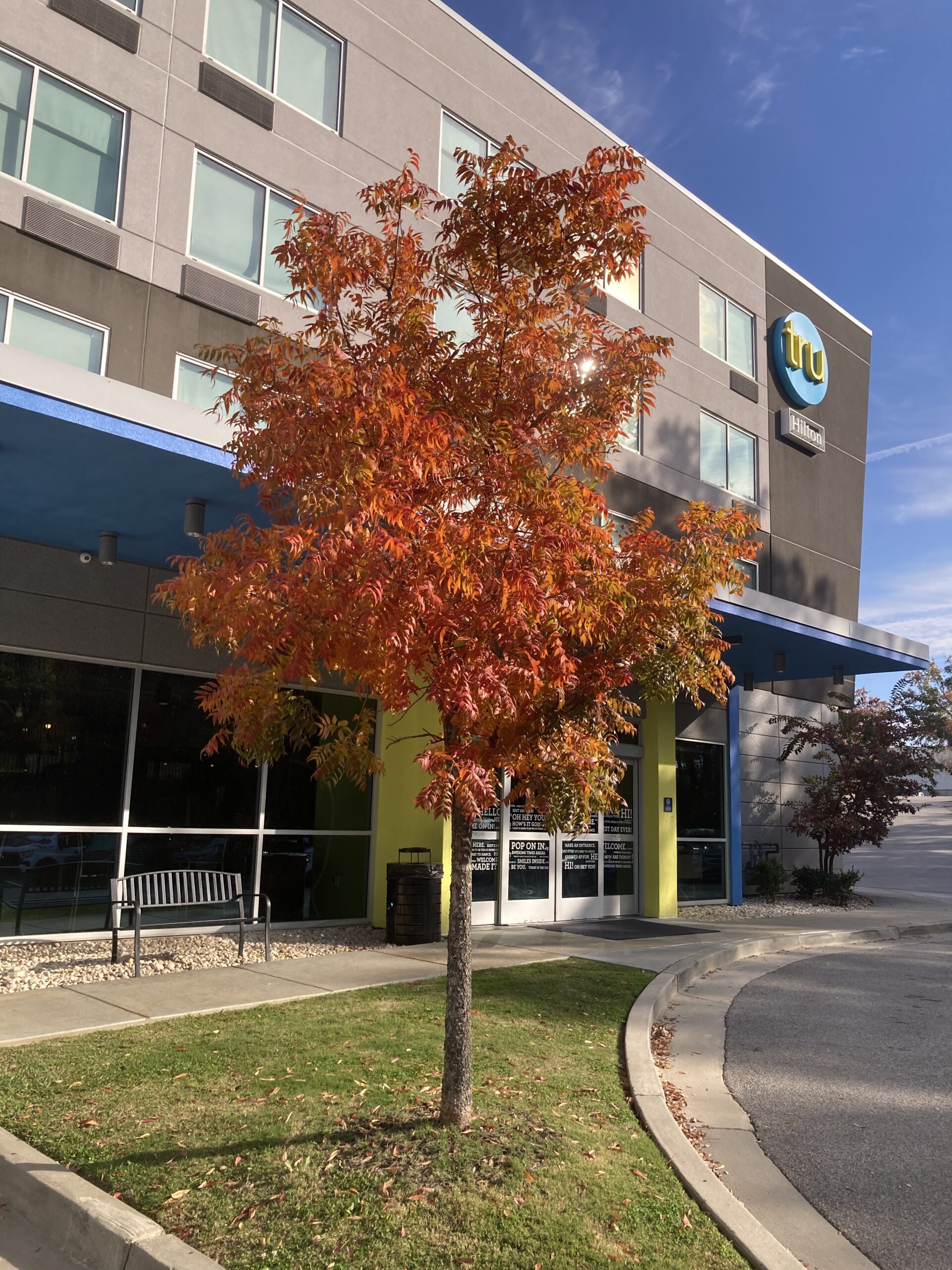
Chinese pistache tree (Pistachia chinensis) is a 25–40-foot small to medium landscape tree in the Botanical family known as Anacardiaceae. Branching habit is slightly upright that creates a narrow tree profile that is ideal for a small patio or a curb-side street tree. The bark of a young tree is silvery gray with a more rugged blocky pattern as an adult. (USDA hardiness zones 6-9).
This lovely small tree is indigenous to China, Taiwan and the Philippines (USDA hardiness zones 6-9). Tree grows 1-2 feet a year It is related to the edible pistache nut tree (Pistachia vera) but without producing any messy nuts. A variety of birds and yard wildlife consume the nutlets, which are not very tasty to humans.
Foliage consists of dark green, alternatively arranged pinnate compound leaves to 10 inches long, each leaf typically having 10-12 lanceolate leaflets to 4 inches long. Tree displays a fine leaf texture, and the small leaflets are easy to rake up in the fall and incorporate as a mulch in a flower or veggie bed. Foliage is aromatic when bruised. In some years autumnal leaf color can be an eye-catching crimson red, bright orange, and occasionally yellow.
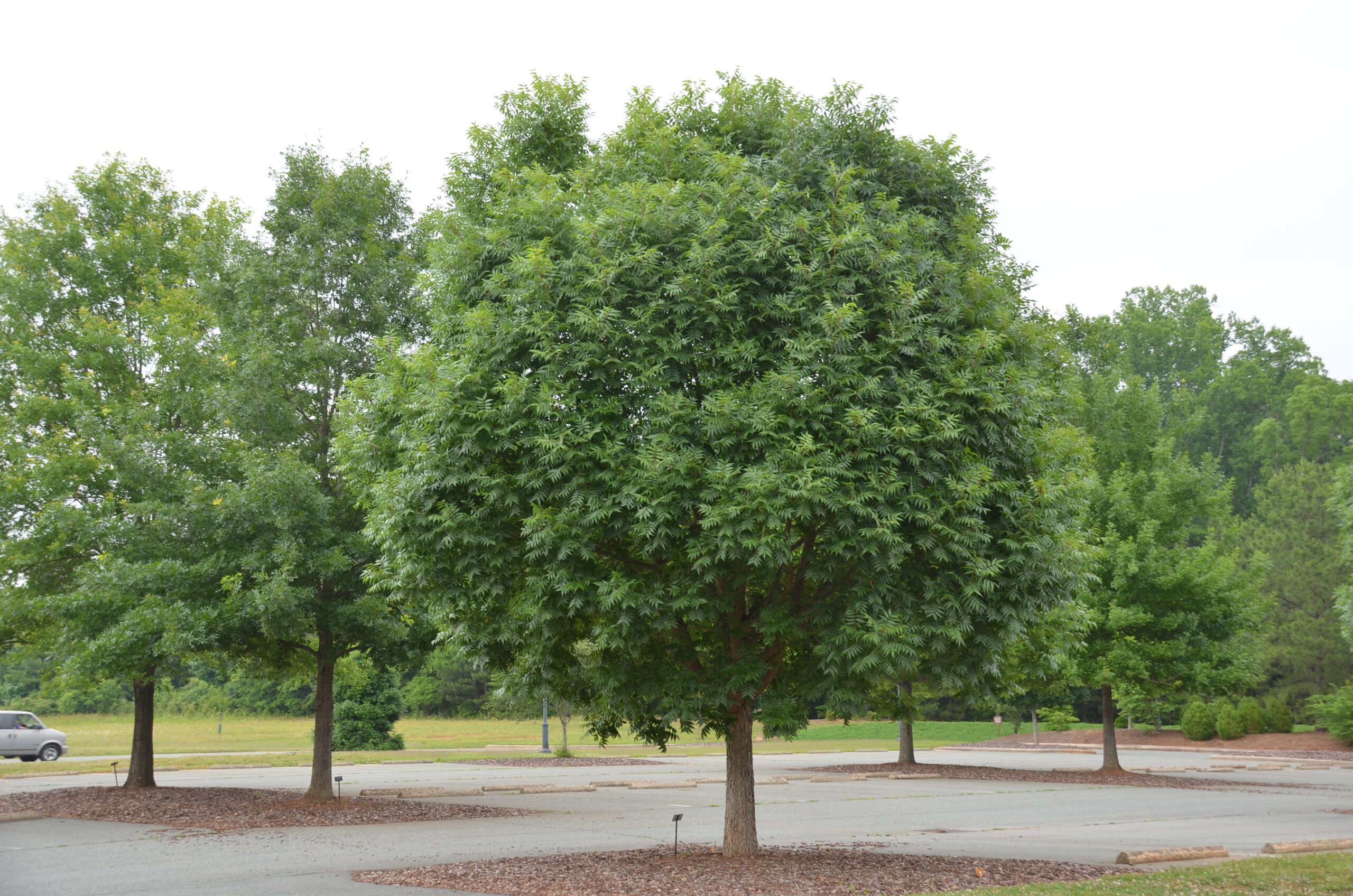
Chinese pistache is dioecious, e.g. a single tree is either male or female. Pistache blooms in April but go relatively unnoticed compared to more showier spring blooming shrubs and trees. Female flower clusters are nearly twice as wide as males. The non-edible ¼ inch diameter drupe fruits turn red in summer before ripening to bluish-purple in late fall. Berries are a food source for birds. Gray-brown bark on older trees peels to reveal salmon colored inner bark.
This tree grows in moist, compost-rich, well-drained soils and in full sun. It can also handle full-day part shade. This a low-maintenance tree is tolerant of drought, heat, and heavy clay soils. In most landscape situations Chinese pistache is free from serious pests and disease. Verticillium wilt may become a serious disease in poorly drained soils. Annual pruning in early years is essential to develop a desired symmetrical tree with good form.
A small specimen is suitable for patios and gardens. If you are concerned about berries dropping on walkways, select a fruitless male clone, P. chinensis ‘Keith Davey,’ a 35-foot-tall tree with a crown diameter of 30 feet. Female variety ‘Sarah’s Radiance’ produces lovely red fruits and nutlets in the fall. ‘Pearl Street’ is a very fast-growing seedless variety with an upright form.
Chinese pistache is rarely sold at local garden centers but can be found at e-commerce on-line nurseries.
 Posted in


