
Helenium Helenium autumnalis), aka sneezeweed, is a cheerful, daisy-like perennial wildflower that lights up moist meadows and stream banks across nearly all of North America with masses of golden-yellow flowers from late summer through fall (USDA hardiness zones 3–8).
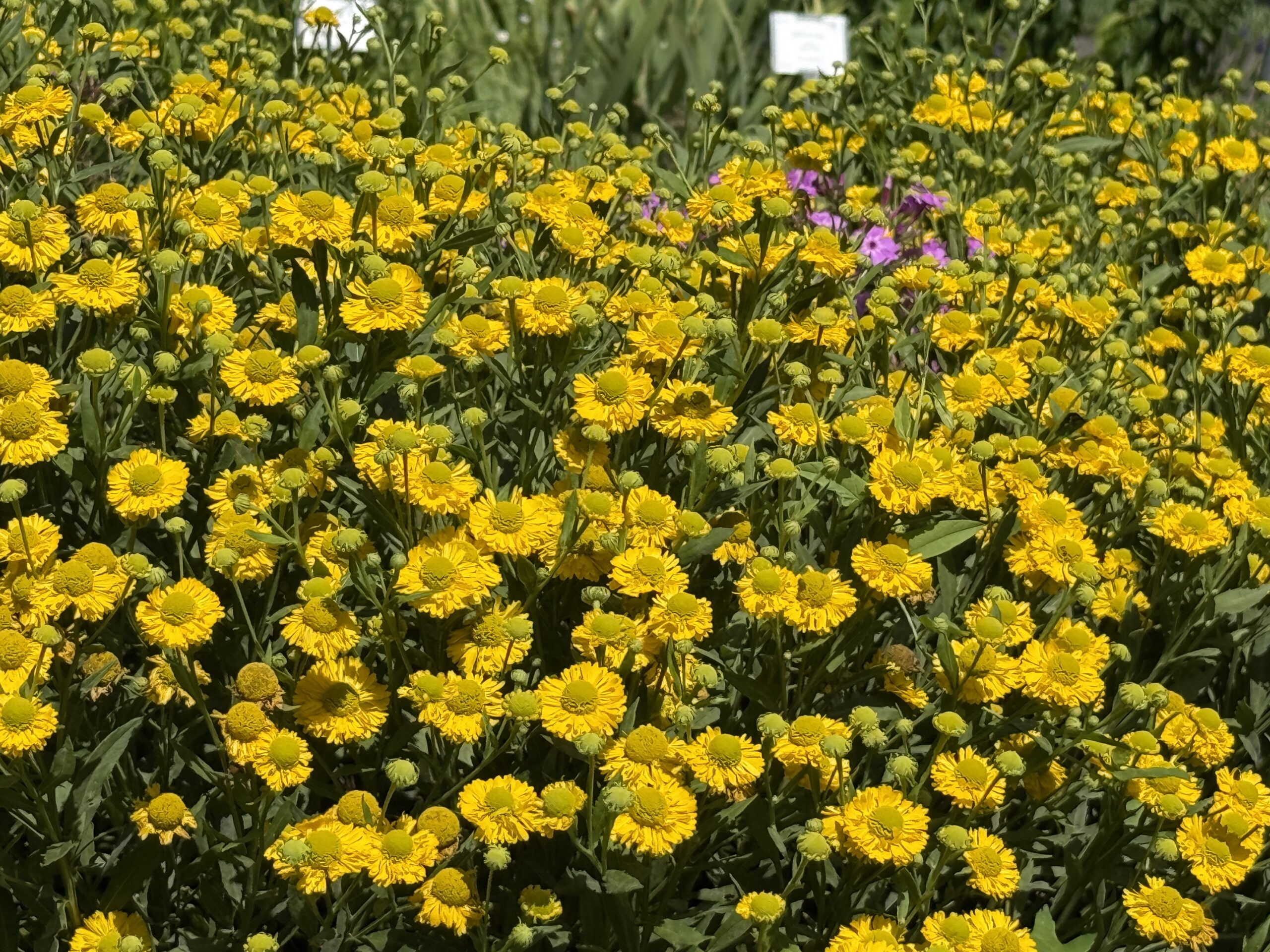
It has an unfortunate common name – “Sneezeweed”— which refers to a historical use of dried flower heads as snuff to induce sneezing. Fortunately, at least for humans, helenium has no allergy-causing properties. Helenium is a member of the aster (Asteraceae) family is a beautiful native wildflower species for wet-site gardens and prairie plantings. Quizzically, its scientific genus Helenium supposedly is said to honor Helen of Troy??
Heleniums grow 2 to 5 feet tall with an upright, branching habit and produces abundant clusters of distinctive flowers. Floral heads measure 1-2″ across, with 3-lobed ray petals that curve downward. The brightly colored flowers, with brown-gold button centers or “cones”, bloom from August – October.
Leaves are alternate, lance-shaped, 2 to 6 inches long, with toothed margins and a distinctive feature: the leaf bases extend down the stem as “wings,” giving the stems a winged appearance. Dark green foliage is slightly rough-textured. Lower leaves may be larger and more broadly lance-shaped than upper ones.
This U.S. native is found from coast to coast, growing naturally in wet meadows, stream banks, moist prairies, ditches, pond margins, floodplains. Helenium thrives in full sun — at least 6 – 8 hours of direct sunlight daily. In shade, plants become leggy, floppy, and produce far fewer flowers. It thrives in moist to wet soils and tolerates heavy clay, loam, and even slightly sandy soils as long as moisture is consistent. The species struggles in dry, well-drained sites.
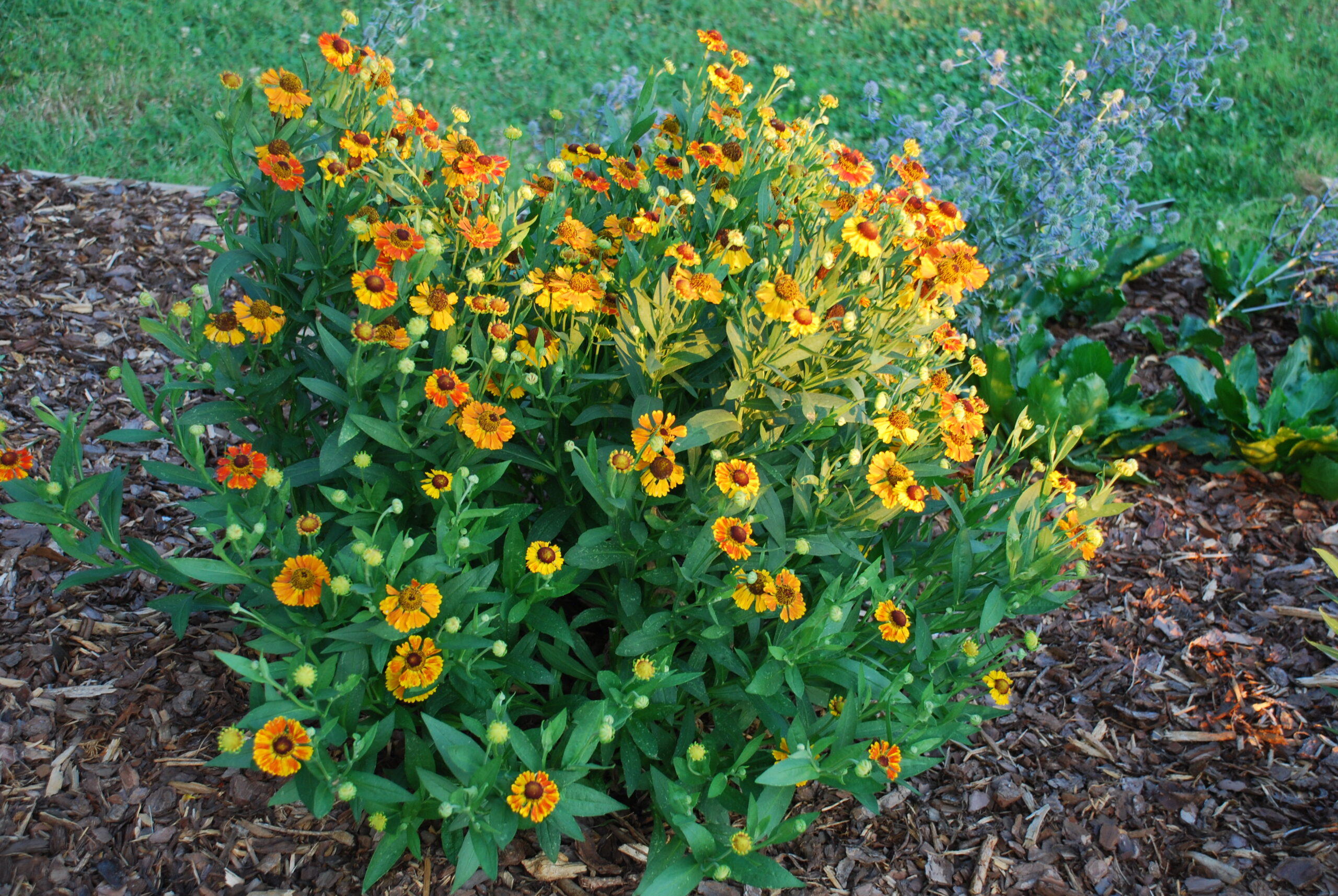
Plant in spring or fall, spacing plants 18 to 24 inches apart. Sow seeds in fall for natural stratification, or cold-stratify for 30 days and sow in spring. Seeds require light for germination, so tamp them lightly into the soil without covering them. Nursery transplants establish quickly and typically bloom the first year.
Pinch or cut back stems by half in early summer (June) around “Chelsea chop” time to promote bushier growth that won’t grow tall and floppy. Deadhead spent flowers to extend blooming. Cut to the ground in late fall or early spring. Divide clumps every 3–4 years in spring to maintain vigor. It grows alongside species such as Joe-Pye weed, boneset, blue lobelia, cardinal flower, swamp milkweed, and many others.
Helenium grows in moist, low-lying meadows or at the edges of soggy woodsy areas. Over the years plant breeders have expanded helenium varieties to include several shades of gold, orange, red, and bicolors. Helenium flowers attract butterflies in late summer and fall. Numerous cultivars are available in festive, warm colors like ‘Mardi Gras,’ ‘Salsa’, ‘El Dorado’, ‘Butter Pat’, and ‘Siesta’.
Helenium is valued as a late-season nectar and pollen source for native pollinators. Seeds are sort after by goldfinches, sparrows, and many foraging birds. Winter dried stems offer shelter and forage for overwintering insects and birds to feed upon. Vegetation can be toxic to cattle, horses, and sheep if consumed in large quantities. Helenium is also highly deer resistant.
 Posted in


