
Smooth hydrangea or wild hydrangea (Hydrangea arborescens) is an open widely branched deciduous shrub that typically grows to 3-6 feet. Tree forms frequently grow to 10-20 feet and higher over 25 years or more. This U.S. native hydrangea is indigenous from New York to Florida and west to Iowa, Missouri, Oklahoma and Louisiana. (USDA hardiness zones 4-9).

Smooth hydrangeas perform best in morning sun and afternoon shade or dappled day-long sunlight Plants tolerate full sun if planted in good well-drained soil and provided supplemental water during drought periods lasting 10 days or more. Annual spring mulching is highly recommended.
Seasonal foliage is sharply toothed and dark 2-6-inch-long green leaves with pale green undersides; leaves turn yellow in fall. Tiny white fertile flowers bloom in May-July on flattened hairy clusters (corymbs to 2-6 inches across). Scattered continuing flowering may occur through summer months. A few large sterile flowers usually appear at the cluster margins, usually not enough to spoil their flattened lacecap shape. Flowers give way to dehiscent seed capsules which ripen in October-November.
Fertile Lacecaps hydrangeas are called “Dome Hydrangeas”. Invincibelle Lace®, ‘Hayes Starburst’, ‘Haas’ Halo’, and ‘Dardom’ are unaffected by winter cold and late spring frost and bloom on new growth.
Invincibelle Lace® hydrangea produces plum purple florets on strong ruby red stems incredible in informal style gardens, providing year-round interest. Its elegant coloring and graceful habit fit in perfectly with gardens. It is also a pollinators’ delight and is incredibly winter hardy (zones 3-8).
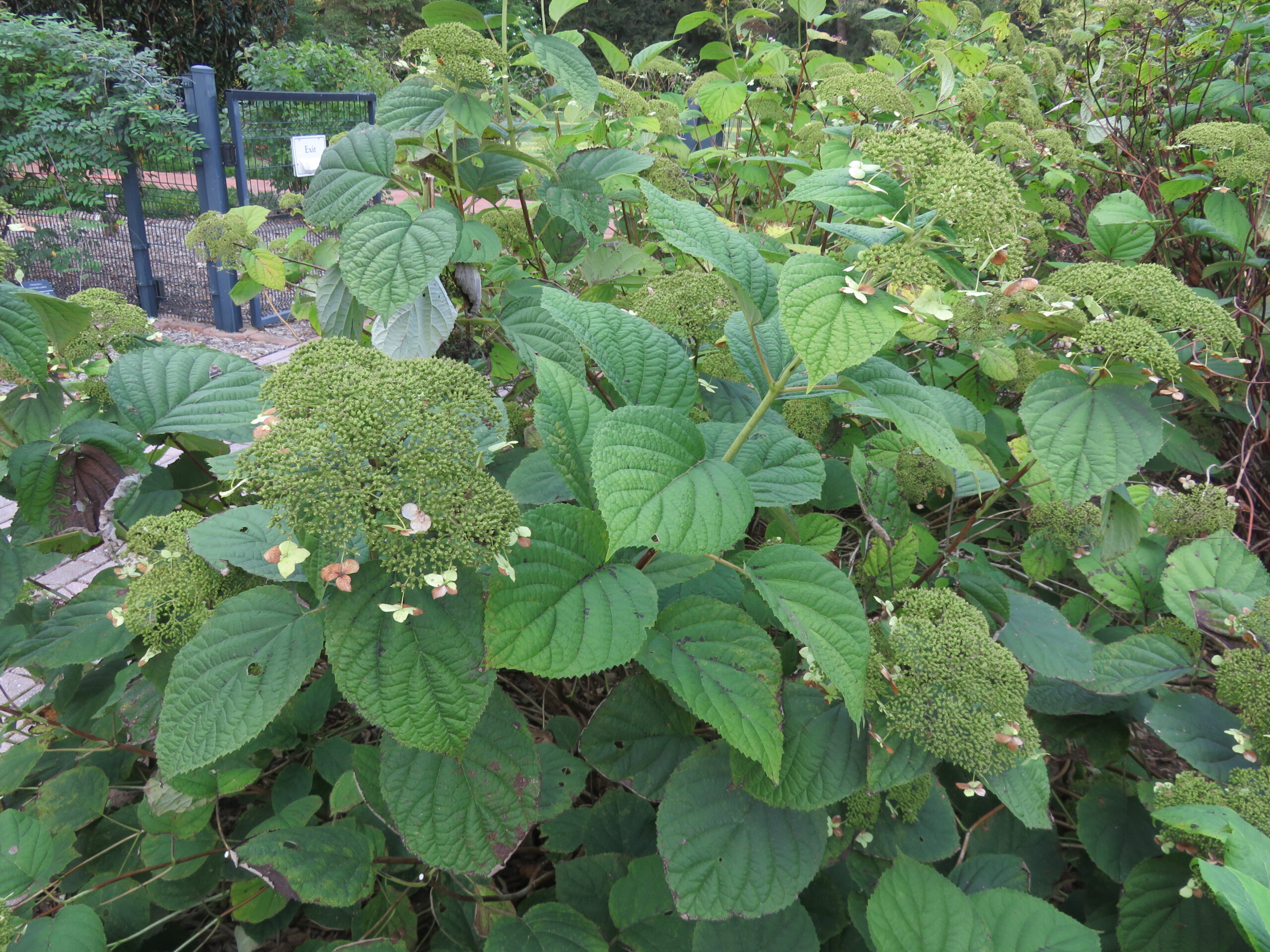
‘Dardom’ (commonly sold under the trade name of WHITE DOME), is a patented cultivar that originated in 1997 from a chance pollination of two unidentified selections of H. arborescens. It is a large, upright, freely-branching, rounded shrub with strong stems that is distinguished by its vigorous growth, large leaves and large dome-shaped inflorescences of white flowers. It typically grows 3-5 feet tall. Mostly fertile flowers with a sprinkling of sterile flowers appear in huge, symmetrical, rounded heads (corymbs resembling white domes) which typically grow 6-10 inches across. Flowers bloom in early June for up to two months. Flowers contrast well with the ovate to elliptic, serrate, dark green leaves (3-8 inches long).
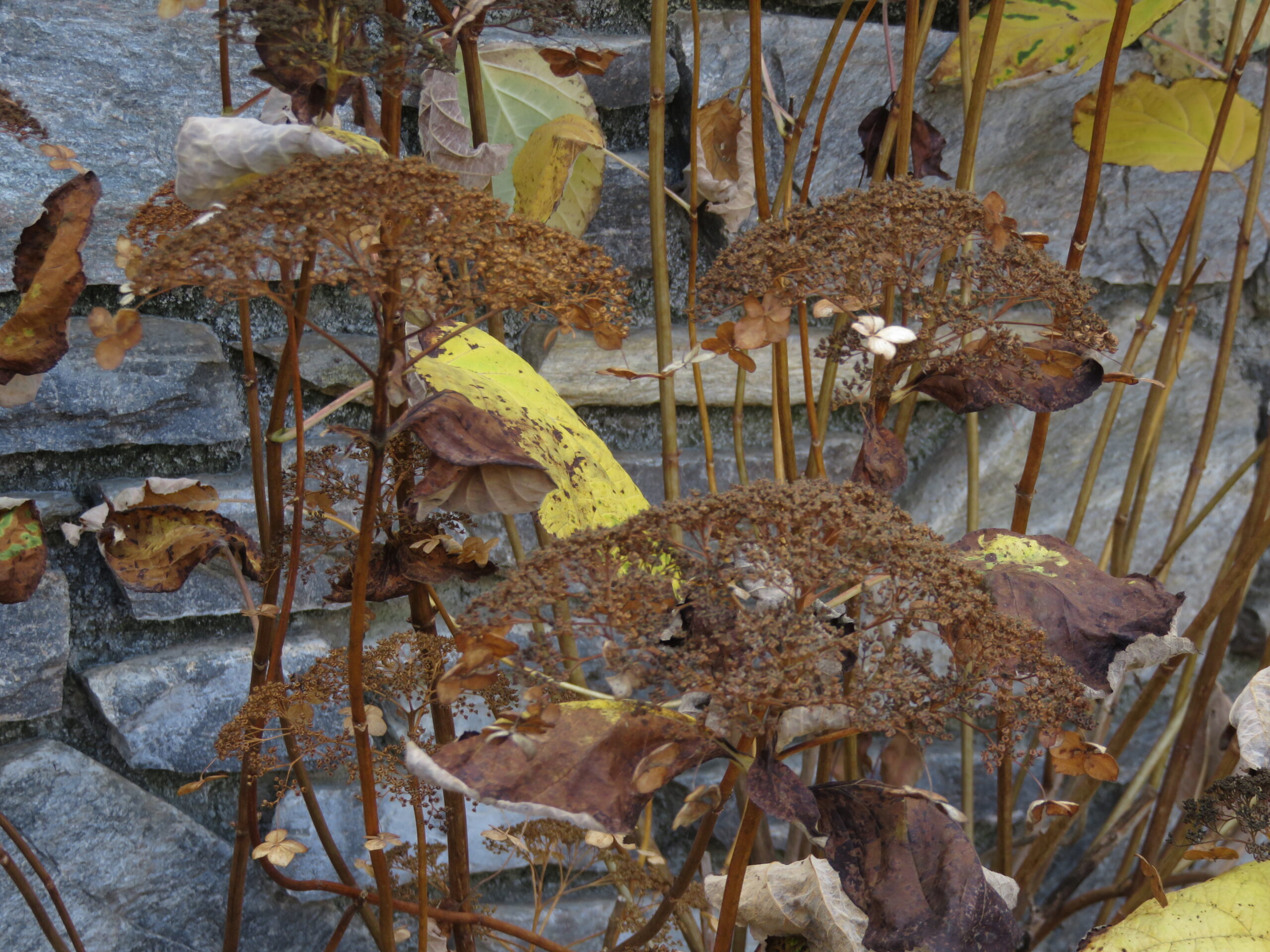
‘Mary Nell’ hydrangea (Hydrangea arborescens ‘Mary Nell’) is underutilized and deserves to be planted more widely. It was named by Dr. Joseph McDaniel, who also introduced H. arborescens ‘Annabelle’. ‘Mary Nell’ is a lacecap hydrangea that stands out, with a double ring of sterile flowers around the rim of the inflorescence. Comparable in overall size to ‘Haas’ Halo’. ‘Mary Nell’ produces slightly smaller flower heads with more sterile flowers at the margin. ‘Mary Nell’ performed best in shade, retaining attractive foliage and sterile flowers for nearly the entire growing season. With exceptional plant vigor but stems occasionally proved to be too weak to support the magnified flower heads.
Many species of hydrangea, including this one, are susceptible to bud blight, bacterial wilt, leaf spots, mold, rust and powdery mildew. Watch for aphids, mites, scale and nematodes. Pruning stems back to the ground in late winter each year helps promote stem vigor. Rabbits tend to avoid this plant. Unfortunately, deer generally love to munch on hydrangea flowers and foliage.
Further Reading: MT. Cuba Center Plant Evaluation – Hydrangea arborescens
 Posted in


