
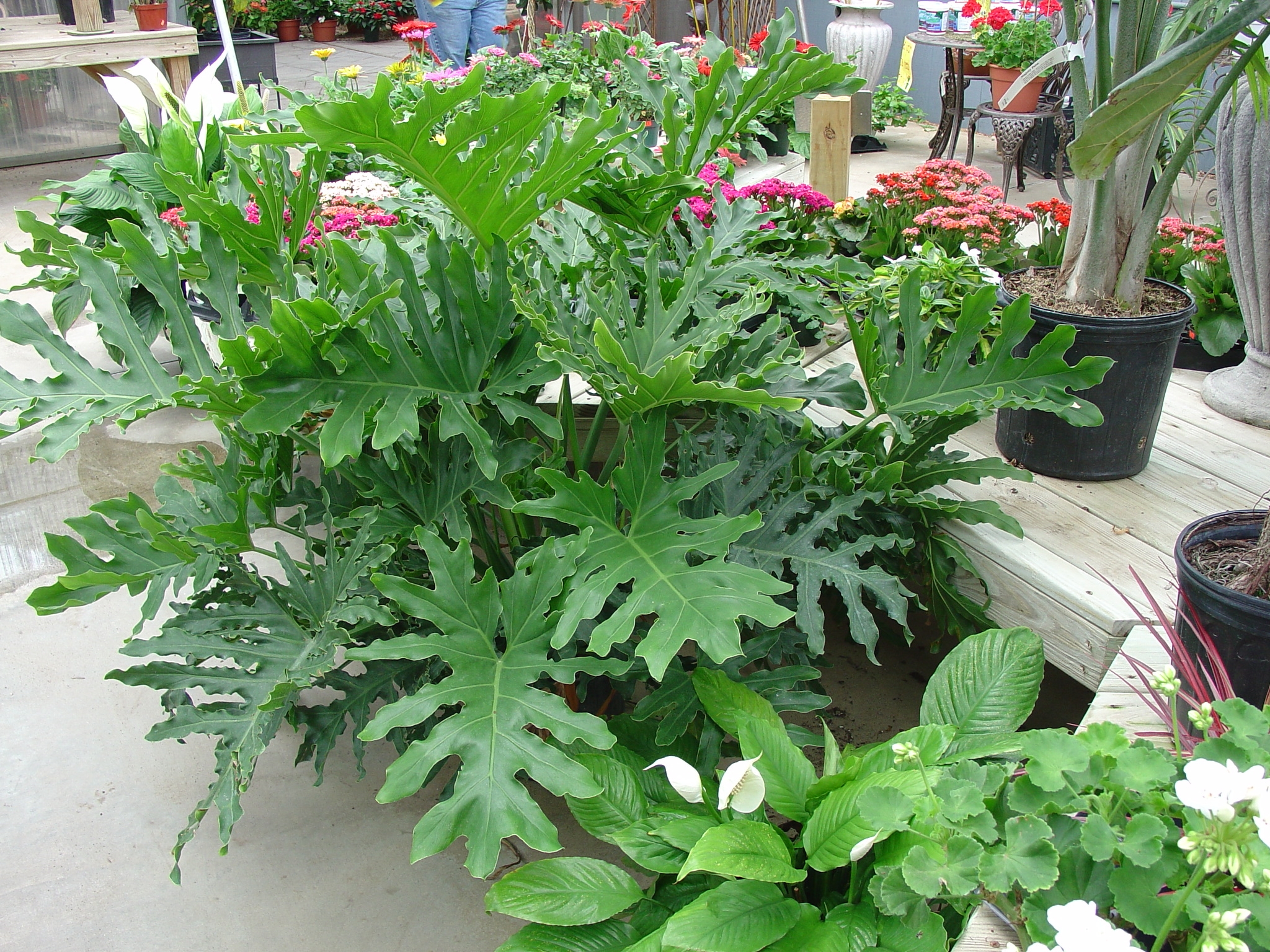
In recent years, Monstera plants have become wildly popular house plants. They’re indigenous to tropical areas of Central and South America. Approximately 50 different species are available at plant shoppes or online. It is an understory plant that grow in the shade of tropical trees and other vegetation.
Plants prefer filtered indirect light and avoid full direct sunlight. If plants get leggy, adjust the light setting for your monstera. Some varieties can take nearly full 1/2-day morning sun indoors. Contrarily, some variegated foliage types can burn in bright room light.
Monstera plants prefer a well-drained organic medium for most other tropicals at plant shoppes. Plants also produce aerial root systems that may take root in potting mix.
Plants prefer temperatures from 60° – 85°F and moderate humidity levels around 40- 50% for optimum growth. Daily misting of foliage and exposed air roots will raise room humidity levels. Wipe leaves monthly with a damp cloth to remove dust.
Feed @ 50% fertilizer strength (read package directions) once monthly and hold back feeding during the winter months.
Prune Monsteras to encourage new growth, limit plant height, and remove old, damaged foliage.
Monsteras can be propagated in water, peat-perlite mix, air layering, and root division. Grow it in a hanging basket as a cascading plant or trellised on single osmunda, coir, or moss trellis pole.
Popular Monstera Species:
Monstera deliciosa Split-leaf philodendron or “Swiss cheese plant”, – large, rounded leaves full of holes; slow-grower climber or creeping stem that is often trellised.
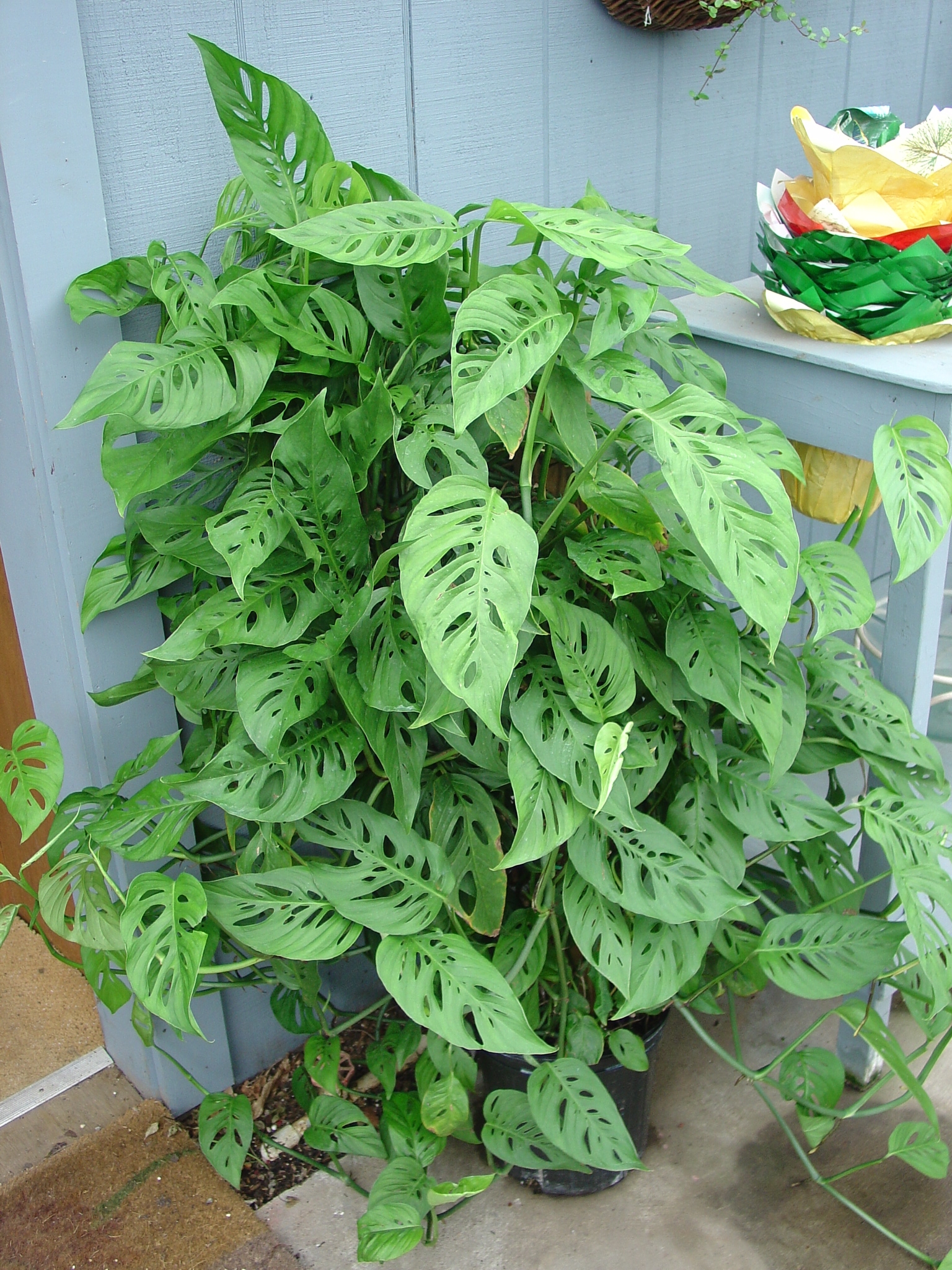
Monstera adansonii, – another “Swiss cheese plant” – oval to heart shape leaves, with about 5 holes per leaf; grows only 3 to 5 feet high.
Monstera epipremnoides – grows tall with big leaves and perforated leaves that drape over one another.
Monstera obliqua, aka Swiss Cheese plant, – a rare, slow-growing form with large holes in the leaves form.
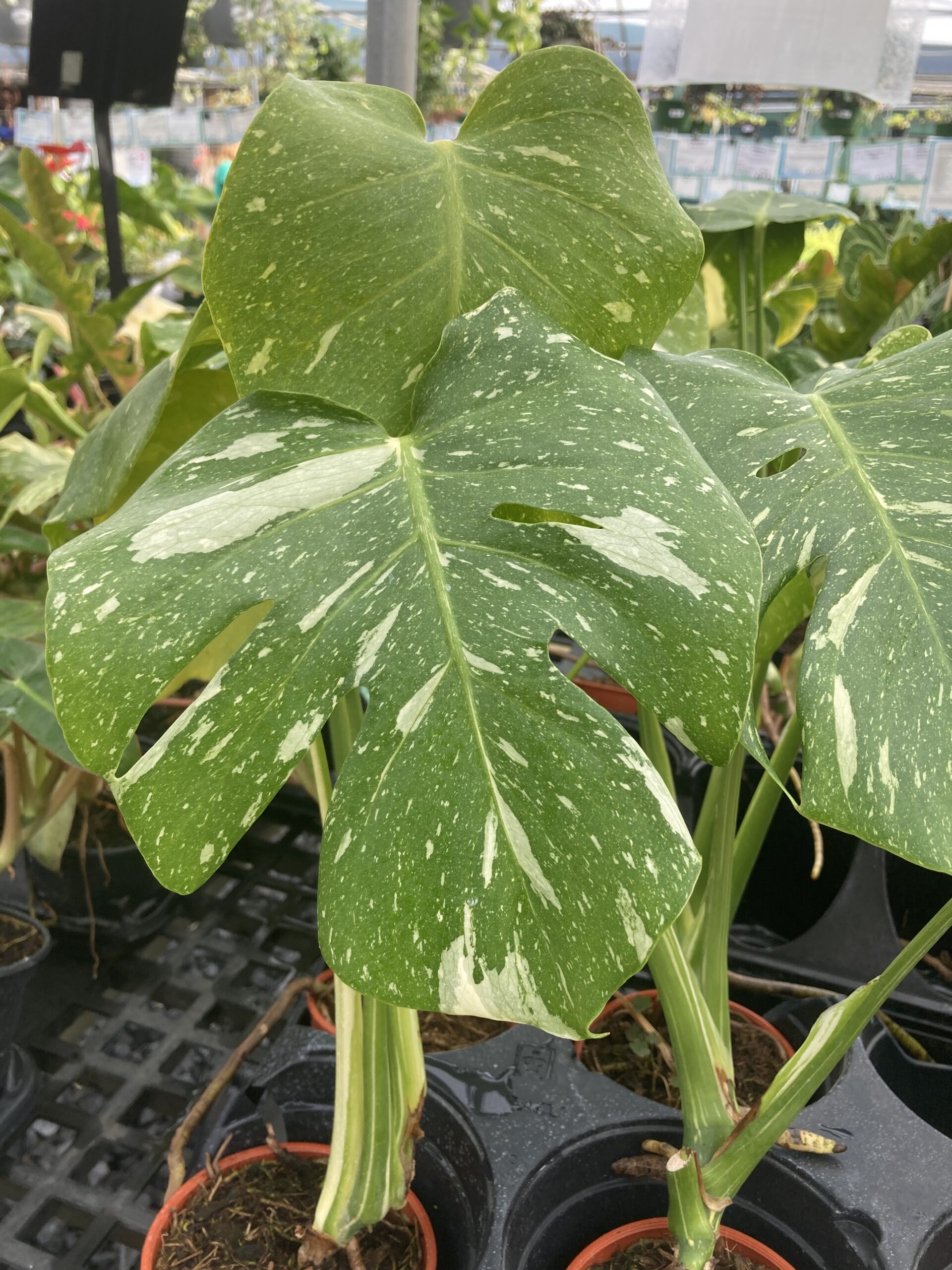
M deliciosa alba borsigiana – variegated form highly coveted for its large white bands that contrast with the green foliage; leaves burn easily compared to solid green forms.
M. deliciosa ‘Thai Constellation’ -fast-growing variety with vining stems with small, variegated foliage that is splashed and speckled.
Caution: plant sap can cause irritation to the skin, eyes, mouth, and digestive tract; wear gloves when pruning and wash your hands thoroughly after handling the plant.
 Posted in


