
Underplanted in U.S. gardens are stewartias (Stewartia spp.) and the most popular is the lovely Japanese stewartia (S. pseudocamellia). This small 20-30 foot small slow-growing tree or multi-trunked shrub is indigenous to Japan and Korea. Specimens in the wild can reach 50-60 feet in height. In U.S. gardens, it typically matures in landscapes to 20-40 feet tall. (USDA hardiness zones 5-8).
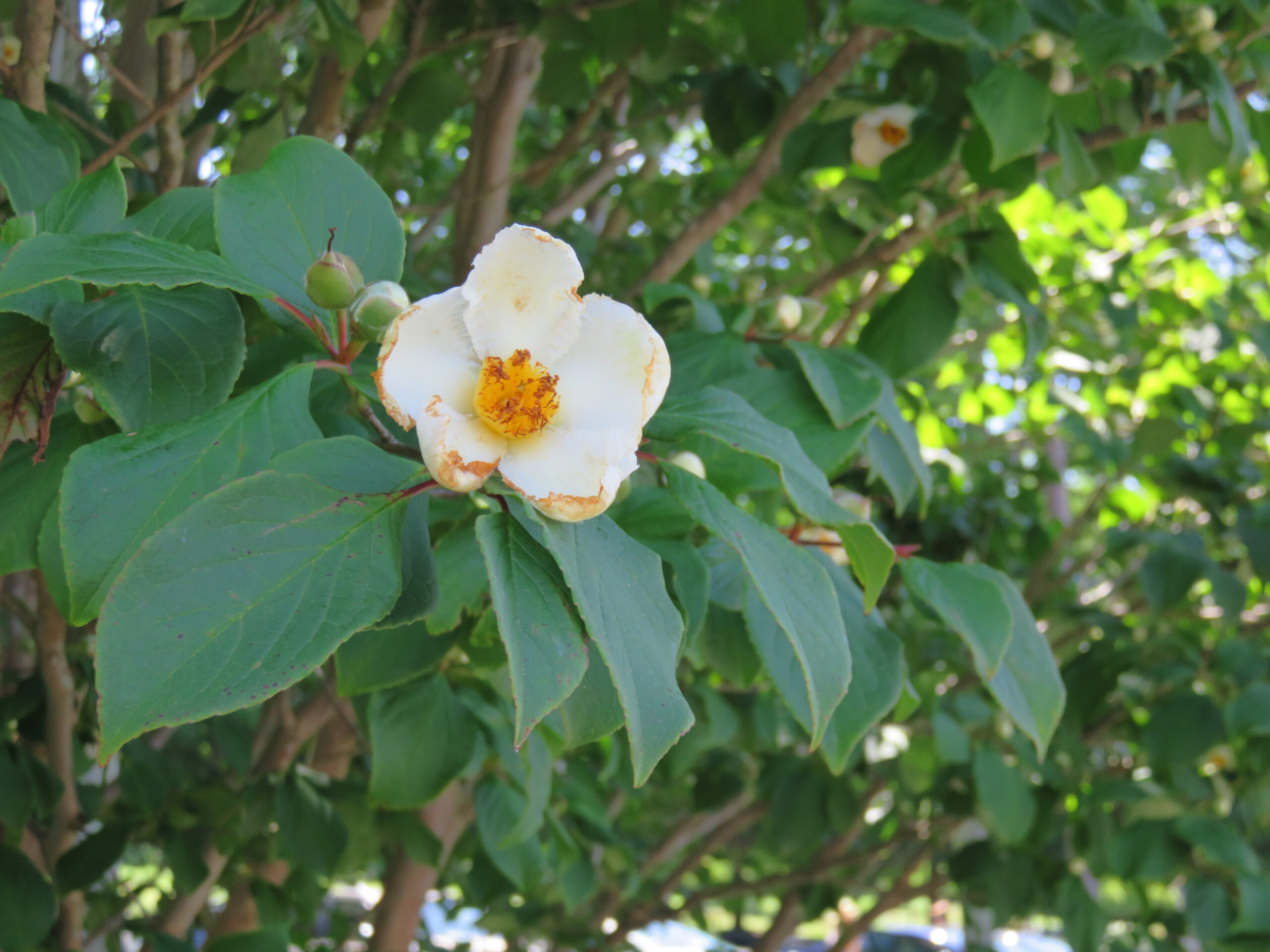
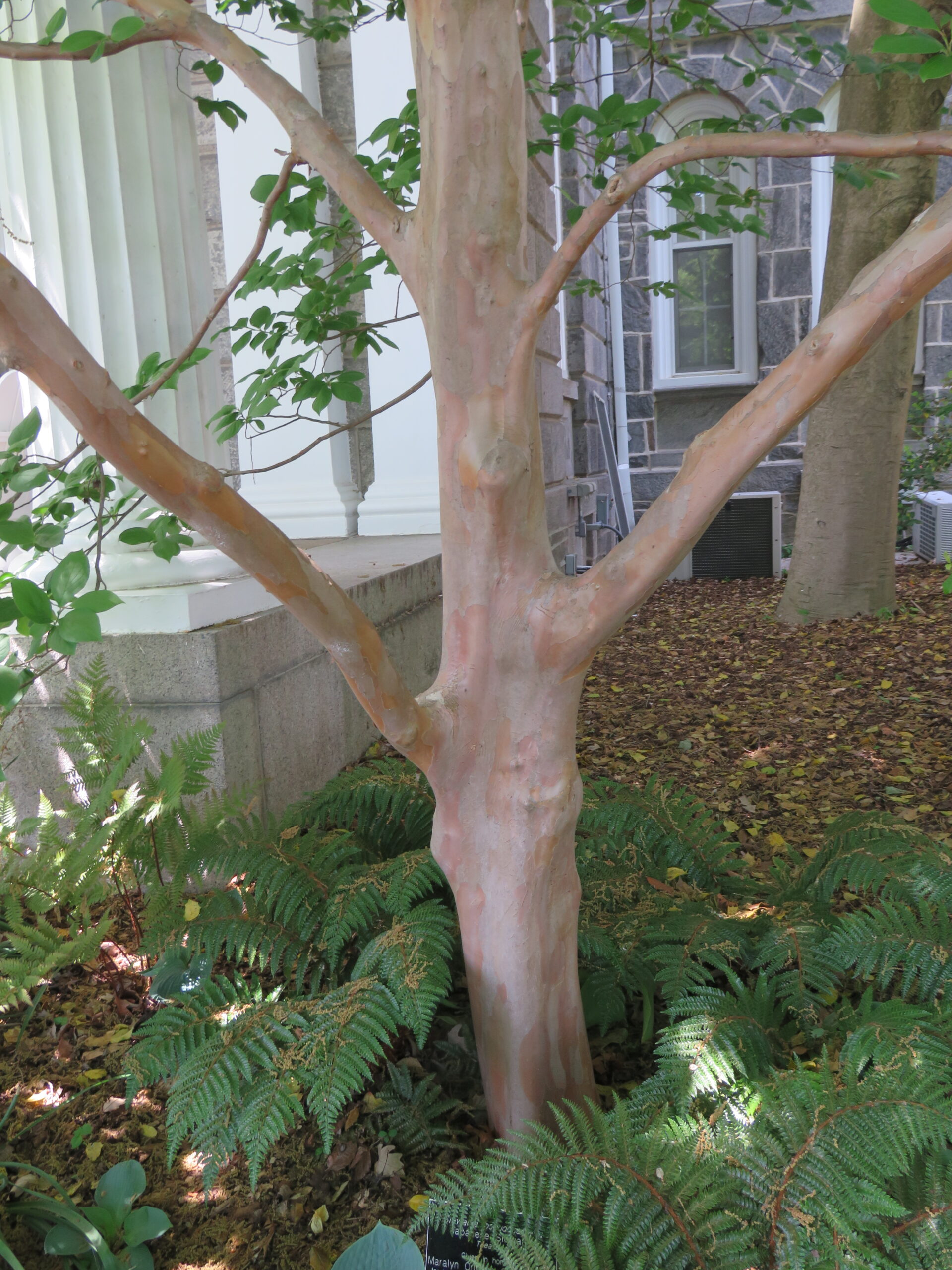
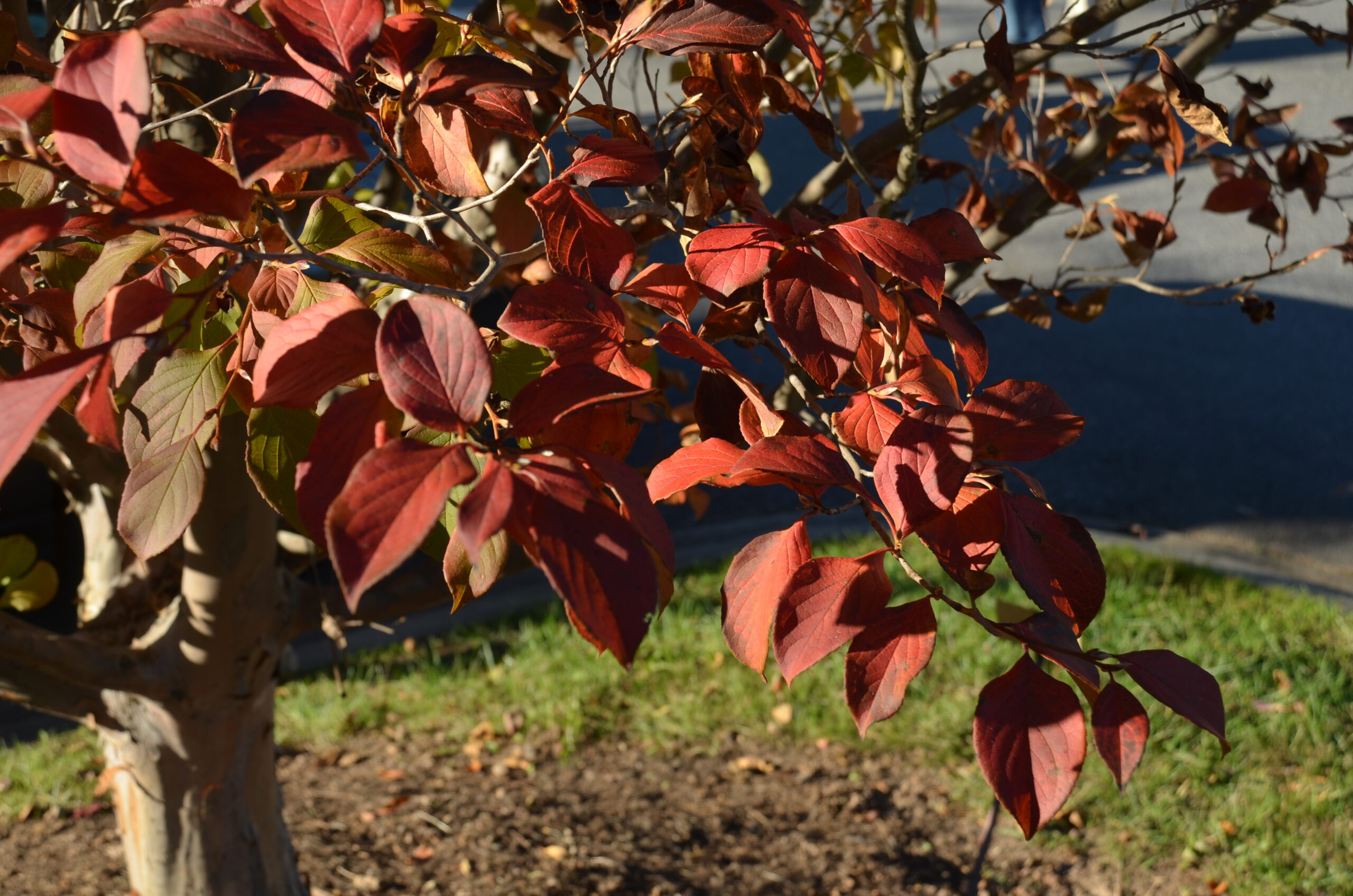
Visually, Japanese stewartia provides four seasons of ornamental beauty. Lovely 2-to-2.5-inch cup-shaped white flowers, with showy orange-yellow stamens, appear in early June for 2 – 3 weeks. The 3- 4 -inch blemish-free, dark green summer foliage turns crimson red in mid- autumn, depending on its location. Its patchwork mottled bark is an added plus. This cherished arboreal beauty tree becomes more beautiful as it ages. Trunk and lateral wood peels away in thin strips of gray, orange, and reddish-brown. Hard capsulated oval fruits, greenish to brownish in color, ripen in late fall.
Proper site selection is keenly important, which is very similar to our native flowering dogwood (Cornus florida). Japanese stewartia requires a humus-rich, acidic pH, and well-drained soil along with all-day filtered sunlight or six hours of morning /early afternoon sunlight. Spring feed with a slow-release fertilizer at moderate rate and apply 3-4 inches of an organic mulch.
Prolonged periods of scorching summer heat and low rainfall may be damaging to the foliage of Japanese stewartia. Irrigate to cool and refresh the tree and keep properly mulched. Sheltered S. pseudocamellia from winter dry winds.
A popular alternative in the world of stewartias is Korean stewartia (S. pseudocamellia var. koreana). Flowers are white, about 3.0 inch wide, 5-6 petals, large yellow center (yellow stamens). Similar to S. pseudocamellia except flowers are flatter rather than cup-shaped. Both bloom around the same time.
Stewartia, Camellia, and Franklinia are all members of the tea family (Theaceae) and produce similar flowers. Availability is limited in the U.S specialty nurseries.
 Posted in


