
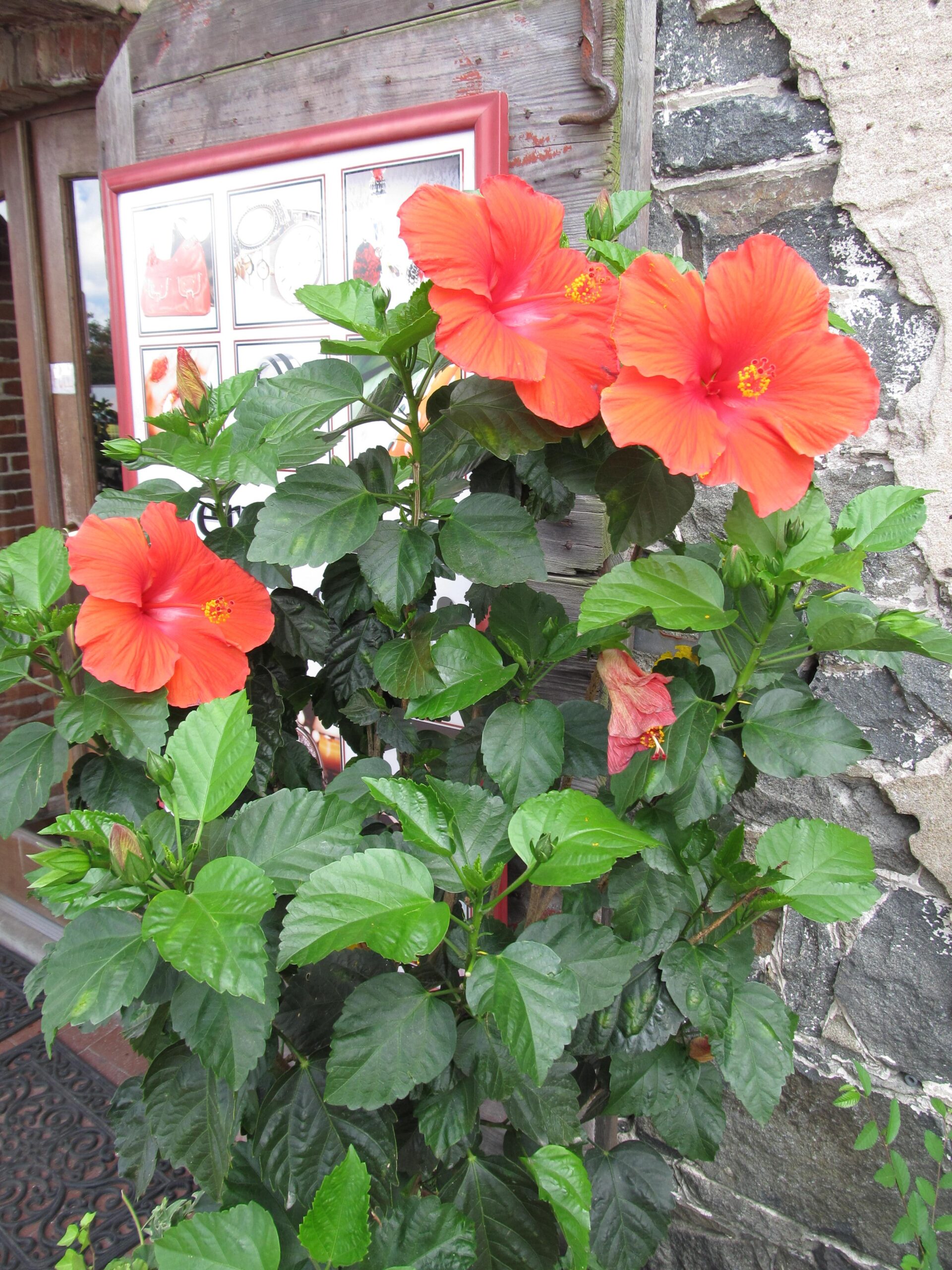
Tropical Hibiscus(es) (Hibiscus rosa-sinensis) are a non-hardy group from southeast Asia. They require temperatures above 50°F year-round (USDA Plant Hardiness Zones 9–12) and will likely be injured at temps below 35°F. They are evergreen cousins of the very hardy deciduous shrub group —Althea (H. syriacus) and herbaceous perennial favorites like Rose Mallow (H. moscheutos) and Scarlet rose mallow (H. coccineus).
Tropical hibiscus are often purchased at garden shops as patio, deck, or house plants. To repeat, plants are not frost tolerant. Their magnificent blooms last 1, maybe 2 days, and in an awesome range of color shades and sizes. Flower widths range from 2-10 inches across. Single or double flowers are available. In southern states or in greenhouses, some grow into large landscape shrubs, 4-10 feet tall and 3-6 feet wide.
Tropical Hibiscus can be grown in containers and offer a tropical environment on a deck, patio or around a pool. Tropical hibiscus are sun-lovers, e.g. they prefer moderate to full day sun, but do tolerate light shade. Less light translates to fewer and/or smaller flowers. When bought into the home to overwinter, set plants near a south- or west-facing window.
Plants prefer an evenly moist root ball; do not allow hibiscuses dry out After planting in the ground, provide supplemental irrigation the first year as needed until the plant is well established. Do NOT overwater. When potting, choose a container that is sized to the plant. Check your plant every few days. Over time, you will determine its water requirements and make adjustments according to how much sun or rain it is receiving.
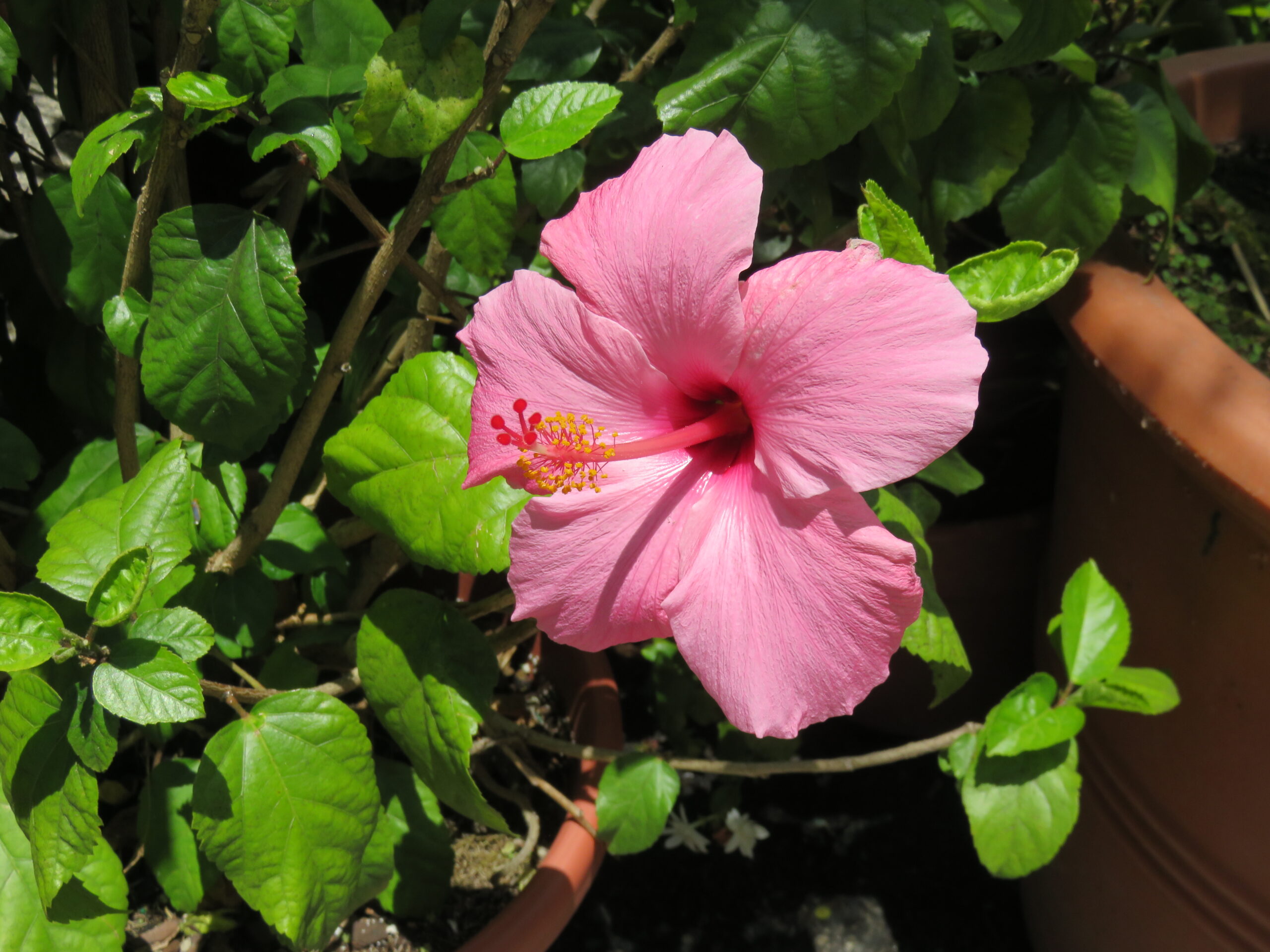
In northern zones plants should be overwintered indoors in a South- or West-facing window. Hibiscus require less water during the cooler months. Scout for pests and diseases before bringing them inside and treat as needed. Prune through fall-winter to hold a desired shape. Before plants go outdoors in the spring, give branches a hard cutback.
Slow-release fertilizers are an easy way to keep plants fed throughout the growing season. Another feeding alternative is to feed with a complete fertilizer containing high phosphorus to encourage sturdier stems and more flower numbers. Select a fertilizer designated for tropical plants that contains supplemental iron to avoid chlorotic (yellowed) foliage. Feed plants from April through October and reduce feeding by one-half.
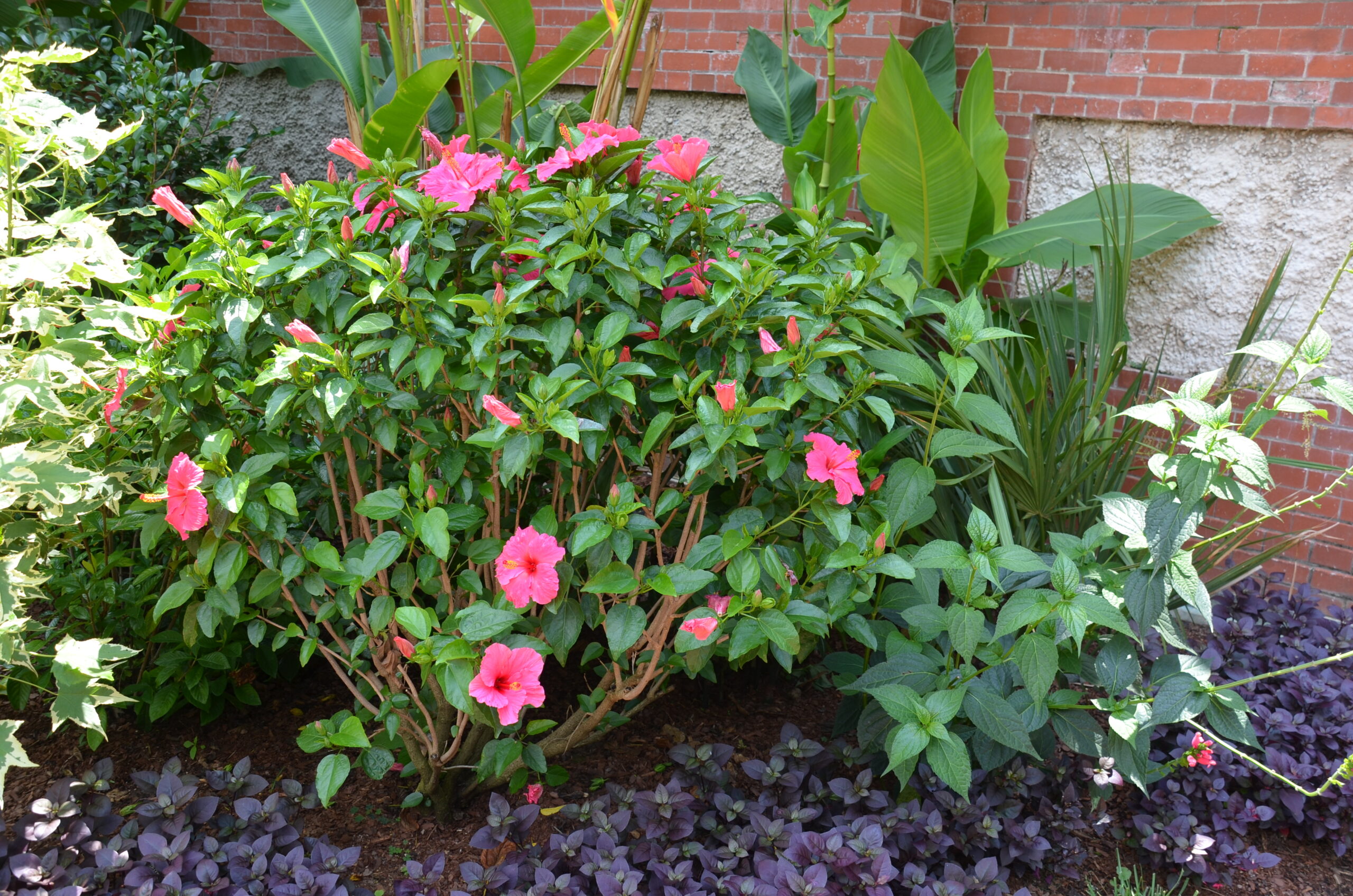
Unfortunately, plants are susceptible to a number of sap-feeding insects. Inspect leaves and stems for aphids, thrips, spider mites, whitefly, scale, and mealybug. Look particularly the undersides and spray with horticultural oil or insecticidal soap. Alternatively, prune out infected stems if outbreaks are severe. A few potential disease problems are powdery or downy mildew and botrytis. Black spots are often seen as well but their causes are vast and hard to identify without proper testing.
Occasionally floral buds or leaves do not open, turn yellow and drop off. Climatic issues, overwatering and drought stress may be the cause. Roots injury may be a cause. Contact your county/state Extension office for proper identification and treatment of plant maladies.
 Posted in


