
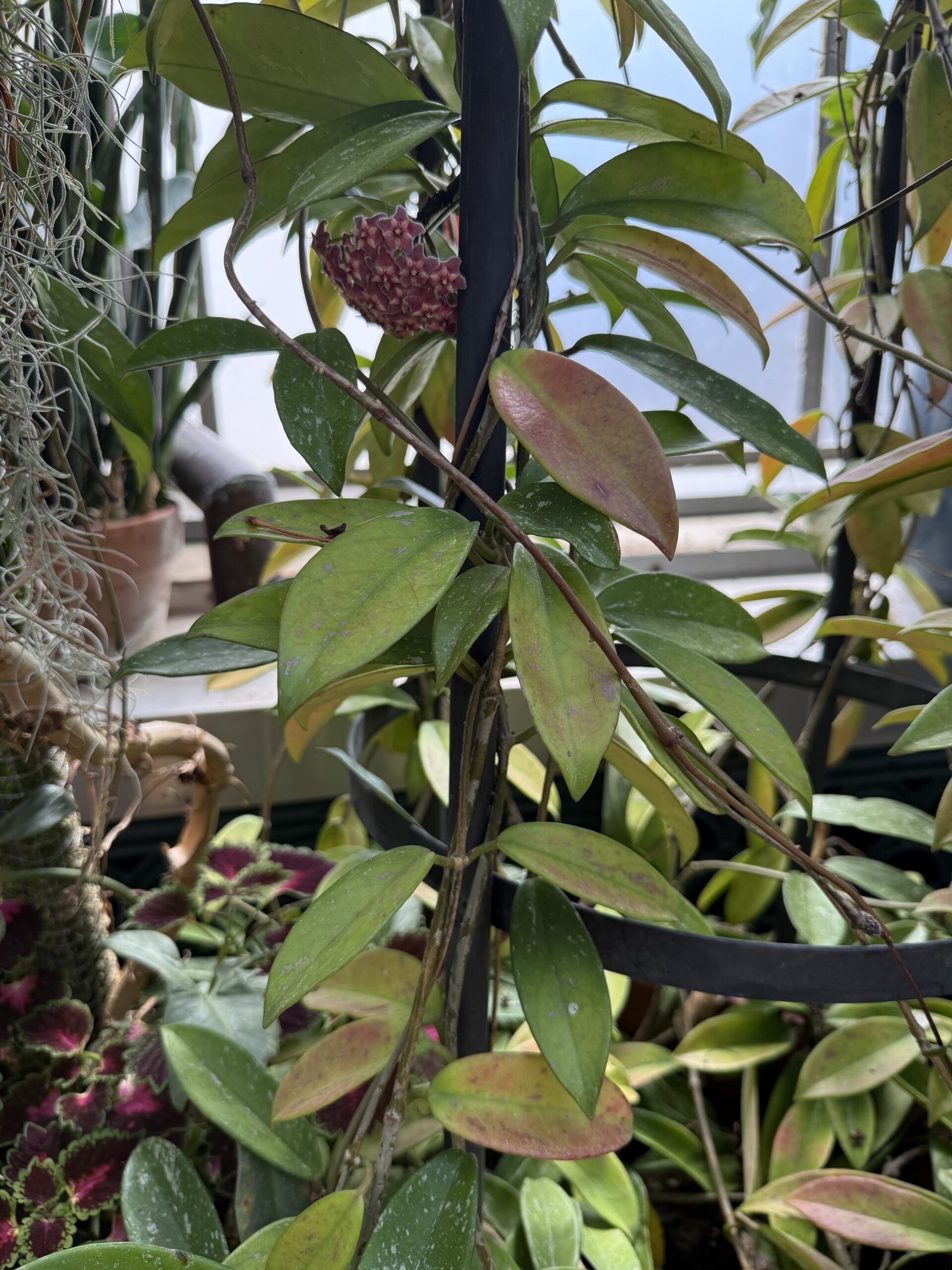
Hoyas, also called wax plant, porcelain flower, honey plant, common waxflower, are an Asian native plant (epiphyte) with fragrant, low-maintenance with lovely flowers that grow in a ball-shaped cluster. These low-maintenance plants produce woody stems with waxy evergreen leaves.
Hoyas have become hugely popular among house plant collectors and available at most retail garden centers, box stores, and plant shops. Depending on species and variety, plants grow in a vine or bushy form. Full length or height of the plant should be 2 to 4 feet. Hoyas prefer bright, indirect sunlight for 2-6 hours daily and moist, well-draining soil that should dry out between waterings.
Vining hoyas are grown in a hanging basket for trailing or support on a trellis within a container. Plant prefers moderately moist, well-draining soil; allow hoyas to dry out between waterings. Hoyas are light feeders. Feed with a slow-release fertilizer once monthly. Orchid fertilizers are adequate.
Hoyas generally bloom from June through September. Flowers grow in a ball-shaped cluster and last for 6-9 days. Each cluster may contain up to 40 individual flowers packed tightly together. Each flower appears to be molded from wax or porcelain, thus their common names. Flowers often sport a colorful central corona eye. Flowers may be sweetly fragrant or quite foul.
Generally, water plant(s) every 7-10 days. Allow plant to dry out between waterings, usually 7-10 days between waterings. Overwatering leads to root rot issues. Hoyas thrive in warm and humid environs. Consider using a humidifier or growing hoyas in a humid room, such as a bathroom with adequate light.
Five Popular Hoya Species:

- H. carnosa: twining trailer with light pink flowers and dark, green leaves; ‘Krimson Queen’ is a popular variety.
- H. compacta ‘Indian Rope’ – light pink flowers and curly waxy leaves; popular choice among hoya collectors.
- H. kerrii variegata ‘Sweetheart Plant’ -heart-shaped foliage with white margins; yellow and orange flowers.
- H. publicalyx – thick, waxy, glossy foliage that climb and cascade beautifully and star-shaped fuschia flowers.
- H. australis – oval-shaped waxy leaves, long climbing vines, and fragrant white flowers.
Hoya plants flourish in a well-draining, loose potting mix that prevents waterlogging but still retains adequate moisture. An ideal mix that promotes good aeration around the roots includes amendments like coco coir, orchid bark, perlite, and/or sphagnum peat moss.
Propagate hoyas by stem cuttings rooted in gritty sand or water jar in a warm, air-humid environment. Treating cuttings with a mild rooting hormone is optional.
Inspect plants at least monthly for aphids, mealybugs, and spider mites. All can be controlled with neem oil. Possible fungal diseases include botrytis blight and root rot. Inspection, along with good cultural practices, are the key to growing pest-free hoyas.
Outdoors, hoyas may be grown in USDA hardiness zones 10-12. Choose a location with dappled full day to morning only sunlight. Some Hoya species receiving only a few hours of indirect sunlight may not flower poorly.

 Posted in


