
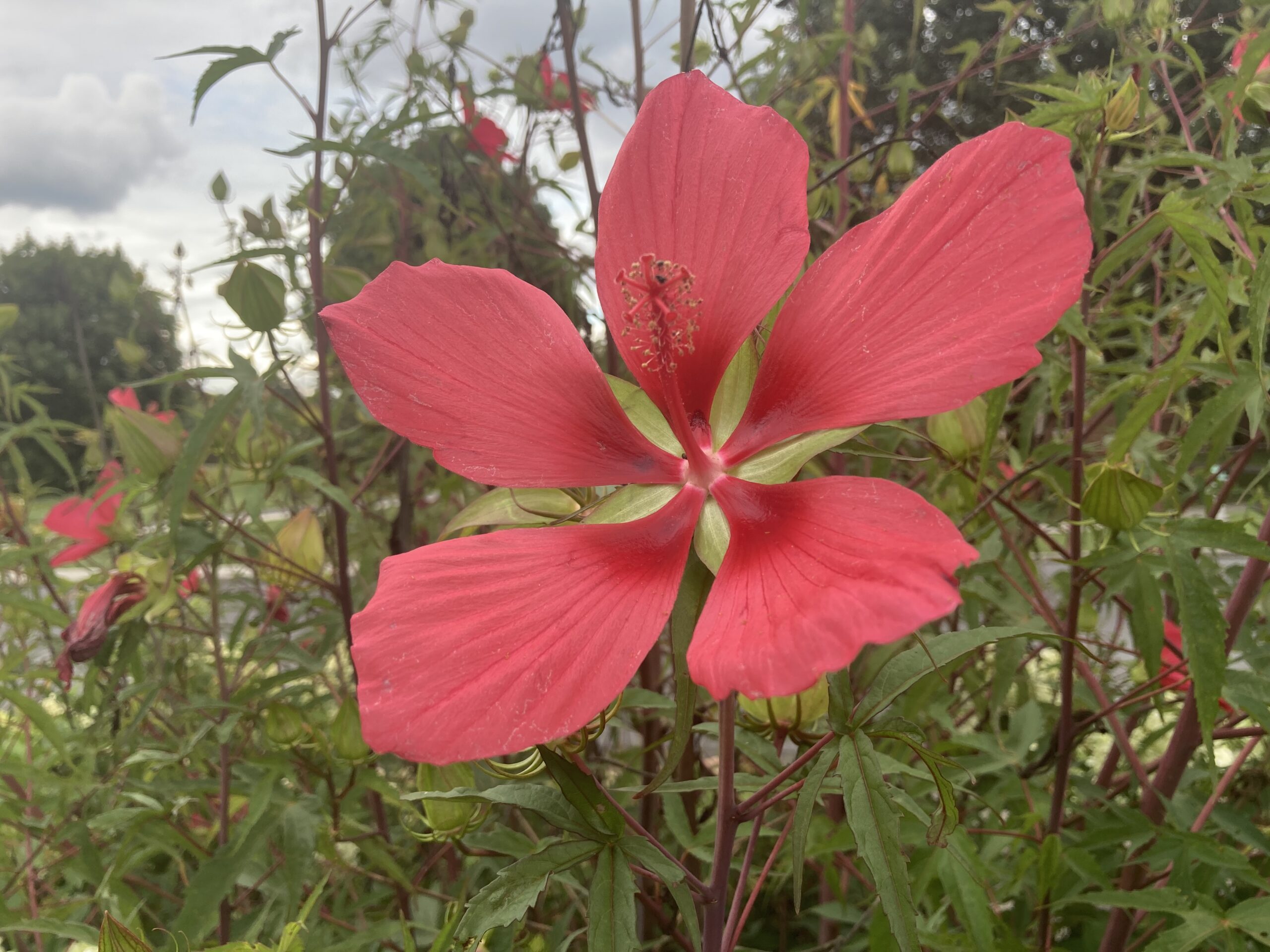
Swamp hibiscus (Hibiscus coccineus), aka scarlet rose mallow, is a hardy perennial plant that grows in swamps, marches and roadside ditches in the Southeastern U.S. (USDA hardiness zones 5-9). It can grow 6 to 8 feet tall and 2 to 3 feet wide. The 5- to 6-inch-long palmate leaves are 3 – 7 lobes and have jagged teeth along their margins. Deep red flowers measure 5 to 6 inches across in mid to late summer. A white bloom form ‘White Texas Star’ is also available.
Scarlet rose mallow is a late spring starters, but their growth rate is voracious. This herbaceous to semi-woody perennial dies back in the winter and returns in late May, generally following the emergence of rose mallow (H. moscheutos). Speed of stem growth is torrid and easily achieves 5-6 feet by late July when first blooms start opening. They can grow to be over 6 feet tall and may need staking, depending on their height and position. Swamp hibiscus bloom continuously, and plentiful blooms last only 1-2 days.
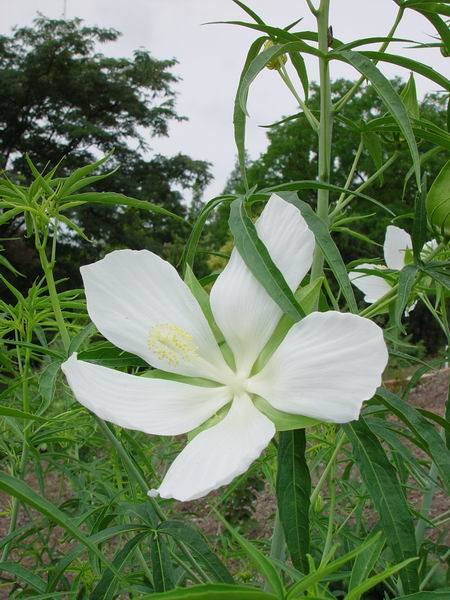
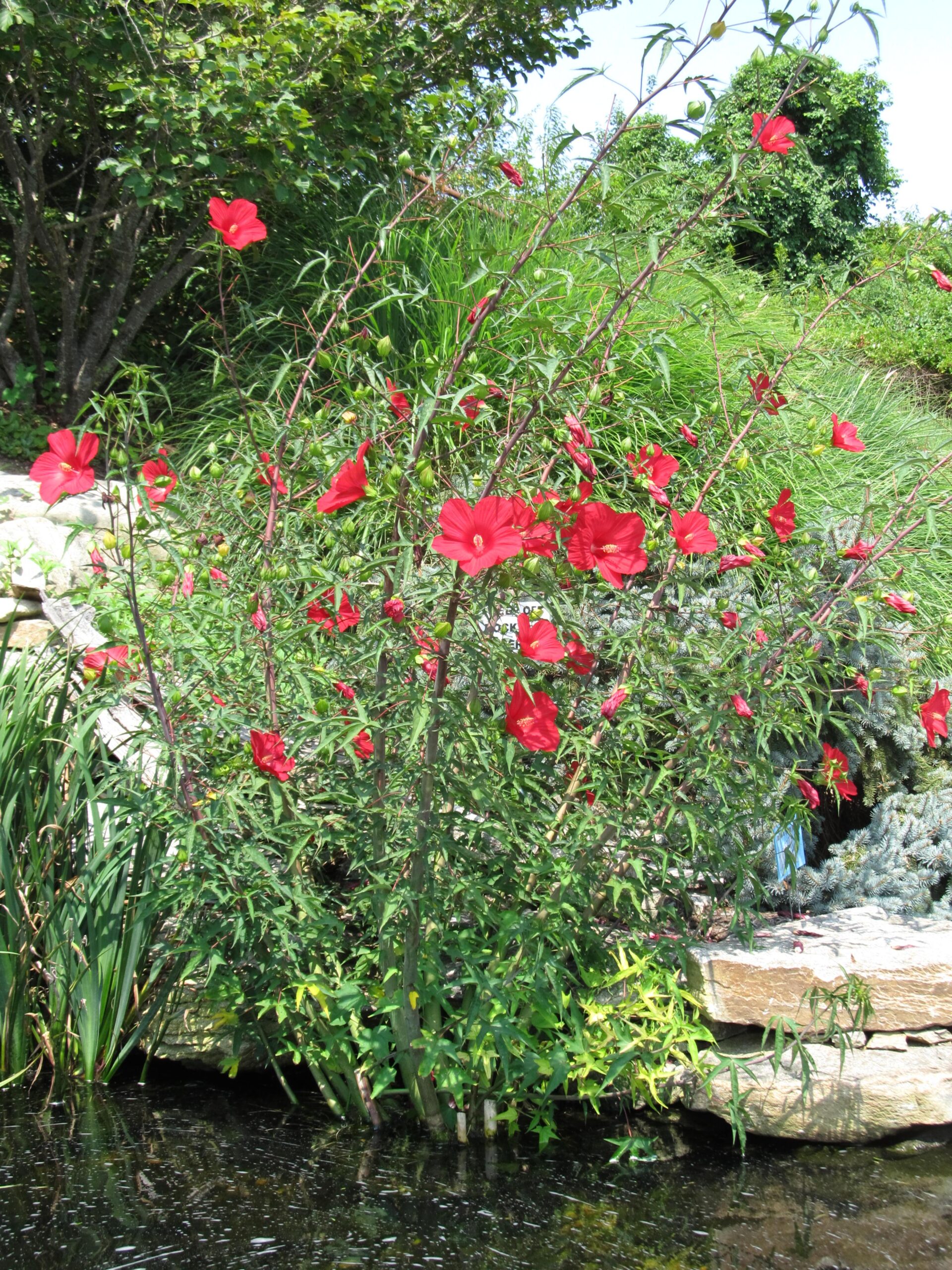
Swamp hibiscus grows well in loamy well-drained soils with back-up irrigation, but is equally at home in wet boggy sites, such as pond or the edge of a stream. Set them at the back of a perennial border, against a courtyard wall, or in rain and pollinator gardens. The plant attracts butterflies, hummingbirds, and bees. Flowers are a wildlife food source. Unfortunately, deer may consume the colorful flowers.
Swamp hibiscus thrive in hot humid summers. If you garden in a northerly zone, protect plant roots and crown with a 3-4 inch layer of organic mulch (grass clippings, fallen leaves, or yard waste) in late autumn. Swamp hibiscus can easily susceptible to leaf burn if summer rainfall is low. Avoid planting on a windy site.
In spring fertilize with a 6-month slow-release formula like Osmocote™ or Nutricote™. In spring remove the previous year’s tall dead stems. Optionally, cut new spring growth back in early June (4-5 weeks after shoot emergence) to encourage branching and grow a more manageable 3-4 foot plant to summer’s end.
Plants may be damaged by stem canker, rust, leaf spots, aphids, and hibiscus sawfly. Scarlet Rose Mallow usually outgrows most injury by outgrowing these pests and still present an attractive floral show. If plants are grown in partially shade, swamp hibiscus may require staking.
 Posted in


