
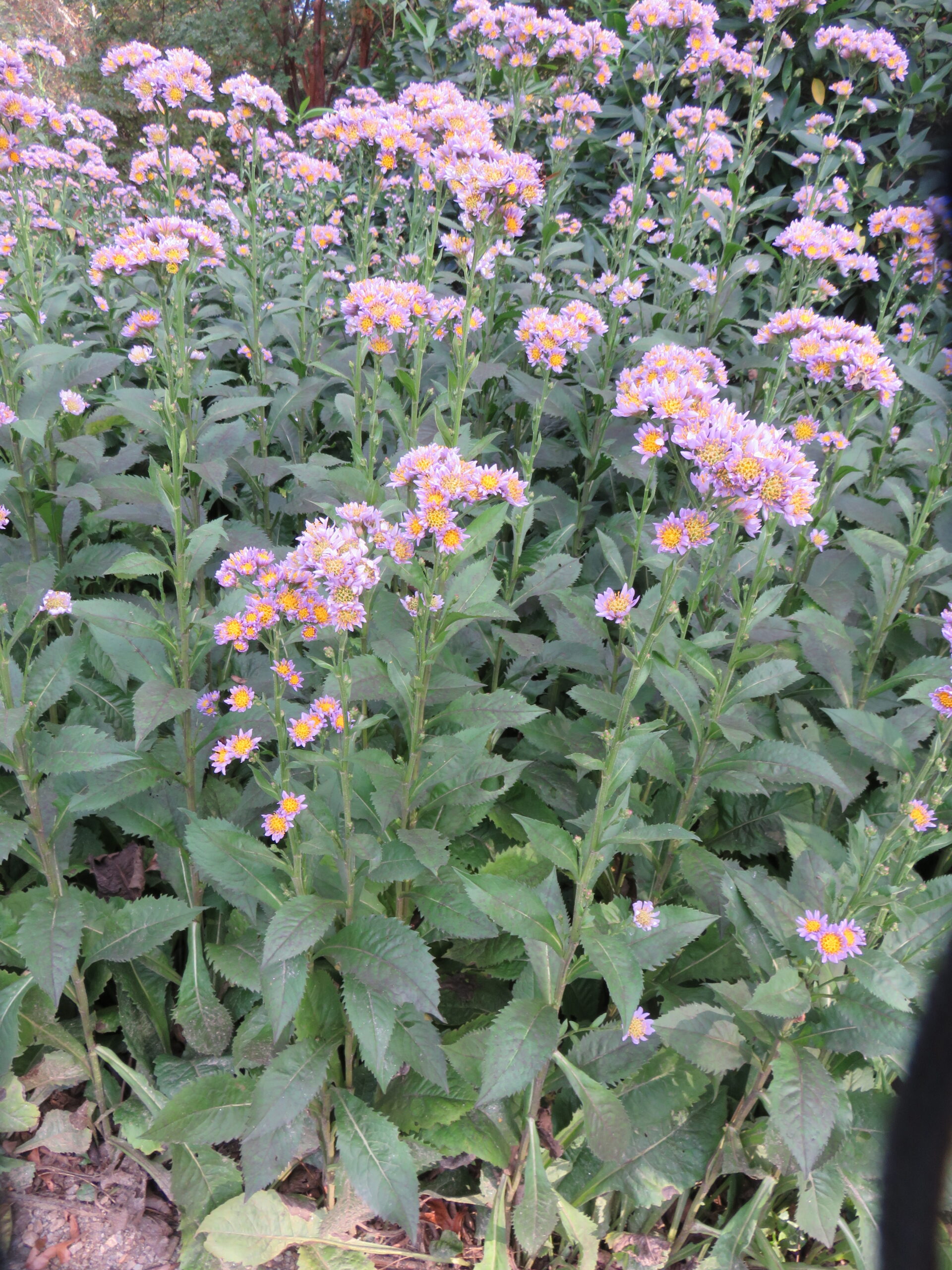
Tatarian aster (Crinitaria tataricus) / (Aster tataricus) is an herbaceous perennial wildflower indigenous to eastern Europe, Siberia, and Mongolia (USDA hardiness zones 3-9). Its stiff sturdy stems support showy abundant flower clusters comprised of 1 inch (2.5 cm) across, with deep lavender to blue rays and yellow centers. The flat-topped clusters add late season color in the fall garden. A. tataricus ‘Jindai’ is a slightly dwarfed type found in the Jindai Botanical Garden near Tokyo, Japan.
Plant in full sun and it grows well in a wide variety of well-drained soils. Rich soils may lead to it spreading via a vigorous rhizomatous root system and become too aggressive or weedy. Lower foliage is dense at the bottom, with paddle-shaped leaves up to 2 feet long that get smaller as they grow up the stem.
‘Jindai’ tatarian asters grow tough as nails. Topping out at 6 feet with numerous clusters measuring 3 feet or more across, plants stand up to weather, pests, and diseases. Tatarian asters are a bold choice for a late-season pollinator plant; butterflies, moths, bees, and other pollinators come for the plentiful nectar.
This tall aster is best planted as a long back border or use in a naturalized area. Stems are thick and sturdy but may require staking if pampered in humus-rich, moist, fertile soils. Warning: Japanese aster is an aggressive plant that spreads aggressively via rhizomes. Their size limits where to plant it in the landscape.
It tolerates the heat and humidity of southern summers well. Plant wilt, powdery mildew, and botrytis are occasional problems. Plant spacing is important to avoid leaf mildew issues. To repeat, in good fertile soils, this aggressive aster may require staking in partial shade areas. In the spring divide the root ball every 3-4 years or grow from seeds. See below.
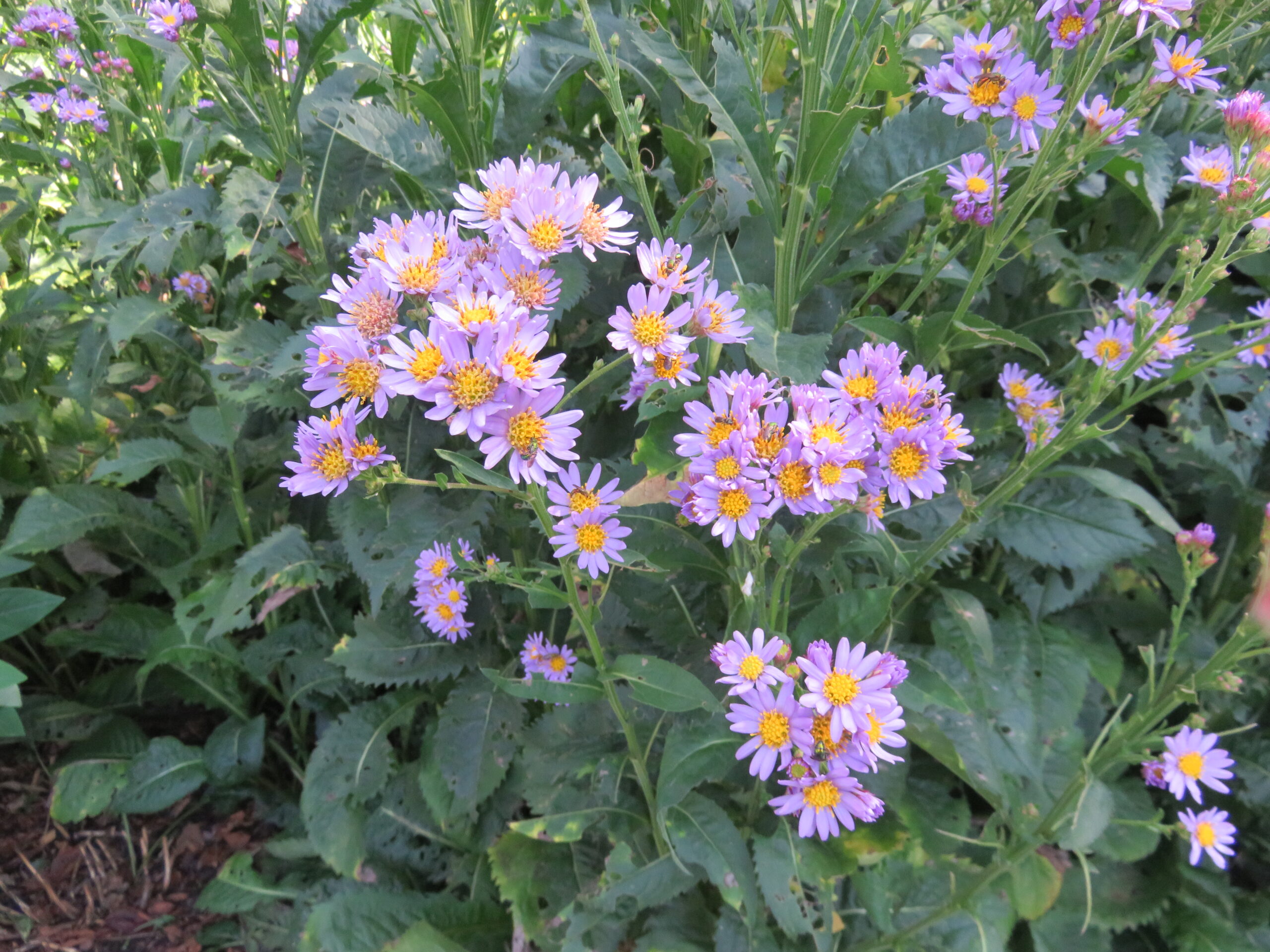
Tartarian aster is not rated invasive, although the plant grows very vigorously. Start out with collected seed is not recommended. Why?… ‘because ‘Jindai’ or any cultivated variety don’t usually produce “true to seed,” and fail to replicate the desirable characteristics of the parent plant. Shoot cuttings may be started in spring; dip in a mild rooting hormone and then place it in potting medium to grow roots. Place cuttings in a plastic tent for added humidity. Digging root divisions are another option.
Tartarian aster is a host plant for the larvae of the black swallowtail butterfly.
 Posted in


