
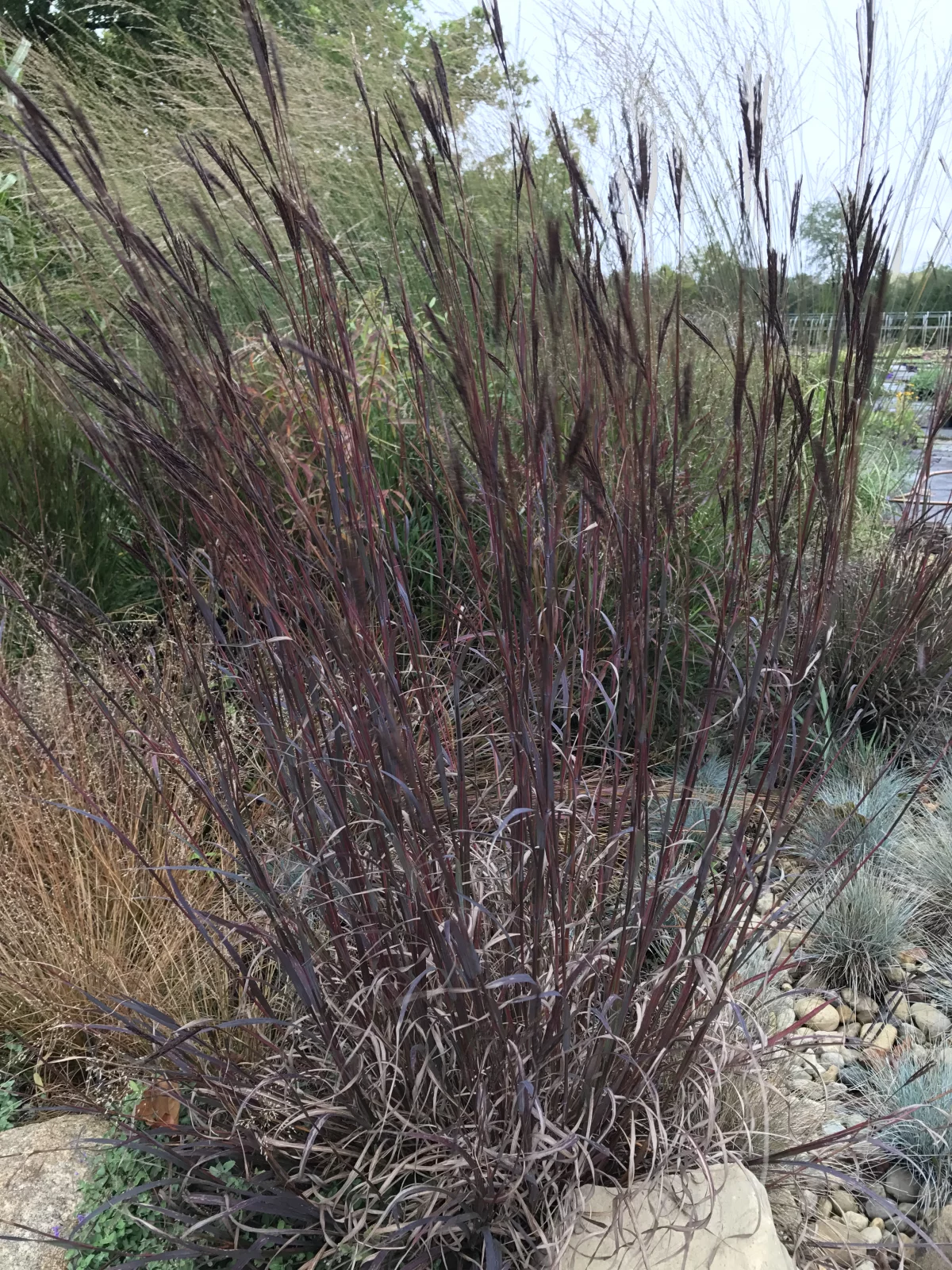
Big bluestem grass (Andropogon gerardii) is a tall, native, perennial, warm season grass that is a dominant species in a large part of the Midwestern U.S. (zones 3-9). Its attractive foliage that changes color seasonally, its good architectural height, and its interesting flower/seed heads have caught the eye of plant breeders.
‘Blackhawks’ (PP27,949) was introduced by plant breeder extraordinaire Brent Horvath at Intrinsic Perennial Gardens in Hebron, IL. This stand-out cultivar promises better reliability and performance in the landscape. The upright dark green foliage begins to turn purple in August as nights cool and is nearly black by late September.
Blackhawks has been selected the 2026 Perennial Plant of The Year by the Perennial Plant Association. Clumps stand erect with flattened leaves (to 2 feet long and 3/8 inches wide). By autumn plants (including inflorescence) finish 5 feet tall and 2 feet wide. It grows taller in moist soils and shorter in dry soils.
Big bluestem grass is easily grown in average, dry to medium, well-drained soils and in full sun. This prairie grass grows in a wide range of soils and growing conditions. Under ideal conditions, it freely self-seeds, demonstrates superior drought tolerance and easy maintenance. Cut stems to the ground in late winter before new shoots appear.
Big bluestem is nick-named “turkeyfoot grass”. In late summer, flowering stems rise in late summer above the foliage clump bearing purplish 3-parted, finger-like flower clusters (to 4″ long) resembling turkey feet.
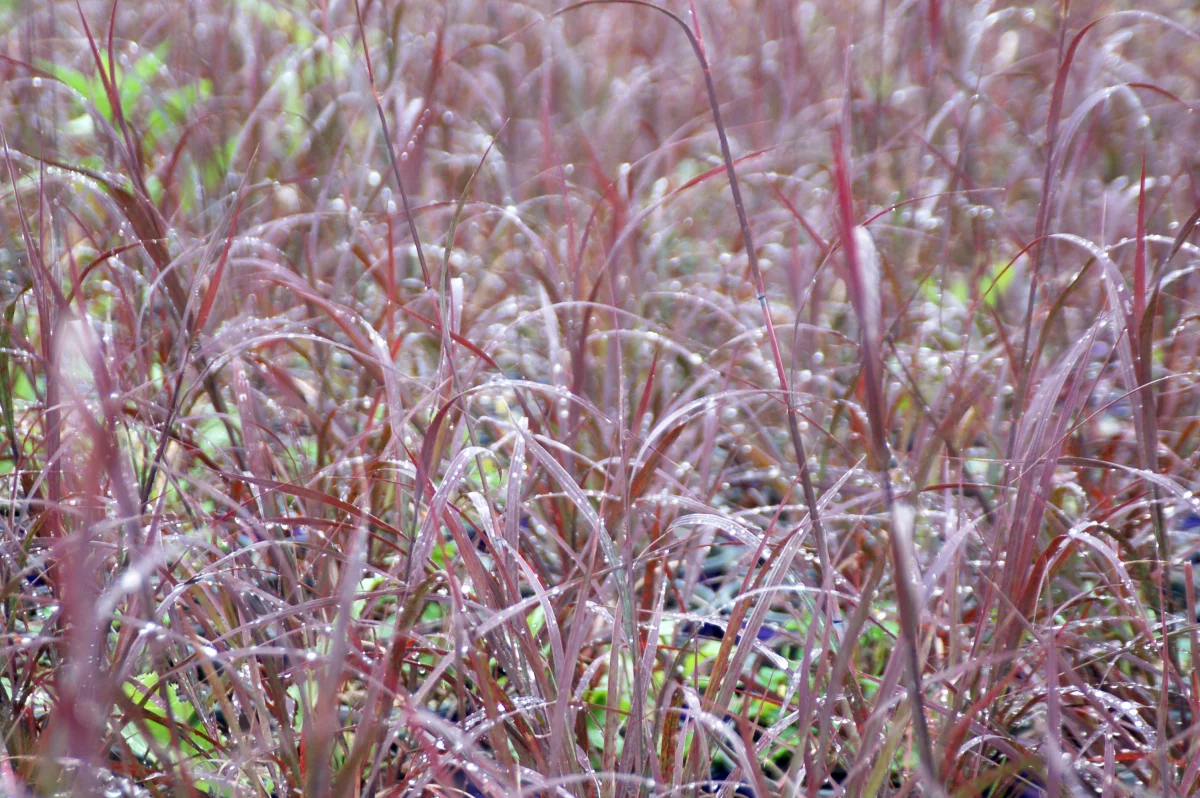
Enjoy the seasonal color changes of ‘Blackhawks’ starting with its dark green foliage in early season. By mid- to late summer, leaf tips and nodes turn purple, and burgundy red inflorescences emerge. As nights cool, the entire plant intensifies to a dark, rich purple that’s almost black.
Blackhawks Big Bluestem has no serious insect or disease problems. Extensive root system makes big bluestem a good choice for erosion control. It is expected to be also deer-proof.
Landscape Uses: “Blackhawks Big Bluestem is somewhat shorter and more upright than the species. Weave it through perennial plantings for brilliant contrasts and striking combinations. It is best massed in wildflower meadows, prairie or naturalized areas. Plant it in a combo in mixed containers. Due its size, Blackhawks is best suited in back of a perennial border or native plant gardens as a screen or accent
 Posted in


