
Prickly pears are a subgroup of Opuntia, identified by their wide, flat, branching pads. They are also called nopal cactus or paddle cactus. Most prickly pear plants are found in warm, dry climates like the Southwestern U.S., although there are some cold-hardy species such as the Eastern prickly pear (O. humifusa). (USDA hardiness zones 4-9). Prickly pears have a combination of detachable spines and tufts of barbed bristles (glochids) that can cause significant allergic skin reactions.
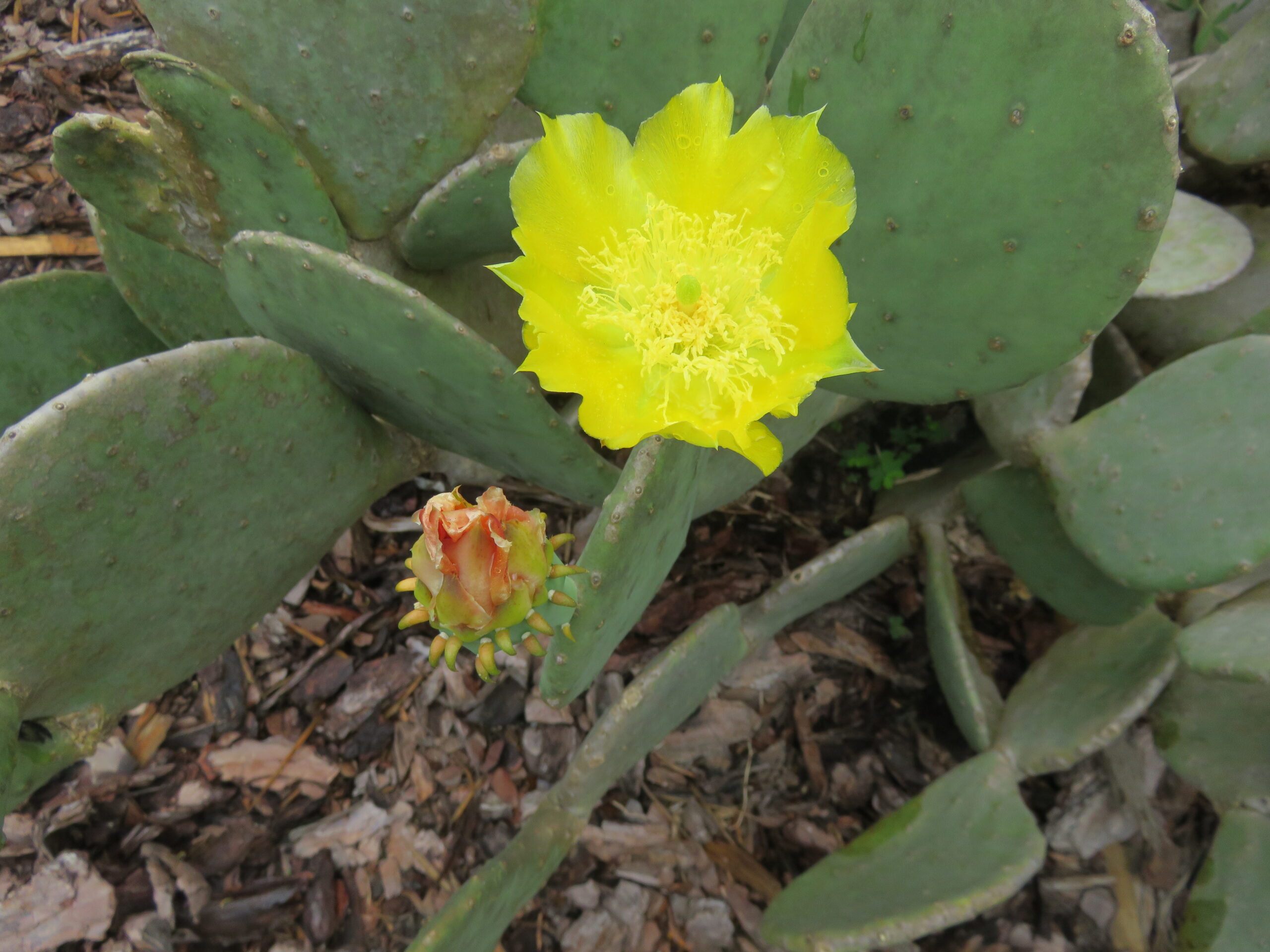
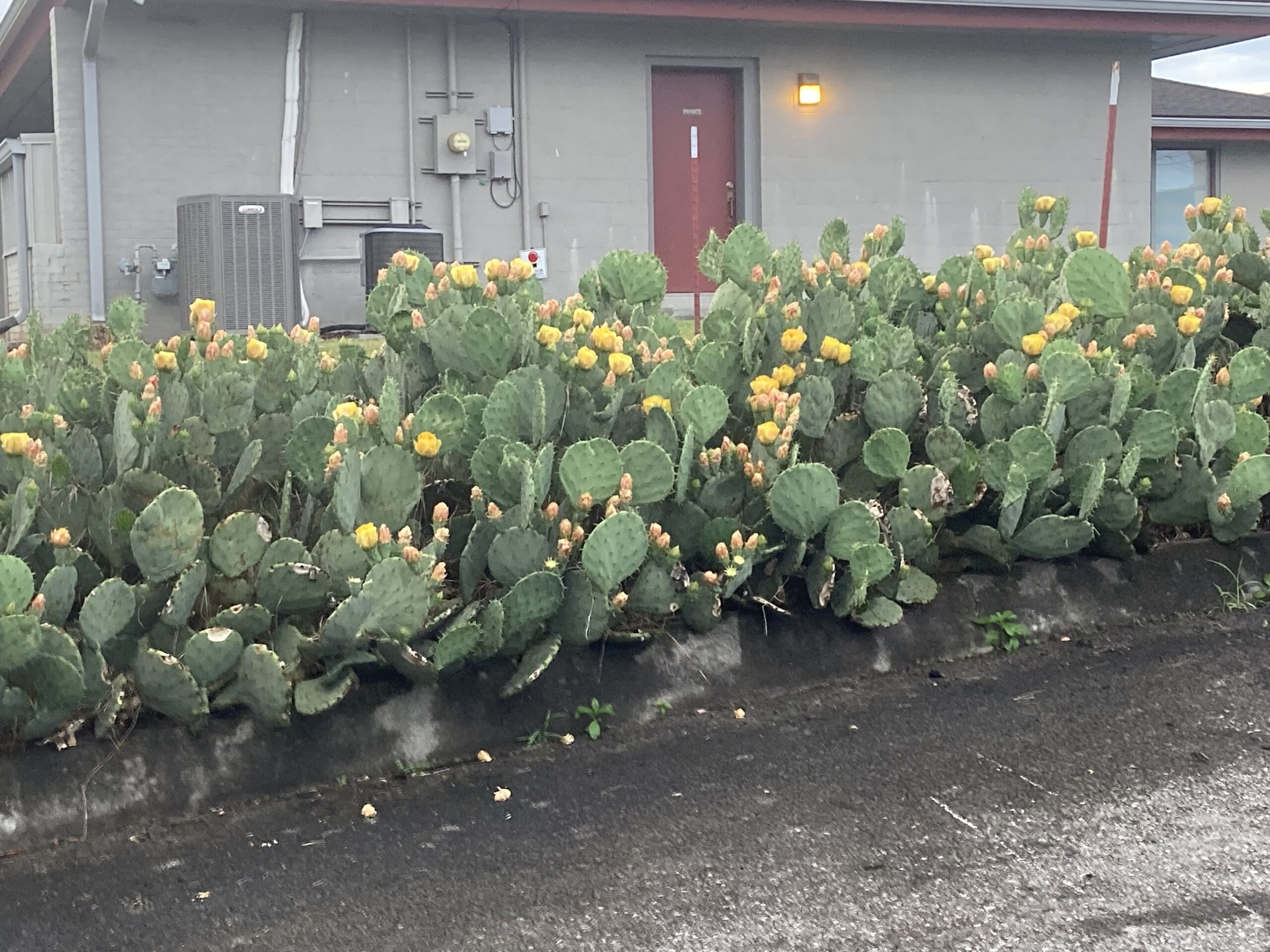
A bed of prickly pear cactus is called a colony. The grey-green vertical pads and 4-inch-wide yellow flowers, along with the edible colorful fruits of most varieties are reasons for their popularity garden-wise. Numerous large yellow flowers form along the flat edges of discs or pads. Pads are covered with far too many piercing and treacherous spines. Pads break off and root into the soil. As prickly pear plants prepare for winter, pads may appear shriveled and lay prostrate on the ground. They quickly recover (green up) in spring.
Pad cacti prefer full- to partial-day (6-hours minimum) sunlight. Plants are highly disease and pest resistant. Occasionally, inspect a colony for mealybug and scale insects and root rot disease when seasonal rainfall is unusually high. Flowers attract bees and hummingbirds. Prune away any damaged or rotted pad to maintain a colony’s appearance. Always wear heavy duty gloves when working with prickly pears.
Prickly pears are popular additions to in gravel gardens. Watering once or twice a month in summer is recommended. A colony grows equally happy in fertile, well-drained soil, sandy or particle soil preferred. Fertilize sparingly with a slow-release product.
Three other Opuntia species are grown in U.S. landscapes and in the home are:
- Bunny ears cactus (O. microdasys): Renowned for its resemblance to rabbit ears, this adorable cactus features soft, white spines (glochids) and small yellow flowers. (zones 9-11).
- Indian fig opuntia (O. ficus indica) boasts large, flat pads and produces sweet, pear-shaped fruits which are valued for its edible fruits and pads, as well as its ecological and medicinal properties. Grows up to 15 feet tall and wide. (zones 8-11).
- Spineless varieties like O. cacanapa ellisiana grow up to 3-4 feet tall with oval, gray-green pads with slight purple tinge in winter; vibrant yellow flowers in spring and bright red fruits in fall. They’re virtually have no glochids on the pads but be wary of an occasional tiny spine or two. (7b-11).
The tiny stiff bristles (called glochids) capture pollen which insects gather up and carry to other plants. Pads are edible (called “nopales”) and fruits, called “tunas”, are staples in Mexican cuisine.
In my travels a number of public gardens have wonderful collections of Opuntias including Botanical Gardens in Denver and Atlanta.
 Posted in


