
Japanese apricot (Prunus mume), aka Chinese plum, is a beautiful reminder that perhaps the worst of winter may now be behind us. On days barely above freezing, their cheery fragrant blossoms open, although rarely in great numbers. Cold nights may damage any open blossoms, but new buds will emerge in the next warmup. This small flowering tree is cold hardy (USDA hardiness zones 6-9).
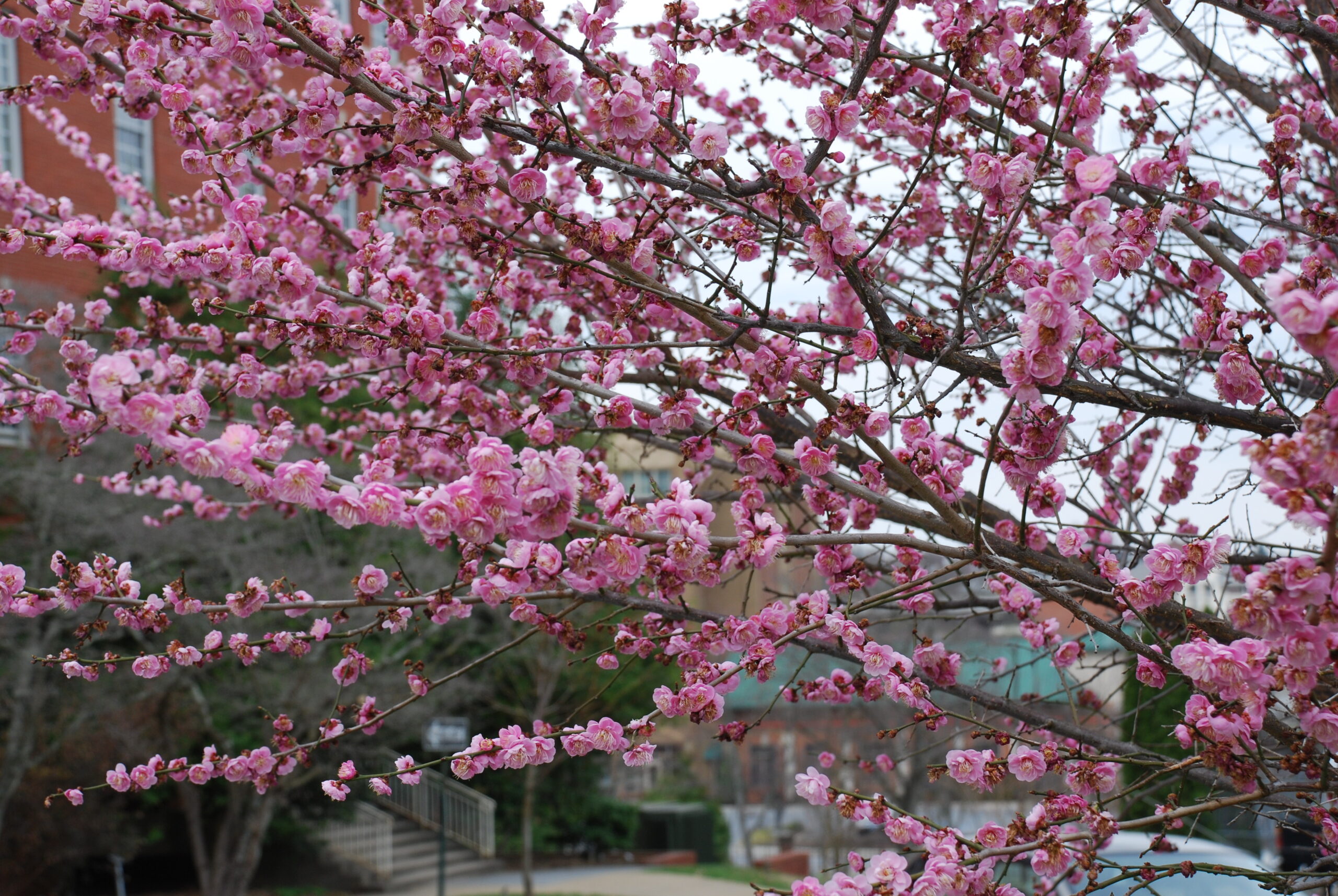
A member of the Rosaceae or rose family, Japanese apricot is native to China and has an important tree in Chinese and Japanese culture over 1500 years. The tree does not prosper in hot or dry locations. Plant in a moist, well-drained soil, mulch as needed, and prune to maintain an open branched habit. Although not indigenous to Japan, it is grown extensively there and boasts up to 300 cultivars with white, pink, or red color shades in single, semi-double or double blossoms.
Japanese apricot forms a rounded to oval crown and grows usually 15 – 20 feet tall and equally as wide. From January through February, the tree displays beautiful, delicate, and fragrant pale pink flowers on bare branches and brightens up the long winter days. Plant in a full sun area of the garden, near decks and patios where you can visually enjoy the winter bloom from inside your warm home.
Green ovate shaped leaves emerge with a spring season warm up. Yellowish-green, fuzzy-skinned fruits appear and can be harvested during the summer. Unfortunately, fruit taste is sour to bitter.
Prunus mume prefers full sun to partial shade, moist, acidic, loamy soils. An ideal site is one that offers protection from winter cold that will injure the flowers. Japanese flowering apricot blooms occur on the previous year’s wood. Spring pruning after flowering is the best time.
Their showy blossoms will brighten up a winter landscape when very few other trees are in bloom. Its cultivars include white, pink, rose, and red flowering in single and double forms. It is similar in habit and appearance to some of the smaller flowering cherries that bloom one to two months later in spring.
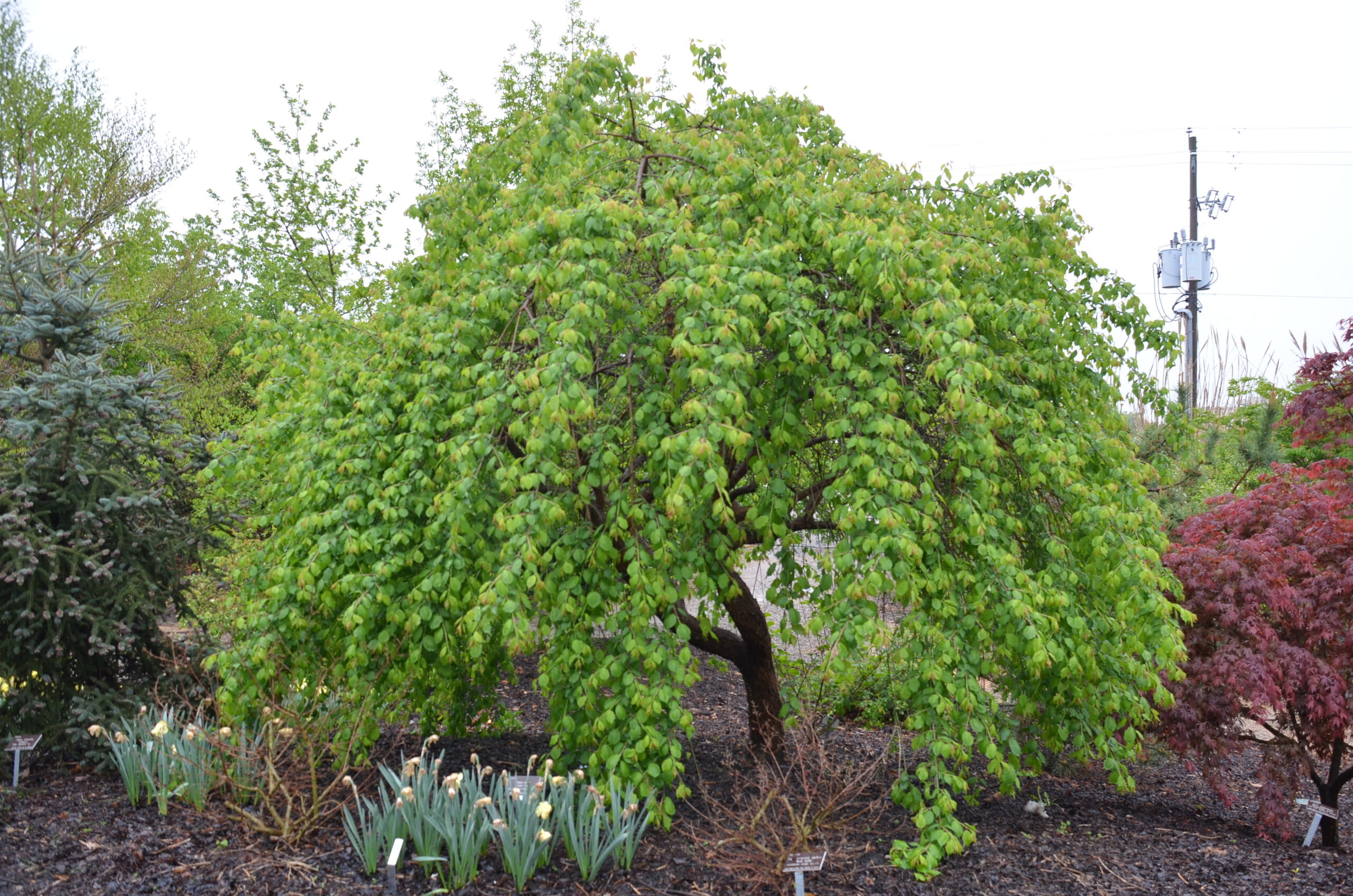
Unfortunately, its availability at most U.S. garden centers is not plentiful. Instead, shop online at a specialty nursery. Five personal favorites include: ‘Peggy Clarke’ – double deep rose flowers; ‘Bridal Veil’ – pale pink flowers; ‘Kobai’ – red, semi-double flowers; ‘Josephine’ – light pink flowers; ‘W.B. Clarke’, a weeping selection, 10 -20 feet tall and wide, double pink flowers. Some white-flowering forms are also available.
To enhance seasonal interest plant as a landscape specimen adjacent to a walkway, patio, or deck. Again, I emphasize that Japanese flowering apricot should be sited in a sunny protected location. Flowers emit a slight fragrance. Fruits are very tart to eat raw but can be processed into delicious jams and jellies.
Although a litany of several diseases and insect pests are listed for this tree, it tends to avoid most pest maladies that include aphids, scales, borers, spider mites, and tent caterpillars; diseases may include bacterial canker, and fruit brown rot. Fruit drop may become messy on lawn and paved areas. Leaves, stems, and seeds are toxic to dogs, cats, or horses if ingested.
 Posted in


