
Depending on where you garden, Canna lily (Canna spp.) is a tropical-looking, herbaceous annual or perennial. Its colorful foliage and long blooming time leaves a huge visual impact. Canna is not reliably winter hardy in the Southern Appalachian region (USDA hardiness zones 6 and 7). […]
Archive for the ‘Flowers’ Category
A Canna Lily Revival
Posted by Hugh on July 30th, 2011
 Posted in Canna lily, Canna lily, Fertilizing plants, Southern Appalachian Region, Summer flowering, Uncategorized, Virus diseases, water garden maintenance, watering tips, winter hardiness, winter injury
  Comments Off on A Canna Lily Revival
Native Plumleaf Azalea Blooms In The Heat Of Summer
Posted by Hugh on July 28th, 2011
Plumleaf Azalea (Rhododendron prunifolium) From my garden here is a look today (July 28th) at plumleaf azalea (Rhododendron prunifolium). Plumleaf is an Alabama native, and its orangey red flowers has been growing in my east Tennessee garden for the past 15+ years. It is hardy to zone 5-b (- 15°F) which includes most of the mid-Atlantic and southern New England states. Plumleaf handles Southern […]
Posted in acidic soil, Azalea (deciduous), compost, Deciduous Azaleas, Disease resistant, Drought tolerant, Hummingbird, Native Plant, Plumleaf azalea, Pruning, Southern Appalachian Region, Summer flowering, Summer heat tolerant, Trees & Shrubs Comments Off on Native Plumleaf Azalea Blooms In The Heat Of SummerMove Over AJ, Here Comes T-Rex
Posted by Hugh on July 26th, 2011
For nearly half a century, ‘Autumn Joy’ has been the leading “stonecrop” or “live forever” sedum cultivar planted. More than once I’ve heard this saying: “if Autumn Joy won’t grow in your garden, you should try another hobby. ‘T-Rex’ is a terrific new hybrid and ‘Autumn Joy’ is one of its parents. ‘T Rex’ has […]
Torch Lily Has Long Bloom Life
Posted by Hugh on July 23rd, 2011
Torch lily (Kniphofia spp.), aka “red hot poker”, is an easy to grow long-lived perennial from South Africa. Its colorful floral spike (and a little imagination) resembles a fiery torch or sizzling poker, visited often by hummingbirds, bees and butterflies. New cultivars are mostly hybrids and vary in plant height and flower color. Starting in […]
Posted in Attracting birds, Bee Favorite, Butterflies, deadheading, Disease resistant, Hummingbird, Perennials, Pruning, Southern Appalachian Region, Spring flowering, Summer flowering, Summer heat tolerant, Torch lily (red hot poker), Uncategorized, watering tips, winter hardiness Comments Off on Torch Lily Has Long Bloom LifeTo Grow Crocosmia Or Not?
Posted by Hugh on July 19th, 2011
This South African native, also called ‘montbretia”, thrives in full sun in well-drained average garden soil. A richly composted soil tends to boost foliage size and bloom count, but often weakens bloom stems, requiring some staking. Crocosmia may struggle in a wet soggy wintry soil. Established plants are exceptionally summer heat and drought tolerant. Brightly colored […]
Posted in Crocosmia (Montbretia), Mites, Perennials, plant nutrition, Southern Appalachian Region, Summer flowering, Summer heat tolerant, Winter Protection Comments Off on To Grow Crocosmia Or Not?Panicled Raintree Promises Showy Lantern Pods
Posted by Hugh on July 15th, 2011
Chinese flametree (Koelreuteria bipinnata) is also called bougainvillea raintree. This rare tree, available primarily from internet nursery commerce, deserves to be planted more. It has performed well in the Southern Appalachian region (USDA zones 6-b and 7) and is questionably hardy further north. Flametree is less popular in Southeastern landscapes than goldenrain tree (K.paniculata). Low branching […]
Posted in Chinese flametree, Invasive plant, Regional, Southern Appalachian Region, Summer flowering, Trees & Shrubs Comments Off on Panicled Raintree Promises Showy Lantern PodsGalinsoga -The Gardener’s Weed
Posted by Hugh on July 13th, 2011
Thirty plus years ago a gardening friend passed along this tidbit: “galinsoga (Galinsoga parviflora) is the gardener’s weed”. Galinsoga grows only in cultivated soils such as in your vegetable and/or flower garden from part shade to full sun. It prefers moist soil but grows almost anywhere, even between cracks in a sidewalk. Its thin leaves may wilt […]
Posted in Broadleaf weeds, Flowers, Fruits & Vegetables, Herbicide management, mulching, Pests, Southern Appalachian Region, Uncategorized, Weeds Comments Off on Galinsoga -The Gardener’s WeedSummer Blooming Oyama Magnolia
Posted by Hugh on July 10th, 2011
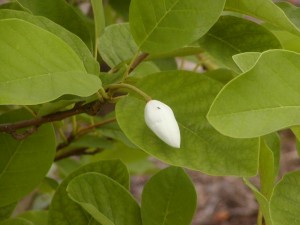
A friend on vacation sent me the attached photo from Wooster, Ohio. When I told him that it was Oyama magnolia (Magnolia sieboldii), he asked why gardeners are not growing it. Good question! Oyama magnolia is a 10-15 feet tall (and equal spread) deciduous tree or large shrub from eastern Asia. It prefers to grow […]
Posted in acidic soil, compost, Featured, Flowering, Large shrub, Magnolia, Magnolia sieboldii, mulching, Propagation (Cuttings), Pruning, Southern Appalachian Region, Spring flowering, Summer flowering, winter hardiness Comments Off on Summer Blooming Oyama MagnoliaInvite Sonata Cosmos Into Flower Beds
Posted by Hugh on July 7th, 2011
Over the past few years a flower bed containing cosmos (Cosmos bipinnatus) has become a rare sight across the Southern Appalachian region (USDA zones 6 and 7). Not so, at the recently visited BuGa National Gardening Show 2011 in Koblenz, Germany. Called by some “Mexican asters”, cosmos produces big 3- inch wide red, white, pink […]
Posted in Disease resistant, Flowers, Southern Appalachian Region, Summer flowering, Summer heat tolerant, watering tips Comments Off on Invite Sonata Cosmos Into Flower BedsTough And Reliable Chinese Astilbes
Posted by Hugh on July 4th, 2011
Astilbes (also called “false spireas”) are favorite late spring flowering perennials. The Astilbe x arendsii hybrids from Germany are most popular and available at local garden centers. Astilbes are very hardy in the Southern Appalachian region (USDA zones 6 and 7). If low maintenance is your goal, try Chinese astilbe (Astilbe chinensis var tacquetii). Their […]
Posted in Astilbe (false spirea), Flowers, Perennials, Southern Appalachian Region, Spring flowering, Summer flowering, watering tips Comments Off on Tough And Reliable Chinese Astilbes


