
Sweetgum (Liquidambar styraciflua) is a medium to large landscape tree, which matures to 65-70 feet in height and 35 feet in spread. To many people it’s called the cursed “gumball” or “ankle twister” tree, not be confused with the fruit balls of the American sycamore or London plane tree (Platanus spp.). Gumball detractors should look […]
Archive for the ‘acidic soil’ Category
‘Slender Silhouette’ Sweetgum…Very Few Gumballs!
Posted by Hugh on September 4th, 2011
 Posted in acidic soil, Disease resistant, Heat Tolerance, Native Plant, Soil drainage, Southern Appalachian Region, Sweetgum (Liquidambar), Trees & Shrubs, winter hardiness
  Comments Off on ‘Slender Silhouette’ Sweetgum…Very Few Gumballs!
Native Plumleaf Azalea Blooms In The Heat Of Summer
Posted by Hugh on July 28th, 2011
Plumleaf Azalea (Rhododendron prunifolium) From my garden here is a look today (July 28th) at plumleaf azalea (Rhododendron prunifolium). Plumleaf is an Alabama native, and its orangey red flowers has been growing in my east Tennessee garden for the past 15+ years. It is hardy to zone 5-b (- 15°F) which includes most of the mid-Atlantic and southern New England states. Plumleaf handles Southern […]
Posted in acidic soil, Azalea (deciduous), compost, Deciduous Azaleas, Disease resistant, Drought tolerant, Hummingbird, Native Plant, Plumleaf azalea, Pruning, Southern Appalachian Region, Summer flowering, Summer heat tolerant, Trees & Shrubs Comments Off on Native Plumleaf Azalea Blooms In The Heat Of SummerSummer Blooming Oyama Magnolia
Posted by Hugh on July 10th, 2011
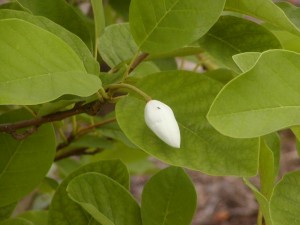
A friend on vacation sent me the attached photo from Wooster, Ohio. When I told him that it was Oyama magnolia (Magnolia sieboldii), he asked why gardeners are not growing it. Good question! Oyama magnolia is a 10-15 feet tall (and equal spread) deciduous tree or large shrub from eastern Asia. It prefers to grow […]
Posted in acidic soil, compost, Featured, Flowering, Large shrub, Magnolia, Magnolia sieboldii, mulching, Propagation (Cuttings), Pruning, Southern Appalachian Region, Spring flowering, Summer flowering, winter hardiness Comments Off on Summer Blooming Oyama MagnoliaRosebay Rhododendron for Cool Shady Landscapes
Posted by Hugh on June 24th, 2011
Rosebay Rhododendron (Rhododendron maximum) grows in dense woodland shade along cool mountain streams and on moist, rocky slopes. This Southern Appalachian native is extremely winter hardy to -15° to -20° F. It is a late-season bloomer reaching its peak around late June. Rosebay grows large, 15 to 20 feet in height. On some sites it […]
Posted in acidic soil, acidify soil, Attracting birds, compost, mulching, Rhododendrons, Shade Gardening, Southern Appalachian Region, Summer flowering, watering evergreens Comments Off on Rosebay Rhododendron for Cool Shady LandscapesSummer Pruning of Oakleaf and Bigleaf Hydrangeas
Posted by Hugh on June 15th, 2011
Bigleaf or “mophead” hydrangeas (Hydrangea macrophylla) tend to get tall and leggy, and outgrow their garden space. Our native oakleaf hydrangeas (Hydrangea quercifolia) are pruned as blooms quality declines. Remove or “deadhead” all withered or faded flowers. Main pruning time for these two species is from mid-June thru mid-August. Mopheads may rebloom if they had […]
Posted in acidic soil, Attracting birds, Attracting Butterflies, Bees and other pollinators, Deciduous, Disease resistant, Drought tolerant, Fertilizing plants, Flower Arranging, Flower arrangments, Garden Maintenance, Hydrangea, Hydrangeas, Landscape ideas, mulching, Native Plant, Oakleaf hydrangea (H. quercifolia), Planting tips, Propagation (Cuttings), Propagation (layering), Pruning, Purchasing Plants, Shade Gardening, Soil drainage, Southern Appalachian Region, Spring flowering, Summer flowering, Summer heat tolerant, Trees & Shrubs, Uncategorized Comments Off on Summer Pruning of Oakleaf and Bigleaf HydrangeasStewartia- A Tree for All Seasons
Posted by Hugh on June 1st, 2011
Japanese stewartia (Stewartia pseudocamellia) is a truly beautiful 20-30 foot small tree or multi-trunked shrub. Stewartia may be finicky to grow, but a great plant nonetheless. Although rarely seen in U.S. gardens, Japanese stewartia is the most commonly grown of the six stewartia species. All are winter hardy in the Southern Appalachian region (USDA zones 6 […]
Posted in acidic soil, compost, Disease resistant, Flowers, Pruning, Southern Appalachian Region, Stewartia pseudocamellia, Summer flowering, Summer heat tolerant, Trees & Shrubs, watering iris, winter hardiness Comments Off on Stewartia- A Tree for All SeasonsYellowwood Not Every Year Bloomer
Posted by Hugh on May 22nd, 2011
American yellowwood (Cladrastis kentukea) is a medium-sized flowering tree. In the month of May, a beautiful yellowwood tree is in bloom somewhere in the Southern Appalachian region (USDA zone 6 and 7). The 1- 1 1/2 inch white pea blossoms comprise the 8-14 inch long wisteria-like panicles which drape from branch and twig tips. Yellowwood may bloom 2 to 3 consecutive years […]
Posted in acidic soil, Failure to Bloom, Flowers, Medium sized Tree, Native Plant, Southern Appalachian Region, Spring flowering, Trees & Shrubs, Yellowwood Comments Off on Yellowwood Not Every Year BloomerSelect Hollies for Privacy
Posted by Hugh on May 16th, 2011
Ilex opaca ‘Greenleaf’ I continue to witness the overplanting of Leyland cypress (Cupressocyparis x leylandii) across the Southern Appalachian region (USDA zones 6 and 7). This is followed by Japanese cedar (Cryptomeria japonica) and western arborvitae (Thuja x plicata). These three evergreen species have a rapid growth rate and eventually attain heights of 40-60 feet, […]
Posted in acidic soil, Ilex (hollies), Southern Appalachian Region, Trees & Shrubs Comments Off on Select Hollies for Privacy‘Janet Blair’ Rhododendron
Posted by Hugh on May 13th, 2011
Here in the Southern Appalachian region (USDA zones 6 and 7) rhododendrons can be challenging. Of critical importance is to choose a good garden spot and to plant a hardy cultivar. Over the past 25 years ‘Janet Blair’ has been one of the most reliable varieties in my Northeast Tennessee garden. ‘Janet Blair’ bears medium-sized […]
Posted in acidic soil, compost, deadheading, mulching, plant nutrition, Rhododendrons, Southern Appalachian Region, Summer heat tolerant, Trees & Shrubs, Uncategorized, water garden maintenance, winter hardiness, Winter Protection Comments Off on ‘Janet Blair’ RhododendronGrowing Azaleas in Outdoor Containers Year-Around
Posted by Hugh on May 10th, 2011
In the Southern Appalachian region (USDA zones 6 and 7), if you desire to grow azaleas in above ground containers year around, you must select winter hardy cultivars. Two of the best for containers are ‘Elsie Lee’ (2½- inch wide semi-double light lavender blooms) and ‘Herbert’ (1 ¾- inch wide bright purple with dark blotch). […]
Posted in acidic soil, Azaleas (evergreen), Container growing, mulching, plant nutrition, Pruning, Southern Appalachian Region, Trees & Shrubs, winter hardiness Comments Off on Growing Azaleas in Outdoor Containers Year-Around


