
Archive for the ‘Garden Maintenance’ Category

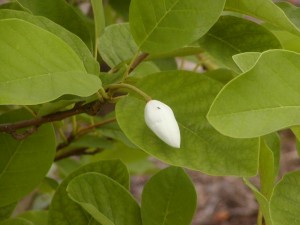
Summer Blooming Oyama Magnolia

A friend on vacation sent me the attached photo from Wooster, Ohio.  When I told him that it was Oyama magnolia (Magnolia sieboldii), he asked why gardeners are not growing it. Good question! Oyama magnolia is a 10-15 feet tall (and equal spread) deciduous tree or large shrub from eastern Asia. It prefers to grow […]

Invite Sonata Cosmos Into Flower Beds

Over the past few years a flower bed containing cosmos (Cosmos bipinnatus) has become a rare sight across the Southern Appalachian region (USDA zones 6 and 7).  Not so, at the recently visited BuGa National Gardening Show 2011 in Koblenz, Germany. Called by some “Mexican asters”, cosmos produces big 3- inch wide red, white, pink […]

Tough And Reliable Chinese Astilbes

Astilbes (also called “false spireas”) are favorite late spring flowering perennials.  The Astilbe x arendsii hybrids from Germany are most popular and available at local garden centers. Astilbes are very hardy in the Southern Appalachian region (USDA zones 6 and 7). If low maintenance is your goal, try Chinese astilbe (Astilbe chinensis var tacquetii). Their […]

Goldenrain Tree – A Golden Shower of Bloom

Goldenrain tree (Koelreuteria paniculata) is a medium sized landscape tree maturing to 30-40 feet in height and spread with rounded canopy. A native of China, Japan, and Korea, the tree is winter hardy in the Southern Appalachian region (USDA zones 6 and 7). Large panicles of dark yellow flowers set off a golden fireworks for your 4th of July celebration. Individual flowers barely measure […]

Rosebay Rhododendron for Cool Shady Landscapes

Rosebay Rhododendron (Rhododendron maximum) grows in dense woodland shade along cool mountain streams and on moist, rocky slopes. This Southern Appalachian native is extremely winter hardy to -15° to -20° F. It is a late-season bloomer reaching its peak around late June. Rosebay grows large, 15 to 20 feet in height. On some sites it […]

Flaming ‘Fireball’ Hibiscus Quite A Summer Show

  ‘Fireball’ hibiscus (Hibiscus x moscheutos ‘Fireball’) is a vigorous hardy perennial with burgundy tinted cutleaf foliage and huge 10-12 inch clear red flowers from mid-summer to late summer. Plant height is 4 – 5 feet and 2 – 3 feet in width. A strikingly beautiful plant, ‘Fireball’ thrives on heat and humidity. It wants full […]

Summer Pruning of Oakleaf and Bigleaf Hydrangeas

Bigleaf or “mophead” hydrangeas (Hydrangea macrophylla) tend to get tall and leggy, and outgrow their garden space. Our native oakleaf hydrangeas (Hydrangea quercifolia) are pruned as blooms quality declines. Remove or “deadhead” all withered or faded flowers. Main pruning time for these two species is from mid-June thru mid-August. Mopheads may rebloom if they had […]

Calliope™ Dark Red Geranium- One of the Best

Garden performance is very important. Calliope™ Dark Red geraniums have it!! Calliope geraniums are interspecific hybrids with zonal-type leaves and huge vibrant red flowers. Plant breeders crossed ivy geraniums (the kind commonly used as hanging baskets) and zonal geraniums (found growing in pots, window boxes, and as bedding plants). Calliope is a vigorous grower with a mounding to semi-trailing […]

Stewartia- A Tree for All Seasons

    Japanese stewartia (Stewartia pseudocamellia) is a truly beautiful 20-30 foot small tree or multi-trunked shrub. Stewartia may be finicky to grow, but a great plant nonetheless. Although rarely seen in U.S. gardens, Japanese stewartia is the most commonly grown of the six stewartia species. All are winter hardy in the Southern Appalachian region (USDA zones 6 […]

Does Mulch Attract Termites?

 Mulching, in itself, does not attract termites to your home. That’s the conclusion of two university studies. Soil moisture appears to be the key factor that attracts termites to the home.  The subterranean termites found in scattered, localized areas are routinely found in wood chip mulch. While landscape mulches are good for woody and herbaceous […]