
Chinese dogwood (Cornus kousa), a favored spring-flowering tree, reaches 20-25 feet in height and blooms two weeks subsequent to our native flowering dogwood (C. florida). The ‘Wolf Eyes’ cultivar forms a compact tree or large shrub, standing 8–10 feet tall and nearly twice as wide. lowly reaches 10 to 20 ft. tall and wide; largest […]
Archive for the ‘Garden Maintenance’ Category
Wolfeyes Chinese Dogwood
Posted by Hugh on April 20th, 2011
 Posted in acidic soil, Attracting birds, Bees and other pollinators, Chinese (kousa) dogwood, compact tree, Disease resistant, Disease resistant, Landscape ideas, Light requirement, mulching, Non-native, Propagation(grafting), Purchasing Plants, Soil drainage, Southern Appalachian Region, Summer heat tolerant, Trees & Shrubs, watering tips, winter hardiness
  Comments Off on Wolfeyes Chinese Dogwood
Three Mid-sized Ornamental Grasses for Small Gardens
Posted by Hugh on April 14th, 2011
For their sheer architecture alone, ornamental grasses provide 4- seasons of landscape excitement. Within a small garden space three mid-sized (4 – 6 feet tall) ornamental grasses with awesome vertical stature excel. All are highly rated for long garden life and low annual maintenance. ‘Karl Foerster’ Feather Reed Grass (Calamagrostis x acutiflora ) forms silvery […]
A Perfect Small Garden Tree– ‘Ace of Hearts’ Redbud
Posted by Hugh on April 11th, 2011
Ace of Hearts redbud (Cercis canadensis ‘Ace of Hearts’) is an arboreal treasure, a compact form of our native redbud. Heavy clusters of light purple pea-like flowers cover twigs and branches from late March into early April, depending on your locality. Ace of Hearts grows 12 by 15 feet in height and spread, roughly one-third […]
Posted in Pruning, Redbud, Southern Appalachian Region, Spring flowering, Summer heat tolerant, Trees & Shrubs Comments Off on A Perfect Small Garden Tree– ‘Ace of Hearts’ RedbudDouble Take™ Flowering Quinces
Posted by Hugh on April 8th, 2011
Photo credit: Dr. Tom Ranney, NCSU Research Horticulturist Flowering quince (Chaenomeles spp) is an early spring flowering shrub, treasured for its brightly colored blooms (USDA hardiness zones 5-9). Old fashioned quince shrubs produced small amounts of fruits which were gathered and prepared into yummy jelly in the autumn kitchen. These often large 10-12 foot tall shrubs produced small sharp […]
Posted in Bee Favorite, compact shrub, Fertilizing plants, Flowering, Flowering quince (Chaenomeles), Propagation (Cuttings), Soil drainage, Spring flowering, Summer heat tolerant, Trees & Shrubs, winter hardiness Comments Off on Double Take™ Flowering QuincesNo Excuse for Tree Topping
Posted by Hugh on April 1st, 2011
Why do people top trees? Often, it is because “their neighbor(s) did it”. When asked whether they believe their neighbor to be a wise person, the typical response is “NO”. The Negatives About Tree Topping: 1. A topped tree reduces property values in a community. Topping adds a blight look to a neighborhood or over […]
When To Prune Spring Flowering Shrubs
Posted by Hugh on March 25th, 2011
Seven reasons why you prune: eliminate dead, diseased, insect riddled branches control plant height and spread shaping such as topiary, espaliered or pollardized trees increase or decrease the numbers of flowers and fruits rejuvenate an old shrub or tree remove low branches over walkways remove water sprouts and root suckers Flowering shrubs bloom from late February thru […]
Posted in Disease resistant, Failure to Bloom, Garden Maintenance, Pruning, shrub roses, Southern Appalachian Region, Trees & Shrubs Comments Off on When To Prune Spring Flowering Shrubs‘Misty Blue’ Doll’s Eye Will Catch Your Eye
Posted by Hugh on March 22nd, 2011
White baneberry or doll’s eye (Actaea pachypoda) is a strikingly beautiful native perennial. The cultivar ‘Misty Blue’ was first discovered at Mt. Cuba Center in Greenville, Delaware. The bluish-green foliage is multi-stemmed and finely cut from mid-spring thru the summer months. Grow it in a moist shade garden environment. Lovely fringed white flowers appear in April. In the fall clusters of white “doll’s eye” berry fruits sit atop brightly red […]
Posted in acidic soil, Baneberry (Actaea), compost, Garden Maintenance, Native Plant, Perennials, Southern Appalachian Region, watering tips Comments Off on ‘Misty Blue’ Doll’s Eye Will Catch Your EyeBetter Choices for Golden Moon Maple
Posted by Hugh on March 15th, 2011
Photo credit: Mr. Brian Upchurch, Highland Creek Nursery, Fletcher, NC A few months back I asked Mr. Brian Upchurch, owner of Highland Creek Nursery*, his opinion of Golden Fullmoon Japanese maple (Acer shirasawanum ‘Aureum’) in our Southern Appalachian region (USDA zones 6 and 7). He responded: “I have grown it in the past and it […]
Posted in Fullmoon maple, Japanese maple, Maples (Acer), Southern Appalachian Region, Summer heat tolerant Comments Off on Better Choices for Golden Moon MapleBlueberries
Posted by Hugh on March 12th, 2011

Blueberries (Vaccinium spp.) are healthy for you and exceptionally easy to grow organically (without pesticides). Why?- because blueberries are bothered by very few disease and insect problems. Success in growing blueberries depends upon pre-plant soil preparation. If you’re thinking about growing blueberrues for the first time, then allot this calendar year for soil preparation. Put off planting blueberries until the early fall or […]
Posted in acidify soil, Blueberries, compost, Featured, Fruits & Vegetables, organic gardening, Southern Appalachian Region Comments Off on BlueberriesPulmonarias: Wonderful In The Shade Garden
Posted by Hugh on March 6th, 2011
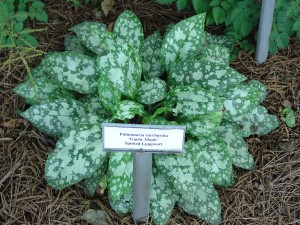
Although my multi-year addiction for hostas has never waned, I remain equally passionate about the lungworts (Pulmonaria spp.). Lungwort is also called Bethlehem sage and Jerusalem sage. Their uniquely splotched or variegated foliage wakes up a dark patch in any shade garden. Lungworts are planted as ground covers and for color accents. In early spring (March), lungworts send up […]
Posted in acidic soil, Container garden, Ground cover, Landscape ideas, mulching, Perennials, Planting tips, Propagation (dividing), Pulmonaria, Purchasing Plants, Shade Gardening, Soil drainage, Southern Appalachian Region, Spring flowering, Sun scald, watering tips, winter hardiness Comments Off on Pulmonarias: Wonderful In The Shade Garden


