
Leather flower (Clematis glaucophylla) is native to moist woodlands in the Southeastern U.S. This lovely flowering vine is covered with one inch hot pink flowers tipped in yellow. The solitary, 1- inch bell shaped flowers are on 6- inch long stalks which reach out for support. It is called “leather flower” because the petals are […]
Archive for the ‘Native Plant’ Category
Leather Flower Clematis- Hot Pink Summer Flowering Vine
Posted by Hugh on June 11th, 2011
 Posted in Attracting birds, Clematis glaucophylla, Native Plant, Southern Appalachian Region, Summer flowering, Vine
  Comments Off on Leather Flower Clematis- Hot Pink Summer Flowering Vine
Yellowwood Not Every Year Bloomer
Posted by Hugh on May 22nd, 2011
American yellowwood (Cladrastis kentukea) is a medium-sized flowering tree. In the month of May, a beautiful yellowwood tree is in bloom somewhere in the Southern Appalachian region (USDA zone 6 and 7). The 1- 1 1/2 inch white pea blossoms comprise the 8-14 inch long wisteria-like panicles which drape from branch and twig tips. Yellowwood may bloom 2 to 3 consecutive years […]
Posted in acidic soil, Failure to Bloom, Flowers, Medium sized Tree, Native Plant, Southern Appalachian Region, Spring flowering, Trees & Shrubs, Yellowwood Comments Off on Yellowwood Not Every Year Bloomer‘Misty Blue’ Doll’s Eye Will Catch Your Eye
Posted by Hugh on March 22nd, 2011
White baneberry or doll’s eye (Actaea pachypoda) is a strikingly beautiful native perennial. The cultivar ‘Misty Blue’ was first discovered at Mt. Cuba Center in Greenville, Delaware. The bluish-green foliage is multi-stemmed and finely cut from mid-spring thru the summer months. Grow it in a moist shade garden environment. Lovely fringed white flowers appear in April. In the fall clusters of white “doll’s eye” berry fruits sit atop brightly red […]
Posted in acidic soil, Baneberry (Actaea), compost, Garden Maintenance, Native Plant, Perennials, Southern Appalachian Region, watering tips Comments Off on ‘Misty Blue’ Doll’s Eye Will Catch Your Eye‘Jeana’ Phlox– no powdery mildew
Posted by Hugh on March 18th, 2011
Photo credit: North Creek Nurseries, Landenberg, PA, USA Our native summer phlox (Phlox paniculata) continues to be challenged here in the Southern Appalachian region (USDA zones 6 and 7) by powdery mildew disease (p-m-d). Over the past decade gardeners have tried new, reportedly disease resistant cultivars. Many have disappointed. To date, the cultivars ‘David’ (white, 3-4 […]
Posted in Disease resistant, Flowers, Native Plant, Perennials, Southern Appalachian Region, Summer phlox (P. paniculata) Comments Off on ‘Jeana’ Phlox– no powdery mildewTwo Sensational New Oakleaf Hydrangeas
Posted by Hugh on January 24th, 2011
Oakleaf hydrangea (Hydrangea quercifolia) is a popular native shrub in the Southeastern U.S. (USDA hardiness zones 5 to 8). Two new compact forms of oakleaf hydrangea were recently introduced by the U.S. National Arboretum. In early summer, ‘Ruby Slippers’ is covered with 9-inch-long floral clusters that are held upright above the foliage. ‘Ruby Slippers’ grows […]
Planting Trees for Future Generations
Posted by Hugh on January 15th, 2011
Oaks, beeches, hickories, ginkgoes, bald cypresses, redwoods, chestnuts and others are trees that future generations inherit from previous generations. In human terms, it takes a lifetime to grow an acorn into a mighty oak. Many tree species live hundreds of years, often asking little and contributing much beauty, summer cooling shade, winter heating comfort as windbreaks, and a […]
Posted in Attracting birds, Bald cypress (Taxodium), Beech (Fagus spp.), Butterflies, Chestnut, Hickory (Carya spp.), Native Plant, Oaks (Quercus spp.), Propagation (Seed), Southern Appalachian Region, Trees & Shrubs, winter hardiness Comments Off on Planting Trees for Future GenerationsWinter King Hawthorn – A Winter Fruit Attraction
Posted by Hugh on January 7th, 2011
bright red fruit in winter season ‘Winter King’ is an outstanding cultivar of our native green hawthorn (Crataegus viridis) and is at home here in the Southern Appalachian region (USDA zones 6 and 7). Over the winter season few deciduous trees present a colorful fruiting display much better than Winter King. Winter King hawthorn is a small landscape tree, maturing to 25-30 […]
Posted in Deer resistant, Disease resistant, Drought tolerant, Hawthorn (Crataegus), Native Plant, Ornamental fruit, Southern Appalachian Region, Trees & Shrubs, Winter bark Comments Off on Winter King Hawthorn – A Winter Fruit AttractionHydrangea Invincibelle Spirit ®
Posted by Hugh on December 10th, 2010
Hydrangea Invincibelle® Spirit ranks as one of the finest new plant introductions in 2010. This hydrangea comes from a good bloodline. Invincibelle® Spirit is a pink flowering clone originating from Annabelle. The cultivar ‘Annabelle’ (Hydrangea arborescens ‘Annabelle’) has been a star in Southern Appalachian gardens (USDA hardiness zones 6 and 7) for the past quarter century. Invincibelle® […]
Posted in Hydrangea, Native Plant, Pruning, Southern Appalachian Region, Trees & Shrubs, Uncategorized, watering tips Comments Off on Hydrangea Invincibelle Spirit ®Doghobble for Shady Landscape Areas
Posted by Hugh on November 11th, 2010
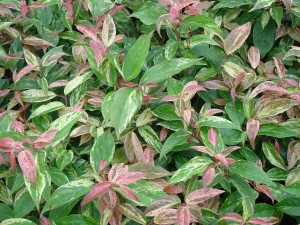
Drooping doghobble or fetterbush (Leucothoe fontanesiana) is native to woodland areas in the Southern Appalachian region (USDA zones 6 and 7). Doghobble is a tall ground cover, averaging 3 – 4 feet in height. The long gently arching evergreen branches display a rambling nature, best reined in with hand pruning as needed. White fragrant flowers, […]
Striped Maple For The Shade Garden
Posted by Hugh on November 8th, 2010
This past weekend, while walking in the Smokies Mountains on a rather brisk rainy autumn day, the bright yellow autumn foliage color of striped maple (Acer pensylvanicum) caught my attention. Also called “moosewood”, it is the only snake-bark maple native to the U.S. The greenish bark is marked with dark vertical lines or “stripes”. The reason that […]
Posted in Native Plant, Southern Appalachian Region, Striped maple, Trees & Shrubs Comments Off on Striped Maple For The Shade Garden


