
bright red fruit in winter season ‘Winter King’ is an outstanding cultivar of our native green hawthorn (Crataegus viridis) and is at home here in the Southern Appalachian region (USDA zones 6 and 7). Over the winter season few deciduous trees present a colorful fruiting display much better than Winter King. Winter King hawthorn is a small landscape tree, maturing to 25-30 […]
Archive for the ‘Regional’ Category
Winter King Hawthorn – A Winter Fruit Attraction
Posted by Hugh on January 7th, 2011
 Posted in Deer resistant, Disease resistant, Drought tolerant, Hawthorn (Crataegus), Native Plant, Ornamental fruit, Southern Appalachian Region, Trees & Shrubs, Winter bark
  Comments Off on Winter King Hawthorn – A Winter Fruit Attraction
Ice Storm- Keep Hands Off
Posted by Hugh on December 26th, 2010
An ice storm is both a beautiful and horrific scene in a garden. The potential for major tree/shrub breakage is staggering. If you feel powerless, this is good thing. During the storm, do nothing / “hands off”. Most actions will likely cause more damage than what nature may have intended. After the storm assess the landscape areas which seem most vulnerable, or that […]
Posted in Bradford Pear, Pruning, Southern Appalachian Region, Trees & Shrubs, Uncategorized, winter injury Comments Off on Ice Storm- Keep Hands OffTry Microbiota Instead of Ground Junipers
Posted by Hugh on December 23rd, 2010
Summer Foliage of Microbiota Microbiota (Microbiota decussata) goes by numerous names including Russian arborvitae and Siberian cypress. This tough customer hails from Siberia, and quite cold hardy to -40 F. In the northern U.S. its lacy evergreen foliage turns brown in the dead of winter. Here in the Southern Appalachian region, microbiota prospers in cooler parts of zone 6 […]
Posted in DWARF CONIFERS, Ground cover, Juniper, Microbiota, Southern Appalachian Region, Trees & Shrubs Comments Off on Try Microbiota Instead of Ground JunipersLacebark pine- an investment in the future
Posted by Hugh on December 13th, 2010
Many rare and unusual garden plants are introduced into a garden as a thoughtful gift. Lacebark pine (Pinus bungeana) is an arboreal aristocrat which a few gardeners are privileged to own. Lacebark is a lovely 3- needle pine with exquisite exfoliating bark which becomes more attractive each succeeding year. The lacebark feature begins after 8-10 years, but it’s […]
Posted in acidic soil, Disease resistant, Drought tolerant, DWARF CONIFERS, Evergreen, Evergreens, Fertilizing plants, mulching, Pines (Pinus spp.), Planting tips, Pruning, Southern Appalachian Region, Summer heat tolerant, Trees & Shrubs, Uncategorized, watering tips, Winter bark, winter hardiness 2 Comments »Hydrangea Invincibelle Spirit ®
Posted by Hugh on December 10th, 2010
Hydrangea Invincibelle® Spirit ranks as one of the finest new plant introductions in 2010. This hydrangea comes from a good bloodline. Invincibelle® Spirit is a pink flowering clone originating from Annabelle. The cultivar ‘Annabelle’ (Hydrangea arborescens ‘Annabelle’) has been a star in Southern Appalachian gardens (USDA hardiness zones 6 and 7) for the past quarter century. Invincibelle® […]
Posted in Hydrangea, Native Plant, Pruning, Southern Appalachian Region, Trees & Shrubs, Uncategorized, watering tips Comments Off on Hydrangea Invincibelle Spirit ®“It’s Wort…not Wart”
Posted by Hugh on November 25th, 2010
Barrenworts (Epimedium spp.) are a collection of ground cover species mostly from Asia and Europe. None are native to North America, but most thrive in gardens in the Southern Appalachian region (USDA zones 6 and 7). There are currently 21 known species worldwide. Also called Bishop’s hat, barrenworts are one of our finest groundcovers for part sun to part shade areas. Some are […]
Posted in Barrenwort (Epimedium), Ground cover, Perennials, seeding lawn, Shade Gardening, Southern Appalachian Region, Uncategorized Comments Off on “It’s Wort…not Wart”Brighten Up a Drab Corner in Your Garden
Posted by Hugh on November 20th, 2010
Crippsii falsecypress (Chamaecyparis obtusa ‘Crippsii’) is one tall 20-25 foot high evergreen shrub (or small tree). Its lacy golden evergreen foliage catches your attention almost any season of the year. Unfortunately, Crippsii is rarely seen in landscapes because few landscape architects and designers know it or can not find it in the nursery trade. Ten years ago a credit union near my home […]
Posted in Evergreens, Pests, Southern Appalachian Region, Trees & Shrubs, Uncategorized, watering evergreens Comments Off on Brighten Up a Drab Corner in Your GardenTrident Maple Has 4- Seasons Interest
Posted by Hugh on November 18th, 2010
Over the past decade residential lot sizes have shrunken. Small and medium sized shade trees are a better choice over large traditional choices of red and sugar maples. Trident maple (Acer buergerianum) is our best mid-sized summer shade maple in the Southern Appalachian region (USDA zones 6 and 7). By mid-November trident has shed its gorgeous reddish […]
Posted in Maples (Acer), Southern Appalachian Region, Trees & Shrubs, Uncategorized Comments Off on Trident Maple Has 4- Seasons InterestDoghobble for Shady Landscape Areas
Posted by Hugh on November 11th, 2010
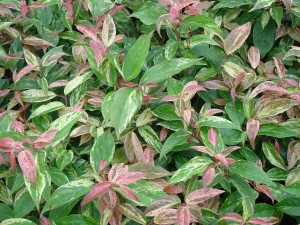
Drooping doghobble or fetterbush (Leucothoe fontanesiana) is native to woodland areas in the Southern Appalachian region (USDA zones 6 and 7). Doghobble is a tall ground cover, averaging 3 – 4 feet in height. The long gently arching evergreen branches display a rambling nature, best reined in with hand pruning as needed. White fragrant flowers, […]
Striped Maple For The Shade Garden
Posted by Hugh on November 8th, 2010
This past weekend, while walking in the Smokies Mountains on a rather brisk rainy autumn day, the bright yellow autumn foliage color of striped maple (Acer pensylvanicum) caught my attention. Also called “moosewood”, it is the only snake-bark maple native to the U.S. The greenish bark is marked with dark vertical lines or “stripes”. The reason that […]
Posted in Native Plant, Southern Appalachian Region, Striped maple, Trees & Shrubs Comments Off on Striped Maple For The Shade Garden


