
On a recently trip to the Ohio State University Horticultural Gardens in Columbus, I discovered ‘Lady Frances’, a relatively tame miniature ivy. The American Ivy Society classifies Hedera helix ‘Lady Frances’ as non-invasive, and it received the first “Ivy of the Year” award in 2001. It grows slowly and works as a ground cover or topiary […]
Archive for the ‘Ground cover’ Category
‘Lady Francis’ Ivy Wakes Up A Shady Patch
Posted by Hugh on June 6th, 2012
 Posted in Disease resistant, Drought tolerant, Ground cover, Interior (house) Plants, Ivy (Hedera), Planting tips, Pruning, Southern Appalachian Region, Uncategorized, Vine, watering tips, winter hardiness
  Comments Off on ‘Lady Francis’ Ivy Wakes Up A Shady Patch
‘Helene Von Stein’ Lamb’s Ear Is More Behaved
Posted by Hugh on May 30th, 2012
Stachys byzantina is a dense gray woolly perennial ground cover, which earns it the common name “lamb’s ear”. ‘Helene Von Stein’ is the single best cultivar, displaying larger leaves, and is more heat and humidity tolerant. Sometimes listed as ‘Big Ears’, it rarely produces flowers which may tarnish its lovely silvery gray foliage appearance. Lamb’s ear grows […]
Posted in Drought tolerant, Evergreen, Ground cover, Heat Tolerance, Lamb's ears (Stachys), Perennials, Pruning, Southern Appalachian Region, Spring flowering, Summer flowering, watering tips Comments Off on ‘Helene Von Stein’ Lamb’s Ear Is More BehavedSacred Lily (Rohdea) Brings Good Fortune
Posted by Hugh on October 19th, 2011
Depending on where you garden, Sacred Lily (Rohdea japonica) is either an evergreen or herbaceous perennial groundcover. It is slow growing and prospers in a moist shady woodland environment. Small clumps of long, strap-like leaves emerge from an underground crown to about 15” in height. Foliage is comprised of 18 inch long strap- like leaves […]
Posted in compost, Disease resistant, Evergreen, Ground cover, Ornamental fruit, Sacred Lily (Rohdea), Southern Appalachian Region Comments Off on Sacred Lily (Rohdea) Brings Good FortunePulmonarias: Wonderful In The Shade Garden
Posted by Hugh on March 6th, 2011
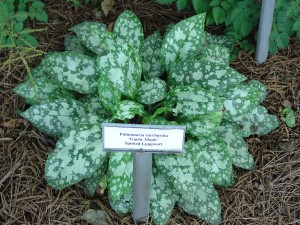
Although my multi-year addiction for hostas has never waned, I remain equally passionate about the lungworts (Pulmonaria spp.). Lungwort is also called Bethlehem sage and Jerusalem sage. Their uniquely splotched or variegated foliage wakes up a dark patch in any shade garden. Lungworts are planted as ground covers and for color accents. In early spring (March), lungworts send up […]
Posted in acidic soil, Container garden, Ground cover, Landscape ideas, mulching, Perennials, Planting tips, Propagation (dividing), Pulmonaria, Purchasing Plants, Shade Gardening, Soil drainage, Southern Appalachian Region, Spring flowering, Sun scald, watering tips, winter hardiness Comments Off on Pulmonarias: Wonderful In The Shade GardenWinter Jasmine Rising
Posted by Hugh on March 1st, 2011
Is the worst of winter behind us? Winter jasmine (Jasminum nudiflorum) is often confused with forsythia shrubs which bloom 3-4 weeks later in the spring. This hardy winter blooming vine from China frequently blooms in late February and March when daytime temperatures climb into the mid-50s for a week or more. Evening chilling temps down into the […]
Try Microbiota Instead of Ground Junipers
Posted by Hugh on December 23rd, 2010
Summer Foliage of Microbiota Microbiota (Microbiota decussata) goes by numerous names including Russian arborvitae and Siberian cypress. This tough customer hails from Siberia, and quite cold hardy to -40 F. In the northern U.S. its lacy evergreen foliage turns brown in the dead of winter. Here in the Southern Appalachian region, microbiota prospers in cooler parts of zone 6 […]
Posted in DWARF CONIFERS, Ground cover, Juniper, Microbiota, Southern Appalachian Region, Trees & Shrubs Comments Off on Try Microbiota Instead of Ground Junipers“It’s Wort…not Wart”
Posted by Hugh on November 25th, 2010
Barrenworts (Epimedium spp.) are a collection of ground cover species mostly from Asia and Europe. None are native to North America, but most thrive in gardens in the Southern Appalachian region (USDA zones 6 and 7). There are currently 21 known species worldwide. Also called Bishop’s hat, barrenworts are one of our finest groundcovers for part sun to part shade areas. Some are […]
Posted in Barrenwort (Epimedium), Ground cover, Perennials, seeding lawn, Shade Gardening, Southern Appalachian Region, Uncategorized Comments Off on “It’s Wort…not Wart”Doghobble for Shady Landscape Areas
Posted by Hugh on November 11th, 2010
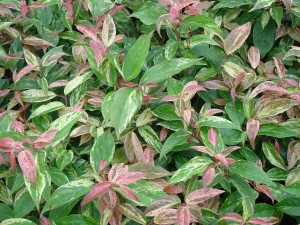
Drooping doghobble or fetterbush (Leucothoe fontanesiana) is native to woodland areas in the Southern Appalachian region (USDA zones 6 and 7). Doghobble is a tall ground cover, averaging 3 – 4 feet in height. The long gently arching evergreen branches display a rambling nature, best reined in with hand pruning as needed. White fragrant flowers, […]
Be Careful What You’re Cutting Back
Posted by Hugh on November 4th, 2010
Halfway through the autumn season, new plants have come to life, while most are retiring for a long winter’s nap (dormancy). About 4-5 weeks back, the leafy growth (vegetative) stage of the surprise lily (Lycoris radiata), also called “resurrection lily or “naked ladies”, appeared (left and center photos). When last seen in late July and August, brightly colored stalks of lycoris flowers had popped through with no leaves present. […]
Posted in acidic soil, compost, Flowering Bulb, Ground cover, Perennials, Shade Gardening 2 Comments »


