Golden Hakone Grass Is Worth The Extra Care
Shredded Umbrella Plant Handles Dry Shade
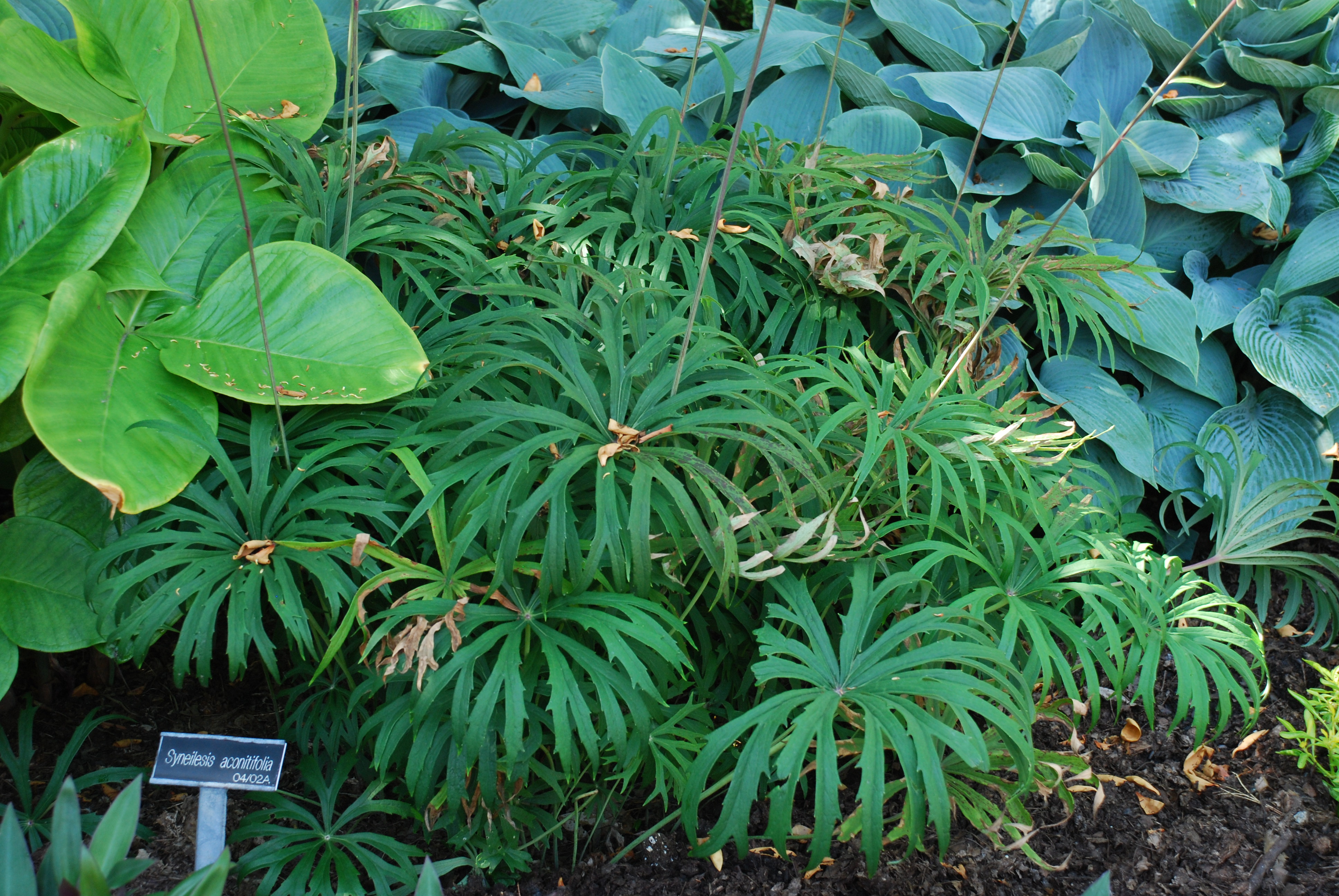
Shredded umbrella plant (Syneilesis aconitifolia) is a non-aggressive woodland ground cover which is native to dry hillsides in China, Japan, and Korea (USDA hardiness zones 4 thru 8). It has a medium green lacy foliage which you will treasure in the shade garden.
While its flowers may be tiny and inconspicuous, the circular umbrella foliage canopy is nothing short of WOW! In early spring the new foliage emerges through the decaying leafy garden debris which carpets the ground. Each leaf is completely clothed with white hairs, exhibiting a soft gray color and fine texture. As the plant matures, a green umbrella leaf canopy dominates and the gray hairs slough off.
While shredded umbrella plant gets by in a moderately dry woodland habitat, it thrives in a compost-rich, well-drained, moist, heavily mulched soil. The rhizomes slowly spread (2 feet wide in 5-7 years) to form a small plant colony.
Stout 16-18 inch high sturdy stems support the circular leaves. On multi-year old plants, individual leaves may average a small dinner plate in size and are dissected as some Japanese maple varieties.
Shredded umbrella plant mixes well with other woodland favorites such as dwarf Solomon seal (Polygonatum humile), brunnera, and ferns. Munchkin Nursery on-line is one of several sources of shredded umbrella plant.
Something New to Grow – Esperanza, Yellow Bells
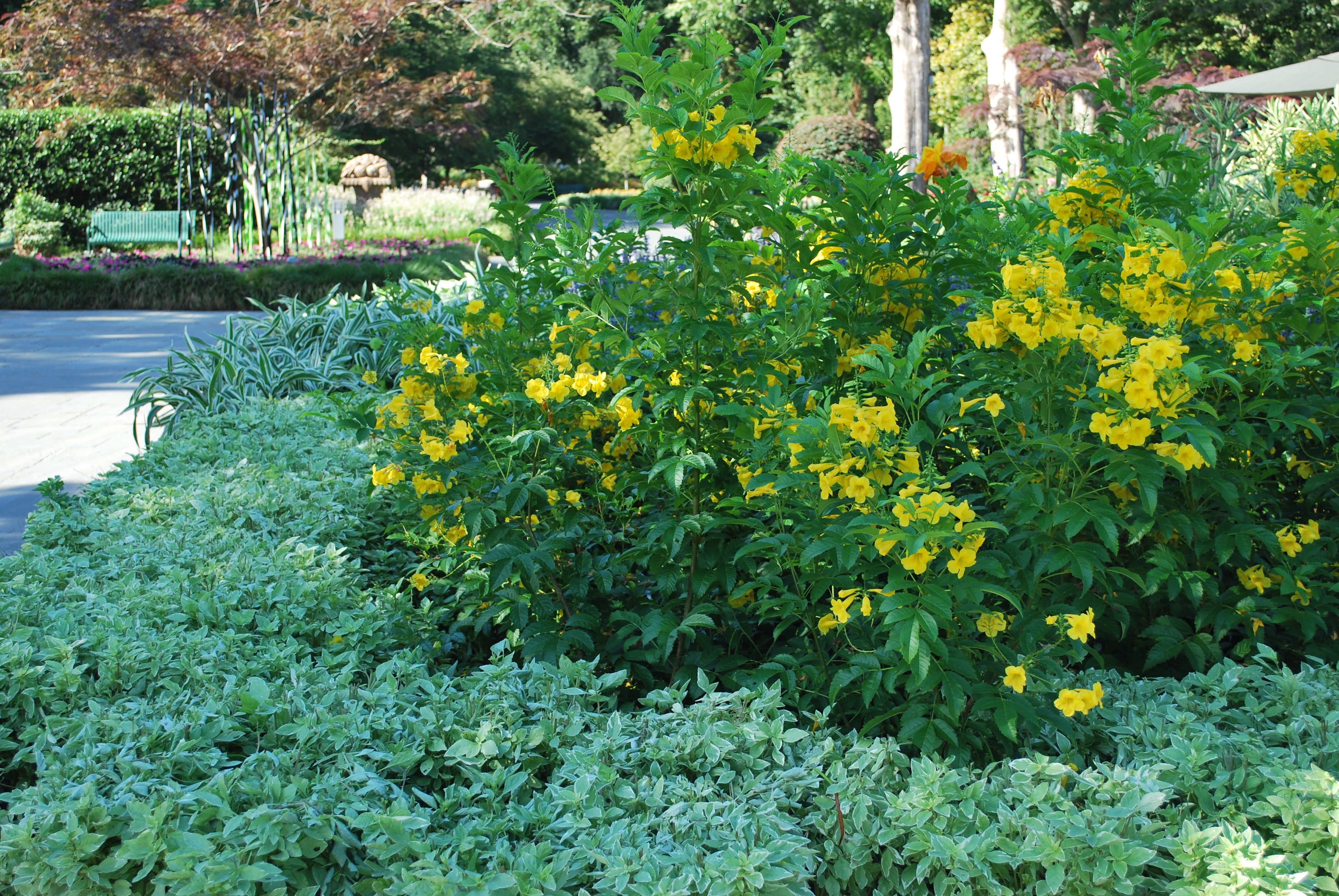
Esperanza or Yellow Bells (Tecoma stans) is a 6 foot tall perennial shrub that grows in South Texas and Mexico (USDA zones 8-10). Esperanza means “hope” and it is destine to become a popular flowering annual in more U.S. Southeastern gardens. It demands a well drained soil and full sunlight.
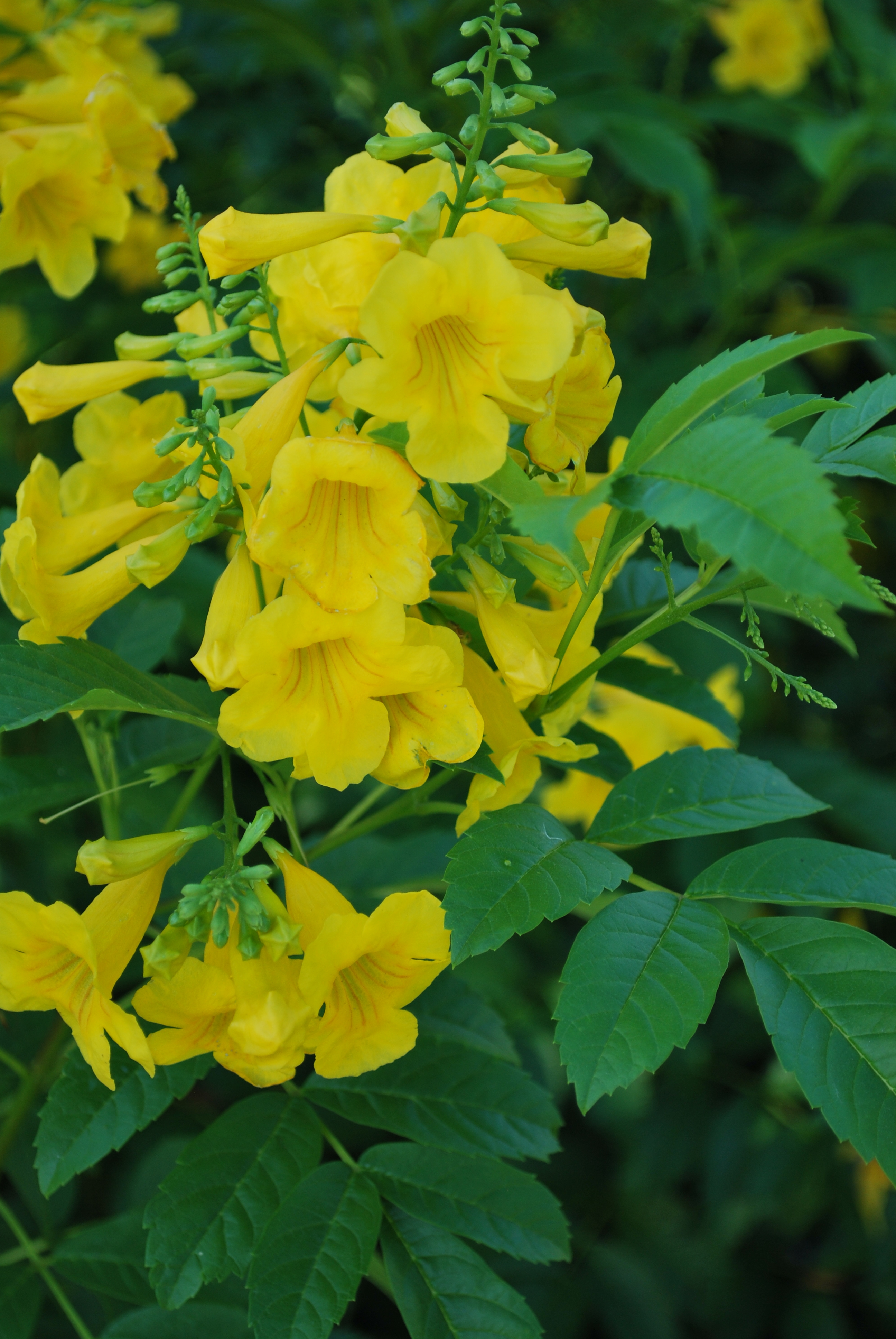
In the Southern Appalachian region (USDA hardiness zones 6 and 7), plant esperanza as a bedding annual or large container plant. Large trumpet-shaped yellow flowers bloom from May to October. The 2 1/2-inch bright yellow flowers are highlighted byattractive shiny green foliage. The flowers have an odd but pleasing fragrance and attract bees.
Its growth rate is exceptionally fast if provided lots of irrigation and fertilizer. Place esperanza near the back or edge of a border. If grown as an annual, it will grow 3 to 4 feet high x 2 to 3 feet wide in average garden soil with a neutral to alkaline pH. Water and fertilize when first planted and into late spring. Once established, it can tolerate long summer dry periods as is frequent in Texas.
Esperanza plant(s) must be dug moved indoors in zone7 and further north in the fall for freeze protection. Cut back plants severely to force new growth indoors.
Long 4- to 6-inch long capsule fruits (beans) set on after the flowers. Quick removal of the beans increases flower numbers. Collect the ripen seeds for starting new esperanza plants in the spring.
In times past Indians made bows from esperanza wood. In Mexico a beer was prepared from its roots and for a variety of medicines.
Fall Color Calendar For Red Maple
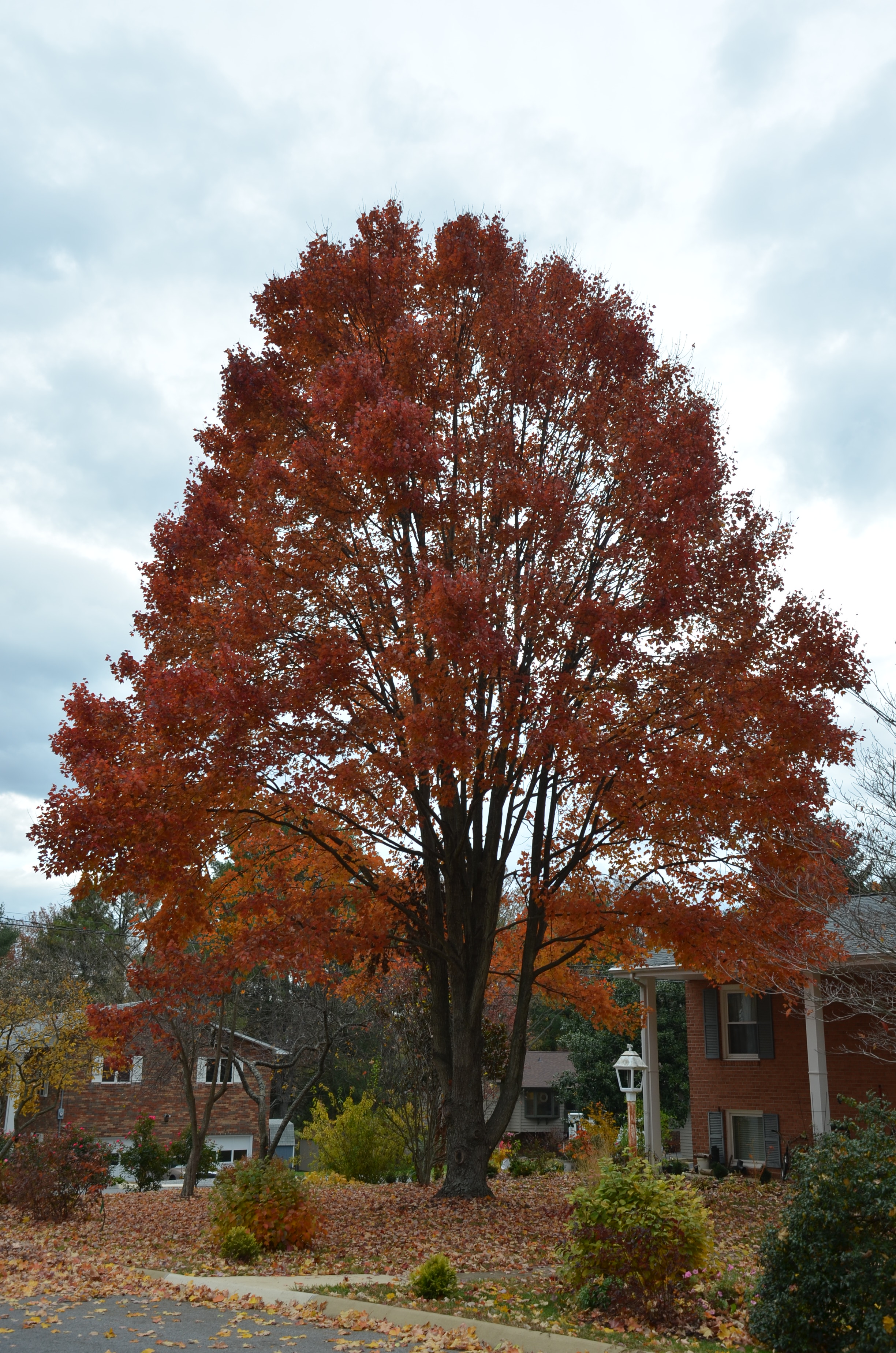
Red maple (Acer rubrum) is commonly planted as a 40-60 feet tall street or shade tree (USDA hardiness zones 3-9). Tiny red flowers burst open early, often in early March throughout the Southern Appalachian region (USDA hardiness zones 6 and 7). Flowers give way to reddish double winged samaras. Its glossy dark green 3-5 lobed leaves are 3-6 inches across and with deep red petioles. Red Maple’s most identifiable trait is its vibrant autumn leaf colors, which can vary by a month or more depending on cultivar.
Red maple is native to moist well drained soils, preferably in full to partial sunlight. It tolerates wet soils and is unswayed by temporary flooding, such as in rain gardens. In some Midwest states it has earned the nickname “swamp maple”. It is resistant to urban air pollutants.
Red maple may be troubled by insect or disease problems, often when tree is planted on a poor landscape site. Leaf aphids, wood borers and scale insects can be occasional pests. Verticillium wilt disease attacks the vascular system, frequently the result of unusually long dry spells lasting three or more years.
Red maple is sometimes called “soft maple” because high winds and ice storms may break branches. Its notoriously shallow root system may raise adjacent sidewalks or driveways. Pruning is best postponed until the spring and summer months when sap pressure in low. Sap from this species can be used to make maple syrup.
Five popular cultivars (rated by fall leaf color date) in the southeast and mid-Atlantic states include:
Autumn Blaze® (A. x freemanii) – 50 ft. x 40 ft. – earliest deep burgundy red leaf color
Red Sunset® (A. rubrum) – 45 ft. x 35 ft. – early bright red leaf color
‘Autumn Flame’ (A. rubrum) – 35 ft. x 15 ft. – better red color in southeast U.S.
‘Armstrong’ (A. rubrum) – 45 ft x 15 ft. – columnar habit for narrow street plantings and variable fall color
October Glory® (A. rubrum) – 40 ft. x 35 ft. – one of the latest for red fall color
Little Girl Magnolias Avoid Early Spring Frosts
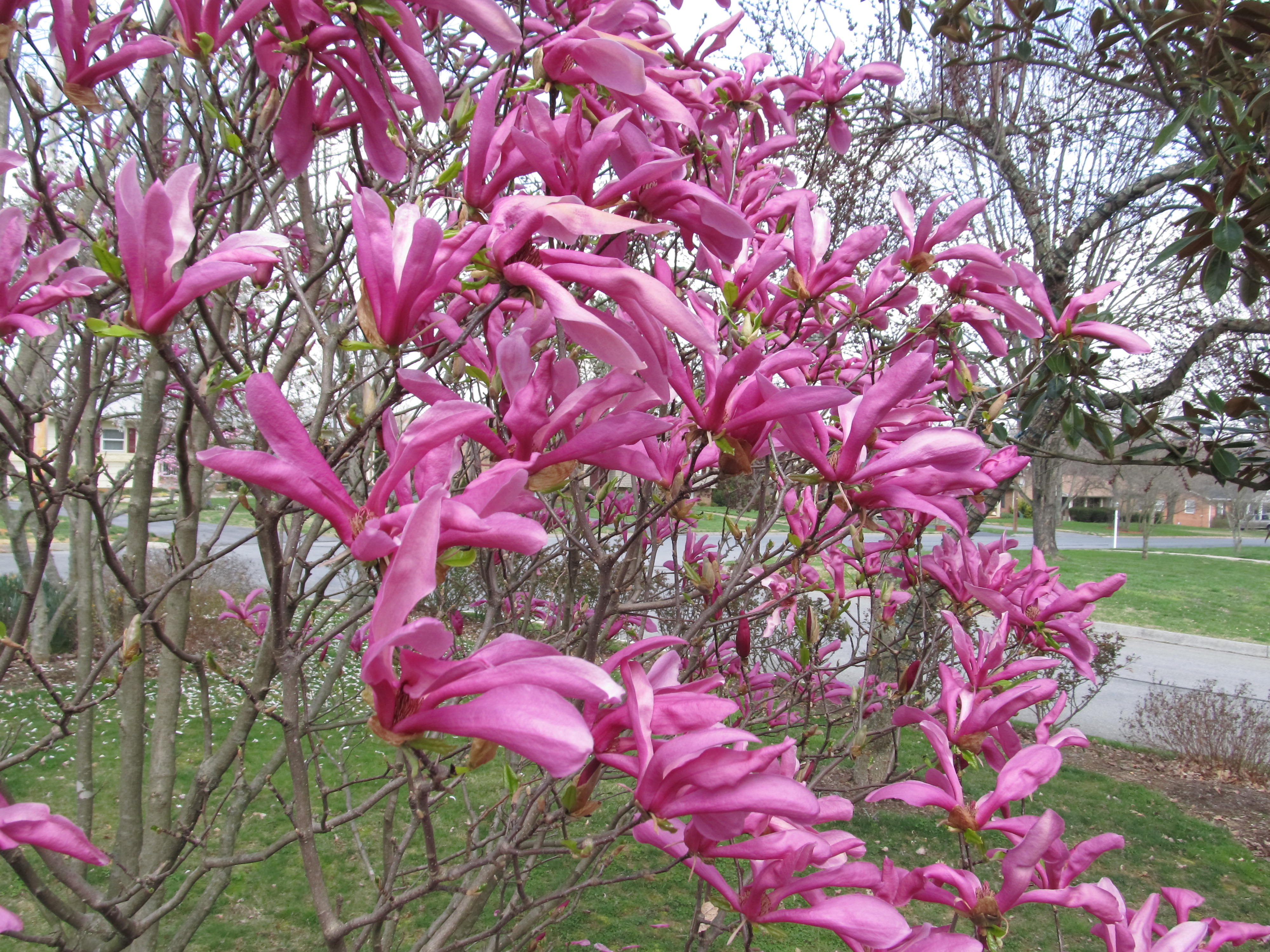
The early flowering deciduous magnolias, namely star (Magnolia stellata) and tulip (M. soulangeana) magnolias, are often susceptible to late winter-early spring frosts. In the 1980’s the U.S. National Arboretum released the series of 8 shrub-type cultivars called the “Little Girl Magnolias”. They were crosses between M. liliiflora and M. stellata. Over ten years these deciduous shrubs will grow 10- 20 feet tall and wide.
Little Girl magnolias represent a great leap forward in developing a later flowering forms. Each cultivar blooms 7-10 days later in spring. The large goblet-shaped flowers are long tepals (petals and sepals) which measure 6 to 9 inches in length. ‘Ann’, ‘Betty’, ‘Susan’, and ‘Jane’ have been the popular choices among the eight introduced cultivars.
Flower colors vary by cultivar in pink to purple shades. Little Girl magnolias often surprise with occasional blooms through the spring and summer months. They are commonly large multi-stemmed shrubs, which can be easily trained into small trees. The deciduous leaves are thick and leathery and cope with summer’s heat and dry spells. With proper care and on the right planting site, magnolias are generally long-lived and disease and pest free.
Little Girl magnolias grow in moist, well-drained soils, preferably with a slightly acidic pH, and in full to partial sun (3 – 4 hours minimum sunlight). They do not tolerate flooding or wet feet. Prune spring flowering magnolias soon after the spring flowering flush is over. Prune to remove basal suckers and to maintain the desired shrub or tree form.
Magnolias can be easily started by layering a branch to the ground in the spring. Bend the flexible shoot to the ground and hold down with a heavy rock. By autumn a rooted shoot may be cut away from the main branch, dug up, and moved to its new garden location or gifted to a garden friend.
Virginia Bluebells – An Early Spring Wildflower
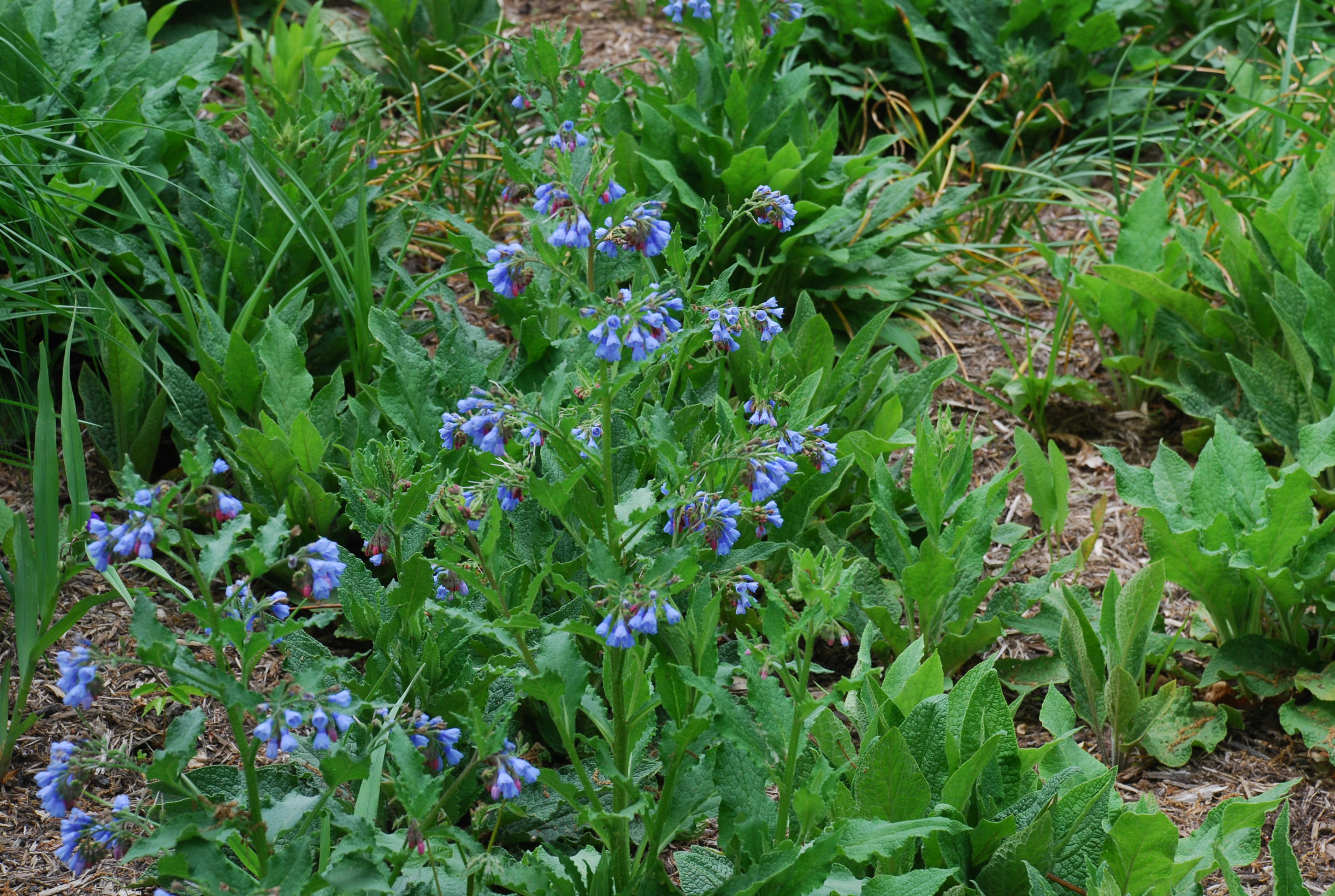
In early spring Virginia bluebells (Mertensia virginica) is an ephemeral woodland wildflower. In early April their lovely presence is to be enjoyed for a short 8-10 week period. Clusters of pinkish-blue nodding buds burst forth into soft pastel blue flowers. Gradually, the bell -shaped flowers age to pale pink hues. The lovely blue flowers are a perfect foil against the pale green foliage beneath. Plants grow in partial to full shade to 18 to 24 inches tall and 12 to 18 inches wide.
Plant tubers purchased from mail order nurseries in the autumn as you would tulips or daffodils. Space them 2 feet apart. Virginia bluebells will bloom next spring. Flowers attract early arriving butterflies and hummingbirds. Plants fade away in late May until next spring.
Mark the garden spot where they are planted. Space the plants about 2 feet and more apart. Bluebells will spread by seed and form small colonies.
Virginia bluebells rarely need fertilizing. They usually receive adequate nourishment in moist, slightly acidic, compost rich soil. When necessary, water plants when in flower. Often, plants bloom sparsely the first year after planting, and alot better in subsequent years.
You may interplant with other shade inhabitants such as ferns, foam flowers (tiarellas), lungworts (Pulmonaria spp.), hostas, and brunneras which may compete for open ground formerly occupied by the bluebells.
‘Alba’ is a white-flowering cultivar that mixes nicely with the traditional blue flowers, but it may be hard to find.
Treat Colorful Caladiums As Tender Annuals
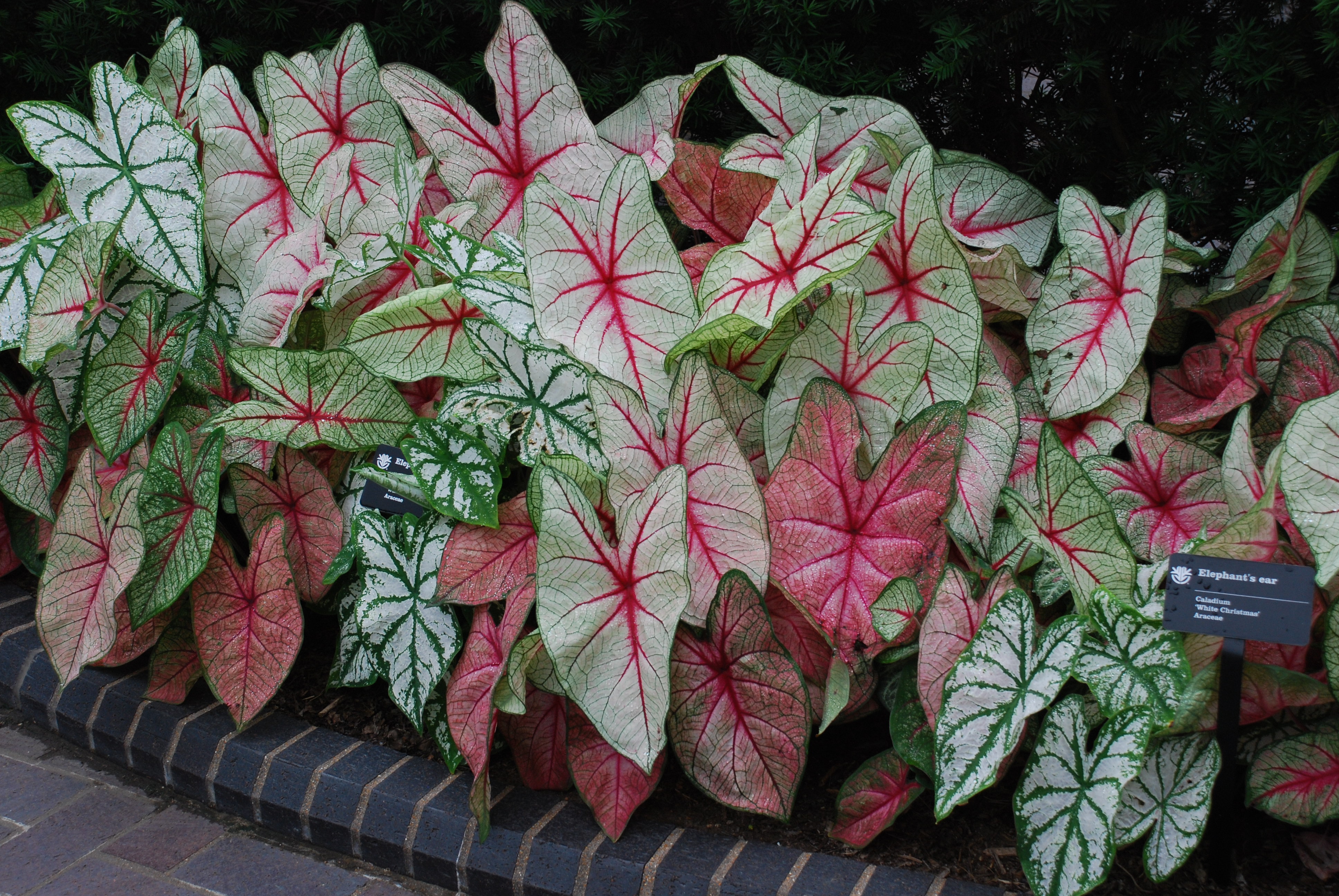
Caladiums (Caladium bicolor) are tropical foliage plants which are grown as annuals. Caladiums brighten up shady to sunny spots. Their brightly colored foliage is either heart and lanced shaped in color combinations ranging from red, rose, pink, chartreuse, green, and white.
Caladiums absolutely prefer a warm, moist, well-drained, compost rich soil. Don’t plant caladiums in questionable ground. If your garden soil is questionable, plant them in a raised bed or in containers with soil-less media. Add mulch to conserve soil moisture.
Caladiums thrive in shady areas, but can grow under modest amounts of direct sunlight if regular soil moisture is provided. Caladiums can survive Texas summer heat and sunlight if irrigated daily.
Plant caladium tubers about 1½ to 2 inches deep with their growing points or “eyes” right side up. Buy jumbo or large sized tubers and space them 12 to 18 inches apart for more and larger foliage in the summer months.
Caladium tubers should be planted in warm 70°F soil in the spring. If planted in cool garden soil, tubers tend to rot rather than sprout. If you’re planting caladiums in northern areas, start them out in a warm greenhouse or cold frame 5 – 6 weeks before last frost in your growing area.
Feed with a high phosphorus based fertilizer such as 5-10-10 or equivalent once in spring and again in early summer. An alternative is to feed caladiums with water soluble fertilizers such as Miracle-Gro®, Jack’s Classic®, or Schultz® products according to package directions.
In the Southern Appalachian region (USDA zones 6 and 7), tender caladiums tuber must be dug up in early autumn. Allow tubers to dry out for 7-10 days, clip off all leaves and roots, and store tubers in dry sphagnum peat, vermiculite, or perlite in a warm spot above 50°F for planting next spring. Storing in mesh or paper bags also works. Do not allow tubers to freeze.
Leaves tend to be larger in shady areas compared to those in sunlight. Foliage colors may vary according to the amount of sunlight, soil nutrition and water quantity.
Caladium bulbs and leaves are highly poisonous, although a person must eat lots of leaves to cause death or serious injury.
Early Blooming Cornelian Cherry In The March Garden
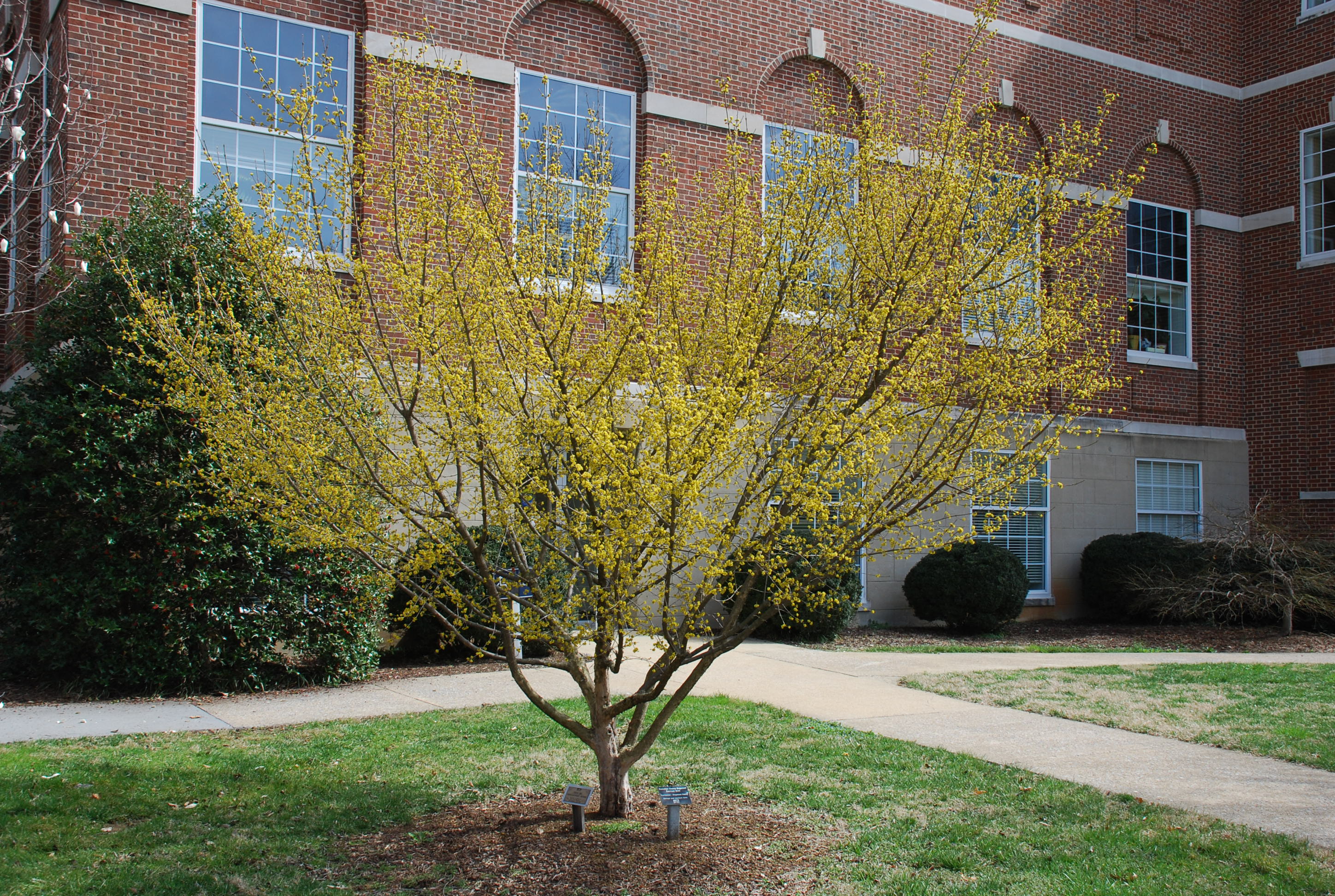
Cornelian cherry (Cornus mas) is a multi-stemmed, low-branched dogwood tree or shrub. It typically grows 20-25 feet tall and slightly less in overall width (USDA hardiness zones 4-7). Tiny, golden yellow flowers appear in late winter, around March 1st in my east Tennessee garden, and remain in bloom through most of the month despite cold winter nights and snow.
Leavess emerge around the first day of spring. Small drupe fruits (called “cornels”) ripen in late summer, and are tasty morsels for birds. Most of the fruits may stay hidden inside the dense foliage until late fall. In eastern Europe, where Cornelian cherry is native, the sour tasting fruits are made into syrups or jams.
In the autumn the dark green oval-shaped leaves turn a dull purple tinge before dropping. No serious insect or pests bother Cornelian cherry, and surprisingly, deer don’t seem to relish either foliage or fruits. A prominent feature on this long lived tree/shrub is its flakey gray-brown bark which exfoliates over the main trunk(s) and older branches as it ages.
Branching tends to be upright and is easily trained into a small single-trunked tree by clearing away all suckers around the base. Plant it in well-drained, slightly acidic soil, and in full to partial sunlight (6-hours minimum). Cornelian cherry makes a fine specimen tree or utilize as a deciduous hedge or privacy screen.
Among plant nerds it has been long debated whether Japanese cornel (C. officinalis) is prettier in bloom than Cornelian cherry. My suggestion is to plant both! ‘Golden Glory’ and ‘Spring Glow’ are major cultivars sold at many garden centers. ‘Aurea’ is a golden yellow leaf form available from on-line nursery sources. Reportedly, ‘Spring Glow’ produces very few fruits annually.