Wolfeyes Chinese Dogwood

‘Wolf Eyes’ kousa dogwood

Chinese dogwood (Cornus kousa), a favored spring-flowering tree, reaches 20-25 feet in height and blooms two weeks subsequent to our native flowering dogwood (C. florida). The ‘Wolf Eyes’ cultivar forms a compact tree or large shrub, standing 8–10 feet tall and nearly twice as wide. lowly reaches 10 to 20 ft. tall and wide; largest in ideal conditions. (USDA Hardiness zones 5-8).

Wolf Eyes displays an awesome leaf variegation which makes it a focal point in any garden or patio container. Its wide white wavy leaf margin is prominently edged on its olive-green foliage. Leaf variegation is very stable, rarely reverting to all green. Summer foliage is also burn or scorch resistant, best was planted in partial sun in Showy, creamy white flower-like bracts are followed by bright red ornamental fruit. 

The off-white four-pointed bracted flowers contribute very little, the small bracts muted by a standout variegated foliage. The green raspberry-like fruit size up and ripen reddish orange color beginning in late summer, attracting lots of famished birds to your property. Showy, creamy white flower-like bracts are followed by bright red ornamental fruit. 

Chinese (kousa) dogwood prefers a deep, well-drained, slightly acidic soil. While moderately drought tolerant, mulching and summer irrigation during prolonged dry periods is encouraged. Kousa dogwood is highly disease resistant.

Attractive variegated foliage

Gordlinia- Nothing Like it Before!


(x Gordlinia grandiflora 'Sweet Tea')

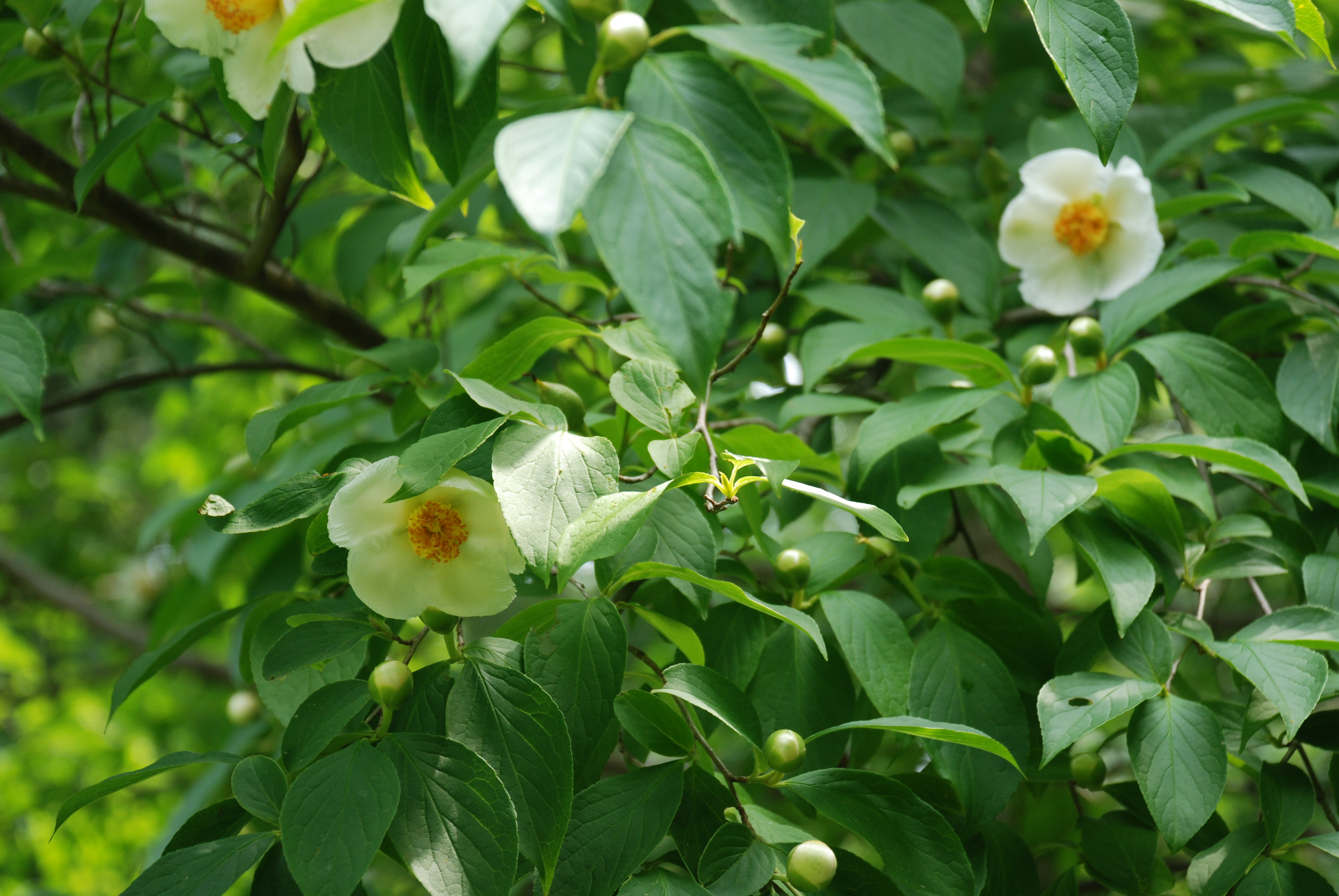
‘Sweet Tea’ resulted from crossing franklinia (F. alatamaha) and loblolly bay or gordonia (G. lasianthus). Sweet Tea is still abit finicky like franklinia, but is more resistant to Phytophthora disease (soil pathogen). This new intergeneric cross possesses huge (5 inch diameter), showy flowers that look like big fried eggs. Sweet tea exhibits semi-evergreen foliage with large, single, camellia-like flowers from July through September.

Why name it ‘Sweet Tea’? It’s a member of the tea family (Theaceae). The flowers have a light sweet fragrance. Both parent species originate from the South where sweet tea runs in our veins. Sweet tea must be planted a good well-drained soil with even moisture year-round.  It grows best in full sun or a little afternoon shade. Irrigation during summer dry spells is a must. Roots readily from stem cuttings, then takes off growing. Mature height is estimated to be 20-30 feet. Winter hardiness is likely in USDA zones 7 thru 10. The plant is not patented or trademarked.

Photo credit and article info. from Dr. Tom Ranney, NCSU Plant Breeder, Mountain Crops Research and Extension Center, Fletcher, NC.

Three Mid-sized Ornamental Grasses for Small Gardens

Calamogrostis 'Karl Foerster'

For their sheer architecture alone, ornamental grasses provide 4- seasons of landscape excitement. Within a small garden space three mid-sized (4 – 6 feet tall) ornamental grasses with awesome vertical stature excel. All are highly rated for long garden life and low annual maintenance.

‘Karl Foerster’ Feather Reed Grass (Calamagrostis x acutiflora ) forms silvery bronze inflorescences (plumes) in mid- summer above its green foliage. The feathery inflorescences start out creamy white with a pinkish tinge. Against brisk winter winds the narrow golden straw plumes stand tall. Seed heads are sterile and not invasive.

‘Morning Light’ Eualia grass (Miscanthus sinensis) has very narrow green leaf blades with a well-defined white midrib line. Pinkish brown plumes appear in mid to late August and stand 12 – 18 inches above the soft textured foliage. Morning Light is not invasive as some Miscanthus species as the seed heads are mostly infertile.

‘Northwind’ Switchgrass (Panicum virgatum) exhibits the tightest vertical form of any switchgrass cultivar. Northwind‘s blue-green foliage is wide and its attractive pink to reddish plumes appear in early September. Northwind grows 4 – 5 feet tall and a narrow 2 – 3 feet wide. Plants remain tall and erect throughout the winter. Switchgrass is a North American prairie species.

All three grasses adapt to a variety of soils, sand, silt or clay loam, and prefer an open area in full to partial sun. Once established, they tolerate dry slopes and boggy areas for a short time. All three grasses may be planted as single specimens or group several planted en mass. Medium sized grasses serve as rear accents or backdrops for smaller plants in front. They grow equally well in containers either alone or mixed among other perennials.

Plant them near water gardens or along stream banks and at the edge of a pond. In coastal areas, Panicum and Miscanthus grasses tolerate salt spray. Foliage and flowers of ornamental grasses are effective in fresh and dried flower arrangements.

In early spring lop them back to within 6 – 8 inches above the plant crown. Grasses are best divided as clumps begin signs of life.

A Perfect Small Garden Tree– ‘Ace of Hearts’ Redbud

'Ace of Hearts' redbud

'Ace of Hearts' summer foliage

Ace of Hearts redbud (Cercis canadensis ‘Ace of Hearts’) is an arboreal treasure, a compact form of our native redbud. Heavy clusters of light purple pea-like flowers cover twigs and branches from late March into early April, depending on your locality. Ace of Hearts grows 12 by 15 feet in height and spread, roughly one-third smaller than standard seedling redbuds. It makes an ideal fit in small and suburban gardens.

Its small semi-glossy heart-shaped leaves are less than half the size of other redbuds. Leaves are spaced close together, each one overlapping another like shingles on a roof. Its dark green summer foliage turns yellow in autumn before falling. Few, if any, unsightly seed pods are produced.

The overall tree holds its dense dome- shaped canopy over several years. Established (2 years planted) trees are exceptionally heat and drought tolerant. Ace of Hearts is susceptible to very few serious disease and insect problems.

Grow this redbud in any well-drained garden soil in full or partial sun, providing a minimum of 6 hours of sunlight to insure good flowering. This compact grower requires very little annual pruning, which is best performed after flowering.

Double Take™ Flowering Quinces

‘Scarlet Storm’ Flowering Quince

Photo credit: Dr. Tom Ranney, NCSU Research Horticulturist

Flowering quince (Chaenomeles spp) is an early spring flowering shrub, treasured for its brightly colored blooms (USDA hardiness zones 5-9). Old fashioned quince shrubs produced small amounts of fruits which were gathered and prepared into yummy jelly in the autumn kitchen. These often large 10-12 foot tall shrubs produced small sharp thorns which made picking the fruit a challenge.

Now appearing in a garden center near you are three new compact quince cultivars: ‘Orange Storm’, ‘Scarlet Storm’ and ‘Pink Storm’. Dr. Tom Ranney and his team at the Mountain Crops Research & Extension Center near Asheville, North Carolina developed the three “Storm” quinces, marketed as the Double Take™ series. Plants grow 3-4 feet in height and average 4-5 feet in width.

The big, vibrant colored, double flowers provide a stunning early spring display. The camellia-like blossoms measure 1 ½ – 2 inches across and open in early spring before the leaves. Flowering branches make good cut displays. Once quinces become established after two years, shrubs are very drought tolerant. Branches are thornless and deer resistant. Double- flowered quinces do not produce fruit and are easy to care for.

After flowering, quinces may be pruned as specimen shrubs, espaliers or hedges. Feed with a slow release fertilizer such a Osmocote™ or Nutrikote™ in late winter.

Wild Onion or Wild Garlic?

Wild Garlic weed patch

Often called “wild onion”, many gardens (including mine) from late winter into spring in eastern Tennessee, western NC and southwest VA are instead plagued  by wild garlic (Allium vineale).

Wild garlic forms a rounded blade (stem) while wild onion (A. canadense) has a flattened blade. When freshly cut, the hollow stem of wild garlic is easily visible. Both lawn weeds are edible in a chemical-free lawn and garden. However, chemical herbicides may be your primary option to eliminating both of these noxious weed pests.

Wild garlic forms patches of perennial bulblets which multiply and return each year in greater numbers. Hand pulling is rarely a viable option because the bulblet root system breaks off and sends up a new plant, often within a week. You need to dig and lift beneath the bulbs.

Frequent mowing cuts off flowers to prevent seed head formation. Maintaining a dense stand of lawn grass crowds out wild garlic (and other weeds).  

Effective chemical herbicide products include:  2,4-D, Dicamba, Clopyralid, and Triclopyr. Combination herbicides containing two or more of the above products are most effective. Adding a few drops of a spreader/sticker provides better herbicidal action.

This post-emergent treatment also controls white clover, dandelions, ground ivy, thistles, chickweeds, henbits, red sorrel, and wild violets.

No Excuse for Tree Topping

Maple tree "hat rack"

Why do people top trees? Often, it is because “their neighbor(s) did it”. When asked whether they believe their neighbor to be a wise person, the typical response is “NO”.

The Negatives About Tree Topping: 1. A topped tree reduces property values in a community. Topping adds a blight look to a neighborhood or over an entire city; 2. A topped tree is more threatening. Re-growth branches are weak and dangerous to park cars, people, and particularly children playing beneath them; 3. A topped tree costs you more in future expenses; and 4. The tree may not survive topping.

If you feel threatened by a large tree, either have the tree pruned by a certified tree arborist or remove the tree. Select a new replacement tree based on its height at maturity. A properly pruned tree has limbs cutback to their point of attachment to a larger branch or trunk.

What’s wrong with tree topping:

  • Removal of too much tree top reduces numbers of leaves, starving tree roots
  • Opening tree center causes sunscald, injuring bark and burning wood which leads to disease
  • Large pruning cuts don’t heal, causing tree infections
  • New growths are weak and snap off in wind and ice storms making tree more hazardous
  • Disfigures the overall look of the tree

Update On New Heuchera Hybrids

'Bronze Wave' heuchera


The best of the villosa cultivars are ‘Caramel’, ‘Citronella’, ‘Mocha’, and my newest favorite ‘Bronze Wave’.  Blooms are tall and mostly insignificant. I often remove them to accent the foliage. All villosa cultivars are long lived and heat and humidity tolerant. Heucheras prefer a moist, well-drained, compost-rich soil. Plants are heat and humidity tolerant in the Southern Appalachian region (USDA zones 6 and 7). Grow the H. villosa hybrids either in direct morning sunlight in z-6 or in partial shade in z-7.

Space each plant 2-3 feet apart.

cultivars are not your grandmother’s puny heucheras. Plants are long-lived and vigorous. Cutback plant foliage and spent flowers to the crown either in late autumn or winter and feed with a handful of 10-10-10 granular fertilizer per plant. Water soluble fertilizers such as Miracle Gro™, Schultz®, and Espoma® are also good choices. Follow package directions. languishes in deep shade and dry soils and is best grown in a mulched bed.

When To Prune Spring Flowering Shrubs

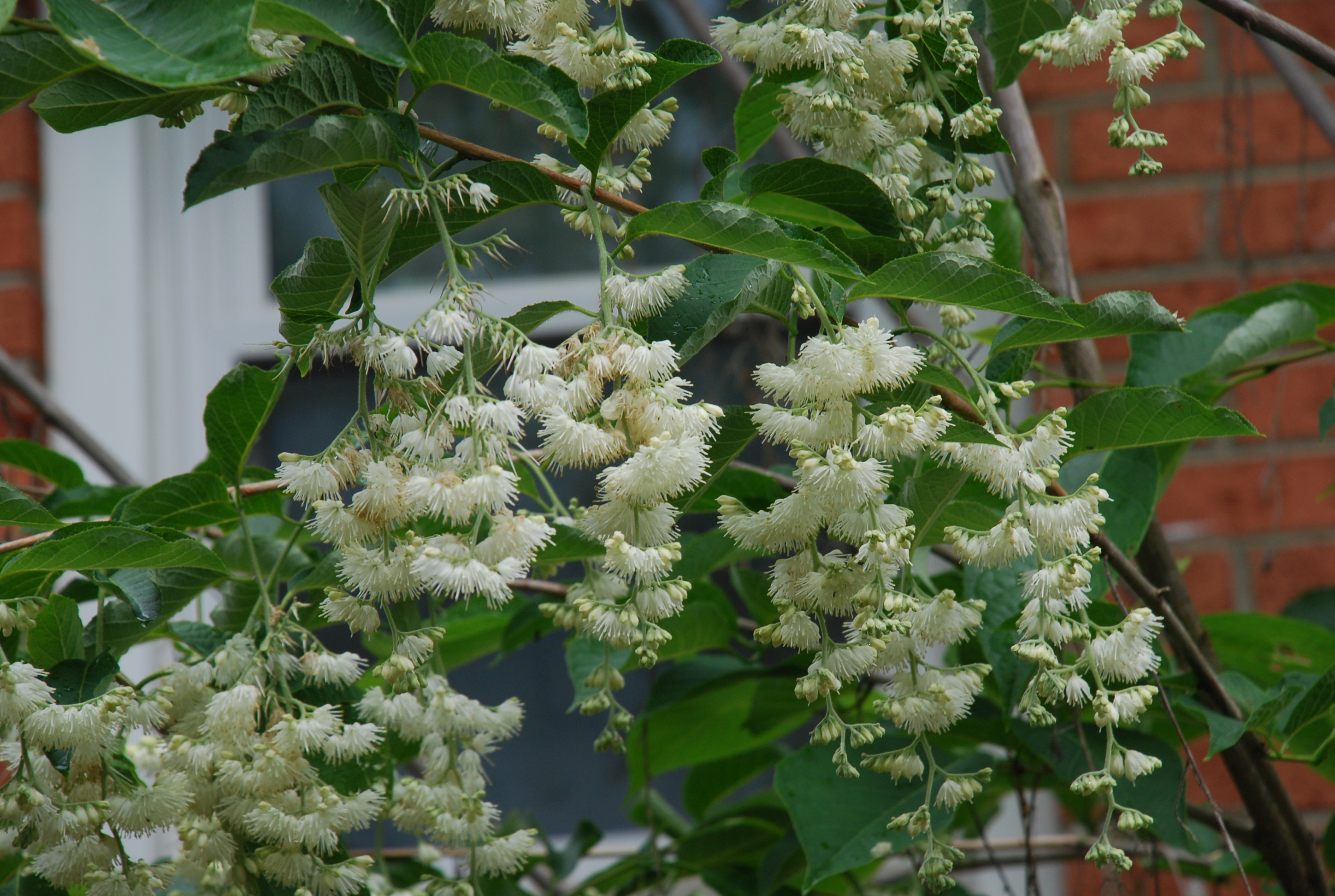
Linden viburnum (V. dilatatum)

Seven reasons why you prune:

  • eliminate dead, diseased, insect riddled branches
  • control plant height and spread
  • shaping such as topiary, espaliered or pollardized trees
  • increase or decrease the numbers of flowers and fruits
  • rejuvenate an old shrub or tree
  • remove low branches over walkways
  • remove water sprouts and root suckers

Flowering shrubs bloom from late February thru May. Pruning them either before or while they are blooming makes little sense. Prune them within one month after each has finished flowering. Examples of spring flowering shrubs include: forsythias, spireas, viburnums, honeysuckles, mockoranges, deutzias, lilacs and most azaleas.

Shrub roses like the popular Knockout™  and Easy Eleagance™ series are cut back when forsythia is in full bloom. By this time, the harsh winter temps are over and rapid re-growth will follow after roses have been pruned.

Hydrangea shrubs are a mixed bag. Oakleaf hydrangeas are pruned immediately after flowering in late spring, while summer flowering PG and AG hydrangeas are pruned now in late winter and early spring.

Use only sharp pruning tools to make clean cuts. Cleaning, lubricating and sharpening saws, shears and loppers are a time-saving winter chore. Well cared for pruning tools provide years of dependable cuts.

‘Misty Blue’ Doll’s Eye Will Catch Your Eye

 White baneberry or doll’s eye (Actaea pachypoda) is a strikingly beautiful native perennial. The cultivar ‘Misty Blue’ was first discovered at Mt. Cuba Center in Greenville, Delaware. The bluish-green foliage is multi-stemmed and finely cut from mid-spring thru the summer months. Grow it in a moist shade garden environment.

Lovely fringed white flowers appear in April. In the fall clusters of white “doll’s eye” berry fruits sit atop brightly red pedicels. Each white berry is marked with a distinct black dot. Fruits persist over 4 – 6 weeks.

Baneberry is a long-lived perennial which thrives in a moist, well-drained, compost rich soil. White baneberry grows 2 – 4 feet tall and is best grouped en masse so that its lovely blue-green summer foliage receives the attention it deserves. Actaea is reliably hardy throughout USDA zones 3 – 8.

Because of its new status, availability of ‘Misty Blue’ baneberry is limited primarily from internet and mail order catalog selling native plants.