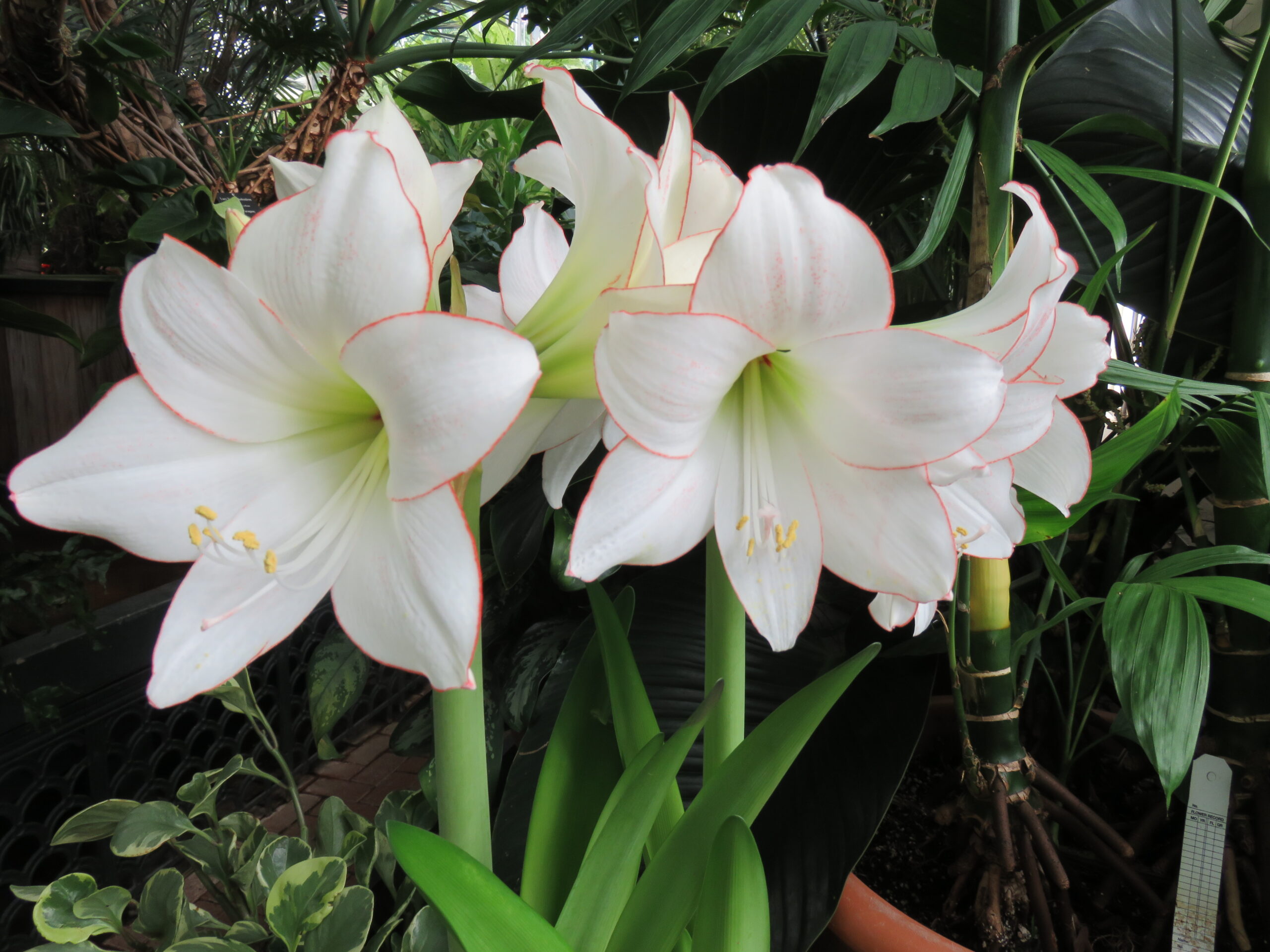
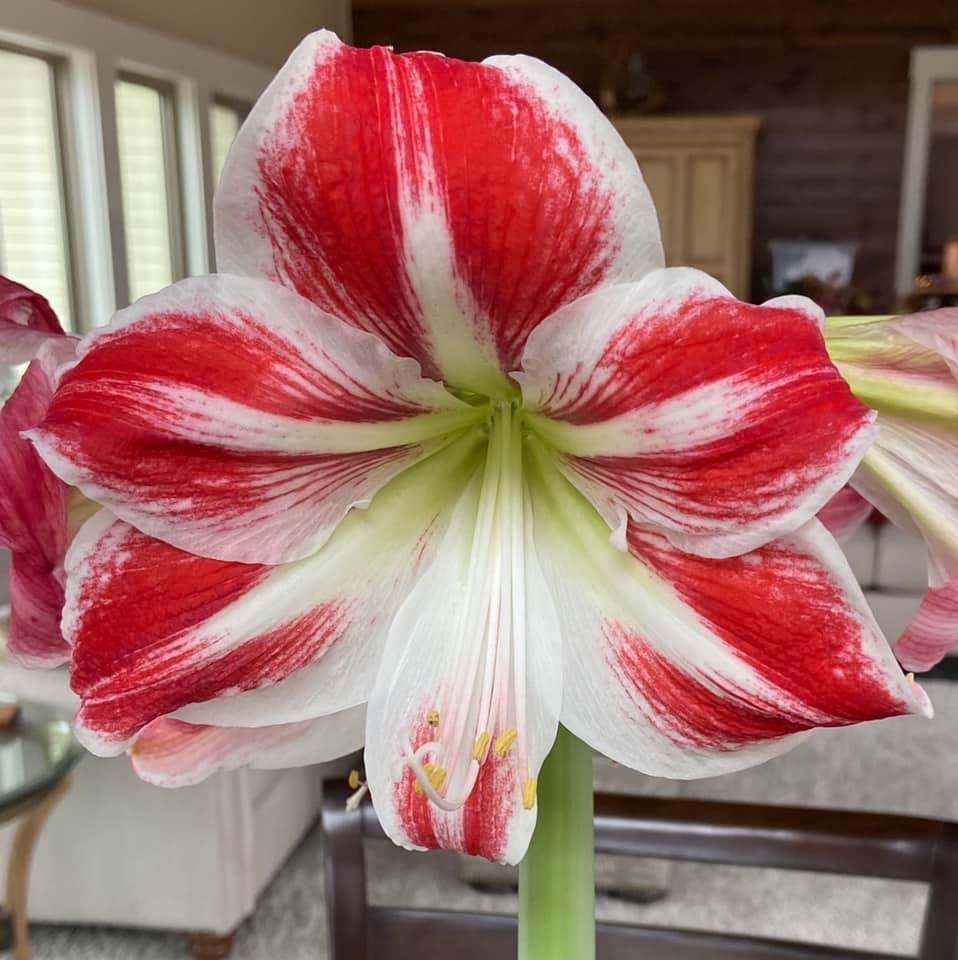
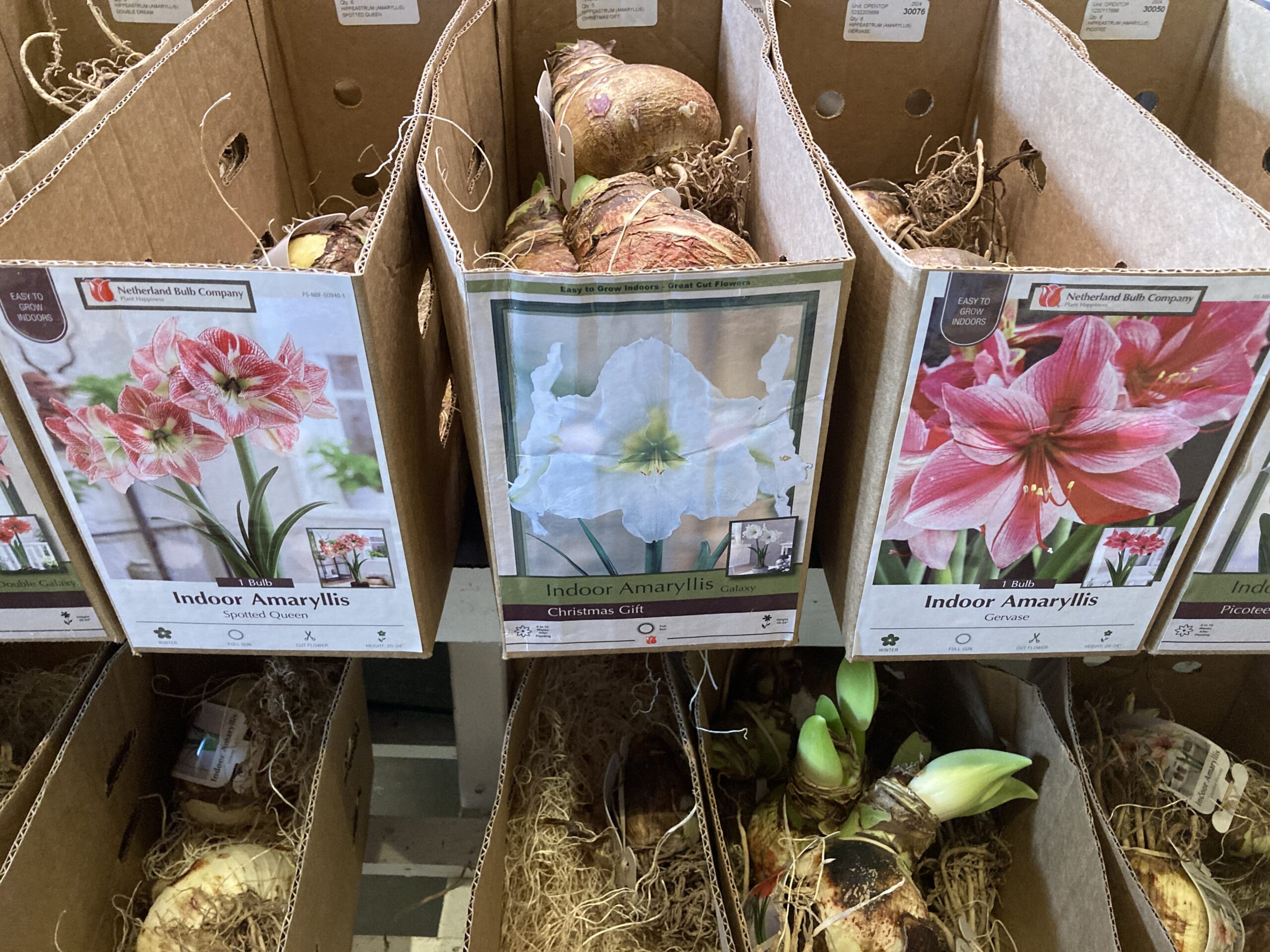
Amaryllis is native to Cape Province in South Africa, and as with other bulbs native to this region. They benefit from a period of dry dormancy before reblooming again. In the autumn season, many temperate zone gardeners bring potted amaryllis bulbs indoors and dry out potting soil to induce dormancy. By withholding water, amaryllis leaves yellow, shrivel, brown, and die.
Once leaves die back, move the pot(s) to a cool dry location for its 8-12 weeks dormancy period. Cool basements and garages are ideal storage areas. You may remove the bulb from soil and place it into a paper bag. Allow your plant to remain in this location for 3-4 month. You may opt to repot the bulb to a slightly wider pot if desired. Amaryllis bulbs don’t mind being pot bound. Once the potting soil (potting media) dries out, water sparingly and choose to restart the bulb. Simply supply water, but do not overwater the bulb to avoid rotting. Generally, it takes 6 to 12 weeks for blooms to initiate.
The flower bud will emerge first, followed by the green strap-like leaves. Extend floral life by placing the plant in a cool location and bright daylight. Rotate the pot weekly to direct the bloom stalk to grow tall and straight. Otherwise, stalk will angle toward the sunlight or another available light source.
After flowering, cut the flowering stem(s) off. Once leaves appear you should feed amaryllis with a water-soluble fertilizer every 4 to 6 weeks. When danger of frost has passed, set your bulb outside in a partly shady location. At this point you can fertilize it every 3 to 4 weeks until late July.
Quick troubleshooting tips:
Dormant period (8-12 weeks); cool in a refrigerator or unheated garage above freezing.
Dormancy temps around 35-45 °F are best.
Outdoor growing period in spring/summer in morning sunlight/afternoon shade.
Fertilize plant monthly during the spring/summer growing period
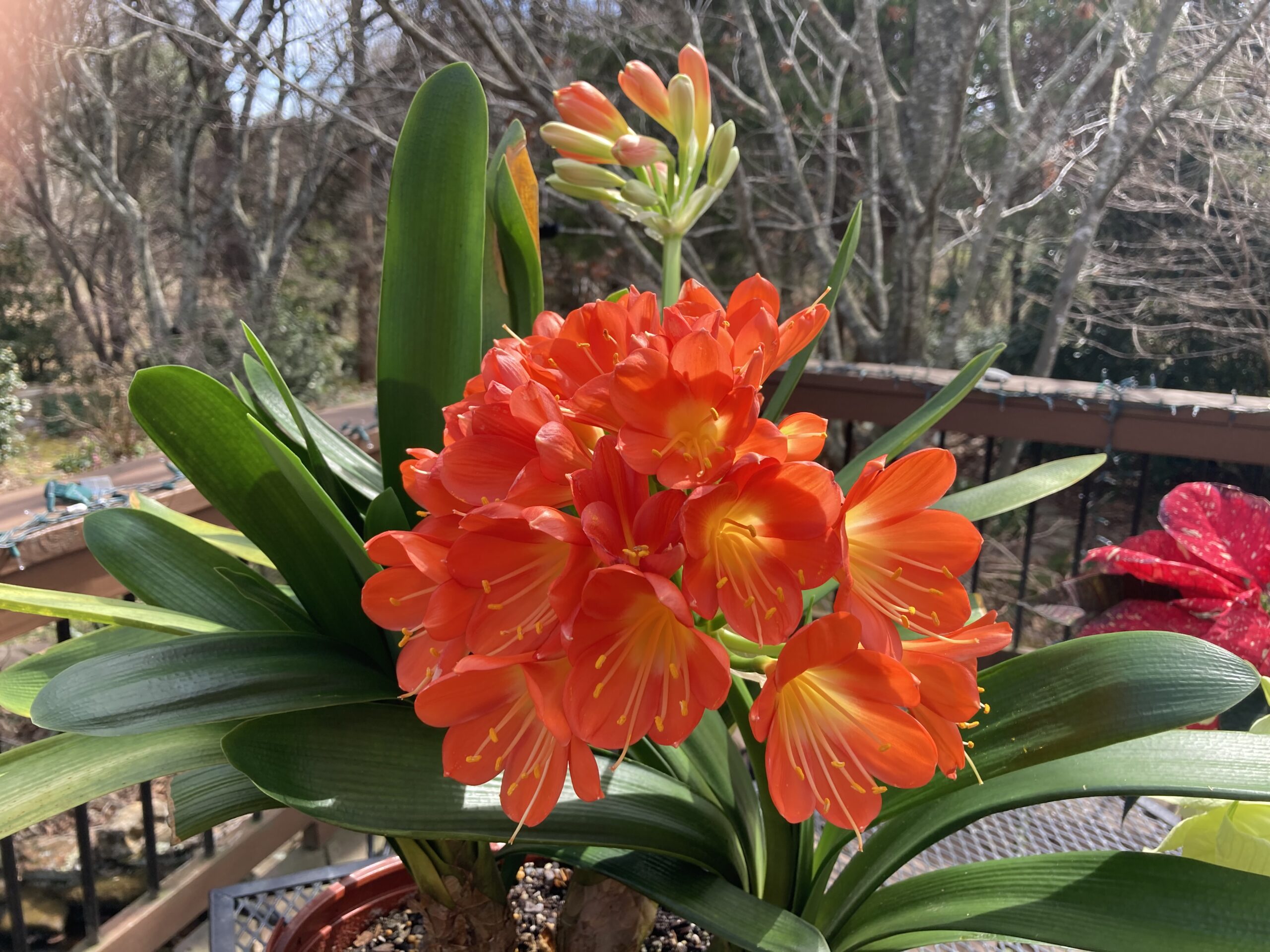
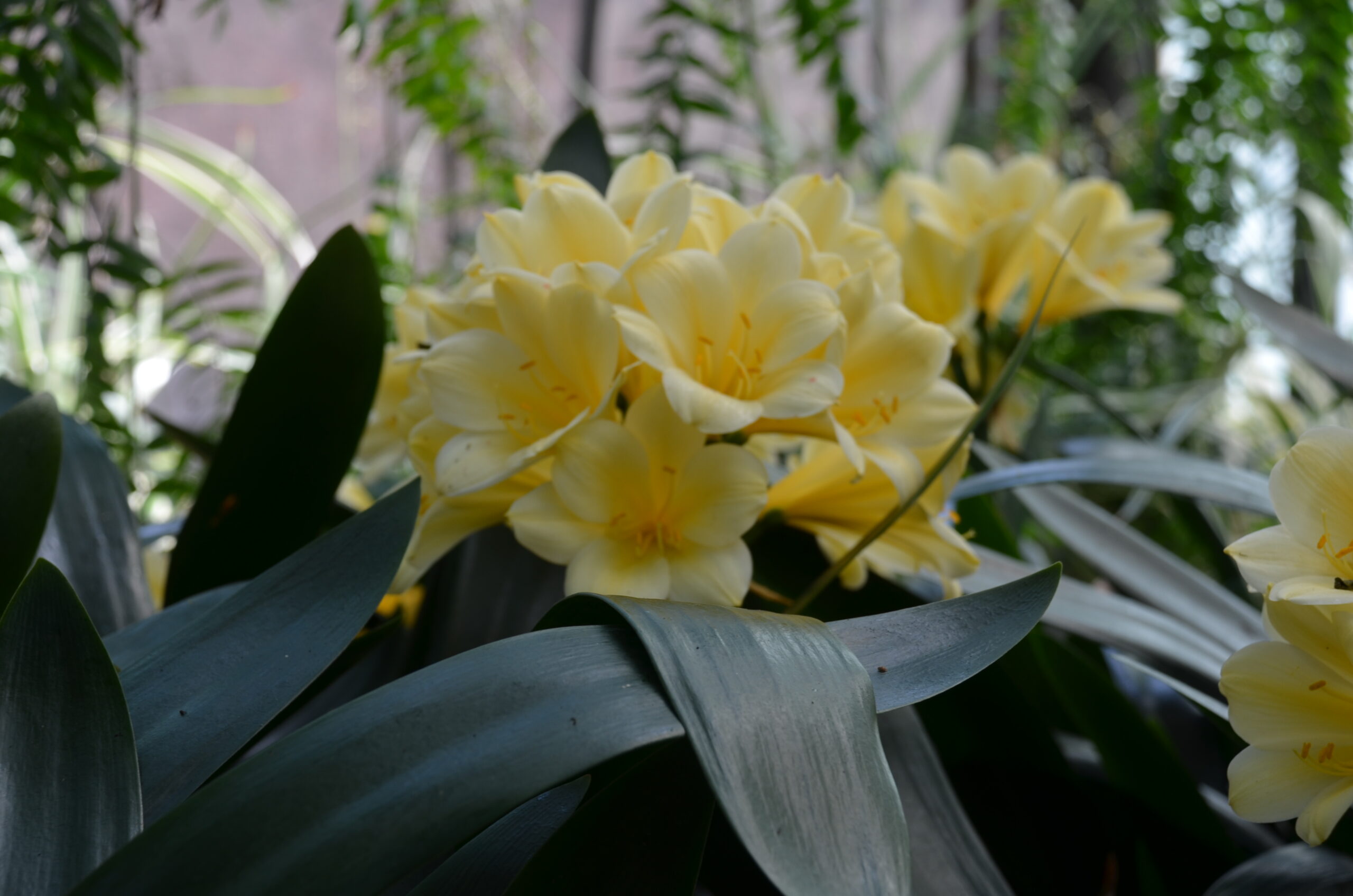
Cliviaminiata blooming in March. (houseplant grown indoors)
Chase away any winter blahs with colorful flowers of clivia (Clivia miniata). This sub-tropical plant should brighten your home. Start by purchasing a plant already budded or in flower. Clivia lives a long time as a potted house plant. An older plant will grow 2 to 3 feet tall and wide. Grow in a large, wide-based clay, ceramic or plastic pot that won’t tip over.
Clivias are native to South Africa and belong to the lily family (Liliaceae). This house plant is easy to care for and can be triggered to re-bloom every year as do amaryllis or holiday cactus. Its wide, strap-like dark evergreen leaves stay blemish-free and gorgeous when not in bloom. Older basal leaves will eventually age, turn yellow, wither away, or easily removed.
Outdoors in the spring and summer months, clivias flourish in bright daylight, but not in direct sunlight. From mid-May thru mid-September set plant(s) under a shade tree (USDA zones 6 and 7). Bring tender clivia back indoors in early autumn when nighttime temps dip below 40°F. Once indoors, water the plant every 7-10 days.
In November, encourage blooming by initiating a dry period lasting 3 months long until mid-February. During this induced “dry period”, if leaves show signs of wilting, supply just enough water to perk them up. Clivia’s fleshy roots store water like a sponge, which enables them to tolerate drought. If available, move the plant into a cool 50-55°F room.
Proper annual care will reward you with one or more bouquets of lily-like flowers borne in tall sturdy stems. By early March one or more thick flower stalk should emerge near the plant base, through the thick foliage. Remove the old floral stalk at the base when the flowers fade and wilt.
Flower colors, either orange or yellow, and currently available. New varieties are being developed by plant breeders around the world including Longwood Gardens in Kennett Square, PA.
‘Longwood Debutante’ clivia
An orange-colored flower variety is commonly sold in plant shops, but other varieties are becoming more available for purchase. Other varieties include:
‘Citrina’ – yellow-flowered cultivar
‘Longwood Debutante’ – off-yellow petals
‘Appleblossom’ -soft pink and peach-hued petals
‘Rabbit’ -bright red-orange outer tepals and creamy yellow centers
During the winter months, clivia prefers direct light from a bright north or eastern exposure window. Inside a grow room or greenhouse, do not expose to long periods of direct sunlight. During the spring and summer, clivia needs regular watering, but allow partial dry down between waterings. Do not mist the foliage or keep the potting medium constantly wet, as this may cause rot and promote leaf diseases.
In the spring and summer, regular watering and feeding are the rules. Once clivia has bloomed, fertilize monthly with a water-soluble fertilizer (20-20-20 or equivalent) mixed at 1/2 the recommended label rate. Do not fertilize in autumn and winter months.
Clivia bloom best when they are pot-bound. They can go 3 to 5 years without repotting. Inspect roots for any damaged or rotting roots. Repotting can be performed any time after flowering. Set each division in a new 10-inch or wider pot containing a good peat-bark-perlite potting medium that drains well.
Snake plants (Dracaena trifasciata) are one of the most popular houseplants and for good reason. It is incredibly drought-tolerant, able to go for weeks without water, and in low and medium lighting conditions. A majority of species are native to Western and Southern Africa and the Asian subcontinent.
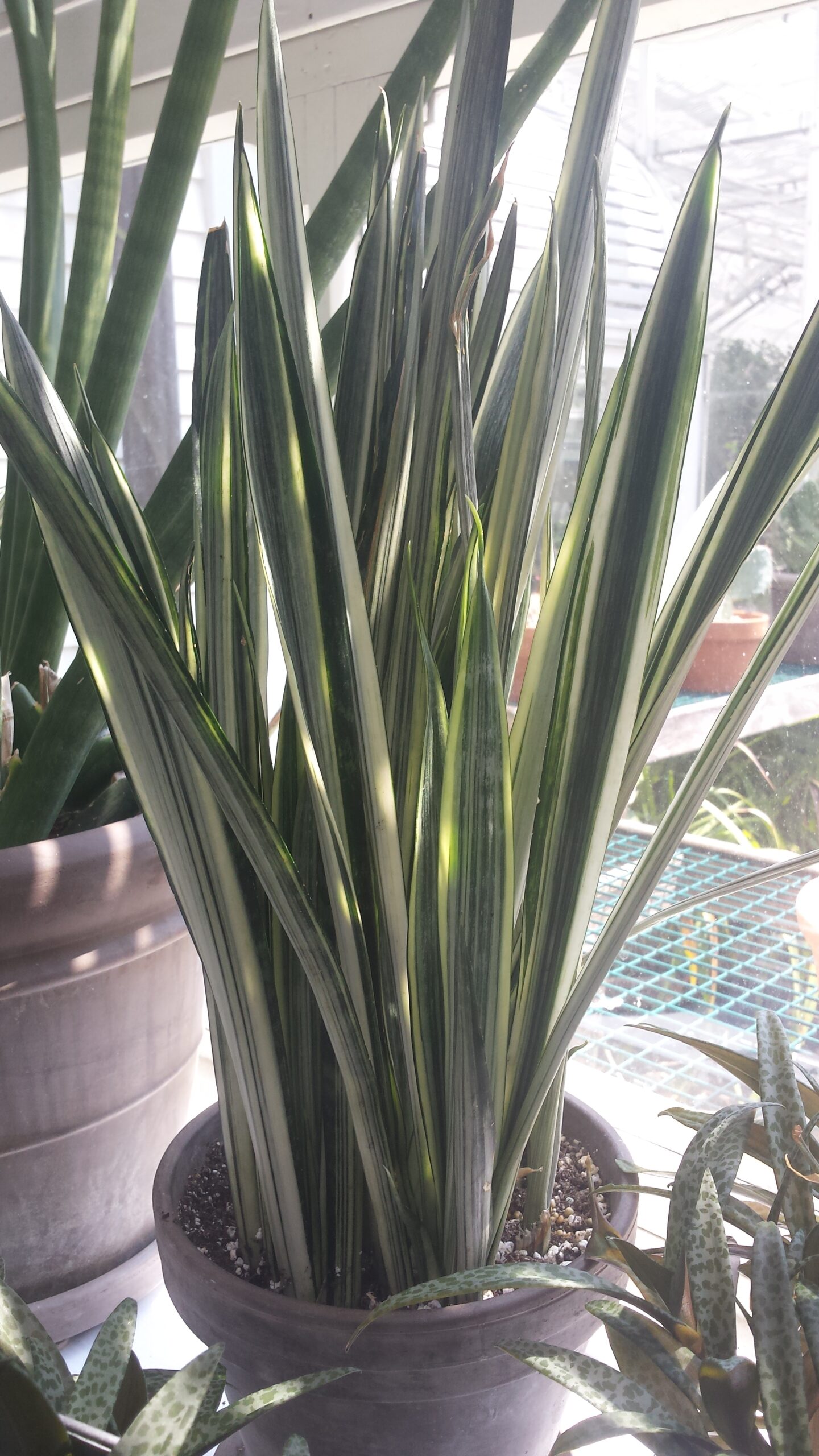
D. trifasciata ‘Bantel’s Sensation’
They are known under a number of names, including mother-in-law plant, mother-in-law’s tongue, and Sansevieria. Depending on variety, plants grow 2-5 feet tall. They tolerate low light (ideal for growing in office buildings) but will thrive in bright light, once acclimated, and send up new leaves and develop stronger variegation.
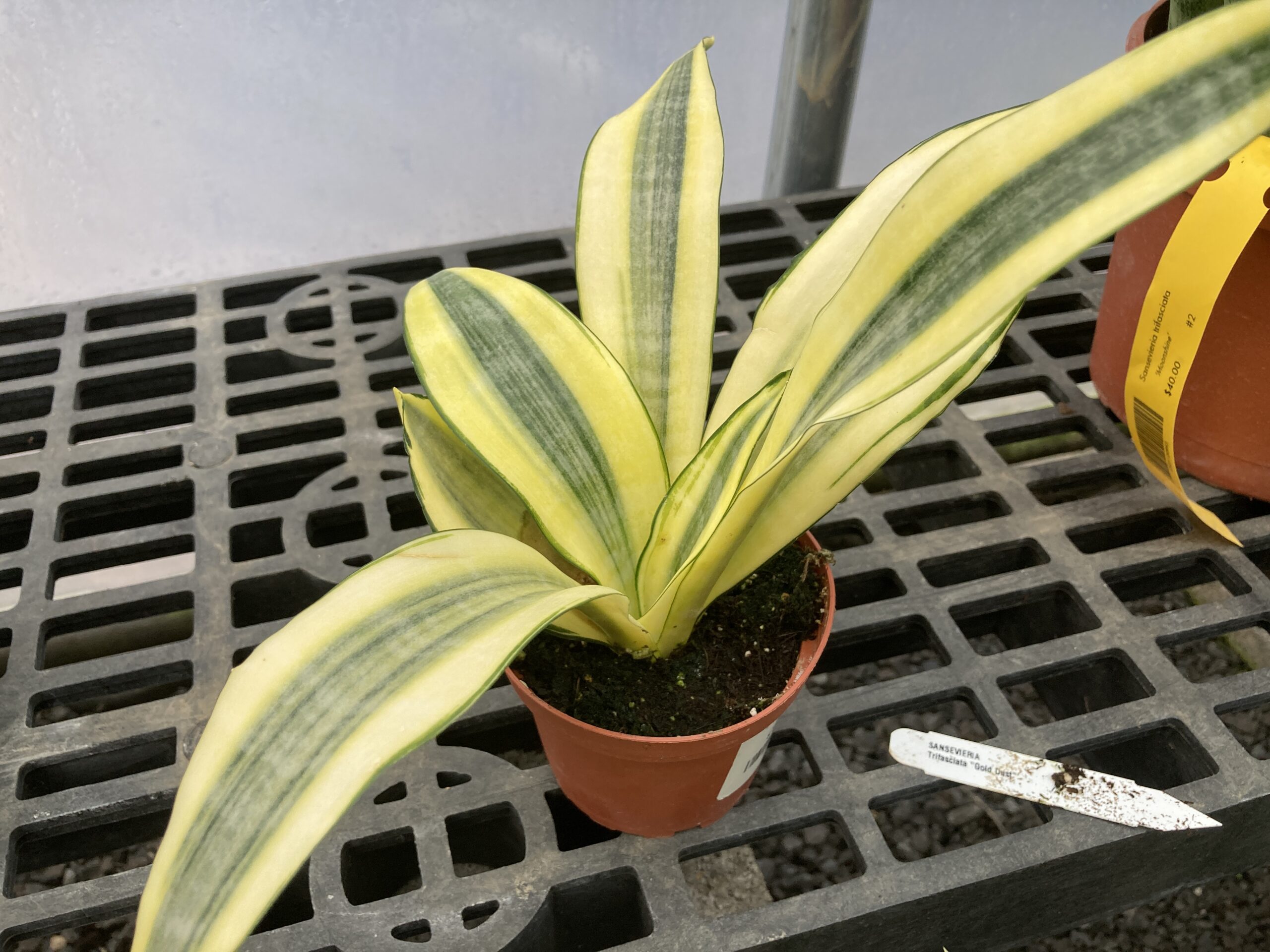
Snake plants are available in dozens of varieties and cultivars, with stiff sword-like leaves that are colored in bands of green, yellow, and cream. Sansevieria (the former genus) is a hard to kill house plant. That means it need very little attention. If you are an intense house plant enthusiast, sansevierias may be a plant to avoid.
Grow them as you would a succulent plant. Soil should have porous drainage mix containing peat/perlite/aggregate sand. Snake plants prefer a loose, well-drained potting soil mix. They do well in sandier soil which makes all-purpose cactus potting soil a good choice. Feed your snake plant monthly in spring thru fall with a water-soluble fertilizer such as Miracle-Gro™ or Peters™ diluted to half strength. Do not fertilize in winter.
Snake plants grow best with 8 – 10 hours of indirect sunlight or a few hours of early-morning direct sunlight. Too much direct sun causes may damage the leaves. Snake plants tolerate some shade, but lack of light will eventually stunt growth and dilute foliage color.
Water your snake plant when the soil has completely dried out, being sure to water deeply every 10-14 days. If leaves are brittle and dry, water immediately. Overwatering is the quickest way to kill a snake plant. Too much water or letting the plant sit in water will rot its root system. Yellowing leaves are an early sign of overwatering.
Snake plants grow best in warm temperatures between 70 °F and 90 °F. Keep plants away from cold drafty windows. They won’t tolerate frost, and prolonged exposure to less than 50 °F can kill the plant. They’ll do fine with average household humidity between 30-50%.
Set snake plants in bright, indirect light. Almost any window in your home is okay. Generally, water plants when the surface pot soil looks dry or every 7-21 days. Wilting leaves or leaf death is a symptom of overwatering and/or insufficient light.
Snake plants are easy to propagate by cuttings or by division. Prune snake plants during the growing season to encourage new growth. Remove tall leaves and damaged unattractive leaves at any time with an x-acto knife.
Repot your plant(s) every 3-5 years, usually at the start of spring. It may be getting unstable (tipsy). Wide, shallow pots with plenty of drainage holes are the best. Repotting is best performed in spring.
Snake plants can be grown outdoors in spring and summer as long as outdoor temps hold reliably above 50 °F. Bring plant(s) indoors back in autumn. Snake plants occasionally may bloom. Their creamy white, tubular-shaped flowers are fragrant.
Dust the leaves every few weeks and inspect for insects and rotting decaying leaves. Snake plants are susceptible to these houseplant pests—scale, spider mites, mealybugs and whiteflies. Wipe the plant with a swab or soft paper towel dabbed in a 50:50 solution of 70% isopropyl rubbing alcohol and water. An alternative approach is to treat pest infestations with Neem Oil.
D. trifasciata ‘Laurentii’ snake plant
Some Snake Plant Varieties:
D. trifasciata ‘Hahnii’ (bird’s nest snake plant) grows 6 inches high with rosette form composed of densely packed leaves.
D. angolensi, called “African Spear”, is cylindrical snake plant has round, stiff leaves several feet long. arching outward from a central crown.
D. trifasciata ‘Laurentii’ is a variegated cultivar with creamy yellow leaf margins and grows 15-18 inches tall.
D. trifasciata ‘Bantel’s Sensation’ grows 3-feet tall bearing narrow leaves with white vertical stripes.
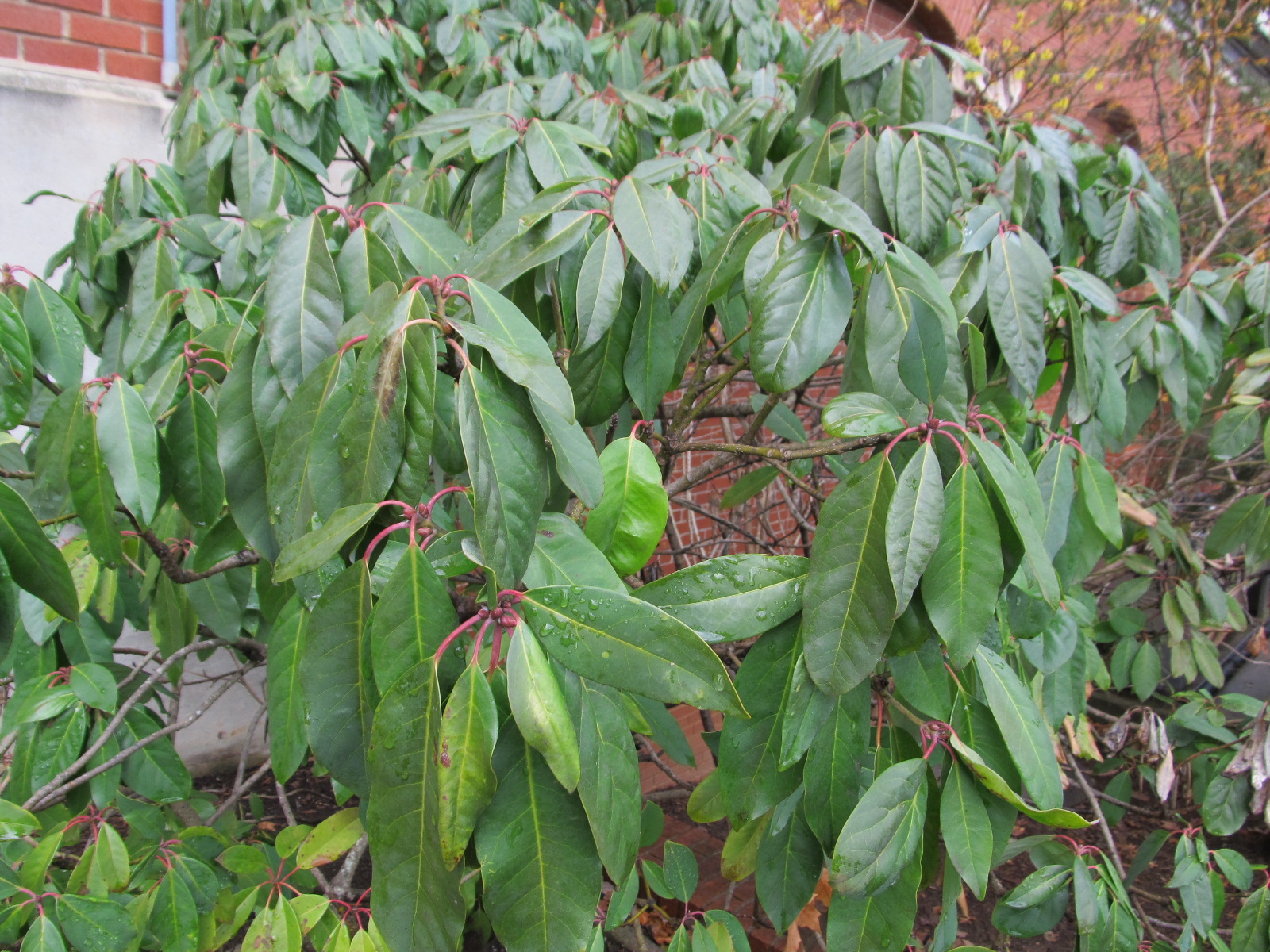
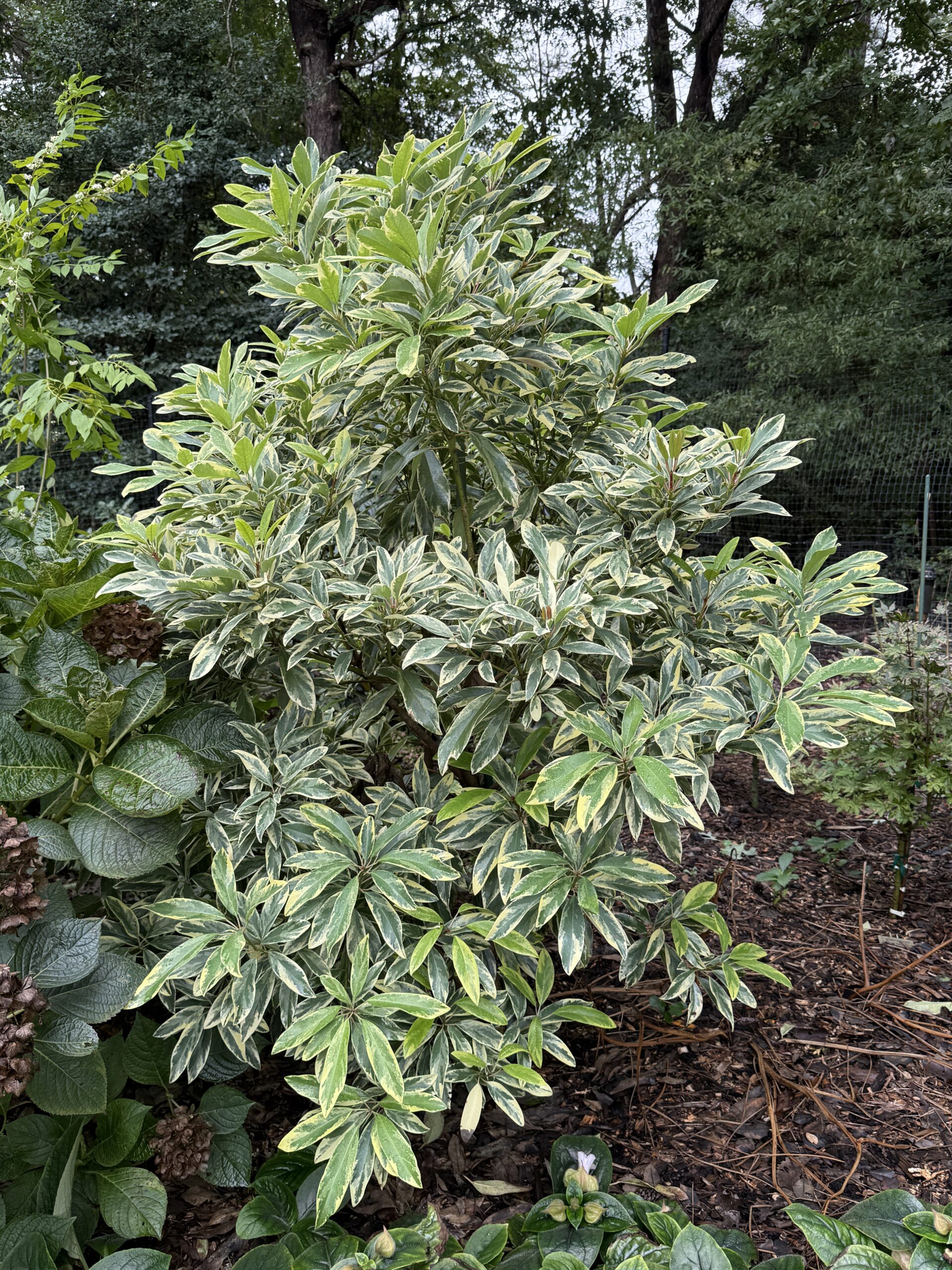
Daphniphyllum on campus of East Tennessee State University in Johnson City, TN
Daphniphyllum macropodium is a rounded understory broadleaf evergreen shrub or small tree native to forested lands in Japan, Korea and China. Daphniphyllum, aka “false daphne”, is recognized for its attractive foliage and unique flowering habit. It stands out for its bold rhododendron-like leaveage. It typically grows to 15-25 feet tall in cultivation; add on 5-10 feet if plant is growing in its happy place.
Long-petioled, oblong to oblanceolate, leathery leaves, 5-10 inches long by 1-3 inches wide, are arranged in closely spaced spirals at the stem ends similar to the leaves on some rhododendrons. Very prominent are its showy purplish red petioles. The deeply glossy deep leaves above and a glaucous light green beneath are outstanding.
Daphniphyllum is dioecious, either male or female on individual shrubs/trees. Flowers are mostly inconspicuous. Female shrubs bear blue ellipsoid fruits on numerous rachis that radiate from under the whorled leaves. In May-June non-showy apetalous flowers in axillary racemes bloom from the leaf axils on previous year’s growth. Male flowers are purple-pink and female flowers are pale green. Female flowers, once pollenized and fertilized, give way to ellipsoidal blue-black drupe fruits (to 1/3” long). Male shrubs/trees do not produce fruit.
Winter hardy to USDA Zones 7-9, daphniphyllum is best grown in moist, rich, sandy-humus-rich, slightly acidic, well-drained soils in part shade. Shrubs may survive Zone 6 winters if sited in a sheltered location and mulched in winter. The soil should be kept uniformly moist, particularly when grown on full sun sites where leaf scorch may be a potential problem. Propagation is mostly by seed.
Unfortunately, much of the ellipsoid-shaped fruits are hidden within the foliage; the brick-red fruits are quite showy. Over a cold winter night, leaves may droop down severely and fully recover by late the following morning. This climatic response is called “epinasty”. Dapniphyllum foliage is attractive in decorative seasonal arrangements.
Variegated leaf daphniphyllum at Bill and Linda Pinkham’s Landscape near Virginia Beach, VA
This humongous shrub might serve as a great tall shady screen on large properties. No disease and pest problems have been reported to date. Leaf scorch may occur in full sun. Deer tend to mostly avoid daphniphyllum. Utilize as a single specimen or plant several in groups if fruit and viable seed are desired).
Plant availability is mostly limited to e-nurseries online. The variegated leaf form (pictured above) is produced in very small numbers.
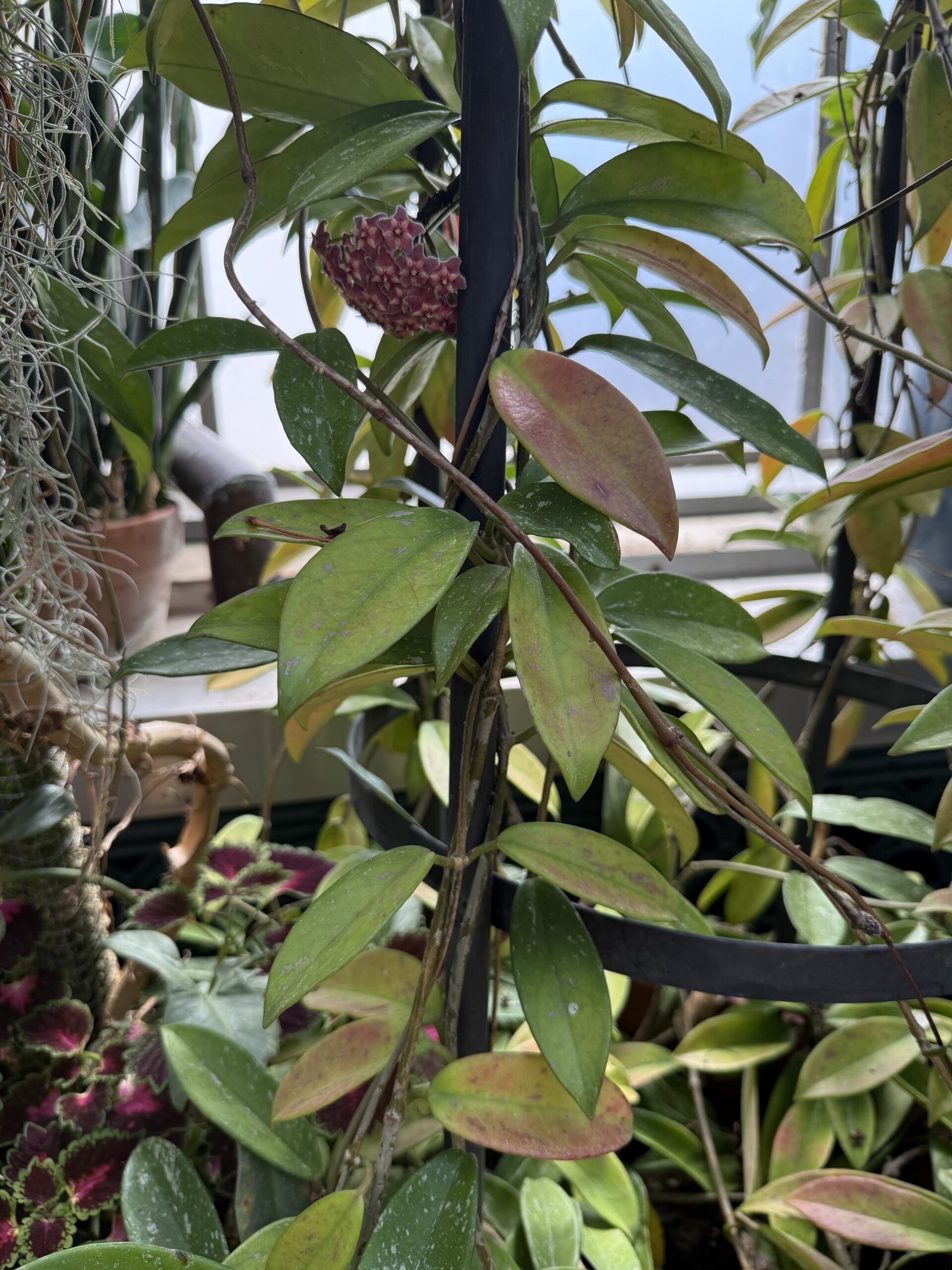
Hoya publicalyx in the Biltmore Estates Conservatory in Asheville, NC
Hoyas, also called wax plant, porcelain flower, honey plant, common waxflower, are an Asian native plant (epiphyte) with fragrant, low-maintenance with lovely flowers that grow in a ball-shaped cluster. These low-maintenance plants produce woody stems with waxy evergreen leaves.
Hoyas have become hugely popular among house plant collectors and available at most retail garden centers, box stores, and plant shops. Depending on species and variety, plants grow in a vine or bushy form. Full length or height of the plant should be 2 to 4 feet. Hoyas prefer bright, indirect sunlight for 2-6 hours daily and moist, well-draining soil that should dry out between waterings.
Vining hoyas are grown in a hanging basket for trailing or support on a trellis within a container. Plant prefers moderately moist, well-draining soil; allow hoyas to dry out between waterings. Hoyas are light feeders. Feed with a slow-release fertilizer once monthly. Orchid fertilizers are adequate.
Hoyas generally bloom from June through September. Flowers grow in a ball-shaped cluster and last for 6-9 days. Each cluster may contain up to 40 individual flowers packed tightly together. Each flower appears to be molded from wax or porcelain, thus their common names. Flowers often sport a colorful central corona eye. Flowers may be sweetly fragrant or quite foul.
Generally, water plant(s) every 7-10 days. Allow plant to dry out between waterings, usually 7-10 days between waterings. Overwatering leads to root rot issues. Hoyas thrive in warm and humid environs. Consider using a humidifier or growing hoyas in a humid room, such as a bathroom with adequate light.
Five Popular Hoya Species:
Hoya kerri ‘Sweetheart’, a variegated form, in Kingwood Center Conservatory in Mansfield, Ohio
H. carnosa: twining trailer with light pink flowers and dark, green leaves; ‘Krimson Queen’ is a popular variety.
H. compacta ‘Indian Rope’ – light pink flowers and curly waxy leaves; popular choice among hoya collectors.
H. kerriivariegata ‘Sweetheart Plant’ -heart-shaped foliage with white margins; yellow and orange flowers.
H. publicalyx – thick, waxy, glossy foliage that climb and cascade beautifully and star-shaped fuschia flowers.
H. australis – oval-shaped waxy leaves, long climbing vines, and fragrant white flowers.
Hoya plants flourish in a well-draining, loose potting mix that prevents waterlogging but still retains adequate moisture. An ideal mix that promotes good aeration around the roots includes amendments like coco coir, orchid bark, perlite, and/or sphagnum peat moss.
Propagate hoyas by stem cuttings rooted in gritty sand or water jar in a warm, air-humid environment. Treating cuttings with a mild rooting hormone is optional.
Inspect plants at least monthly for aphids, mealybugs, and spider mites. All can be controlled with neem oil. Possible fungal diseases include botrytis blight and root rot. Inspection, along with good cultural practices, are the key to growing pest-free hoyas.
Outdoors, hoyas may be grown in USDA hardiness zones 10-12. Choose a location with dappled full day to morning only sunlight. Some Hoya species receiving only a few hours of indirect sunlight may not flower poorly.
Hoya carnosa ‘Krimson Queen’ at a local garden center
Prickly pears are a subgroup of Opuntia, identified by their wide, flat, branching pads. They are also called nopal cactus or paddle cactus. Most prickly pear plants are found in warm, dry climates like the Southwestern U.S., although there are some cold-hardy species such as the Eastern prickly pear (O. humifusa). (USDA hardiness zones 4-9). Prickly pears have a combination of detachable spines and tufts of barbed bristles (glochids) that can cause significant allergic skin reactions.
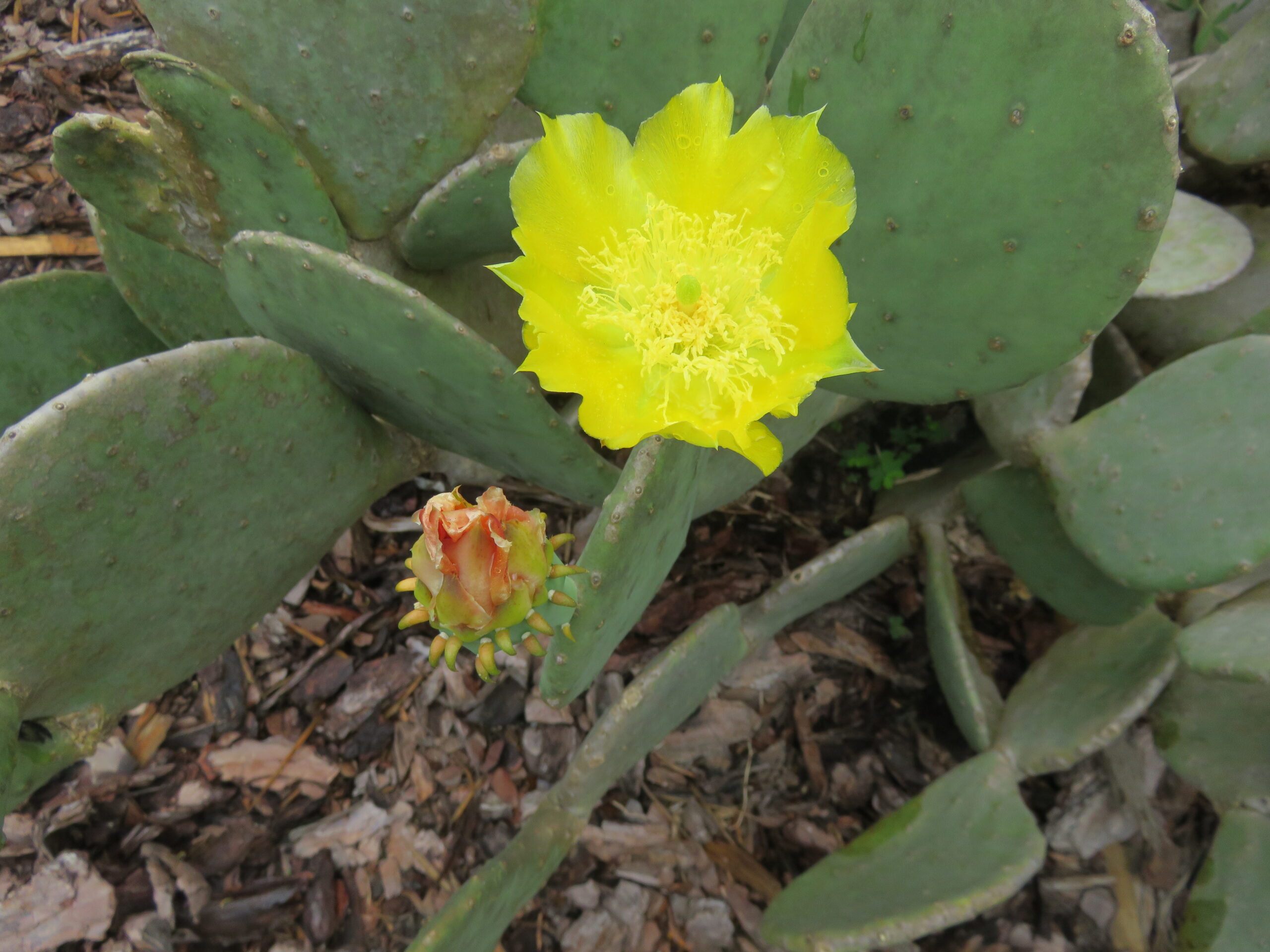
Flowering of Opuntia humifusa
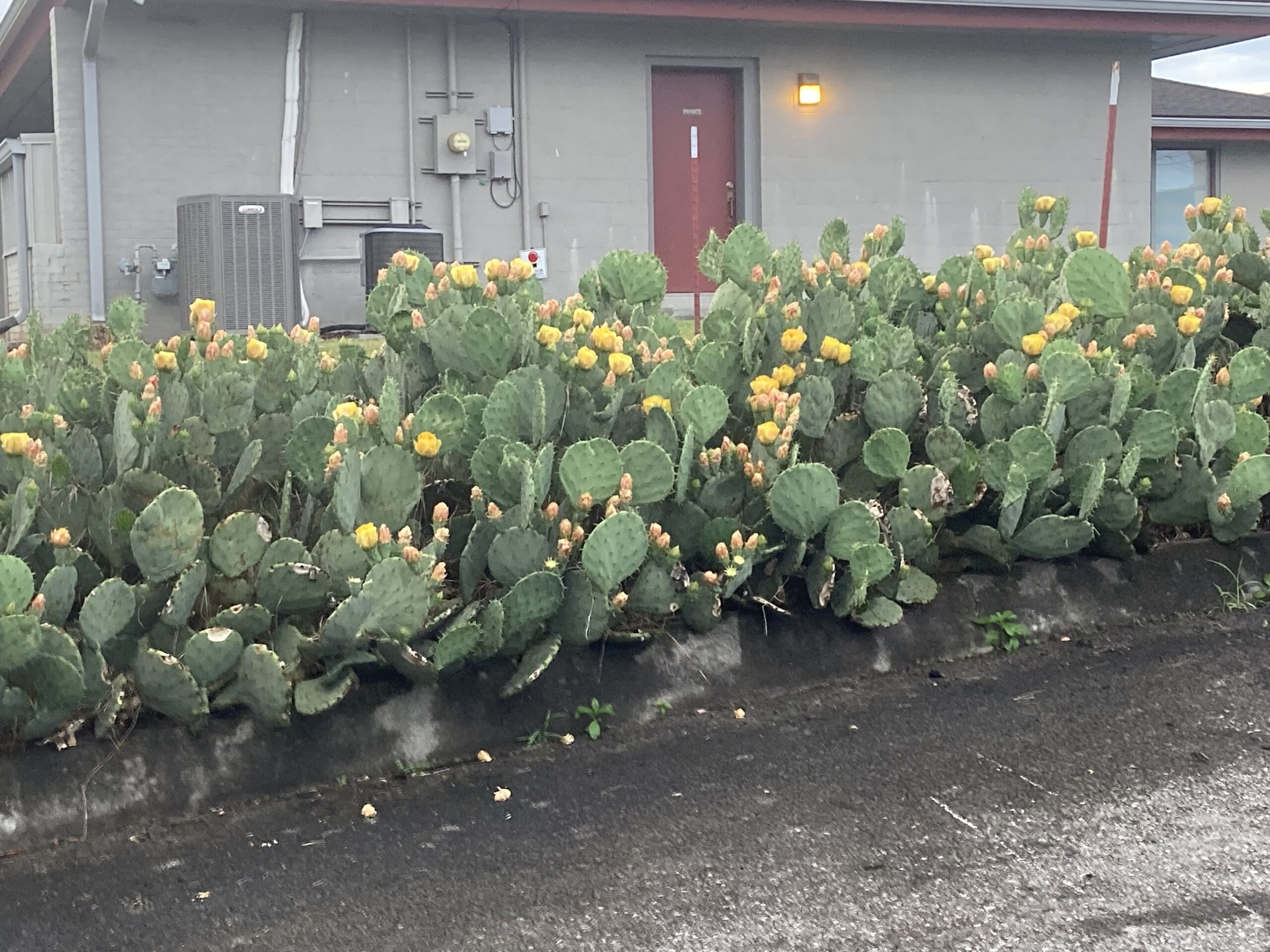
A bed of prickly pear cactus is called a colony. The grey-green vertical pads and 4-inch-wide yellow flowers, along with the edible colorful fruits of most varieties are reasons for their popularity garden-wise. Numerous large yellow flowers form along the flat edges of discs or pads. Pads are covered with far too many piercing and treacherous spines. Pads break off and root into the soil. As prickly pear plants prepare for winter, pads may appear shriveled and lay prostrate on the ground. They quickly recover (green up) in spring.
Pad cacti prefer full- to partial-day (6-hours minimum) sunlight. Plants are highly disease and pest resistant. Occasionally, inspect a colony for mealybug and scale insects and root rot disease when seasonal rainfall is unusually high. Flowers attract bees and hummingbirds. Prune away any damaged or rotted pad to maintain a colony’s appearance. Always wear heavy duty gloves when working with prickly pears.
Prickly pears are popular additions to in gravel gardens. Watering once or twice a month in summer is recommended. A colony grows equally happy in fertile, well-drained soil, sandy or particle soil preferred. Fertilize sparingly with a slow-release product.
Colony of Opuntia humifusa in Johnson City, TN
Three other Opuntia species are grown in U.S. landscapes and in the home are:
Bunny ears cactus (O. microdasys): Renowned for its resemblance to rabbit ears, this adorable cactus features soft, white spines (glochids) and small yellow flowers. (zones 9-11).
Indian fig opuntia (O. ficus indica)boasts large, flat pads and produces sweet, pear-shaped fruits which are valued for its edible fruits and pads, as well as its ecological and medicinal properties. Grows up to 15 feet tall and wide.(zones 8-11).
Spineless varieties like O. cacanapa ellisiana grow up to 3-4 feet tall with oval, gray-green pads with slight purple tinge in winter; vibrant yellow flowers in spring and bright red fruits in fall. They’re virtually have no glochids on the pads but be wary of an occasional tiny spine or two. (7b-11).
The tiny stiff bristles (called glochids) capture pollen which insects gather up and carry to other plants. Pads are edible (called “nopales”) and fruits, called “tunas”, are staples in Mexican cuisine.
In my travels a number of public gardens have wonderful collections of Opuntias including Botanical Gardens in Denver and Atlanta.
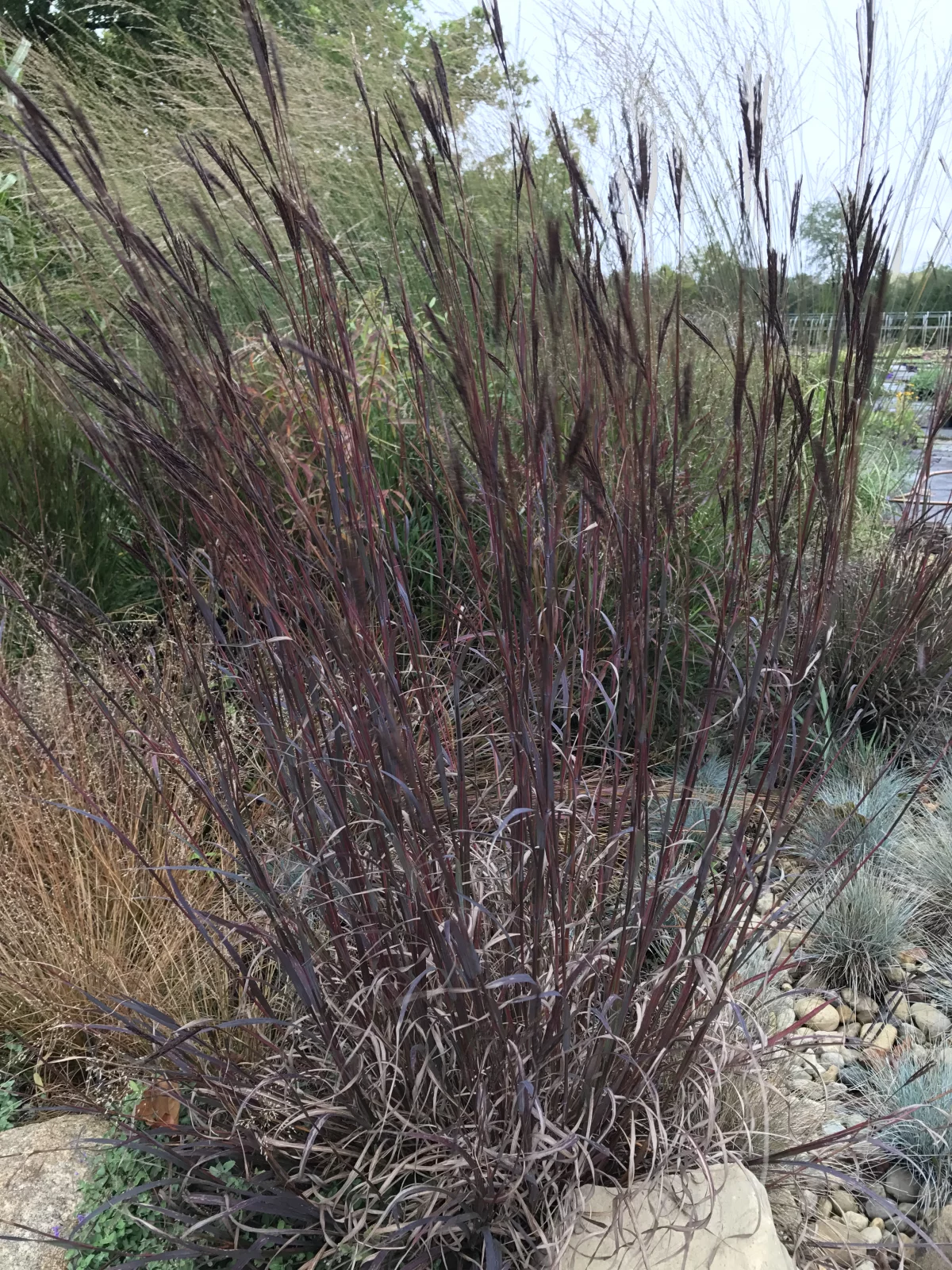
‘Blackhawks’ big bluestem in autumn (Photo courtesy of Intrinsic Perennial Gardens, Hebron, IL)
Big bluestem grass (Andropogon gerardii) is a tall, native, perennial, warm season grass that is a dominant species in a large part of the Midwestern U.S. (zones 3-9). Its attractive foliage that changes color seasonally, its good architectural height, and its interesting flower/seed heads have caught the eye of plant breeders.
‘Blackhawks’ (PP27,949) was introduced by plant breeder extraordinaire Brent Horvath at Intrinsic Perennial Gardens in Hebron, IL. This stand-out cultivar promises better reliability and performance in the landscape. The upright dark green foliage begins to turn purple in August as nights cool and is nearly black by late September.
Blackhawks has been selected the 2026 Perennial Plant of The Year by the Perennial Plant Association. Clumps stand erect with flattened leaves (to 2 feet long and 3/8 inches wide). By autumn plants (including inflorescence) finish 5 feet tall and 2 feet wide. It grows taller in moist soils and shorter in dry soils.
Big bluestem grass is easily grown in average, dry to medium, well-drained soils and in full sun. This prairie grass grows in a wide range of soils and growing conditions. Under ideal conditions, it freely self-seeds, demonstrates superior drought tolerance and easy maintenance. Cut stems to the ground in late winter before new shoots appear.
Big bluestem is nick-named “turkeyfoot grass”. In late summer, flowering stems rise in late summer above the foliage clump bearing purplish 3-parted, finger-like flower clusters (to 4″ long) resembling turkey feet.
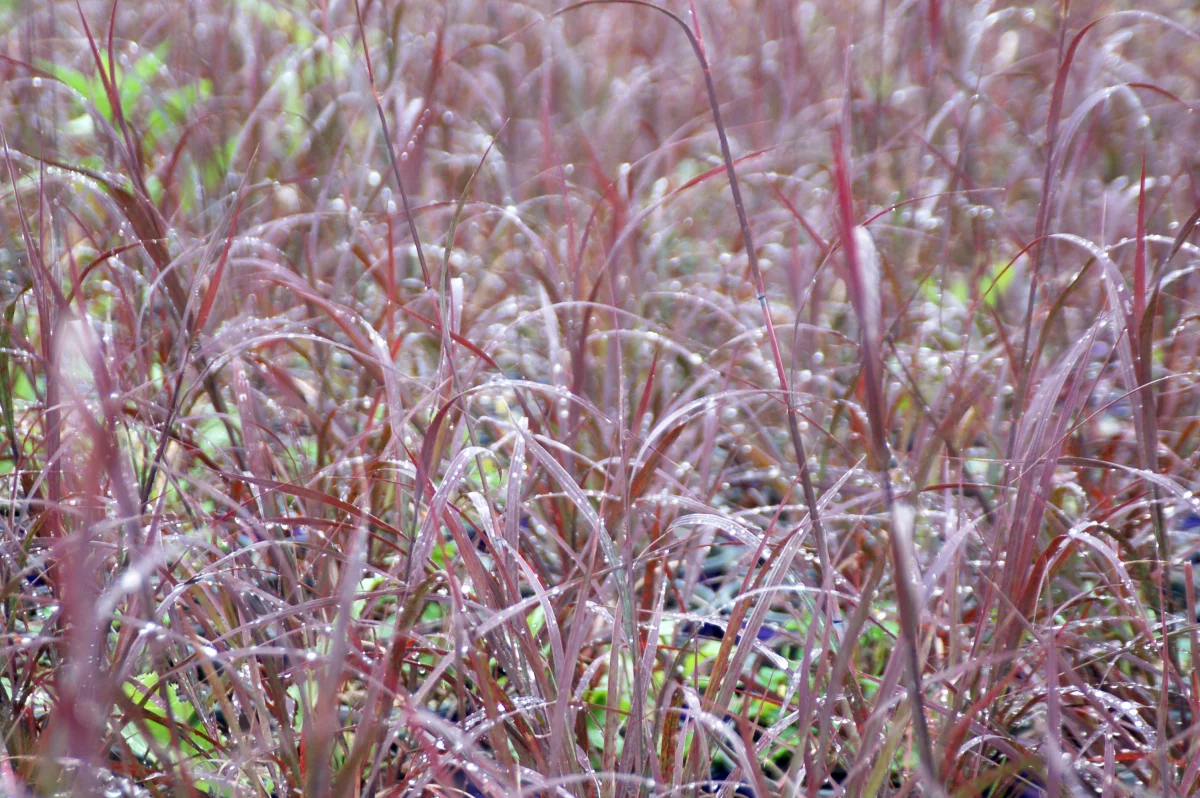
In early summer new foliage turns purple (Photo courtesy of Intrinsic Perennial Gardens, Hebron, IL)
Enjoy the seasonal color changes of ‘Blackhawks’ starting with its dark green foliage in early season. By mid- to late summer, leaf tips and nodes turn purple, and burgundy red inflorescences emerge. As nights cool, the entire plant intensifies to a dark, rich purple that’s almost black.
Blackhawks Big Bluestem has no serious insect or disease problems. Extensive root system makes big bluestem a good choice for erosion control. It is expected to be also deer-proof.
Landscape Uses: “Blackhawks Big Bluestem is somewhat shorter and more upright than the species. Weave it through perennial plantings for brilliant contrasts and striking combinations. It is best massed in wildflower meadows, prairie or naturalized areas. Plant it in a combo in mixed containers. Due its size, Blackhawks is best suited in back of a perennial border or native plant gardens as a screen or accent
Some varieties of groundcovers make good lawn substitutes because they’re vigorous and aggressive growers. Many garden centers and box stores sell many of these garden thugs. Yes, the selling point for these plants is their rapid, low-growing groundcovers that fill in spaces between steppingstones or may be utilized as a lawn alternative. Some non-native species may be listed as invasive in your state and potentially harmful to native plant species.
These ground covers grow where other plants refuse to grow. Stems root wherever they touch the ground, making it an aggressive, weedy plant. Once established, many are nearly impossible to eliminate. If the tiniest root is left in the soil, it will quickly regrow.
As a potential lawn substitute, many species remain evergreen, providing year-round greenery. They also hold up to light foot traffic, making it suitable for pathways and children’s play areas. Its lush appearance and ease of care are appealing to some gardeners.
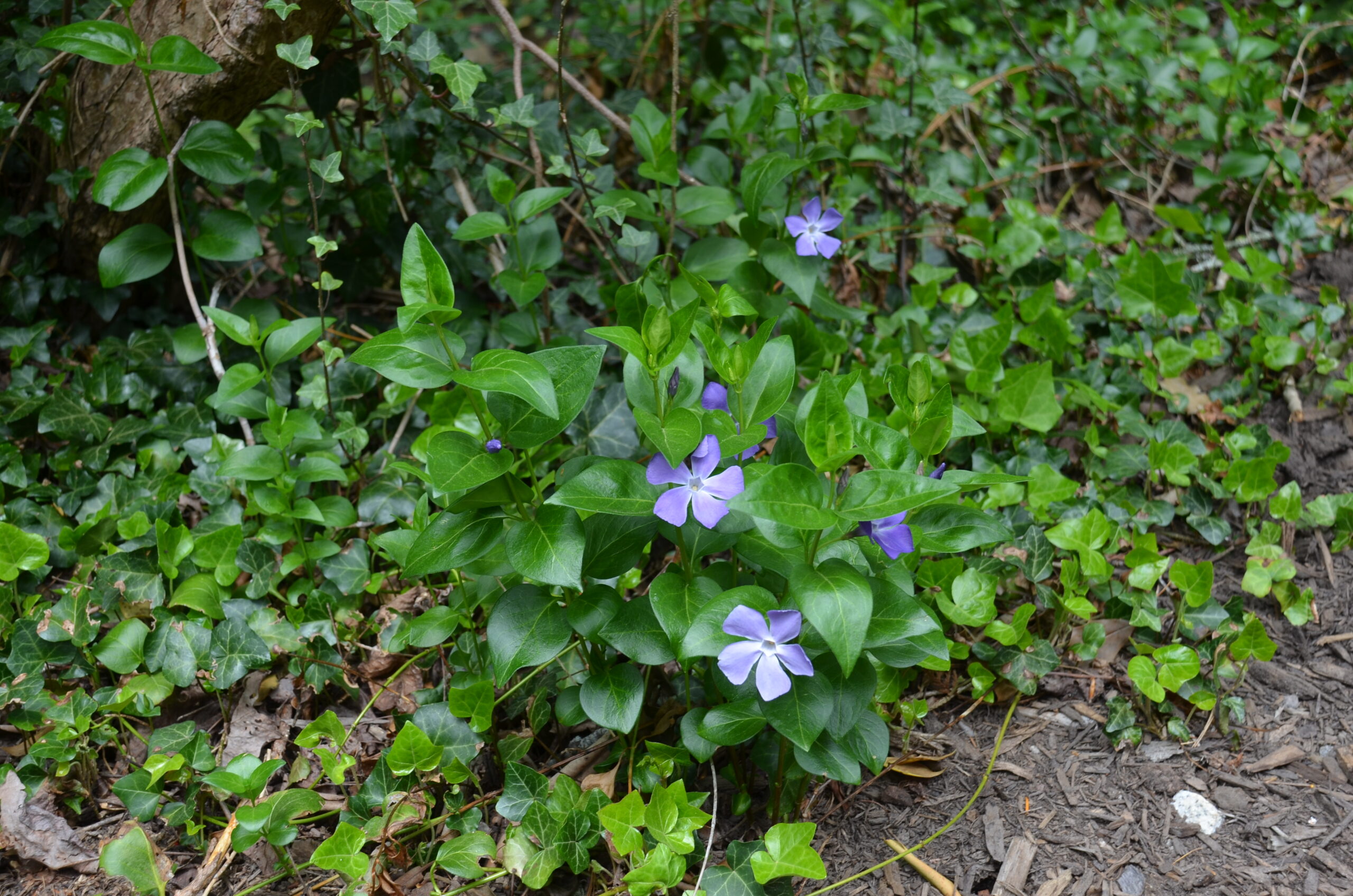
Little leaf periwinkle (Vinca minor)
I have identified these eleven (11) of these garden thugs:
Ground ivy (Glechoma hederacea), aka “Creeping Charlie” spreads, usually under 12 inches tall, branching frequently, forming a low-growing mat of stems and leaves across the ground.
Creeping Jenny (Lysimachia nummularia) grows rapidly and striking yellow-green foliage that adds brightness to garden spots; exceptionally difficult to manage its trailing growth habit as a ground cover or able to climb over walls.
Lily-of-the-valley (Convallaria majalis) produces fragrant, bell-shaped white flowers in spring; eventually, its growth rate becomes rapidly in shady areas.
Dichondra (Dichondra argentea) is a versatile evergreen groundcover with small, kidney-shaped leaves that create a soft, green carpet that withstands light foot traffic.
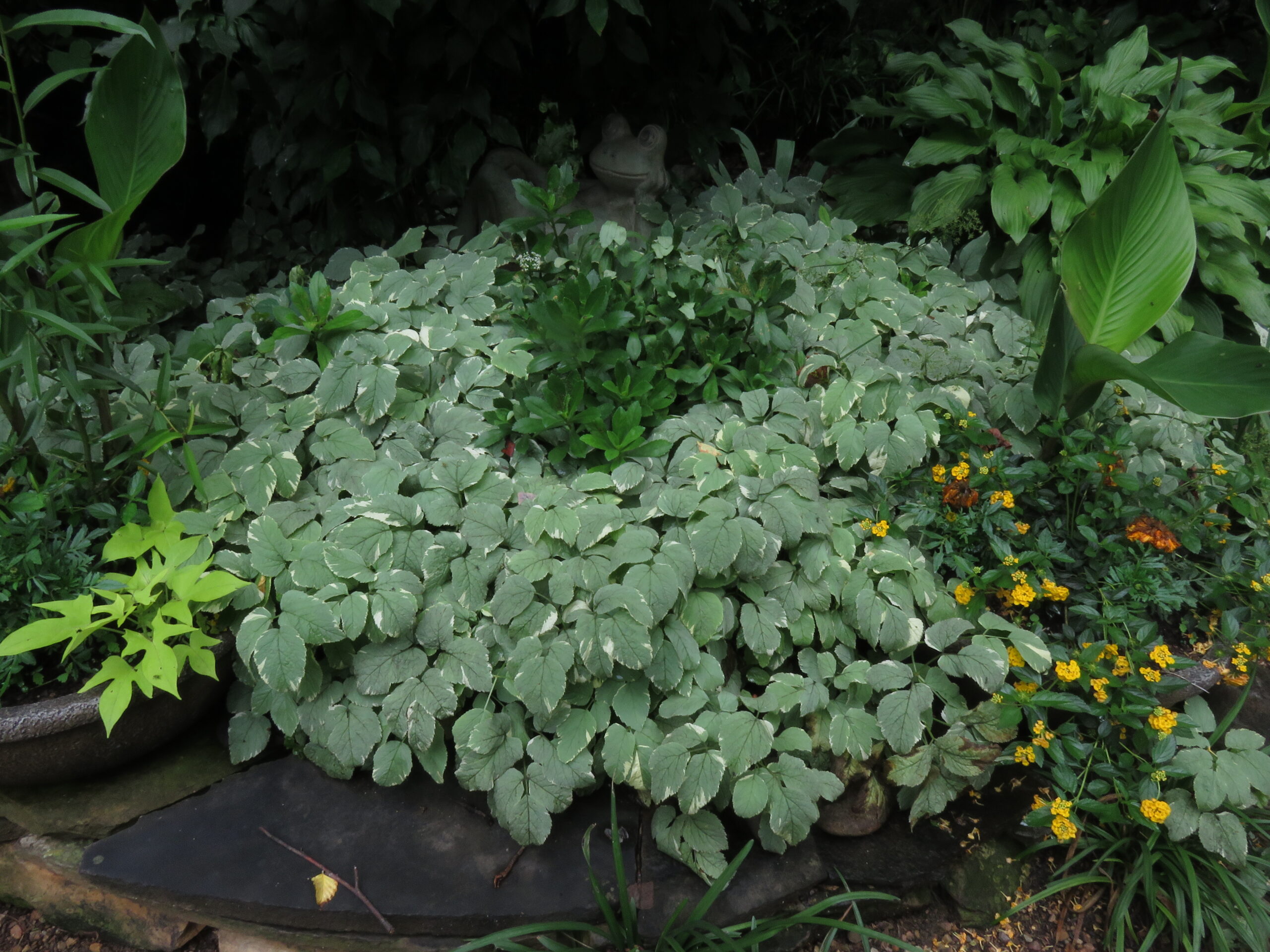
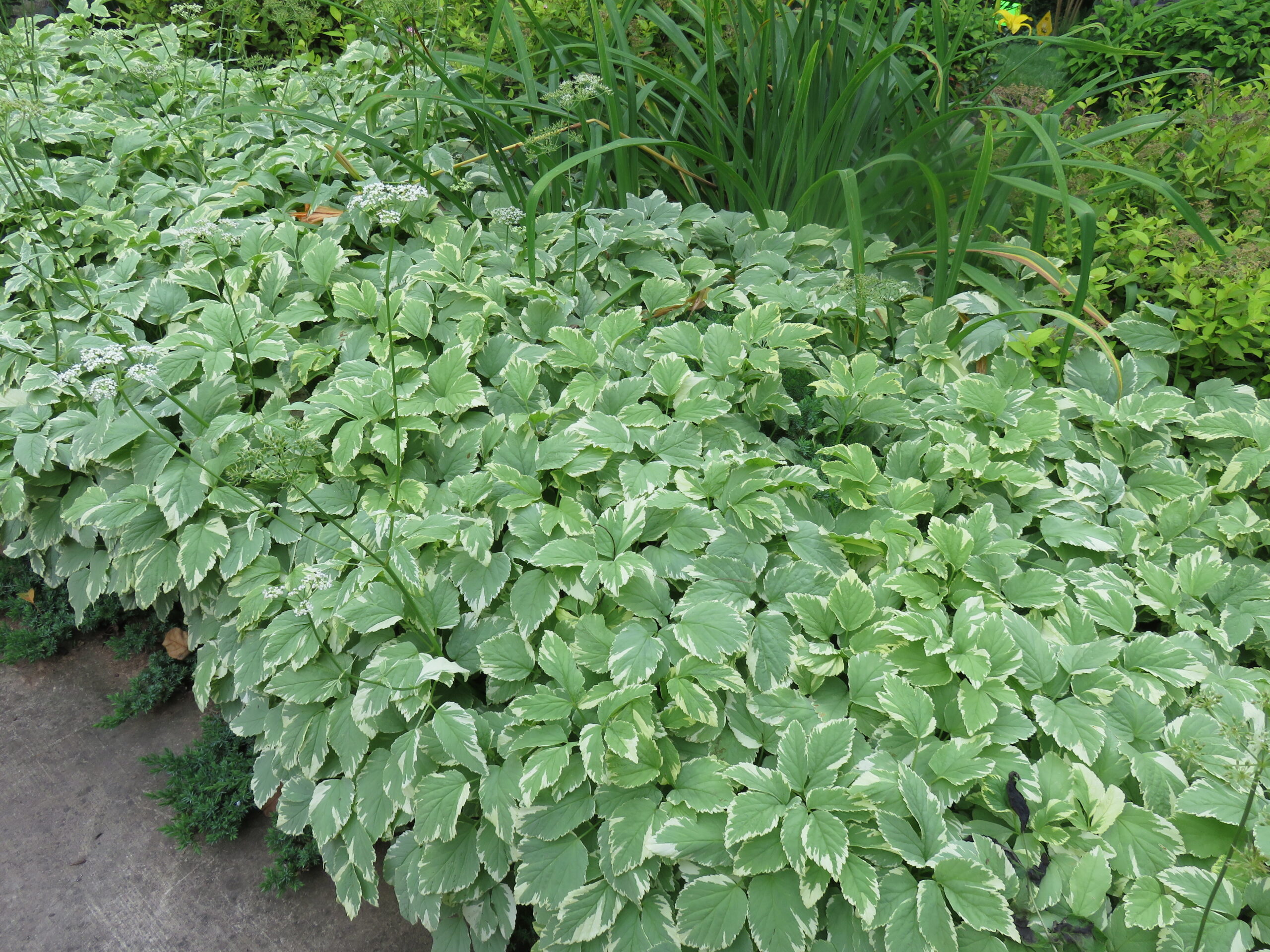
Bishop’s weed (Aegopodium podagraria) spreads aggressively, up to 12 inches tall and spreads by rhizomes and seeds in partial to full shade.
Yellow archangel (Lamium galeobdolon) is an aggressive, weedy plant that grows about 2 feet tall annually; yellow flower spikes in early summer.
Chameleon plant (Houttuynia cordata) has variegated, heart-shaped leaves on quickly spreading stems that stand 1 to 2 feet tall. It thrives in shade and moist soil but grows just about anywhere.
English ivy (Hedera helix) is an aggressive evergreen ground cover which may also climb tall trees; its adult form climbs via aerial rootlets and produces fruits and loads of seeds.
Little-leaf periwinkle (Vinca minor) is a glossy foliage and lovely blue-violet flowers in early spring.
Big-leaf periwinkle (Vinca major) is the larger leaf cousin of little leaf periwinkle (V. minor) with violet-blue flowers; a white edge variegated form is also for sale. Both vinca species are rated as invasive and potentially harmful to native plant species.
Japanese Pachysandra (Pachysandra terminalis) grows in shade and dry soil, becoming a lush groundcover. The native pachysandra (P. procumbens) is a clump grower and far less aggressive.
Before purchasing and planting any groundcover, check that each species is not invasive for your state.
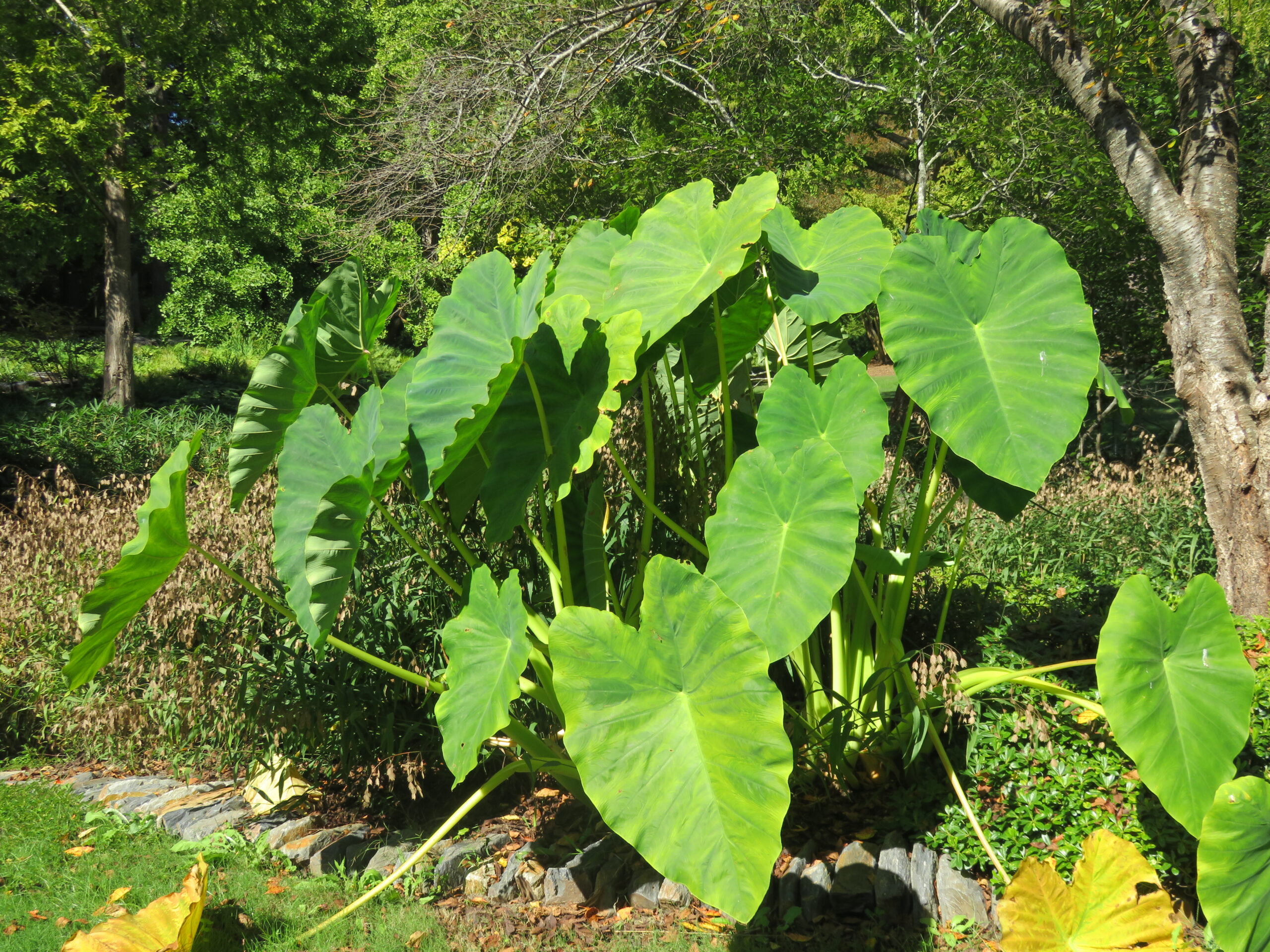
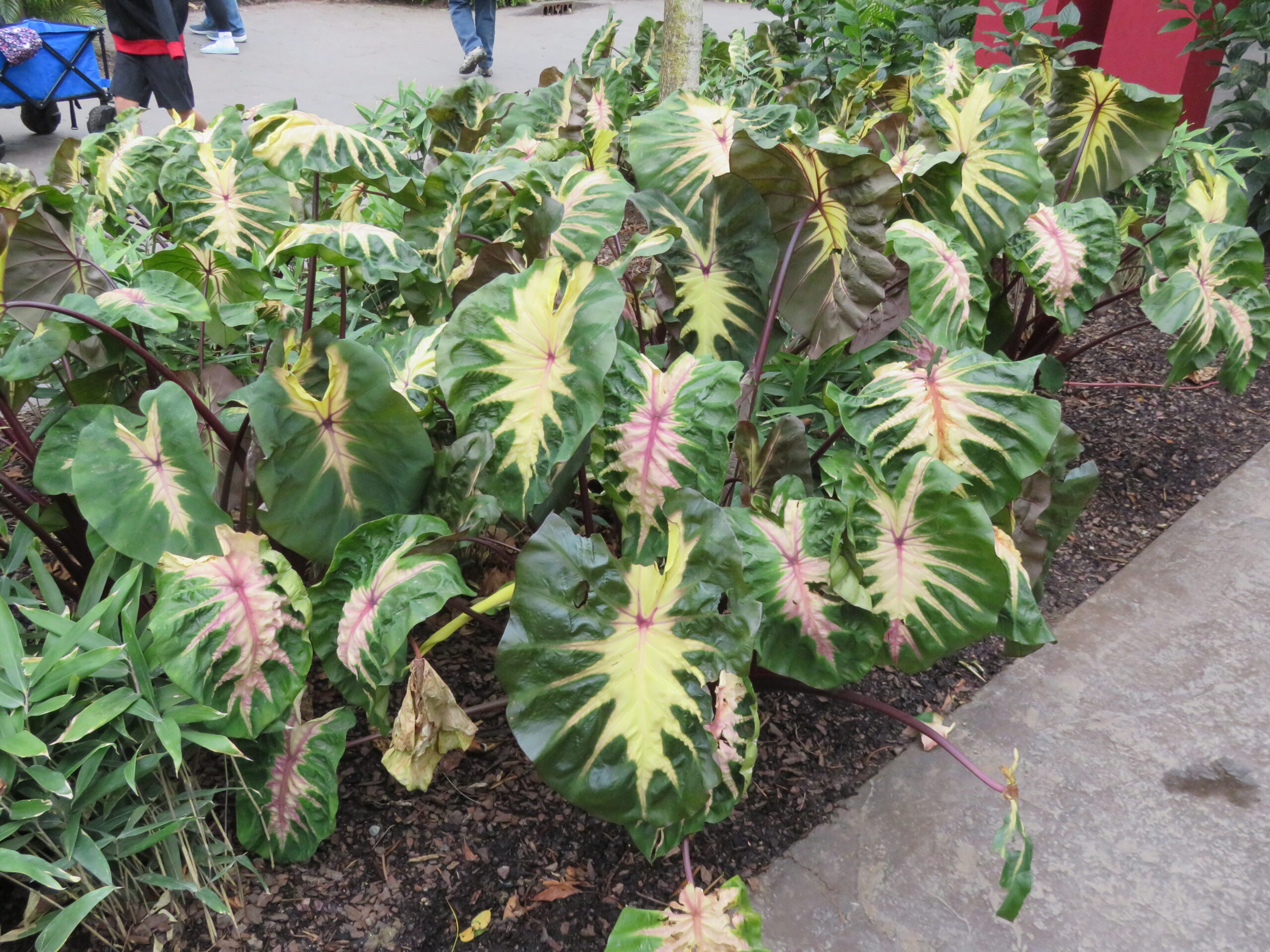
Elephant ears (Colocasia) and close botanical cousin (Alocasia) is also called ornamental taro. Plants take off and grow rapidly after spring planting, once all threats of spring freeze injury have passed. In moderate zones 6-7-like climates, elephant ears are special garden tropicals are stunningly beautiful over 7 months before declining for its long winter dormancy.
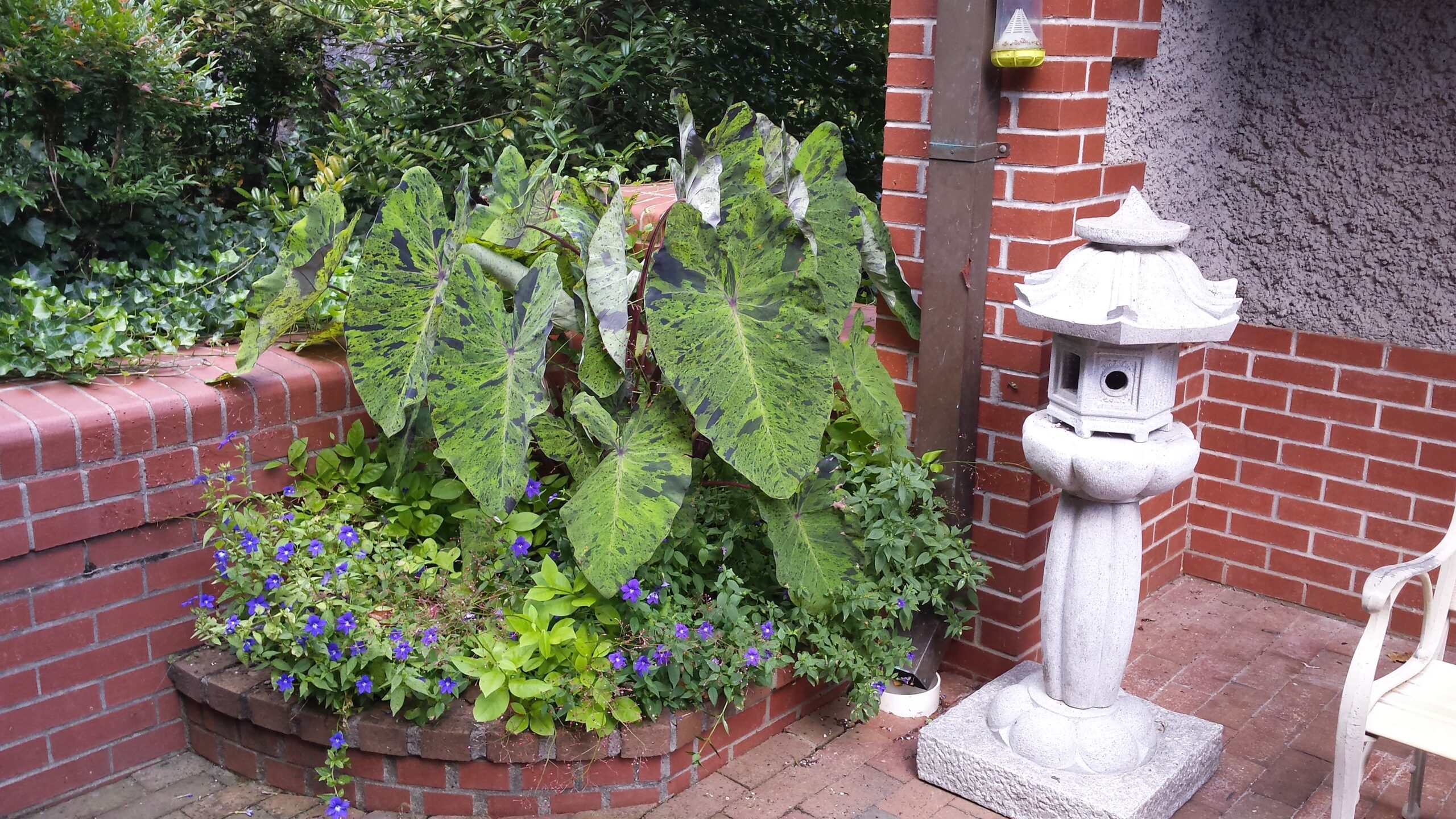
In smaller city gardens grow the mini-colocasia varieties such as ‘Black Magic (black matte finish), ‘Mojito’ (dark green /dark mottled patches), and ‘Tea Cups’ (cupped leaves that fill and spill water during rains).
Larger varieties that demand larger spaces, choose Colocasia ‘Diamond Head’, ‘Pharoah’s Mask’, ‘Redemption’, and ‘Kona Coffee’ for their striking leaf artistry and Colocasia ‘White Lava’ and ‘Maui Gold’ with cheery chartreuse-gold color hues. C. gigantea ‘Thailand Giant’ is an enormous green plant that boasts thick 2-4-foot-long leaves.
Colocasia ‘Mojito’ at Biltmore Estates in Asheville, NC
Colocasia is a tender perennial that cannot survive winter months outside of zones 7b- 10. Either utilize this tropical plant as an annual or dig up the corm after the first frost in autumn and overwinter it in a cool dry area (submerged in dry wood shavings or peat) where winter temps do not fall below 40°F. The tuber is replanted back into the garden in late April. An easy alternative method is to treat Colocasia as a container plant and move the pot into an unheated garage (@ 40°F) over winter.
Elephant ears grow best in partial shade to partial sun and lots of soil moisture. Full sun exposure, especially in warm areas, may damage plants. They grow rapidly during the warmest days of summer. Feed plants with a slow-release fertilizer like Osmocote™ or a water-soluble fertilizer like Miracle-Grow™ or Peters™. Don’t forget to irrigate, but never to the point of flooding. Plants prefer soils that drains well and don’t stay soggy.
Elephant ears, particularly the small forms, can be grown in garden beds and in containers. Sources to buy them include independent garden centers, mail order, nurseries, and rarely at box stores.
In areas with moderate winter climes (zones 6b – 7a), move elephant ears and several other tender tropicals indoors in the fall. Store in a cool spot around 40°F until spring. Repot into a fresh compost-rich potting media, trim back roots, old foliage, and petioles. When the threat of spring frost has passed, move elephant ears back to the garden.
Warning: Avoid eating taro root raw. It may cause mild stomach upset if not cooked before eating. In contrast, all vegetative parts of Alocasia are highly poisonous. Keep the plant away from children and pets. Yes, taro is a major food crop for both people and farm animals, high in protein. The plant is traditionally served at Hawaiian luaus, and the corms form the basis for poi, a favorite Hawaiian dish.
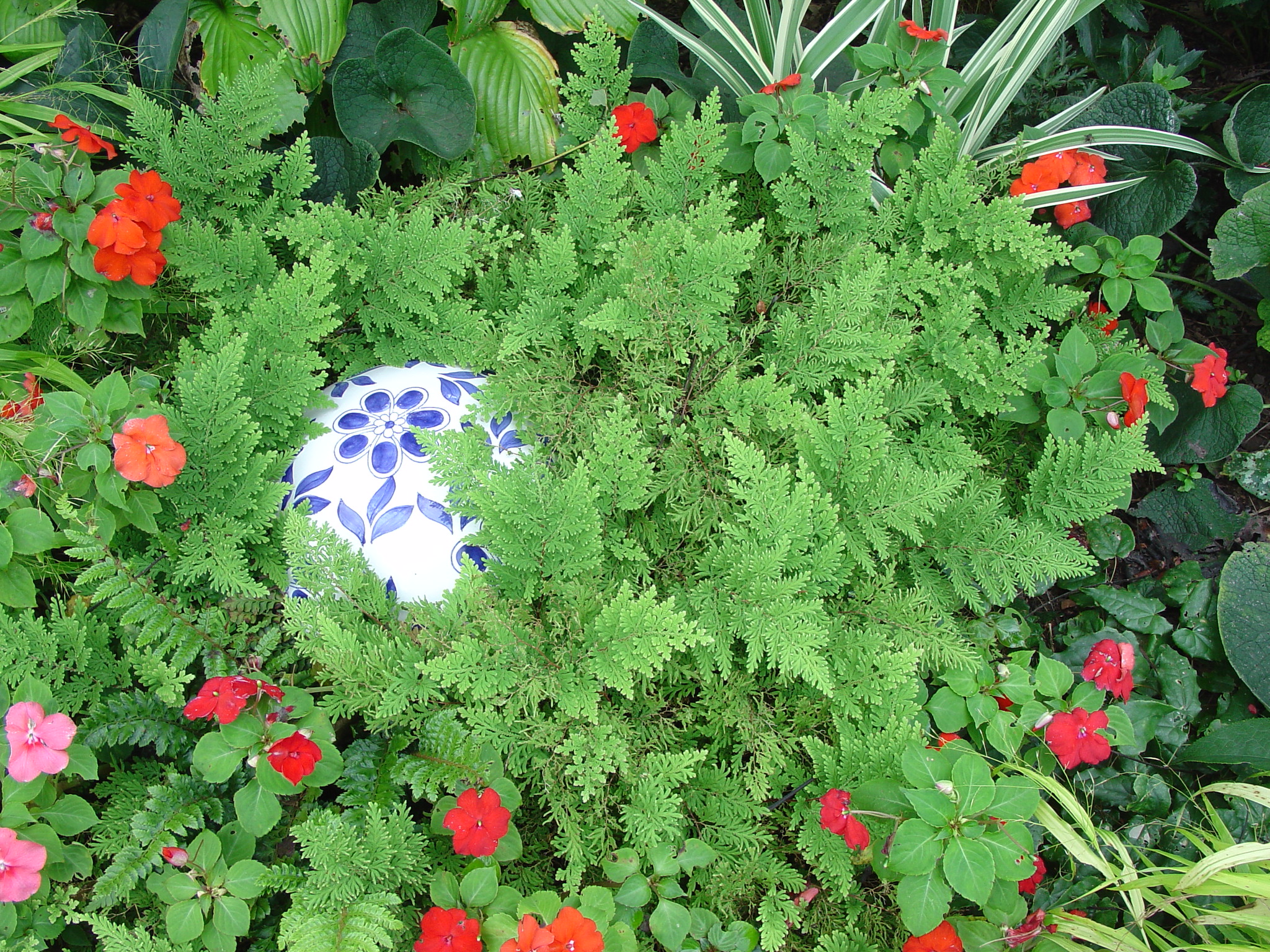
Arborvitae Fern (Selaginella braunii) is not a true fern, but it produces spores. This ancient plant is called a club moss and spikemoss. A diverse group of over 700 species, spikemoss is native to China. Its thick lacy fern-like foliage resembles Arborvitae or Cedar. Spikemoss (S. braunii) is a hardy landscape selection that forms a low-growing matting groundcover that shades out competing weeds. (USDA hardiness zones 6-9)
Spikemoss is a wonderful addition to a partial to full shade garden. Set in a well-drained, humus-rich soil. Established plantings demonstrate exceptional summer drought tolerance. While shady moist spots are ideal, this lacy ground cover does not tolerate standing water for long periods.
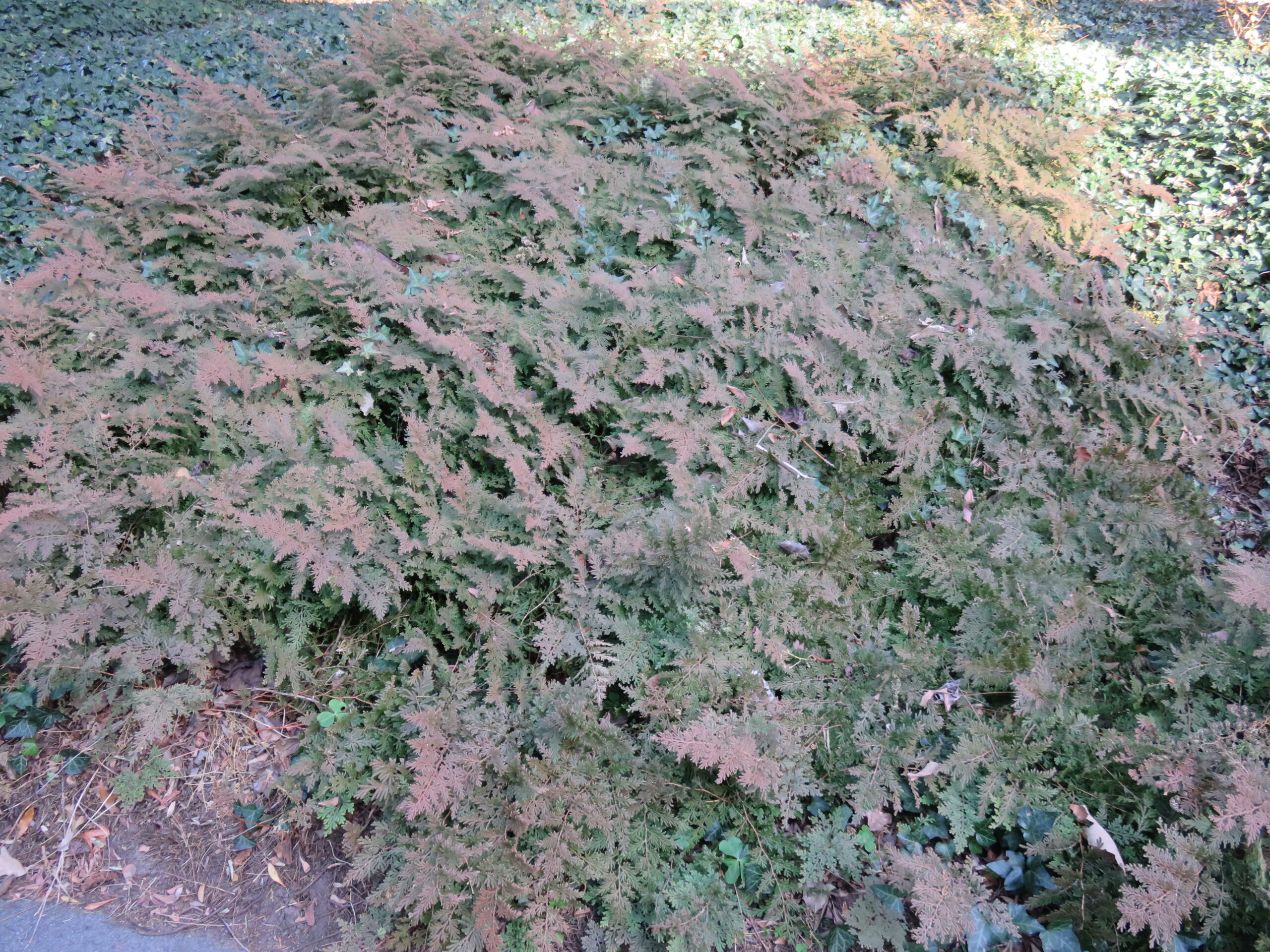
Selaginella braunii take on bronzy appearance in late autumn (Biltmore Estates in Asheville, NC)
This carefree plant also looks great forming a mat around taller plants in containers and hanging baskets. Spikemoss wants excellent drainage when grown in containers. Clumps can be divided any time of year.
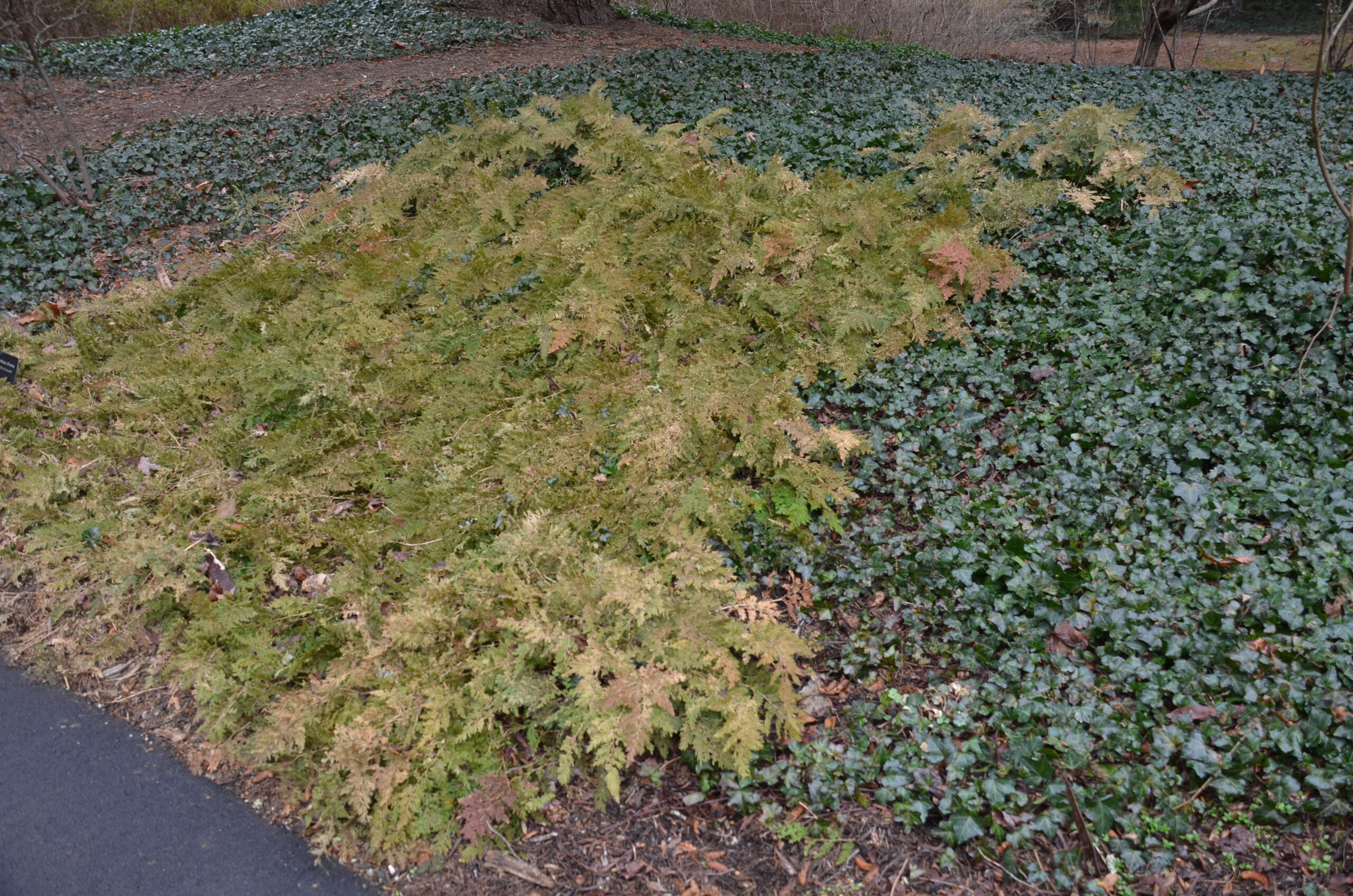
Over several years arborvitae fern will develop a dense ground cover that competes against most other vegetation. Fronds take on a coppery appearance once cool temps arrive in the fall.
Native to variable climates from tropical to dry and from sun to shade. Several perennial species are hardy in Tennessee and North Carolina areas (Zones 6-7). Selaginella plants are great as groundcovers around hosta, Solomon’s Seal, and other bold-foliaged perennials.
February in the garden /arrival of new spring growth greens up landscape
Spikemoss foliage is soft to the touch and low growing…a great groundcover filler for a woodland garden, pathway or shade container. Other species of Selaginellas thrive in terrariums and are fabulous companions to shade loving container plants.
Some Selaginella species are very drought-tolerant while others prefer marshy ground. This drought tolerant species may even turn brown and curl up during a drought but will rehydrate with no problems once rain finally arrives.