
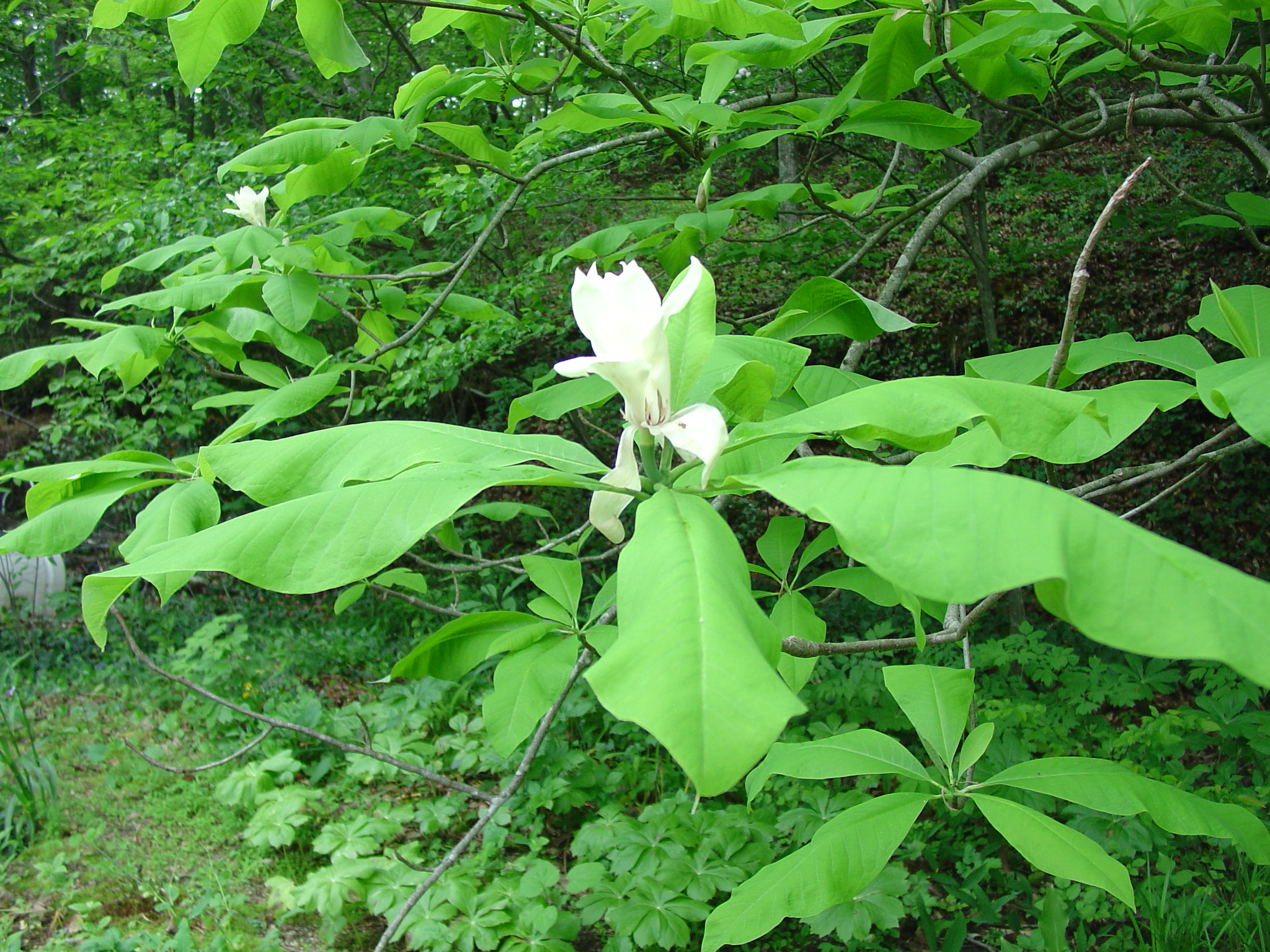
Ashe magnolia (Magnolia ashei) is a small 10-20 feet deciduous tree with enormous size flowers and leaves (zone (5)6-9). Each white flowers may measure 6- 12 inches across with a purple blotch at the base of 3 inner petal-like tepals. Ashe magnolia blooms in late May – early June here in Tennessee, Virginia and North Carolina. Many of the blooms may be hidden within the large almost tropical-like foliage.
Among the large leaf magnolias, Ashe magnolia grows the shortest, the so-called “runt of the litter”. Its deciduous leaves may be 2-3 feet long and up to a foot wide. Leaves are wider near the tip than at the stem, green on the upper surface and whitish beneath. When fully open, the citrus-scented white blossoms expose a purple blotch in center are up to 6 inches long and about half as wide. Ashe magnolia blooms at an early age, usually when only 4-6 feet tall. It may bloom as early as three years from seed.
Ashe magnolia is an understory tree, growing in day-long dappled sunlight or in morning only sun. Allow Ashe magnolia plenty of room to grow, good light, and humus-rich, moist, well-drained soil. Lightly mulch around the tree to a depth of 2-3 inches annually. Over the active growing period, water the tree every 2-3 weeks over the 1-2 years until it’s established.
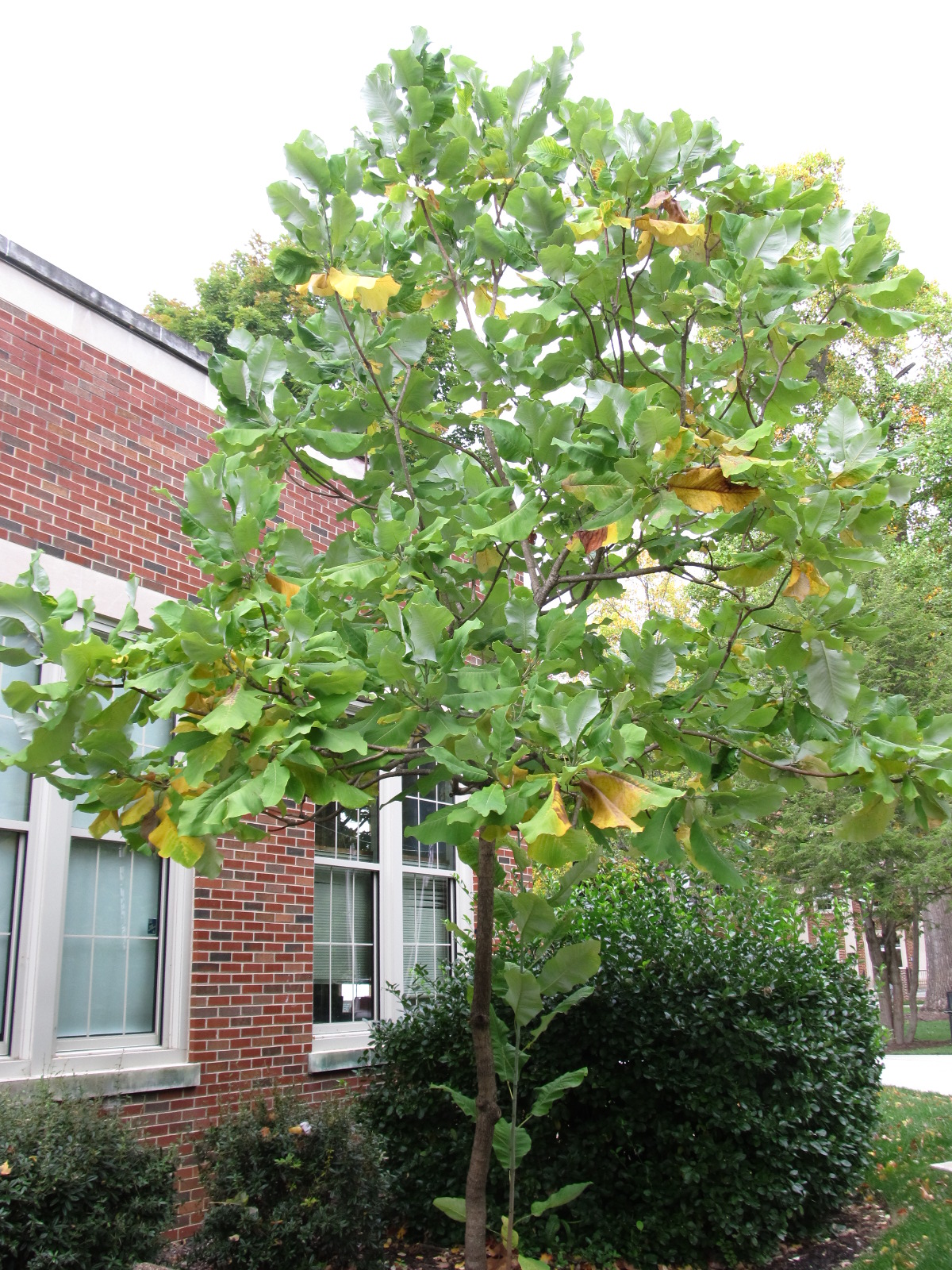
Ashe Magnolia rarely needs to be fertilized unless grown in a container. Ashe magnolia does not do well in hot and dry conditions. The grand champion tree is 44 feet high in Montgomery County in Pennsylvania. Plant in a sheltered site away from strong winds that can shred the papery leaves and break brittle branches. Prune in late winter or late summer to avoid excessive bleeding of sap. Light annual pruning is usually the rule to maintain the tree’s desired framework.
Disease and pest problems are rare if Ashe magnolia is properly sited and maintained. Annually inspect for bacterial leaf spot, spot anthracnose, canker, dieback, butt rot, powdery mildew, anthracnose, fungal leaf spots, weevils, snails, scale insects, thrips, planthoppers. Leaf drop can become a leaf-raker’s nightmare in the fall.
Ashe magnolia is a plant collector’s treasure. It can be purchased from an e-mail specialty plant nursery. Request the seed provenance and purchase a mid-Atlantic or mid-South seed source.
 Posted in


