
Lantanas (Lantana camara) are garden favorites for their small, lovely blooms in dense, 2-inch (5-cm) wide clusters, (USDA hardiness zones 7-11). Floral colors range from red, purple, pink, orange, yellow, and white, often flower clusters in multiple colors. This woody annual/perennial is in the verbena botanical family (Verbenaceae) family and is native to the West Indies, Mexico, and central America. Some 150 species are found worldwide.
Whether grown as an annual or a perennial in warmer climates, lantanas are tough plants that prosper in almost any garden spot that must be sunny most of the day. Plants thrive in poor soils, high summer heat and drought, and salty coastal soils. The perennial lantanas featured here grow 2-4 feet tall, almost shrub-like, and require only minimal annual maintenance. Hardy varieties dieback to the ground and re-emerge in the mid-spring warmup.
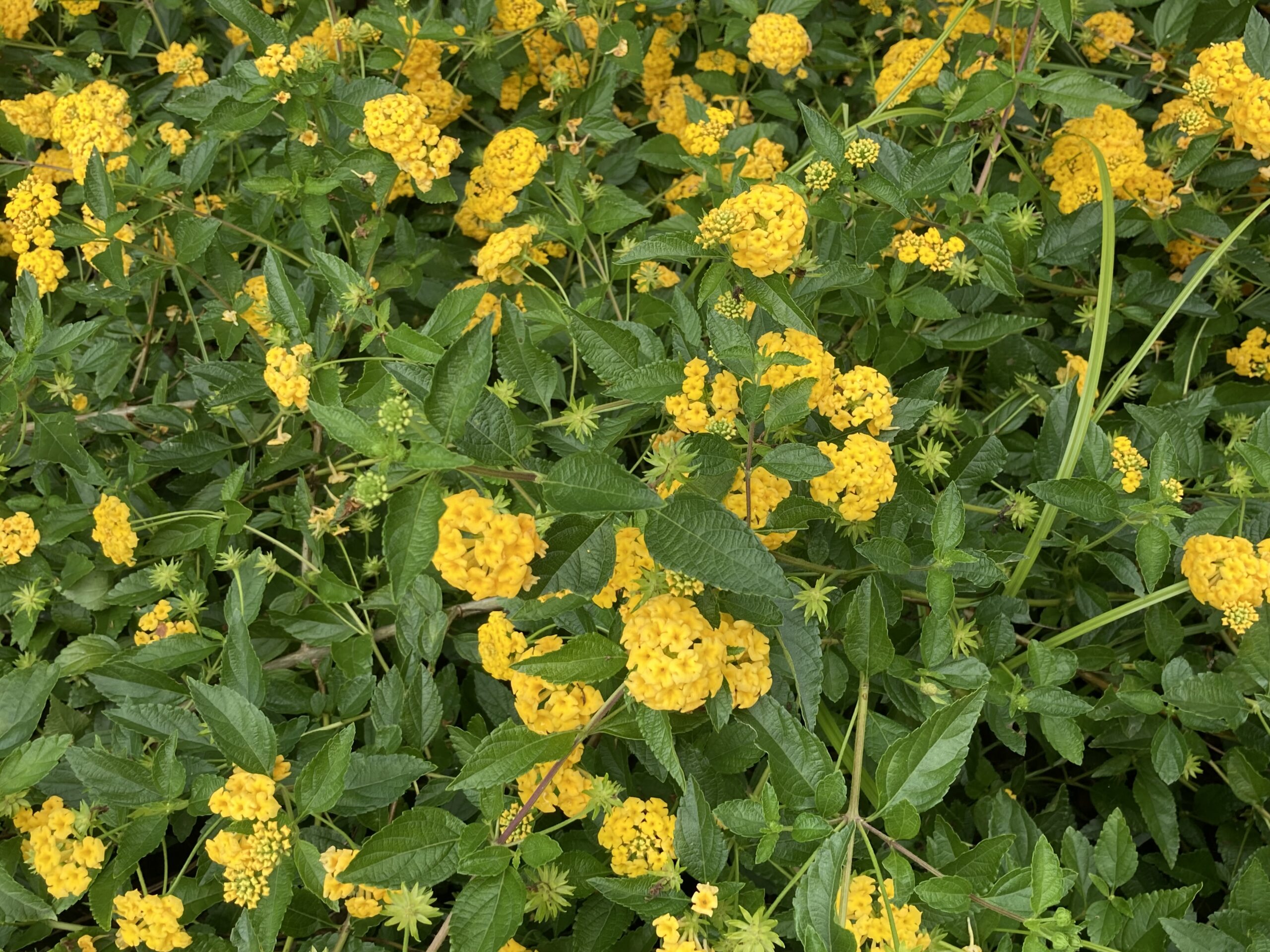
Four popular varieties in Tennessee, Virginia and North Carolina are ‘New Gold’, ‘Miss Huff ‘, ‘Sonset’, and ‘Chapel Hill Yellow’. ‘New Gold’ is covered with bright golden yellow flower clusters all summer into the fall. ‘Miss Huff’ originated from cuttings of a plant in Athens, Georgia with showy orange blooms. ‘Chapel Hill Yellow’ is a North Carolina cold hardy (7b – 11) selection with bright yellow flowers and low ground-hugging habit (18-20 inches tall, 24-36 inches spread). ‘Sonset’ produces yellow and soft orange in the morning; by mid-afternoon blooms change to dark orange and red, and to magenta and purple in evening.
For hardy lantanas to perennialize, plant them by mid-spring in full sun and in moist, well-drained soils. These low-maintenance plants tolerate heat and drought once established, are resistant to deer and rabbits, and grow rapidly to fill their space. These four selected varieties should grow 2-4 feet tall and 2-3 feet spread in the mid-South. Their showy flowers appear in mid-spring thru most of autumn and are visited by native and bumble bees, several species of butterflies, and hummingbirds.
Lantanas are an excellent addition to cottage or pollinator gardens, foundation plantings, or shrub border. It may also be used for mass plantings along rock walls or hillsides and excel in containers and hanging baskets in sunny patio areas. Plants grow rapidly and aggressively.
No serious insect or disease problems trouble lantanas. Lantana has shown high resistance to soil-borne phytophthora disease. Whiteflies and spider mites can affect plants kept overwinter in-home solariums. Leaves may cause minor skin irritation.
Warning: Lantana foliage and berries are toxic to livestock such as cattle, sheep, horses, chickens, pigs, goats and domestic dogs and cats. Keep away from children.
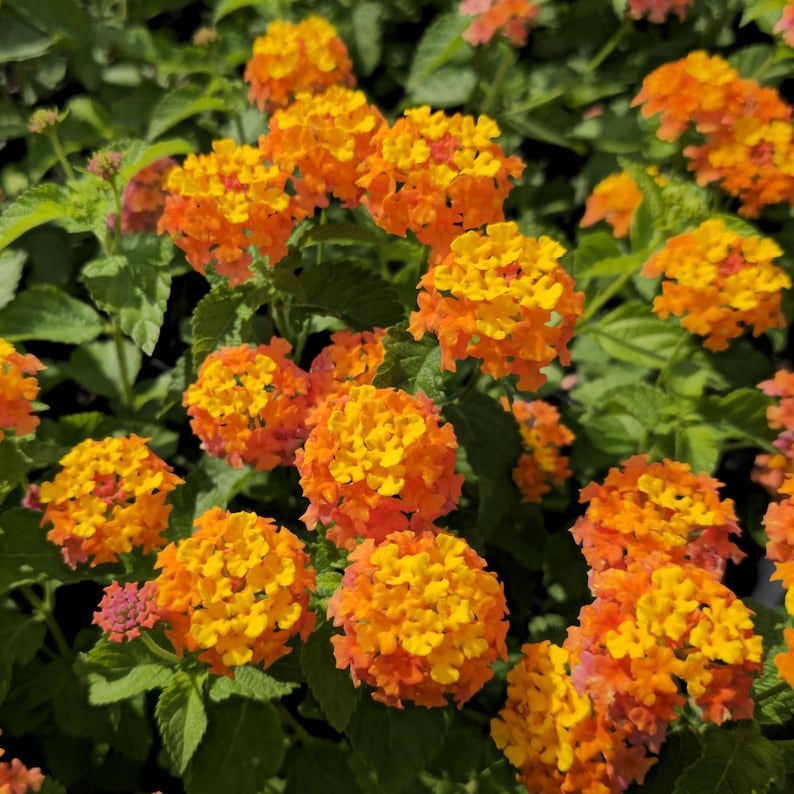
In northern latitudes (zones 5-6), lantanas make dependable summer flowering annuals. In a few southern states lantanas are listed as invasive. Currently, lantanas are invasive in Hawaii and the in coastal regions of North and South Carolinas, Georgia, Florida, Mississippi, and Texas. Annual lantanas are sold at most garden centers and box stores., while sales of perennial varieties are often limited to independent garden centers in the Mid-South.
 Posted in


