
Snowdrop flower bulbs (Galanthus spp.) grow in areas where winters are moderately cold (Zones 3-7). Purchase snowdrop bulbs from your favorite bulb emporium in autumn and plant them immediately. Snowdrops are related to daffodils (narcissus) and amaryllis bulbs.
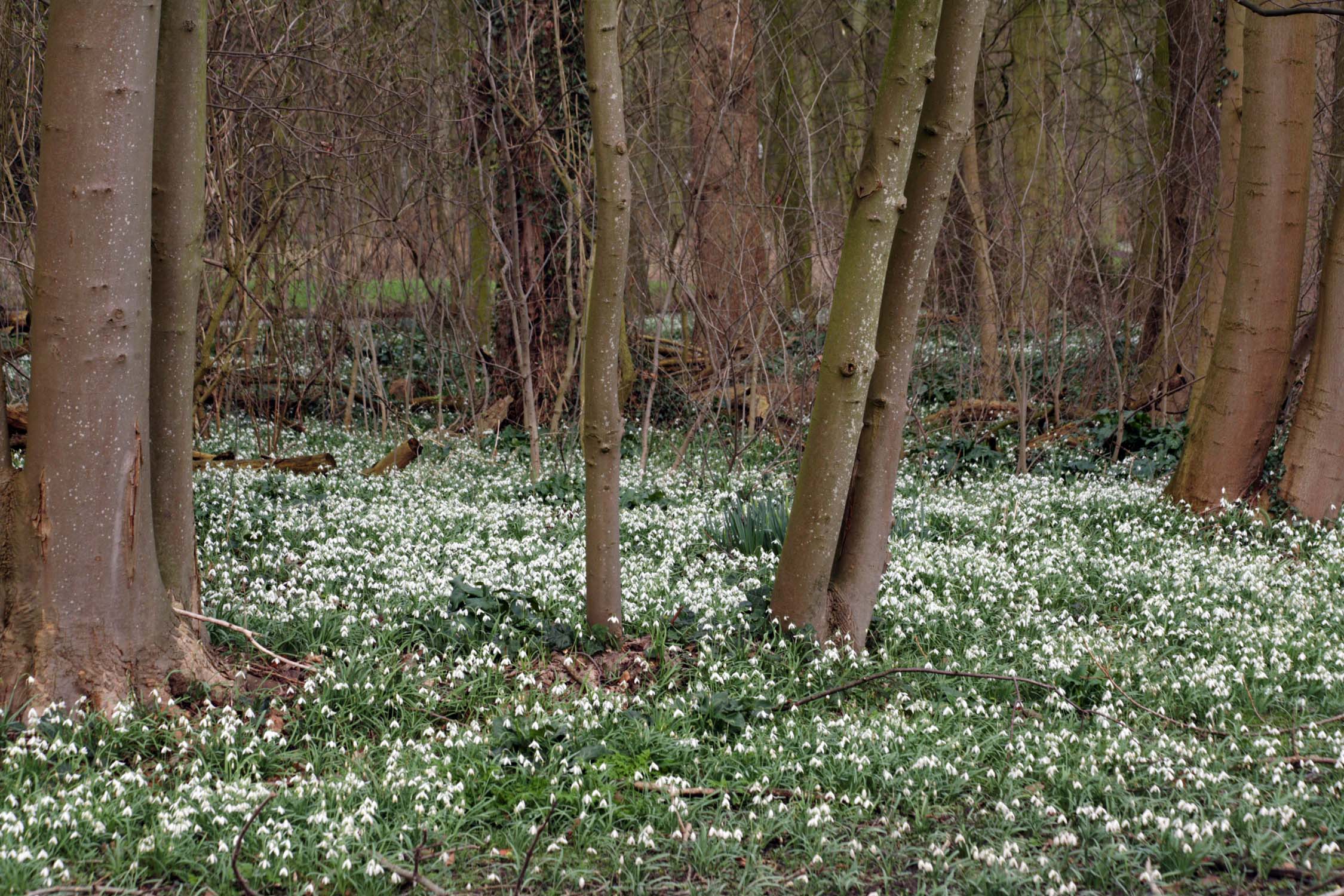
Snowdrops are one of the first spring flowers to bloom in late winter or the first days of spring, often while snow still blankets the ground. This cheerful bulb plant requires almost no maintenance or fuss. They can be grown in a variety of locations in the yard and are not troubled by pests or diseases.
Snowdrop bulbs emerge as tiny 3 to 6 inches tall plants that produce one small (1 inch or less), white, bell-shaped flower which hangs off the end of a green, leafless stalk. When the bloom opens, three outer petals arch out over three inner petals. The flower “nods its head” down to the ground. The grayish-green narrow leaves grow 3-4 inches long. Create a showy impact by planting multiples of 20-30 bulbs should be planted closely together.
Sow bulbs 3 inches deep in garden soil in pots or outdoor beds in early fall to late fall in an area with deciduous shade or open skies. Space the bulbs 3-4 inches apart or 10 bulbs per sq. ft. Flowers emerge and bask in the late winter/early spring sun. Flowers fade and foliage usually disappear by late spring as bulbs enter dormancy. Snowdrops want loose, compost-rich, well-drained soil. Rock gardens or woodland gardens are ideal spots. Mark the bed with a plant label to remind yourself that snowdrop varieties are planted there.
Snowdrops can be mixed with other bulbs in the early spring garden such as Crocus, Glory-of-the-snow bulbs (Chionodoxa), and Winter aconite (Eranthis hyemalis). They flower before deciduous trees such as maple, linden, and oak trees leaf out in the spring.
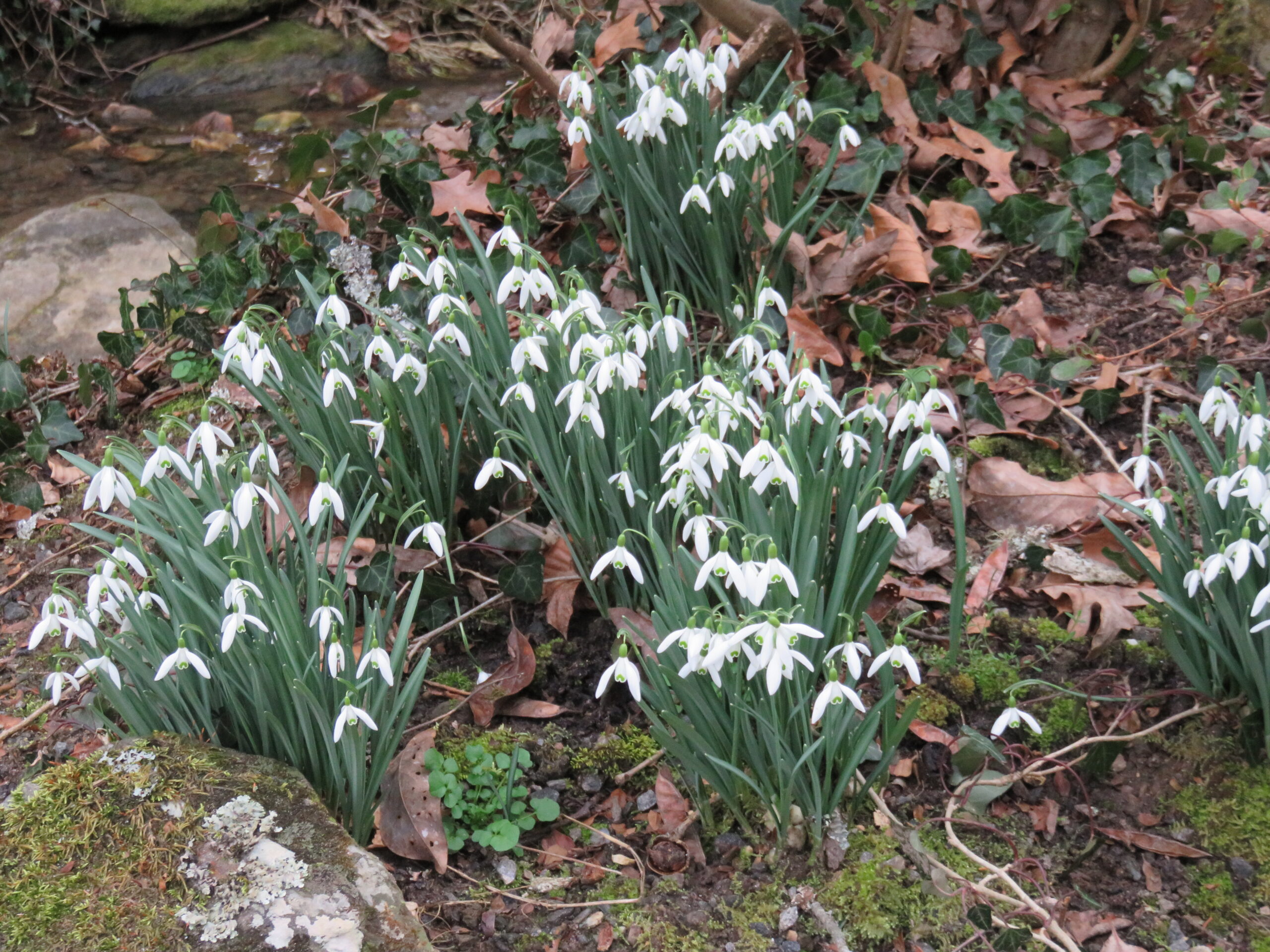
A bulb fertilizer can be added at planting time to help boost your snowdrops to a good start. A late fall addition of compost should provide nutritional needs for next year’s bloom.
Snowdrops are often confused with the taller blooming summer snowdrop (Leucojum) which bloom several weeks later in spring. The three outer petals of Galanthus are larger than the three inner petals, all six of the flower petals in the Leucojum genus are the same length.
- G. elwesii, called the “giant snowdrop”, grows to be twice as tall as Galanthus nivalis. (zone 4 hardy).
- G. nivalis ‘Flore Pleno’ has double white flowers.
- G. nivalis ‘Viridi-apice’ has prominent green marking on its petals.
- G. woronowii – single, pearl- white flower hangs gracefully from each slender, arching stem like a delicate pendant.
Snowdrops come up every year and may multiply and spread over time; in fact, they will frequently naturalize. Take advantage of this fact to lift and divide the bulbs when you wish to propagate snowdrops.
Snowdrops have no serious disease or pest problems. Snowdrops are critter-proof and are deer resistant. Toxic to humans, dogs, and cats, even moles do not eat snowdrops although they may disrupt bulbs on their underground pursuits.
EXTRA: The 2027 Galanthus Festival is scheduled for Friday, March 12, 2027 (virtual) and Saturday, March 13, 2027 (virtual & in‑person). The location is Friends Meeting House, 800 E Lancaster Ave, Downingtown, PA. Registration Information will be online.
Tickets for the 2027 Philadelphia Flower Show Tickets are available scheduled for March 12- 21 at the Pennsylvania Convention Center in Philadelphia.
 Posted in


