
Occasionally, gardeners need abit of confidence before purchasing a plant considered not winter hardy where they live. Twenty years ago, growing a camellia was a folly inside the Southern Appalachian region (USDA zones 6 and 7), until the Drs. Ackerman and Parks’ introductions appeared. These hardy cultivars have changed the playing field. Recently, I asked some local camellia “experts” what one favorite cultivar gardeners […]
Archive for the ‘Trees & Shrubs’ Category
Hardy Camellias — start with this one!
Posted by Hugh on January 4th, 2011
 Posted in Camellia, Flowering, Trees & Shrubs
  Comments Off on Hardy Camellias — start with this one!
Recycle Live Christmas Trees
Posted by Hugh on December 30th, 2010
The holidays are over. This year take your live Christmas tree to a designated location to be recycled. Many cities and towns collect trees which are chipped into mulch. The mulch is spread around municipal park trees and street trees. It is utilized for erosion management along stream banks and on steep slopes. Mulch is also distributed to gardeners in the spring. Communities pile […]
Posted in Christmas trees, compost, Green Recycling, mulching, Sand Dune Protection, Soil Conservation, Winter Protection Comments Off on Recycle Live Christmas TreesIce Storm- Keep Hands Off
Posted by Hugh on December 26th, 2010
An ice storm is both a beautiful and horrific scene in a garden. The potential for major tree/shrub breakage is staggering. If you feel powerless, this is good thing. During the storm, do nothing / “hands off”. Most actions will likely cause more damage than what nature may have intended. After the storm assess the landscape areas which seem most vulnerable, or that […]
Posted in Bradford Pear, Pruning, Southern Appalachian Region, Trees & Shrubs, Uncategorized, winter injury Comments Off on Ice Storm- Keep Hands OffTry Microbiota Instead of Ground Junipers
Posted by Hugh on December 23rd, 2010
Summer Foliage of Microbiota Microbiota (Microbiota decussata) goes by numerous names including Russian arborvitae and Siberian cypress. This tough customer hails from Siberia, and quite cold hardy to -40 F. In the northern U.S. its lacy evergreen foliage turns brown in the dead of winter. Here in the Southern Appalachian region, microbiota prospers in cooler parts of zone 6 […]
Posted in DWARF CONIFERS, Ground cover, Juniper, Microbiota, Southern Appalachian Region, Trees & Shrubs Comments Off on Try Microbiota Instead of Ground JunipersLacebark pine- an investment in the future
Posted by Hugh on December 13th, 2010
Many rare and unusual garden plants are introduced into a garden as a thoughtful gift. Lacebark pine (Pinus bungeana) is an arboreal aristocrat which a few gardeners are privileged to own. Lacebark is a lovely 3- needle pine with exquisite exfoliating bark which becomes more attractive each succeeding year. The lacebark feature begins after 8-10 years, but it’s […]
Posted in acidic soil, Disease resistant, Drought tolerant, DWARF CONIFERS, Evergreen, Evergreens, Fertilizing plants, mulching, Pines (Pinus spp.), Planting tips, Pruning, Southern Appalachian Region, Summer heat tolerant, Trees & Shrubs, Uncategorized, watering tips, Winter bark, winter hardiness 2 Comments »Hydrangea Invincibelle Spirit ®
Posted by Hugh on December 10th, 2010
Hydrangea Invincibelle® Spirit ranks as one of the finest new plant introductions in 2010. This hydrangea comes from a good bloodline. Invincibelle® Spirit is a pink flowering clone originating from Annabelle. The cultivar ‘Annabelle’ (Hydrangea arborescens ‘Annabelle’) has been a star in Southern Appalachian gardens (USDA hardiness zones 6 and 7) for the past quarter century. Invincibelle® […]
Posted in Hydrangea, Native Plant, Pruning, Southern Appalachian Region, Trees & Shrubs, Uncategorized, watering tips Comments Off on Hydrangea Invincibelle Spirit ®December Garden Classic – Prague Viburnum
Posted by Hugh on December 7th, 2010
Garden Classics: a monthly retrospective featuring a singular plant species either under-planted or relatively unknown to gardeners living in the Southern Appalachian Region. Prague viburnum (Viburnum x pragense) is a lovely evergreen shrub, which combines all the best traits of its parents (V. rhytidophyllum and V. utile). It is winter hardy throughout the Southern Appalachian region […]
Posted in Flowering, Flowers, Trees & Shrubs, Uncategorized  Tags: Viburnum Comments Off on December Garden Classic – Prague Viburnum
Brighten Up a Drab Corner in Your Garden
Posted by Hugh on November 20th, 2010
Crippsii falsecypress (Chamaecyparis obtusa ‘Crippsii’) is one tall 20-25 foot high evergreen shrub (or small tree). Its lacy golden evergreen foliage catches your attention almost any season of the year. Unfortunately, Crippsii is rarely seen in landscapes because few landscape architects and designers know it or can not find it in the nursery trade. Ten years ago a credit union near my home […]
Posted in Evergreens, Pests, Southern Appalachian Region, Trees & Shrubs, Uncategorized, watering evergreens Comments Off on Brighten Up a Drab Corner in Your GardenTrident Maple Has 4- Seasons Interest
Posted by Hugh on November 18th, 2010
Over the past decade residential lot sizes have shrunken. Small and medium sized shade trees are a better choice over large traditional choices of red and sugar maples. Trident maple (Acer buergerianum) is our best mid-sized summer shade maple in the Southern Appalachian region (USDA zones 6 and 7). By mid-November trident has shed its gorgeous reddish […]
Posted in Maples (Acer), Southern Appalachian Region, Trees & Shrubs, Uncategorized Comments Off on Trident Maple Has 4- Seasons InterestDoghobble for Shady Landscape Areas
Posted by Hugh on November 11th, 2010
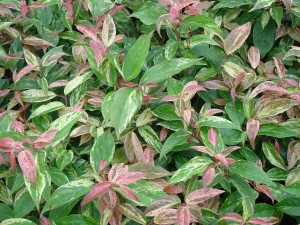
Drooping doghobble or fetterbush (Leucothoe fontanesiana) is native to woodland areas in the Southern Appalachian region (USDA zones 6 and 7). Doghobble is a tall ground cover, averaging 3 – 4 feet in height. The long gently arching evergreen branches display a rambling nature, best reined in with hand pruning as needed. White fragrant flowers, […]


