
This past weekend, while walking in the Smokies Mountains on a rather brisk rainy autumn day, the bright yellow autumn foliage color of striped maple (Acer pensylvanicum) caught my attention. Also called “moosewood”, it is the only snake-bark maple native to the U.S. The greenish bark is marked with dark vertical lines or “stripes”. The reason that […]
Archive for the ‘Trees & Shrubs’ Category
Striped Maple For The Shade Garden
Posted by Hugh on November 8th, 2010
 Posted in Native Plant, Southern Appalachian Region, Striped maple, Trees & Shrubs
  Comments Off on Striped Maple For The Shade Garden
Hardy Camellias Re-Awaken the Autumn Season
Posted by Hugh on November 1st, 2010
‘Winter Star’ camellia (pale pink- photo on left) is the first camellia to bloom in the Conlon garden this fall season. My 8 year-old camellia has 50 or more flowers currently opened and promises to continue blooming through most of November. Other hardy fall blooming cultivars are heavily budded and will open thru mid- December, weather permitting. A few […]
Posted in Camellia, Flowering, plant nutrition, Pruning Comments Off on Hardy Camellias Re-Awaken the Autumn SeasonGinkgo -Sex Education 101
Posted by Hugh on October 22nd, 2010
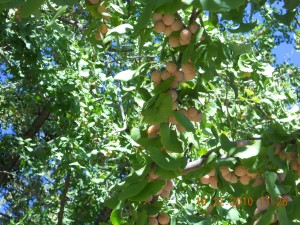
Surviving an autumn season with a heavily fruited ginkgo (Ginkgo biloba) tree is a foul smelling experience. The odorous yellow fleshy fruits ripen in October and drop onto public streets and home lawns. Several times I have witnessed the Jonesborough Tennessee Fire Department raking up fallen fruit and hosing down a sidewalk too treacherous to walk […]
Posted in acidic soil, alkaline soil, Autumn foliage color, Deer resistant, Gardenia, Ginkgo biloba, Large Shade trees, Propagation (Seed), Propagation(grafting), Pruning, Soil drainage, Southern Appalachian Region, Summer heat tolerant, Trees & Shrubs, Winter bark, winter hardiness Comments Off on Ginkgo -Sex Education 101Gather Acorns To Become Mighty Oaks
Posted by Hugh on October 16th, 2010
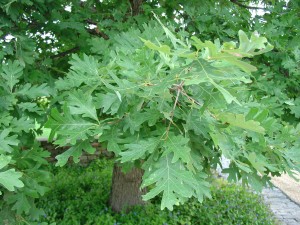
Several species of oaks (Quercus spp.) make their home here in the Southern Appalachian region (USDA zones 6 and 7). Every 3 – 5 years, a majestic oak bears a heavy crop of acorns. Squirrels and gardeners gather acorns (seeds) to plant oaks for future generations. Oaks are divided into two groups. White, swamp, and bur oaks, with rounded […]
Posted in Large Shade trees, Trees & Shrubs, Uncategorized  Tags: Quercus spp. Comments Off on Gather Acorns To Become Mighty Oaks
Franklinia – Native Tree Lost in the Wild
Posted by Hugh on September 27th, 2010
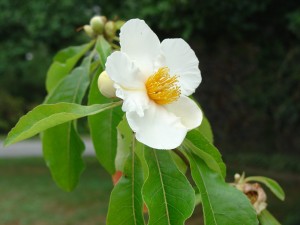
Franklinia (Franklinia alatamaha) is a wonderful small tree or large multi-trunked shrub with fragrant white camellia- like flowers. Franklinia is related to world-class flowering shrubs like camellia and stewartia. Its white 3 – 3 ½ inch camellia-like flowers appear from early August thru late September. Franklinia is winter hardy in the Southern Appalachian region (USDA […]
Posted in Featured, Franklinia, Trees & Shrubs Comments Off on Franklinia – Native Tree Lost in the WildSubstitute Dwarf Cryptomeria for Yews
Posted by Hugh on September 25th, 2010
For better garden performance and different textural look around a home foundation, plant the dwarf shrub forms of Japanese cedar (Cryptomeria japonica). Dwarf cryptomeria is an excellent substitute for Japanese yews (Taxus spp.) or ‘Helleri’ hollies (Ilex crenata) which often struggle in heavy clay soils, particularly those poorly drained. ‘Globosa Nana’ (photo) has a “cookie-cutter” […]
Coppicing – Renewal Pruning for Old Rhododendrons
Posted by Hugh on September 14th, 2010
Coppicing is a form of renewal pruning because the entire shrub is lopped off to the ground. It is a drastic pruning technique primarily used on shrubs that flower and fruit on new or summer wood, those that flower in late June or later. Coppicing is renewal pruning but is so simple that gardeners is […]
Posted in Aggressive grower, Garden Maintenance, Ilex (hollies), Mountain laurel (Kalmia), Pieris japonica, Pruning, Rhododendrons, Southern Appalachian Region Comments Off on Coppicing – Renewal Pruning for Old RhododendronsHardy Camellias for Southern Appalachian Region
Posted by Hugh on September 10th, 2010
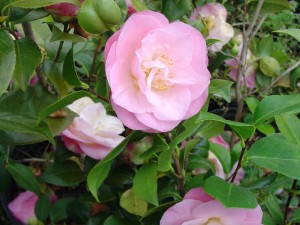
Several camellias bloom reliably either in the fall and or early spring in most areas of Tennessee within USDA hardiness zone 6. In the colder higher elevations above 2000 feet, hardy camellias require some additional shelter to successfully bloom over 6 – 8 weeks. Flower colors range from white, many shades of pink, and red. […]
Posted in acidic soil, Camellia, Evergreens, Featured, Fertilizing plants, Flowering, Regional, Southern Appalachian Region, Spring flowering, Summer heat tolerant, Trees & Shrubs, watering tips, Winter flowering Tags: Camellia Comments Off on Hardy Camellias for Southern Appalachian RegionWinterizing Your Garden
Posted by Hugh on September 8th, 2010
Winterizing Your Garden Garden Tools and Equipment Maintenance Clean tools and coat with oil to prevent rust. Scrape off all dirt with a wire brush or steel wool. Store all tools off the ground in a dry spot. Sharpen and lubricate all pruning tools. Drain water from hoses and irrigation equipment. Disconnect all hoses and […]
Posted in Camellia, Flowering, Garden Maintenance, Trees & Shrubs Comments Off on Winterizing Your GardenFall Apple and Pear Harvest
Posted by Hugh on August 31st, 2010
Apples and pears are plentiful in home orchards this fall. Several late apples such as Winesap, Rome, Fuji and Granny Smith are harvested this month. Pears do not ripen on the tree, so late varieties should be pulled from the tree when outdoor temperatures under 25 degrees F are predicted. Apples can be stored for […]
Posted in Fruits & Vegetables, Trees & Shrubs Tags: apple, pear Comments Off on Fall Apple and Pear Harvest


