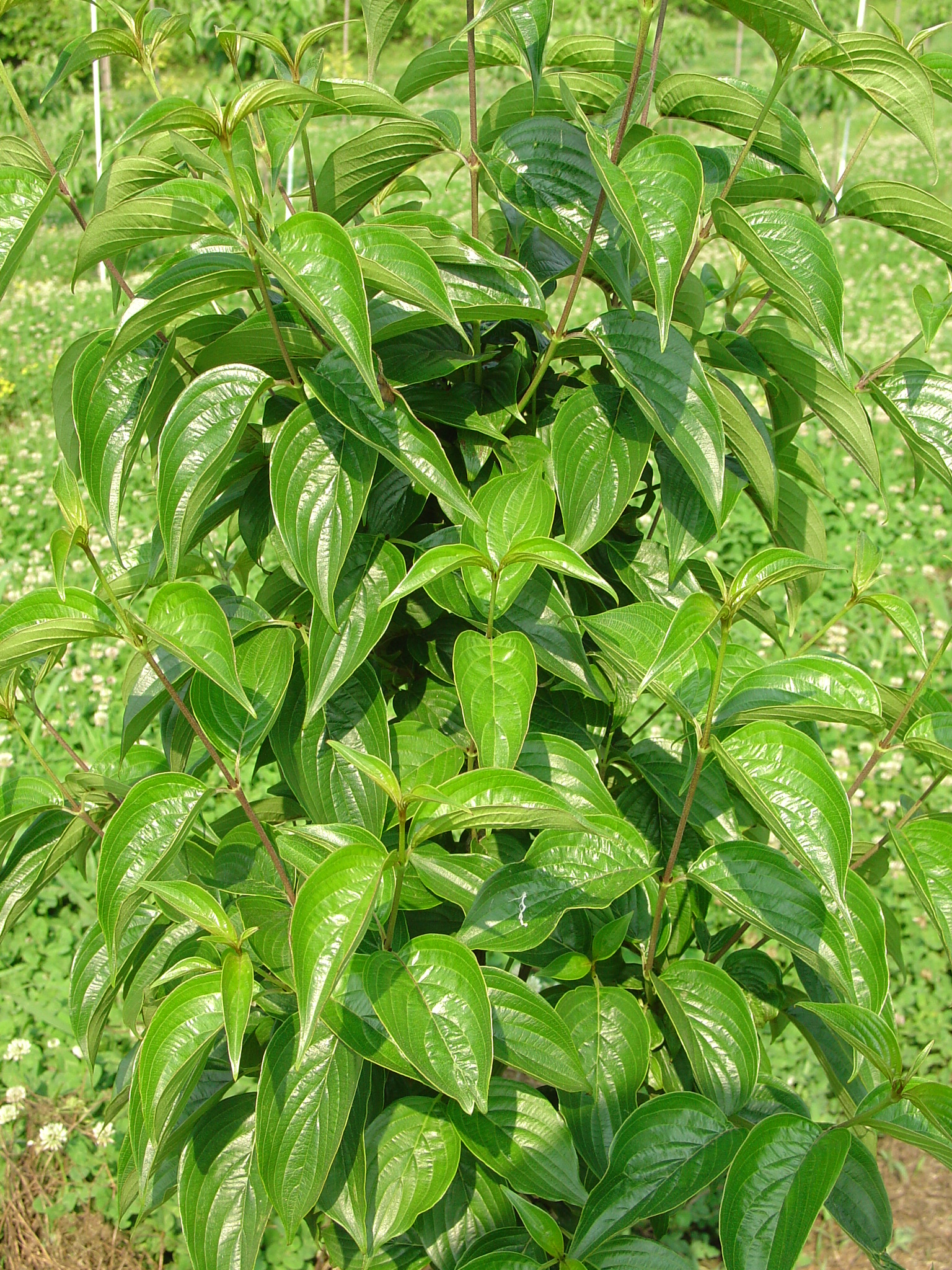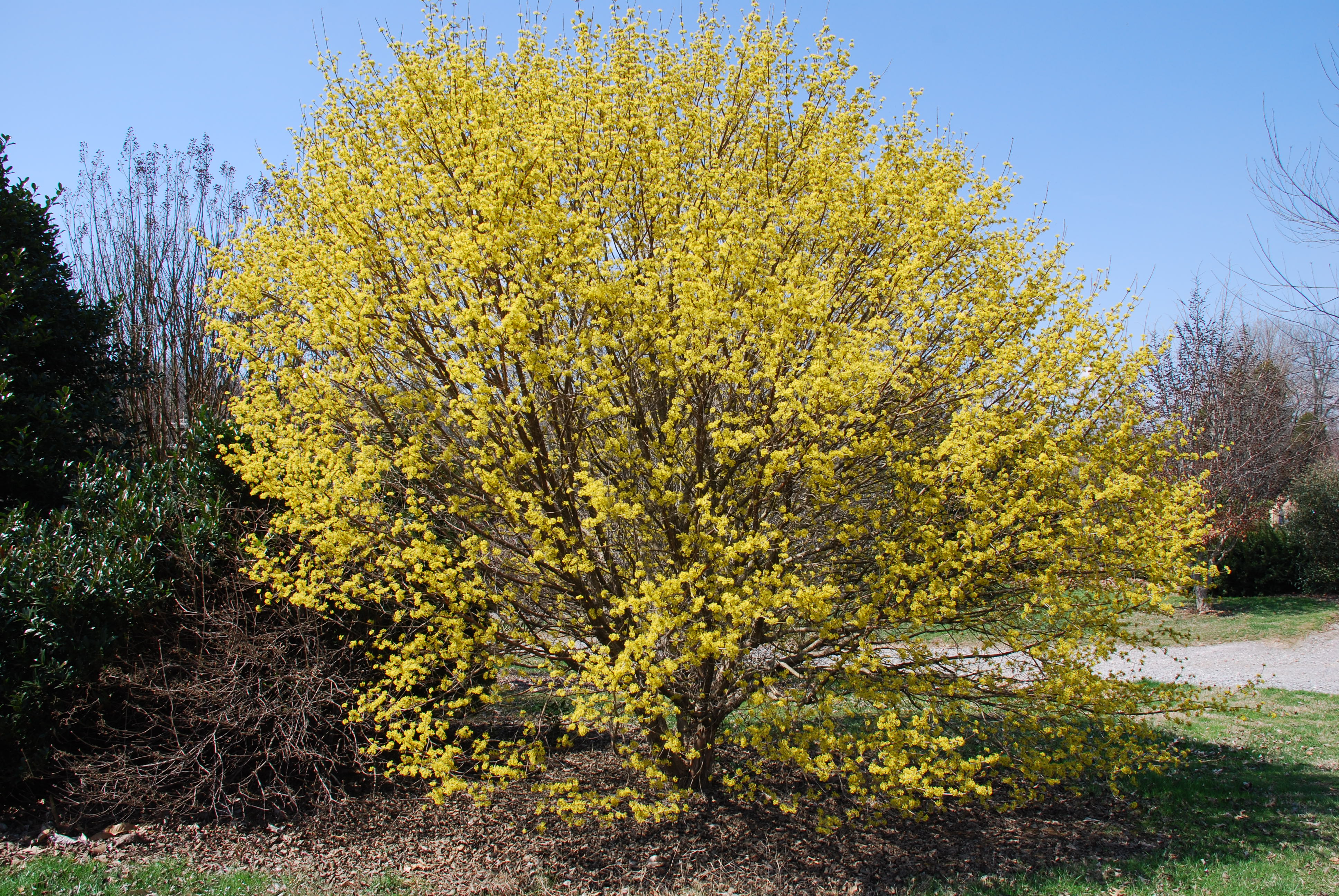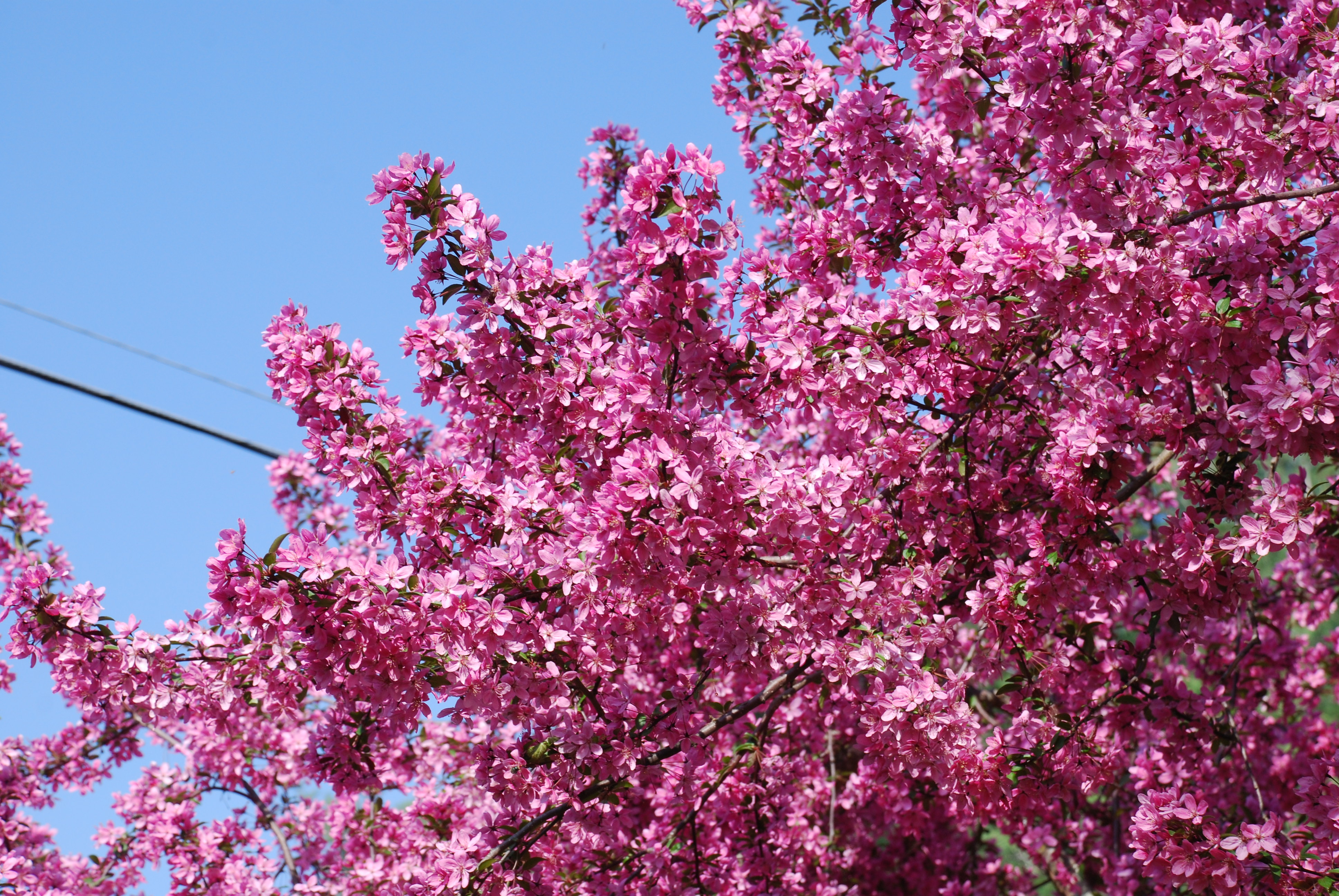
‘Sunsphere’ Japanese Cornel
Edgeworthia Deserves A Try
First, I must thank South Carolina nurseryman, Mr. Ted Stephens, who gifted me a Chinese paperbush (Edgeworthia chrysantha) nearly 6 years ago. Most plant authorities rate its winter hardiness to USDA zones 7 and 8. It struggled through its first winter and spring in my zone 6-b garden, but has never disappointed. A few gardeners living near me are also enjoying some success.
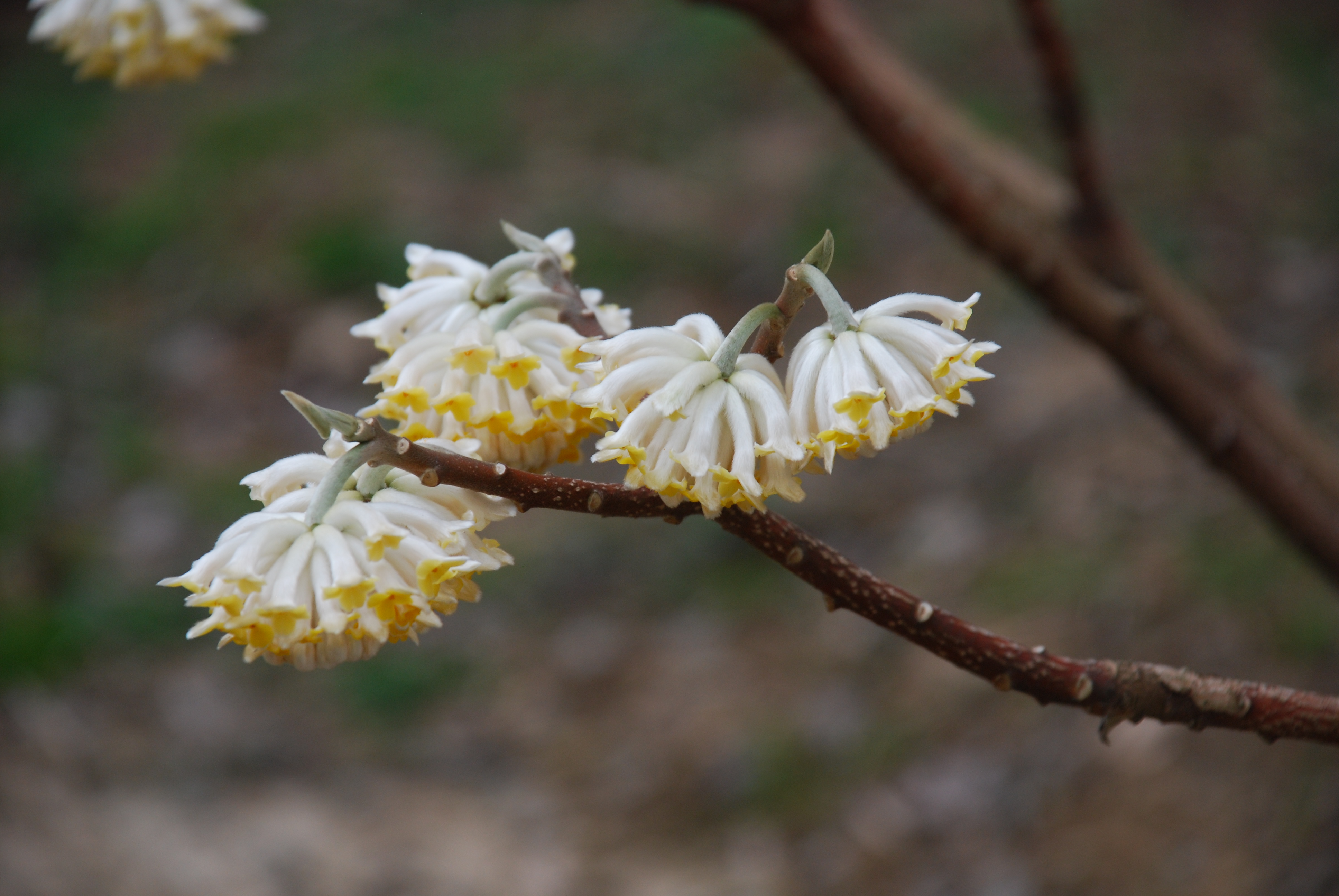
Paperbush is not difficult to grow and is fascinating to watch as cold temperatures moderate in early March. The uniquely nodding floral buds are clearly visible on branch tips in early fall. Fragrant flowers open in early March before the new spring foliage emerges. The tubular clusters of flowers are light yellow on the inside and white on the outside. After a number of years roots will sucker new plants, forming a small plant colony. If your plant reaches suckering stage, congratulations, it is happy in your garden.
Its greenish blue foliage is attractive over the 4-5 feet tall plants. Paperbush is a multi-stemmed shrub. The new growth is coated with fur-like reddish brown hairs. Paperbush belongs in a protected woodland environment under partial shade in the summer. Its unusual flowering and early season flowering entice plant collectors to give it a try.
Paperbush is definitely a collector’s plant and is available at e-commerce nurseries.
Revitalize Pansies Now
Across many areas of the Southern Appalachian region (USDA zones 6 and 7) snowfall has been plentiful this winter, but total rainfall is below normal. It takes 10 inches of snow to equal one inch of rainfall.
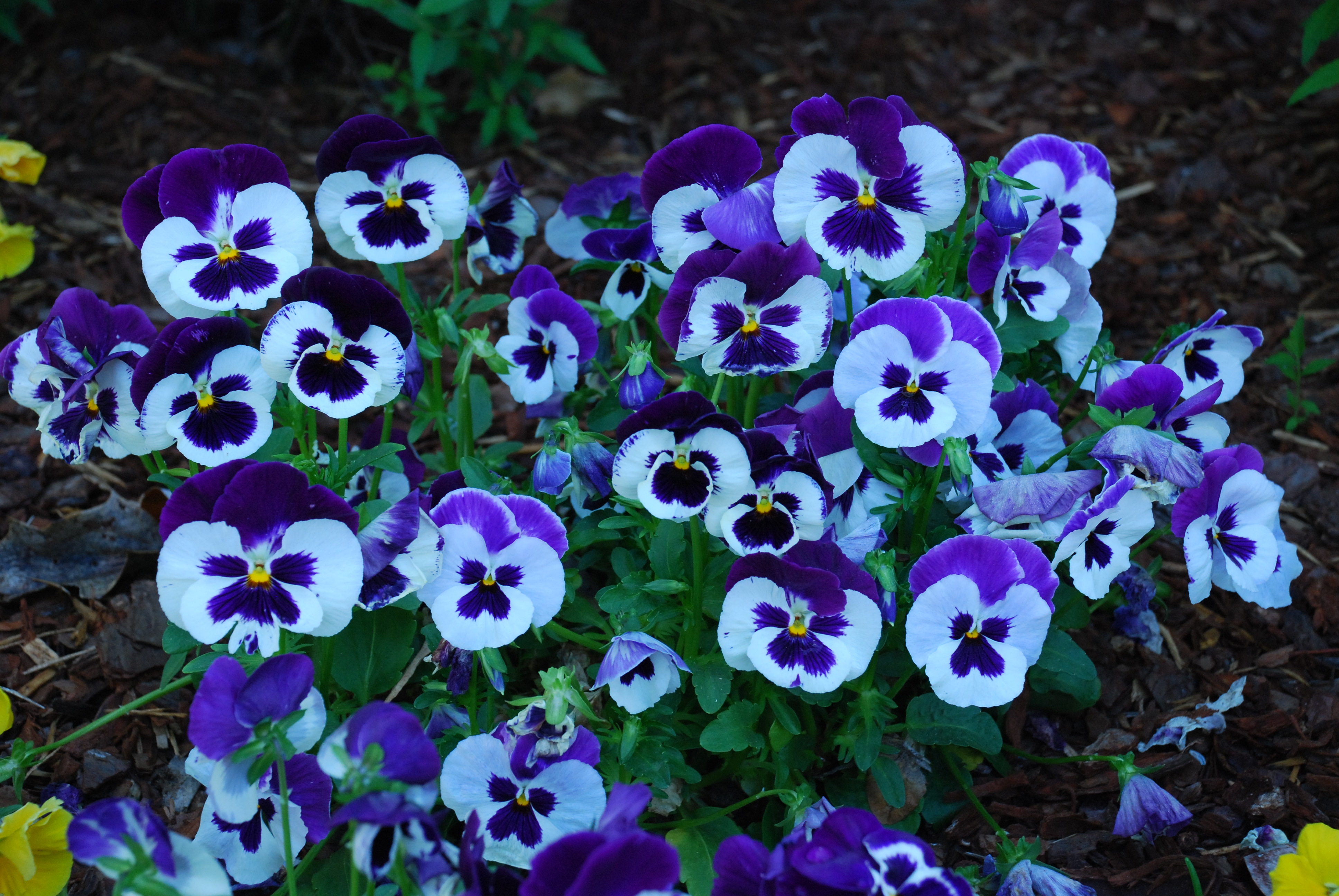
Fall planted pansies and violas are now both hungry and thirsty. Provide them with a shot of fertilizer and water. Winter feeding will not injure these hardy plants.
Apply an agricultural grade of fertilizer such as 19-19-19 or equivalent. Do not use a slow release granular product this time of year as the fertilizer prills do not release their nutrient charge in cold soils. Any water soluble fertilizer, including Miracle Gro® or Jacks® brands, are also good choices for feeding pansies and violas. Follow package directions.
Irrigate thoroughly after feeding to wash the nutrients into the soil as well as to re-hydrate plants. Watering also prevents the fertilizer salts from burning the plant foliage.
Withis a few days your listless pansies should perk up during this warm weather spell which we are currently enjoying.
Opening Show in February- The Witchhazels
First, not to confuse you, our North American native witchhazel (Hamamelis virginiana) blooms in the fall. Our native vernal witchhazel (H. vernalis) has been flowering for the past few weeks.
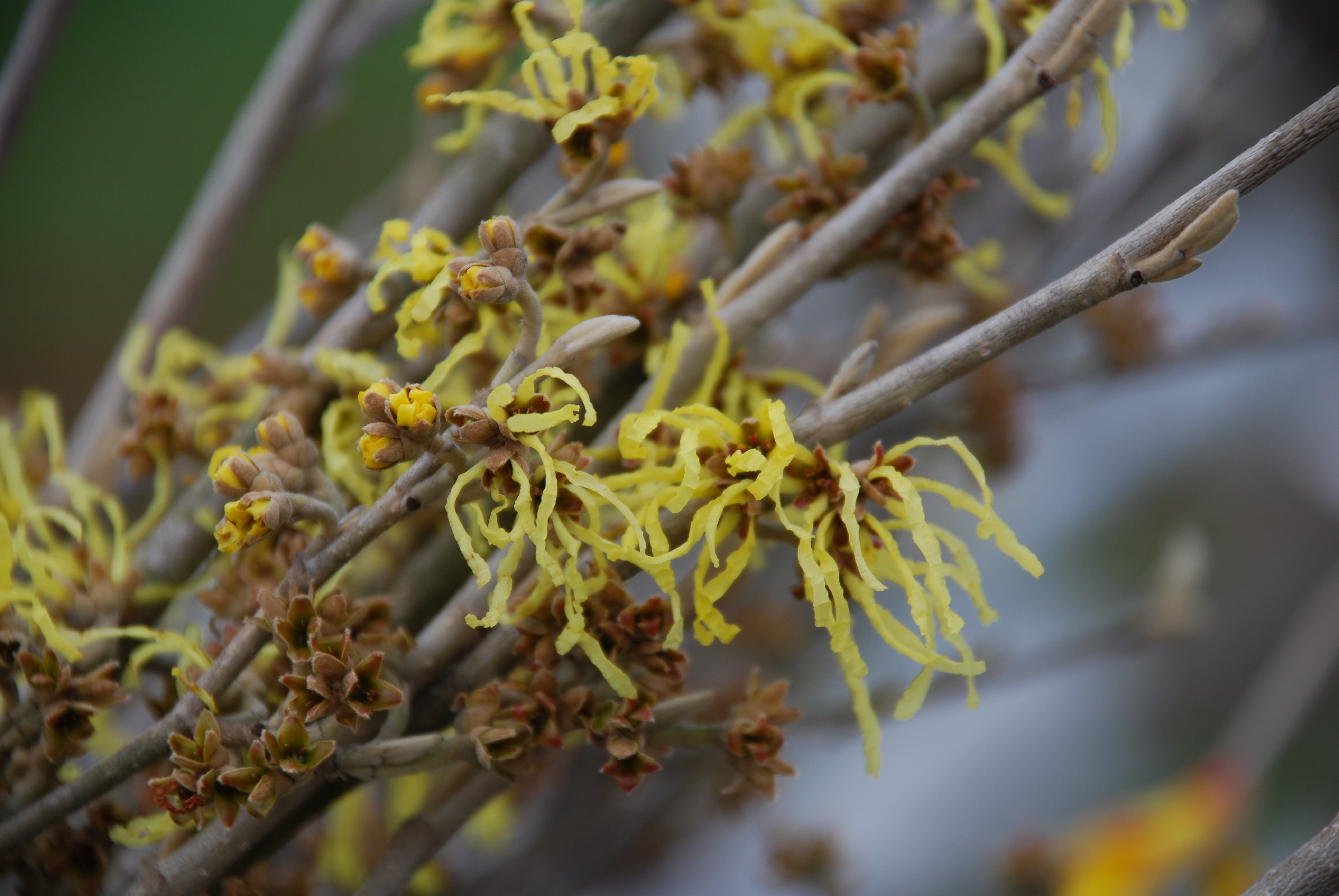
In February, the showiest witchhazels are opening now – species from China, Korea and Japan. Two of the very best are a Chinese species/cultivar called H. mollis ‘Wisley Supreme’ and a hybrid form called H. x intermedia ‘Westerstede’. Both are hardy in the Southern Appalachian region (USDA zones 6 and 7).
Let’s begin with Wisley Supreme. This vigorous shrub grows to 8 – 12 feet in height and 10 – 12 feet in width. A young shrub branches upright and with age takes on a spreading habit. Its pale yellow strap-like flowers are long lasting and sweetly scented. Spring-summer oval leaves exhibit a bluish green cast, turning buttery yellow in the fall.
Westerstede is a hybrid witchhazel from Germany (Japanese (H. japonicum) and Chinese (H. mollis). Westerstede bears light yellow 1- inch long ribbon-like flowers which are fragrant. Floral buds begin to open 1 – 2 weeks later than Wisley Supreme. The broad 5 – 6 inch circular green leaves turn buttery yellow in the fall.
While most hybrid witchhazels grow to tall 20 foot shrubs, the mature heights and widths of Westerstede and Wisley Supreme are similar. Westerstede summer foliage possesses better leaf spot resistant than the old-timey favorite ‘Arnold Promise’.
Witchhazels are easy to grow in an average well-drained moist garden soil. A slightly acidic pH soil is preferred. Annual spring pruning keep the vigorous witchhazels within their assigned garden spot.
Since most garden centers do not sell early blooming shrubs, witchhazels are easily purchased from the internet nursery market.
The Other Lenten Roses
In addition to the popular Oriental hellebore (H. x orientalis), four other species are hardy in the Southern Appalachian region (USDA hardiness zones 6 and 7). Christmas rose (H. niger) is the first lenten rose to bloom, often 4-6 weeks earlier if mild December weather permits. The 3 ½- inch flowers are large and showy, each borne singularly on 2 to 2 ½ foot tall stems.
Corsican hellebore (H. argutifolius) features large yellowish green flowers and glossy light green leathery foliage. Leaves are holly-like, with spiny deeply cut edges. Flower longevity lasts 10 or more weeks. The slightly nodding flower heads emerge from the crown to stand above the foliage. After the seeds ripen in mid-summer, stalks collapse to make room for new growth. Corsican hellebore may require some winter protection in coldest locales of the Southern Appalachian region.
Bearsfoot hellebore (H. foetidus) flaunts dark green, deeply dissected foliage. Each of the green blossoms is edged in purple and blooms at same time as H x orientalis. This species is best planted in a cool, shaded garden area as it is not heat tolerant.
Hellebore blooms make long lasting additions to any cut flower arrangement. To prevent the leaves, buds and flowers from wilting, re-cut each stem using a sharp knife or bypass pruners while holding the stalk submerged in water. This practice assists in continuous water uptake in the stem and improves flower longevity.
Lenten Roses Perk Up the February Garden
Lenten roses or hellebores (Helleborus spp.) are long-lived perennials, often surviving in the same garden spot for many years. Four species of Lenten roses grow in the Southern Appalachian region (USDA hardiness zones 6 and 7). All thrive in shady garden recesses, exposed to as little as 3 – 4 hours of dappled sunlight. Numerous new cultivars have been introduced over the past 25 years.
Foliage is coarsely tooth, palmately compound, the leaflets arranged like fingers on a hand. Lenten roses bloom from mid-February through April and are available in white, pink, green, plum or reddish-purple.
Lenten roses love a loamy well drained soil rich in organic matter or compost. A limey soil pH around 7.0 or slightly higher is best. Mulching around plant(s) contributes to their garden longevity. Hellebores are drought tolerance, but regular watering during dry summer periods is encouraged.
Plants should be divided every 4-5 years either in the early spring, soon after flowering, or in early fall. Wear when handling seeds or plants as the sap may cause skin blisters. Lenten roses are highly poisonous to most animals, including humans, and are quite resistant to deer and vole feeding.
Most popular is the Oriental hellebore (H. x orientalis, often written H. x hybridus). They offer the most color choices of any species. Flowers average 3-inches in width and heads are slightly nodding. Flowers are borne on single stems and petals are often spotted or flecked.
Next Blog: The Other Lenten Roses
Disease-free Shrub Rose Trial–The Winners Are…
Over the past 10 years, the world of roses has witnessed a revolution with the popularity of the Knockout™ series of roses in gardens across the U.S.
Over the past 5 years the University of Tennessee has been testing shrub roses in Poplarville, MS and two Tennessee locations. Dr. Mark Windham and his research team have been evaluating disease resistance in shrub roses. “The summer heat and humidity in the South makes it a perfect location for evaluating rose disease resistance”, says Dr. Windham.
The winners in the 2010 UT Shrub Trial are:
Category 1. Resistant Cultivars (<2% foliage with blackspot and/or Cercospora leaf spot):
‘Blushing Knockout’
‘Brite Eyes’
‘Double Knockout’
‘Double Pink Knockout’
‘Golden Eyes’
‘Hansa’
‘Kashmir’
‘Knockout’
‘Moje Hammarberg’
‘My Girl’
‘Pink Knockout’
‘White Dawn’
‘Wildberry Breeze’
Category 2. Moderately Resistant )<10% foliage with blackspot and/or Cercospora leaf spot):
‘Carefree Sunshine’
‘Como Park’
‘Fiesta’
‘Forty Heroes’
‘Homerun’
‘My Hero’
‘Palmengarten Frankfurt’
‘Super Hero’
‘Wild Spice’
‘Wild Thing’
Most, if not all cultivars, may be purchased from mail order nurseries found on the internet. The ‘Knockout’ series and ‘Home Run’ cultivars are available at most garden centers.
Re-Blooming Your Poinsettia: Winter thru Summer Care
Part III: By late January your poinsettia plant may look droopy and the leaves pale green. Some flowers (colorful bracts) and leaves may have dropped. To revive the plant and to program it to flower again next winter requires additional care from you starting now.
Move the plant to an east or south exposure window, offering it as much direct sunlight as possible. Keep the room temperature between 68-75°F during the day and no lower than 55°F at night. Avoid cold window drafts. Water the plant 1-2 times weekly, and never allow the plant to sit in water. If leaves shrivel and drop, you may be under/over watering it. Keep room humidity high, but do not mist the plant directly.
In early March repot into a slightly larger container, adding new potting soil. Cut the plant back by two-thirds to stimulate all new shoot growth. Feed every 2-3 weeks with a water-soluble plant fertilizer according to label directions.
By late April move the poinsettia outdoors under partial shade when daily temperatures hover above 55°F and bring it back indoors when evening temps drop.
By mid to late May the poinsettia is safe to move permanently outdoors. Set the poinsettia on a partially sunny (not direct sun) deck or patio area or under a shade tree. Continue to fertilize every 2-3 weeks.
From June thru September 10th, pinch growing tips back 2-3 inches every 3-4 weeks to develop a well-branched compact plant. If not pinched, the plant will grow tall and spindly. Continue watering and fertilizing until mid-September when plant is brought indoors to initiate re-blooming.
Previous Blogs about Care of Poinsettias (dated: 12/18/10 and 12/20/10). Part IV-“Steps in Re-blooming Your Poinsettia” will be published in September.
Two Sensational New Oakleaf Hydrangeas
Oakleaf hydrangea (Hydrangea quercifolia) is a popular native shrub in the Southeastern U.S. (USDA hardiness zones 5 to 8). Two new compact forms of oakleaf hydrangea were recently introduced by the U.S. National Arboretum.
In early summer, ‘Ruby Slippers’ is covered with 9-inch-long floral clusters that are held upright above the foliage. ‘Ruby Slippers’ grows to about 3 ½ feet tall and 5 feet wide and has large creamy white flower panicles that mature to a deep rose color in late summer. ‘Munchkin’ is slightly smaller at 3 feet tall and 4 ½ feet wide, and 6 ½ inch long white flowers age to a medium pink color. Both cultivars grow in either light shade or full sun.
Their compact form and dense plant habit make it ideally suited for use in small residential landscapes. The new light green foliage in spring turns dark green in summer and mahogany-red in fall. Both are ideal specimen shrubs planted either individually or together as a lovely deciduous hedge row.
‘Ruby Slippers’ and ‘Munchkin’ were developed by Dr. Sandra Reed, plant breeder at the U.S. National Arboretum Research Lab, located at the Tennessee State University Nursery Research Center in McMinnville, TN.


![Hydrangea querc'RubySlippers']](https://whatgrowsthere.com/grow/wp-content/uploads/2011/01/Hydrangea-quercRubySlippers-300x218.jpg)