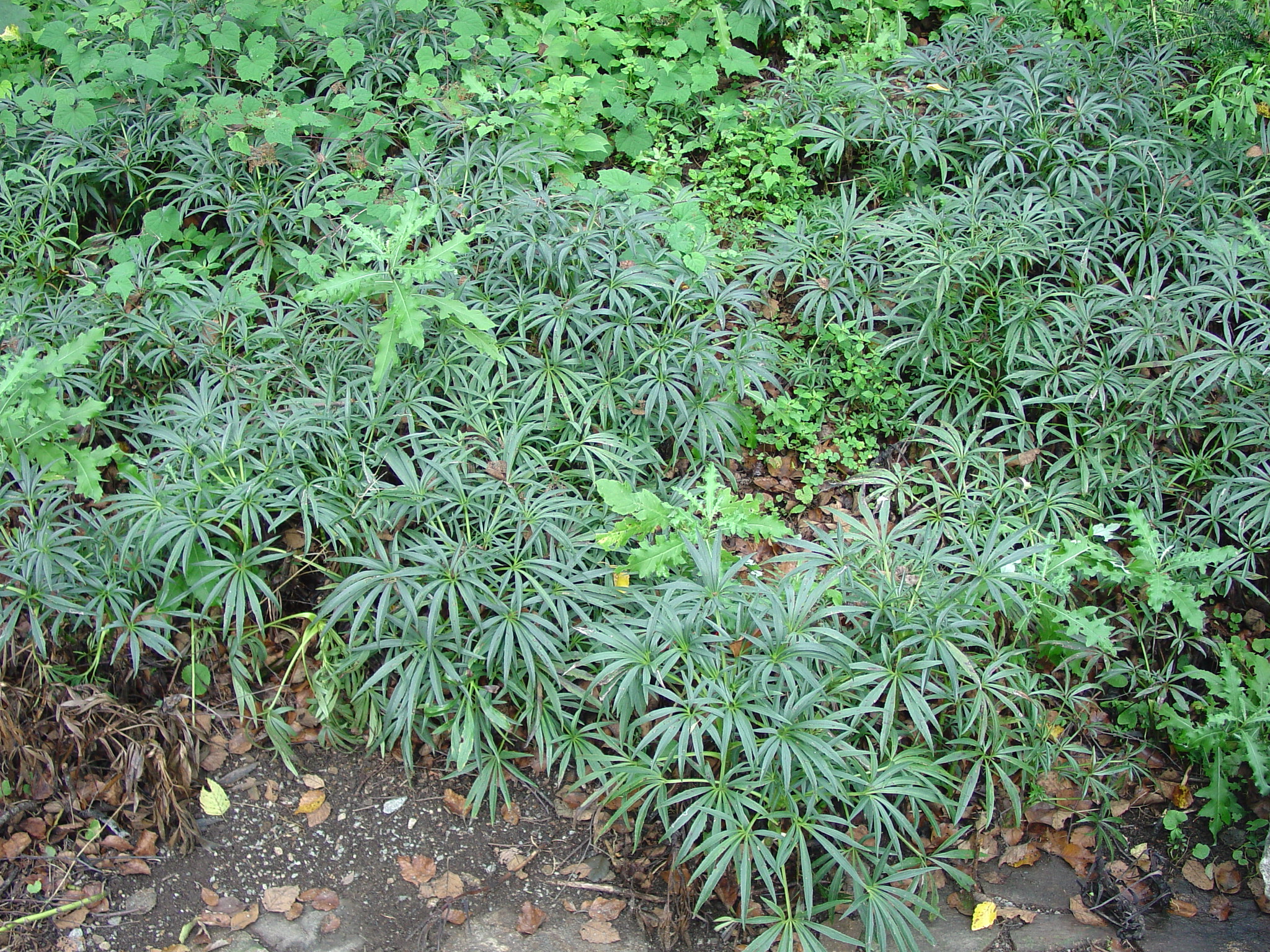
Lovely cut foliage of Bearsclaw hellebore
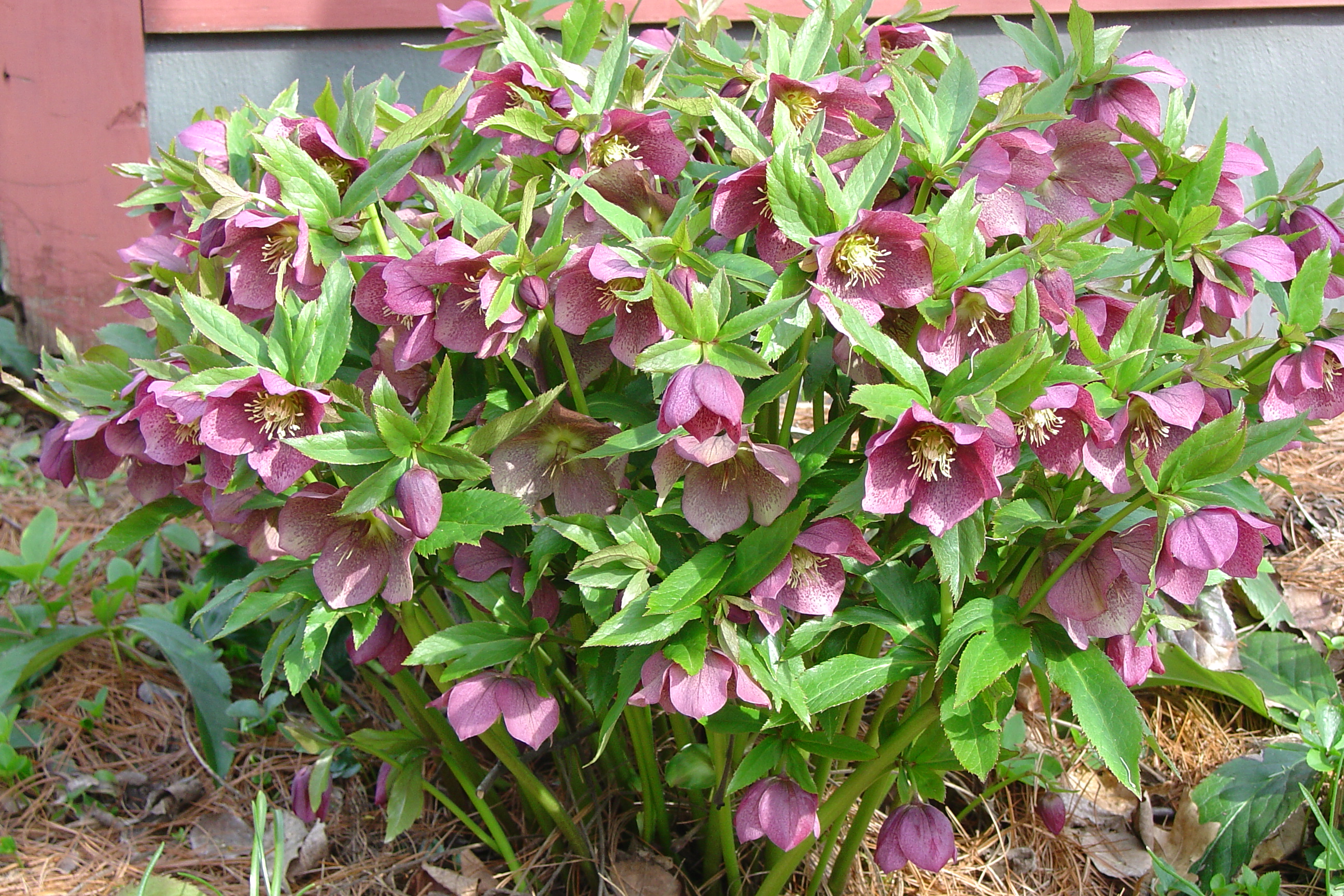
In addition to the popular Oriental hellebore (H. x orientalis), four other species are hardy in the Southern Appalachian region (USDA hardiness zones 6 and 7). Christmas rose (H. niger) is the first lenten rose to bloom, often 4-6 weeks earlier if mild December weather permits. The 3 ½- inch flowers are large and showy, each borne singularly on 2 to 2 ½ foot tall stems.
Corsican hellebore (H. argutifolius) features large yellowish green flowers and glossy light green leathery foliage. Leaves are holly-like, with spiny deeply cut edges. Flower longevity lasts 10 or more weeks. The slightly nodding flower heads emerge from the crown to stand above the foliage. After the seeds ripen in mid-summer, stalks collapse to make room for new growth. Corsican hellebore may require some winter protection in coldest locales of the Southern Appalachian region.
Bearsfoot hellebore (H. foetidus) flaunts dark green, deeply dissected foliage. Each of the green blossoms is edged in purple and blooms at same time as H x orientalis. This species is best planted in a cool, shaded garden area as it is not heat tolerant.
Hellebore blooms make long lasting additions to any cut flower arrangement. To prevent the leaves, buds and flowers from wilting, re-cut each stem using a sharp knife or bypass pruners while holding the stalk submerged in water. This practice assists in continuous water uptake in the stem and improves flower longevity.