Lantanas are popular flowering perennials in USDA hardiness zones 9 to 11 and are heavily planted as annuals in zones 7 and 8. In areas where growing seasons are long, native lantanas are also dependable shrubs in Florida, South Texas, or Southern California. Lantana shrubs may reach up to 6 feet tall in tropical climates. In cool temperate regions potted lantanas may be overwintered in a hobby greenhouse or unheated sunroom.
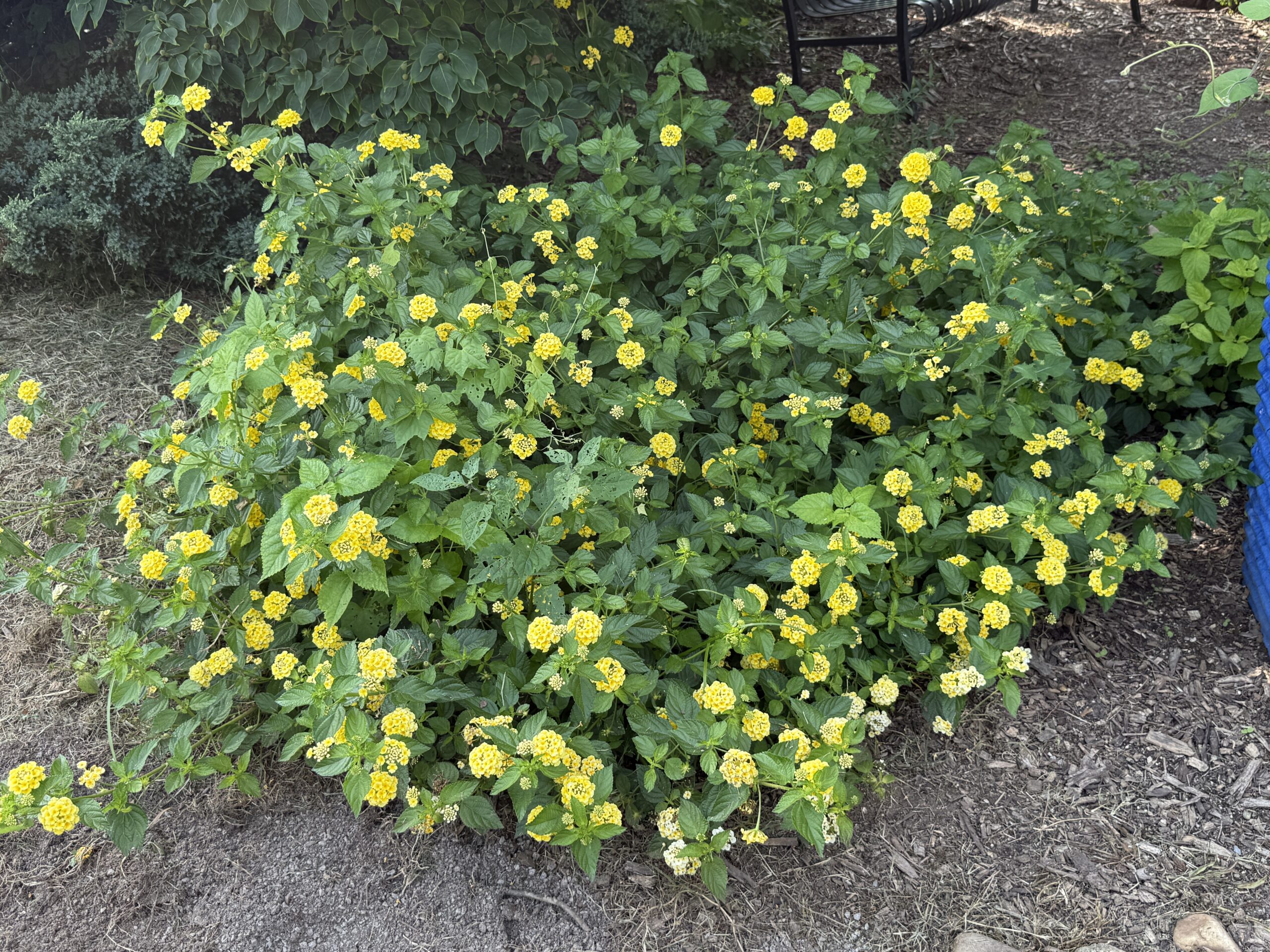
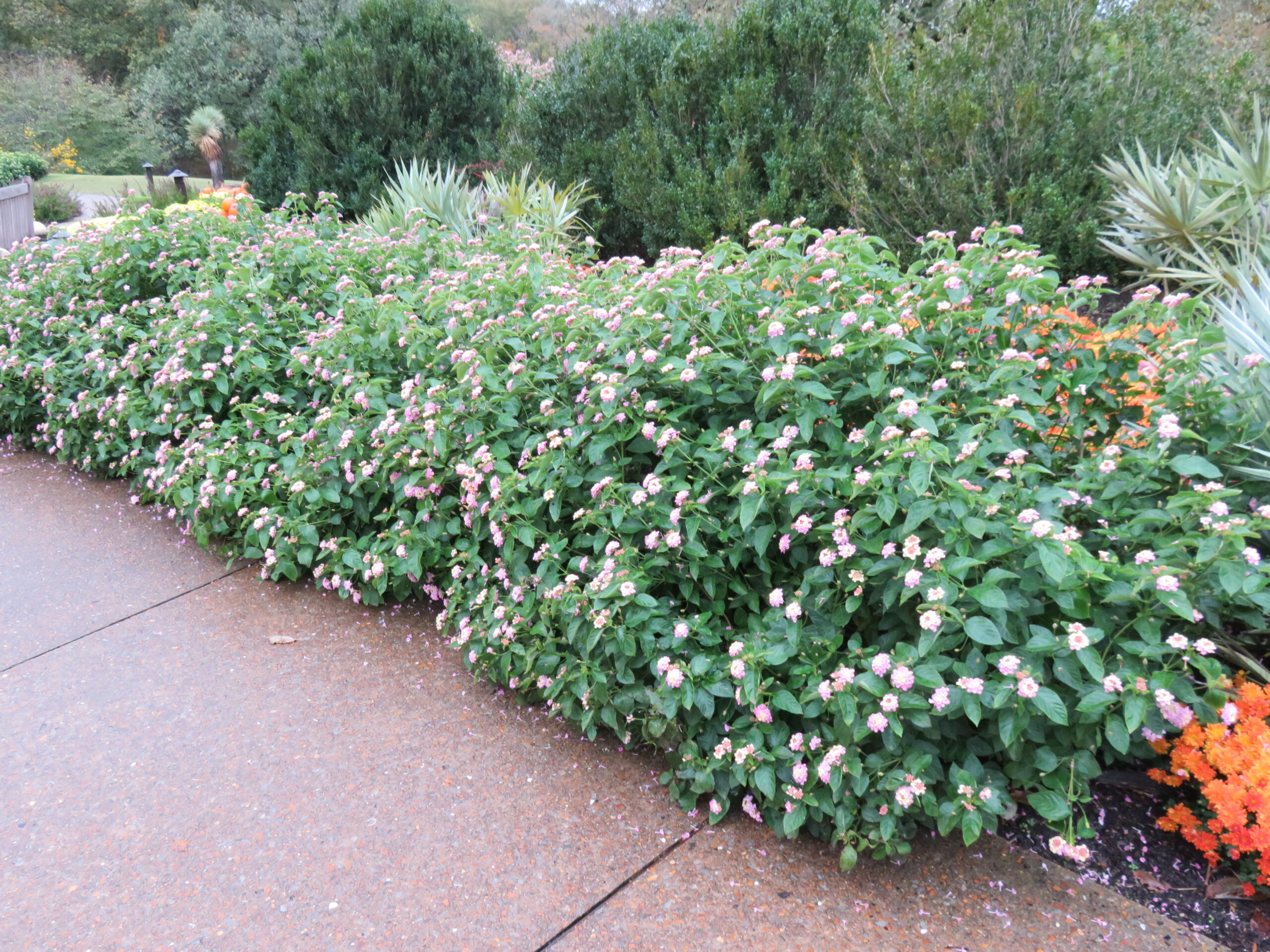
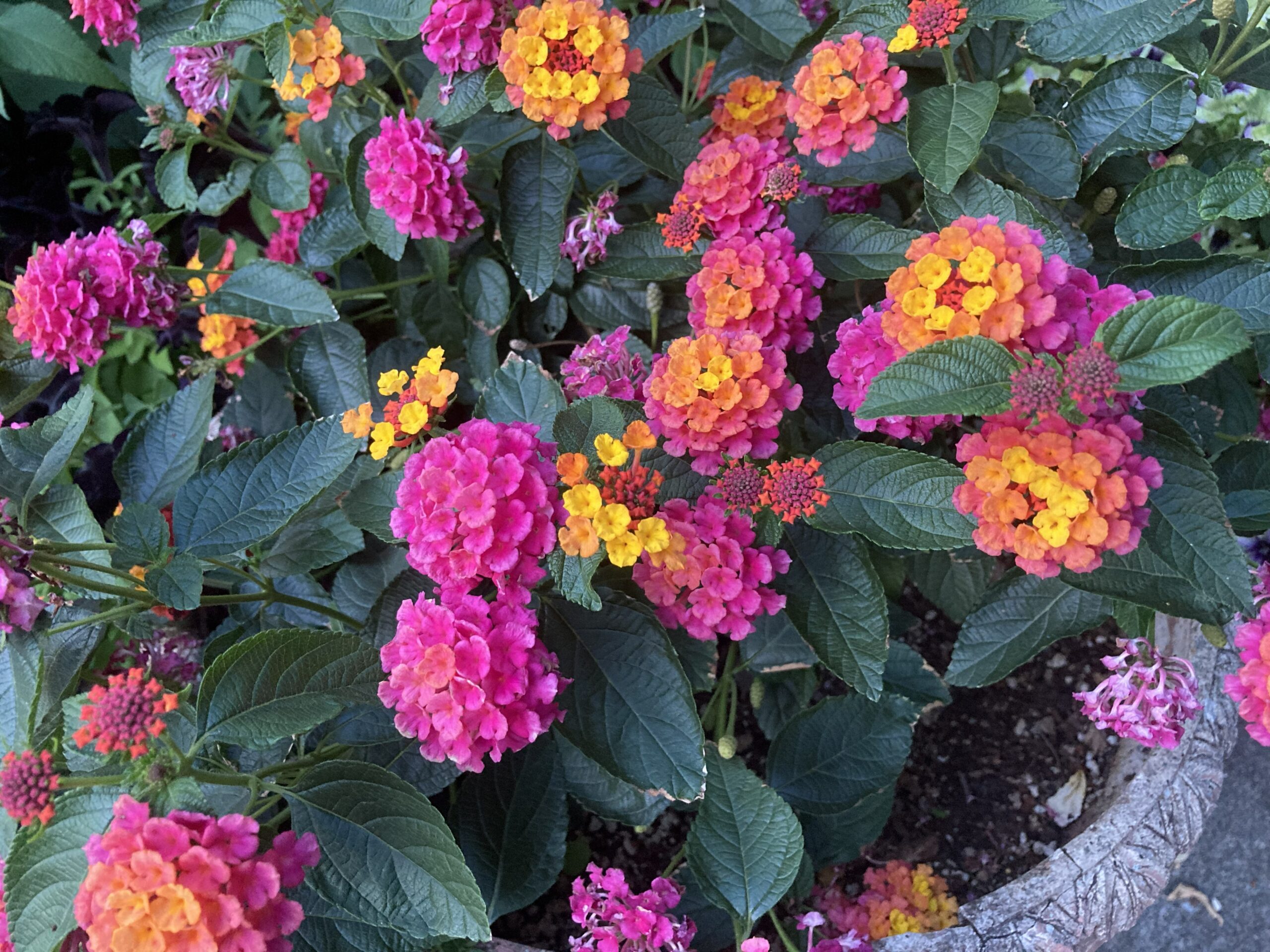
The most popular lantanas are the non-native L. camara. Varieties offer more color choices, are more floriferous, and grow more compact. L. camara are also grown in containers including hanging baskets. Annual lantana series include Luscious®, Shamrock™, Bandana™, and Lucky™. Plants bloom from late spring until the cool days of fall arrive. Flower heads are small globes of tiny florets. Cultivars come in a wide array of colors from rose pink, yellow, orange or a combination of many flowers.
Lantanas prefer full sun and can grow upright, mounded, spreading, and trailing– depending on cultivar. Feed newly set transplants with a slow-release fertilizer such as Osmocote™ or Nutrikote™. An alternative feeding program is to apply a water-soluble product such as Miracle-Gro™, Peters™, or Daniels™ every 6-8 weeks from spring planting time up to late August. Lantanas prosper in a slightly acidic pH soil.
Disease prevention of problems is always your best alternative. Set lantanas in well-drained soil with good air circulation around plants. Lantana may on occasion succumb to root rot or powdery mildew, particularly when summer weather is unusally wet.
Lantanas are deer resistant and the flowers are favorites of hummingbirds, bees and butterflies. Berries can be toxic to pets and humans and leaves may cause a rash for some people. Some environmentalists classify native lantanas as invasive because birds feed on the abundant berries and distribute the seeds over many miles.
Sooty mold, caused by insect feeding by aphids, mites, and whiteflies, turns leaf surfaces and stems black. Problem pests can be sprayed with several kinds of pesticides or washed off. Occasionally, lantanas may be troubled by tiny sap-sucking lacebugs which may result in leaf drop.
Generally listed as flowering annuals, ‘New Gold’, ‘Chapel Hill Yellow’, ‘Ham & ’Eggs’, and ‘Miss Huff’ may perennialize in parts of the mid-South region (Tennessee, Virginia and North Carolina – USDA hardiness zone 7a). Ideally, these varieties should be planted in spring thru mid-summer, so their roots become deeply rooted before winter arrives. Hopefully, their first winter is not severe and plants will perennialize.